It is better to sip water rather than chugging it down. Chugging water can lead to over-filling the stomach and a feeling of being bloated. After losing water, such as when one exercises, it is better to drink less water and replenish one's electrolytes as well to prevent water intoxication.
On a hot summer’s day, nothing is better than a glass of cool water. If you’re particularly parched, gulping down the water can feel like you’ve received the elixir of life, which you have, considering you would die without water.
But could you be drinking too much of this elixir all at once? In other words, is there a “right” way to drink water so that you remain hydrated? Should you sip your water slowly and steadily or gulp it all at once?
For a few reasons, sipping water is better than chugging it.
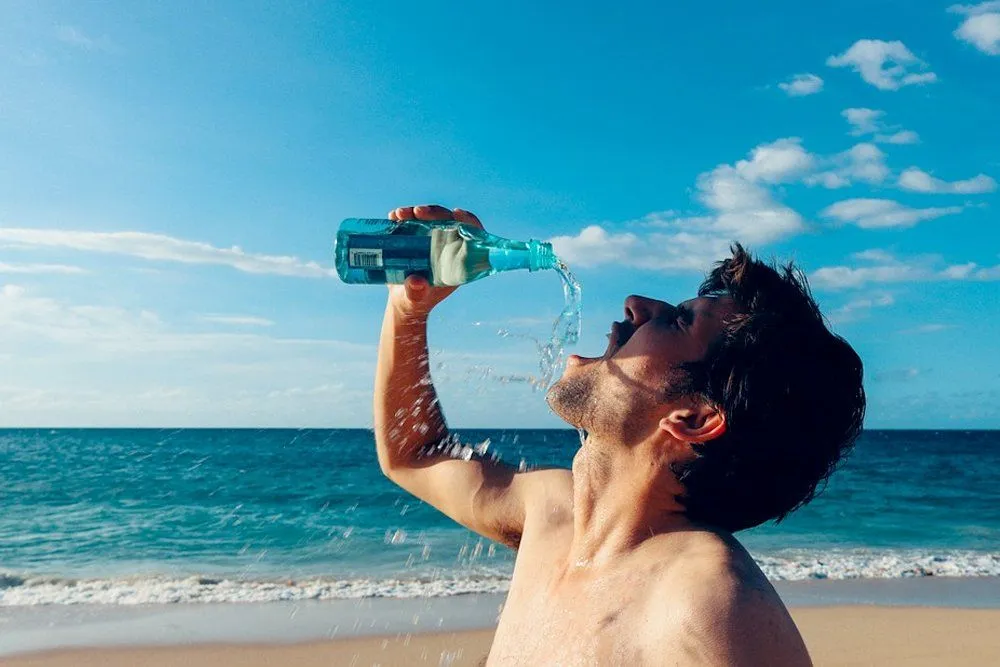
Filling Your Stomach
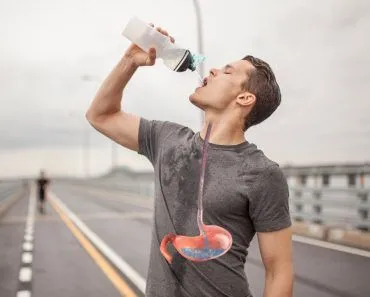
Water moves from the mouth down the esophagus into the stomach. The “full” feeling you get after a meal comes from filling your stomach.
Your stomach is a pouch made of muscle and epithelial cells and nerves. As more food enters the stomach, the pouch fills up and expands, stretching the muscles. Stretch receptors of the vagus nerve sense the stretching and relay the information to the brain. The brain interprets this signal as a feeling of “fullness.”
The stomach cares little about being satisfied with a meal, and there are few to no nerves that sense the chemical composition of food in the stomach. The stomach’s nerves make sure you don’t eat till you burst the stomach. Chugging water, then, will fill your stomach up quickly, making you feel full and bloated. If you drink too much, you might also feel nauseous because now your stomach will try to get rid of the excess water by making you vomit it out.
Chugging vs. sipping water will also affect how fast the water exits the stomach. Normal water exits the stomach quickly, and the quicker you fill your stomach with water, the quicker the stomach empties it into the small intestine. Most of the water is absorbed in the small intestine. If you drink too much water too quickly, it could disrupt your body’s electrolyte balance.
Electrolyte Balance In Your Body
Just like the fish in the sea prefer a certain salt concentration in the water that they swim in, so too do the molecules and tissues of your body. The ratio of solvent to solute, aka water to salts, is crucial to maintaining the integrity of the DNA, RNA, proteins, fats, and carbohydrates that make critical structures that make you.
Too little water makes your insides too “salty,” which can damage cells. But too much water damages your cells as well.
The kidneys have a limit to how much water they can excrete. Drinking too much water consistently and all at once can dysregulate the electrolyte balance in your body. The small and large intestines will continue to absorb the water into the blood. However, without the additional intake of electrolytes such as sodium, potassium, chloride, and bicarbonates, the excess water begins to cause problems.
Hyponatremia
Hyponatremia, commonly known as water intoxication, is when the concentration of sodium in the body decreases below 136 mmol per liter. It can cause nausea, vomiting, confusion, and a host of other neurological symptoms, such as seizures and coma.
You can get hyponatremia if you sip too much water over time. A study examined how marathon runners at the 2016 London Marathon hydrated themselves. They found that some marathon runners developed hyponatremia from drinking too much fluid. This matters to you, too. After exercise, you might over-compensate for the lost fluid by drinking more water or electrolyte solution. It would then be prudent to hydrate oneself slowly and in moderation.
You could also choose a different fluid to hydrate you. The small intestine absorbs the water in coffee at a different rate and amount than milk or orange juice. The composition of any fluid and the amount of proteins, sugars, and salts affect how well the body absorbs the water along with it.
For individuals with lactose intolerance, milk is a terrible fluid to hydrate oneself with. The lactose sugar binds to water and retains it in the gut and, eventually, out the other end.
Are Frequent Trips To The Bathroom A Good Thing?
This is a common misconception based on the fact that excretion is a method to eliminate waste from the body. Hence, the more frequently you urinate, the cleaner your body becomes. However, can there be too much of a good thing?
Undeniably, no. When you urinate, your body loses salts and the excess water collected in the bloodstream. The kidneys carry out this filtration. So, when you chug down a considerable amount of water in one sitting, due to the lower absorption levels by the tissues and muscles, in that short period, the kidneys end up registering this as excess water and will try to expel it. In such a case, the salts are mixed with this water and will be eliminated from the body.
Does Chugging Water Hydrate You As Well As Sipping?
Here is the good news for anyone who just emptied a bottle in one go: plain water is absorbed quickly and almost completely, whether you gulp it or take your time. In a volume kinetics study, tap water reached its maximum effect on the blood (peak dilution) about 20 minutes after it was swallowed. So yes, chugging hydrates you.

The catch is that what goes in fast also comes out fast. In that same study, plain water had a half-life in the body of only about 13 minutes, the quickest of all the drinks tested. When you chug a large volume at once, your blood is briefly diluted, your kidneys read that as surplus, and they send a good chunk of it straight to your bladder rather than letting your tissues hold onto it.
This is why what you drink can matter more than how fast you drink it, especially after heavy sweating. In the beverage hydration index trials, only milk and a sodium-containing oral rehydration solution kept more fluid on board than plain water, cutting urine output by roughly 25%. The electrolytes and small amounts of sugar and protein slow the drink's exit and help your body retain it. So if you have just finished a long run, sipping a drink with some sodium in it will hydrate you more durably than chugging a large glass of plain water.
So, Is It Actually Bad To Chug Water?
This is the question most people are really asking, so let's answer it plainly: for a healthy person, chugging a normal glass or bottle of water is not dangerous. As McGill University's Office for Science and Society puts it, "Drinking more water than necessary is not particularly dangerous. Drink more water and you will simply get rid of it in your urine." The main downsides of gulping, as we saw above, are comfort-related: a stretched, bloated stomach and sometimes a wave of nausea, not a medical emergency.

The real danger lies in volume, not speed. Healthy kidneys can clear up to roughly 20 liters of water a day, but only so much per hour. According to StatPearls, dilutional water intoxication tends to set in once intake climbs past about 750 mL to 1 liter every hour, or beyond roughly 18 liters in a day, which overwhelms that clearance and drops blood sodium below 135 mmol/L. A single chugged 250 to 500 mL glass sits nowhere near that ceiling. The people who get into trouble are those who pour down liters in a short window, such as during a fluid-drinking contest, certain endurance events, or while overcompensating after a hard workout.
One sensible caveat: anyone with heart failure or kidney disease should follow their doctor's advice on fluids, because their bodies cannot offload excess water as efficiently. For everyone else, the takeaway is reassuring. Chugging will not harm you, but if you want to stay comfortable and actually hold onto the fluid, slower sips, ideally with some electrolytes after heavy sweating, win out.
Last Updated By: Salama Yusuf
References (click to expand)
- Hyponatremia: Low Sodium Levels in the Blood.
- Leiper, J. B. (2015, August 19). Fate of ingested fluids: factors affecting gastric emptying and intestinal absorption of beverages in humans. Nutrition Reviews. Oxford University Press (OUP).
- The Water Myth | Office for Science and Society.
- Whatmough S, Mears S, Kipps CEXERCISE ASSOCIATED HYPONATREMIA (EAH) AND FLUID INTAKE DURING THE 2016 LONDON MARATHONBritish Journal of Sports Medicine 2017;51:409.
- Nieman, D. C., Gillitt, N. D., Sha, W., Esposito, D., & Ramamoorthy, S. (2018, March 22). Metabolic recovery from heavy exertion following banana compared to sugar beverage or water only ingestion: A randomized, crossover trial. (S. L. Atkin, Ed.), Plos One. Public Library of Science (PLoS).
- Popkin, B. M., D'Anci, K. E., & Rosenberg, I. H. (2010, July 20). Water, hydration, and health. Nutrition Reviews. Oxford University Press (OUP).
- Interaction Between the Brain and the Digestive System.
- Physiology, Water Balance - StatPearls.
- Adrogué, H. J., & Madias, N. E. (2000, May 25). Hyponatremia. New England Journal of Medicine. Massachusetts Medical Society.
- Volume kinetic evaluation of fluid turnover after oral intake of tap water, lemonade and saline in volunteers. PMC, National Library of Medicine.
- Maughan, R. J., et al. (2016). A randomized trial to assess the potential of different beverages to affect hydration status: development of a beverage hydration index. American Journal of Clinical Nutrition.
- Hyponatremia. StatPearls. NCBI Bookshelf.