Forced and genuine (Duchenne) smiles travel down different neural pathways in the brain. A spontaneous smile is driven by emotional, subcortical circuits that automatically fire both the zygomaticus major (lifting the corners of the mouth) and the orbicularis oculi (crinkling the eyes into crow’s feet). A posed “say cheese” smile only travels through the voluntary motor cortex, which struggles to activate the eye muscle, so the smile looks lopsided or fake.
It is probably easier to pout than to make yourself smile genuinely in photos. Sure, there are those lucky folks who can flash a million-dollar grin like they’re in on the best joke ever, but for the rest of us, it’s a bit of a struggle. Why does it seem so difficult to replicate a genuine smile, a gesture that flows so effortlessly in times of true joy?
A Genuine Smile Vs A Forced One
Trying to fake a real smile can be tough, but spotting it on someone else is a piece of cake. Our facial expressions are billboards displaying our emotions, and our brains are highly skilled at distinguishing the real from the fake. The same goes for discerning a genuine smile from a fake one.
The genuine smile, or the Duchenne smile, is named after the French neurologist Guillaume Duchenne de Boulogne, who first documented it in his 1862 work on the anatomy of facial expression. Arising from joy, it is characterized by two primary muscle movements.
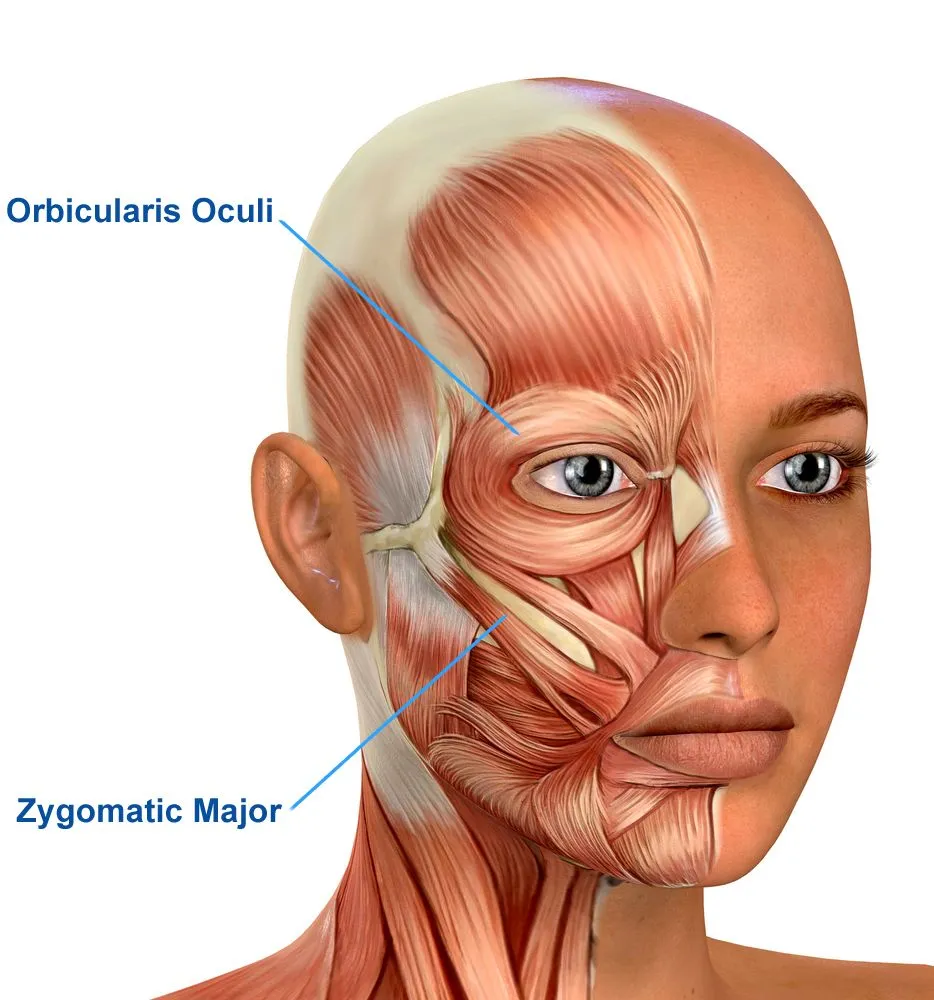
The zygomaticus major muscle angles your mouth upwards when you smile. Then there’s the orbicularis oculi, which causes the skin around your eyes to gather into folds that resemble crow’s feet.
Duchenne observed that the inner strands of the orbicularis oculi were activated only in smiles that resulted from spontaneously experienced enjoyment. The movements of these muscles were usually absent in the case of a forced smile, especially when the smile was small, like a grin.
But why, despite the voluntary effort, does a fake smile fail to activate the facial muscles that a genuine smile effortlessly engages? Well, it all comes down to the circuits that the brain uses to construct these smiles.
Neural Pathways Involved In Generating Forced And Genuine Smiles
Our brains have different neural pathways for involuntary, emotional and voluntary facial expressions.
A genuine smile has its roots in the subcortical nuclei, which include the basal ganglia and limbic system structures, like the amygdala and hypothalamus. The amygdala plays a crucial role in recognizing facial expressions and processing stimuli that evoke positive emotions. The emotions then translate into facial expressions regulated by the extrapyramidal motor system, which orchestrates automatic involuntary movements.
A fake smile, however, is initiated in the motor cortex and then routed through the pyramidal motor system responsible for voluntary movements. So, when aiming for that ideal smile in a photo, your brain follows your command, directing your facial muscles to form a smile. However, a genuine smile effortlessly appears when you feel joy that’s too genuine to conceal.
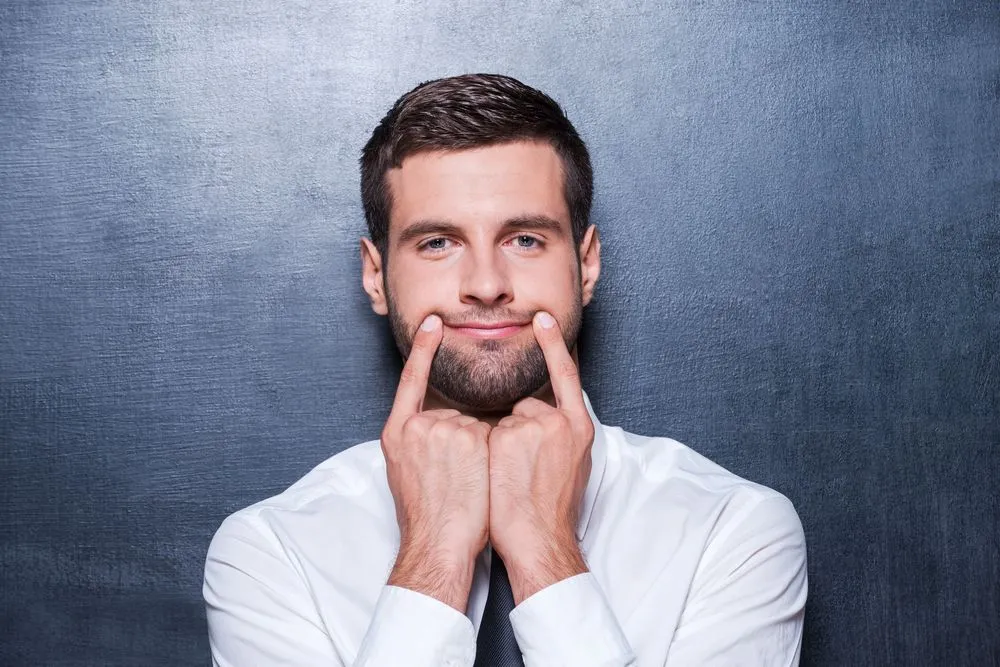
In a fake smile, the movement is simply voluntary. It is not generated in your brain’s emotional centers. Your motor system obeys your will and curves your lips upwards. However, in the case of genuine smiles, the role of positive emotions becomes very apparent.
Research on brain hemispheres and emotions reveals that positive feelings tend to light up the left side of the brain, while negative ones activate the right side. Likewise, EEG data shows that Duchenne smiles triggered by positive emotions have greater activity in the left-sided anterior temporal and parietal regions of the brain compared to other smiles.
So, with such a fundamental difference in the pathways that create these smiles, is it even possible to fake a genuine smile?
Is It Possible To Fake A Genuine Smile?
Absolutely! Actors ace feigning real smiles and so do people aiming to deceive. To master the art of faking an expression, you must master the art of controlling your facial muscles. Actors, for instance, consciously work on those subtle cues that make their laughter seem authentic, helping them connect on a believable level with the audience. The crow’s feet near the eyes are probably easiest to achieve if you make sure that you’re smiling broadly enough.
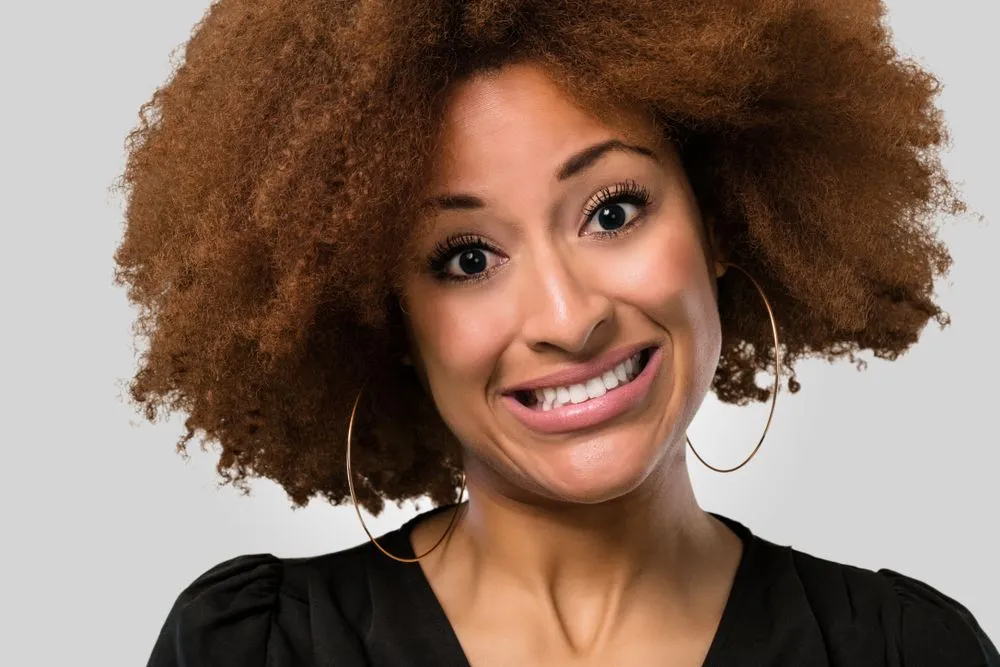
However, there are more nuanced hints that can be trickier to nail. For instance, when a person smiles genuinely, their eyebrows dip down ever so lightly, along with the skin between the eyelid and the eyebrow. These muscles around your eyes may not obey your will, but a truly happy feeling can activate them.
Now, not all of us are born actors. Even after hours of practice in front of the mirror, some of us still end up looking more awkward than before. Remember that episode of Friends where Chandler just couldn’t get his smile right in front of the camera, despite Monica’s relentless coaching? Well, it happens to the best of us.
How To Smile Naturally In Photos
Since a genuine smile starts in your emotions rather than in your mouth, the real trick is to feed it a true feeling instead of manually arranging your face. A few things genuinely help.

Give your brain a reason. Recall a genuinely funny memory, or picture someone you love standing just behind the camera. The best frame is usually mid-laugh rather than the held pose, so it helps to swap a joke or let the photographer crack you up right before the shutter clicks.
Smile with your eyes. Portrait photographer Peter Hurley popularized the “squinch”, where you gently lift and tighten your lower eyelids while letting the upper lids drop a touch. It imitates the orbicularis oculi engagement of a real Duchenne smile (the crow’s-feet crinkle), which is the very detail that reads as authentic.
Relax your jaw. Clamping your teeth shut loads tension into your neck and jaw that becomes obvious on camera. Keep your mouth loose and let your lips part slightly.
Do not over-rehearse. Drilling the same expression in the mirror tends to produce a stiff, rehearsed look and only feeds your self-consciousness. A handful of burst-mode shots that catch the candid moments between poses will usually beat one carefully constructed grin.
What Does It Mean If You Don’t Smile In Photos?
If you instinctively keep a straight face in pictures, you might worry it makes you look unhappy or standoffish. The research is more reassuring than that. A neutral expression carries no obvious emotional cue, so viewers stop reading it as a passing mood and instead treat it as a glimpse of your steady personality.

So what do strangers actually infer? In a 2015 study of 1,000 everyday face photographs, Sutherland and colleagues found that a smile is the single biggest cue people rely on when judging how approachable someone looks. Faces rated high in warmth-linked traits, such as extraversion and agreeableness, were almost always smiling, while neutral faces simply came across as more reserved rather than cold or sad.
A smile can even leak something true about you. A 2024 study in PNAS Nexus by Witkower and colleagues reported that people higher in warm, prosocial traits naturally produce stronger Duchenne (eye-crinkling) smiles, and that strangers judged personality slightly more accurately from smiling photos than from neutral ones. So not smiling does not broadcast a flaw; it simply hands the viewer fewer warmth cues to read, which is partly why the snap first impression from a no-smile photo can feel harder to pin down. Plenty of people skip the grin for the simplest reason of all: a forced “say cheese” just feels fake to them.
Practice Isn’t Enough!
Smiling is a complicated thing. It extends beyond the physical act of turning up the corners of your mouth and crinkling your eyes. Other factors like social cues, cultural norms and psychology are also involved.
One of the most common reasons that makes you awkward in front of the camera is an increased awareness of your appearance. The constant worry about posture, hair, makeup, and finding that perfect angle can pile on the stress, killing the spontaneity of a genuine smile. A smile looks best when it comes organically. Warm and welcoming smiles are accompanied by warm and welcoming body language, but when you’re under the spotlight, trying too hard to perform can make your body language appear stiff, tense, and far from welcoming.
Additionally, facial expressions are not universally understood in the same way. A smile can be perceived differently in different cultures. For example, a broad smile that seems welcoming to some can appear insincere, excessive, and untrustworthy to others.
However, we shouldn’t let this bother us too much. Our brains are wired to pick up on emotions, and a happy smile transcends the boundaries of culture and perception. So, if you want to genuinely smile for the camera, perhaps the simplest trick is to give your brain a genuine reason to feel happy. Maybe reminisce about a joyful moment or just think back to a hilarious meme you saw earlier in the day… that should do the trick!
References (click to expand)
- Ekman P., Davidson R. J., Friesen W. V. (1990). The Duchenne smile: emotional expression and brain physiology II. Journal of Personality and Social Psychology. PubMed
- Neuromodulation of emotion using functional electrical ....
- Fake Smile or Genuine Smile? | The Duchenne Smile.
- Lander, K., & Butcher, N. L. (2020, July 3). Recognizing Genuine From Posed Facial Expressions: Exploring the Role of Dynamic Information and Face Familiarity. Frontiers in Psychology. Frontiers Media SA.
- The Duchenne smile: emotional expression and brain ....
- Guillaume Duchenne de Boulogne (1806-1875). Biographical article. Wikipedia
- Sutherland et al. (2015). Personality judgments from everyday images of faces. Frontiers in Psychology, 6:1616. Frontiers Media SA.
- Witkower et al. (2024). Smile variation leaks personality and increases the accuracy of interpersonal judgments. PNAS Nexus, 3(9). Oxford University Press.
- How to Smile for Pictures: 8 Tips for Perfect Portraits. PetaPixel.