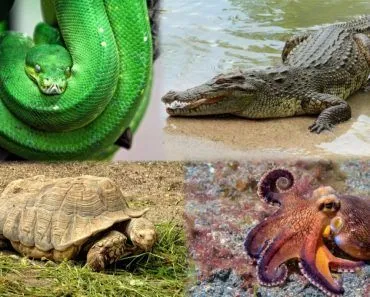
Theoretically, yes, the Targaryen dragons from Game of Thrones could just maybe have evolved here. A bat-winged reptile could fly, brew a flammable fuel like ethanol and ignite it with bombardier-beetle chemistry, and armor up with tortoise-tough scales. However, nature would have to pull off some ridiculous biological gymnastics to make your dreams of dragon riding a reality.
With House of the Dragon back for its third season, and the Targaryens once again riding their winged beasts into battle, it’s natural to wonder once again: could there have been dragons in real life? For the sake of imagination, let’s assume that dragons could evolve. How exactly would that happen?
For the sake of this experiment, let’s use George R. R. Martin’s description of the dragons as source material. They are described as magical, flying, reptilian creatures. Flying and reptilian seems straightforward, but what about the magical bit?
The most obvious and important magical quality is that dragons breathe fire. The other ability I’m going to consider is their apparent indestructibility. Dragons are depicted as being resistant to certain weapons, like arrows and swords.
Now, let’s see how that could hold up in real life.
Flying Lizards
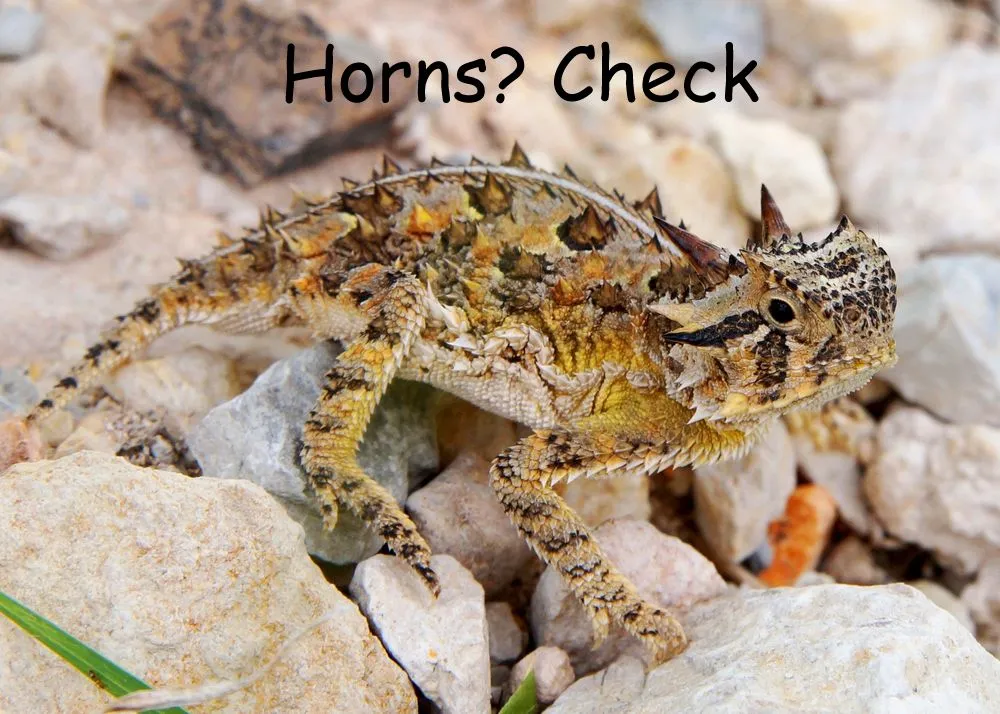
As mentioned, dragons are flying and reptilian. A reptile-like dragon would have to be scaly, bearing claws, pointy teeth and, of course, reptilian eyes. Additionally, dragons would have horns (as described in the book A Clash of Kings).
In our dragon-less world, one reptile does indeed have horns: the horned toad!
Next, flight.
When it comes to flight, there is an important question: would they have four legs and wings, or two legs and wings? Despite most dragons throughout history being depicted with four legs and two wings, the dragons in Martin’s book and the HBO shows have two wings and two legs.
George R. R. Martin was insistent on the creature having two legs and two wings, and he was right to do so!
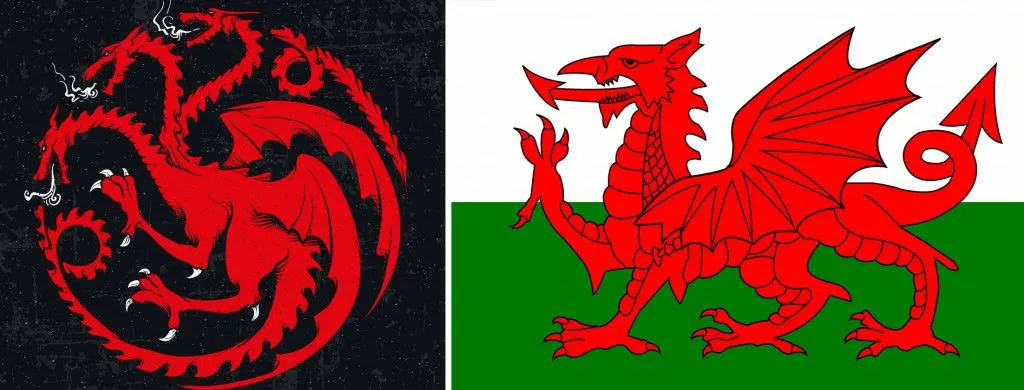
It’s oddly coincidental that dragons are described as having “bat-like” wings, as I imagine they would have evolved their wings much like bats.
Hypothetical dragon ancestors would have jumped from tree to tree or rock to rock. This would have eventually led to their forelimbs becoming webbed and then forming bat-like wings. This is far more likely than a dragon evolving an additional pair of limbs. This is why it doesn’t seem likely that humans will ever evolve wings.
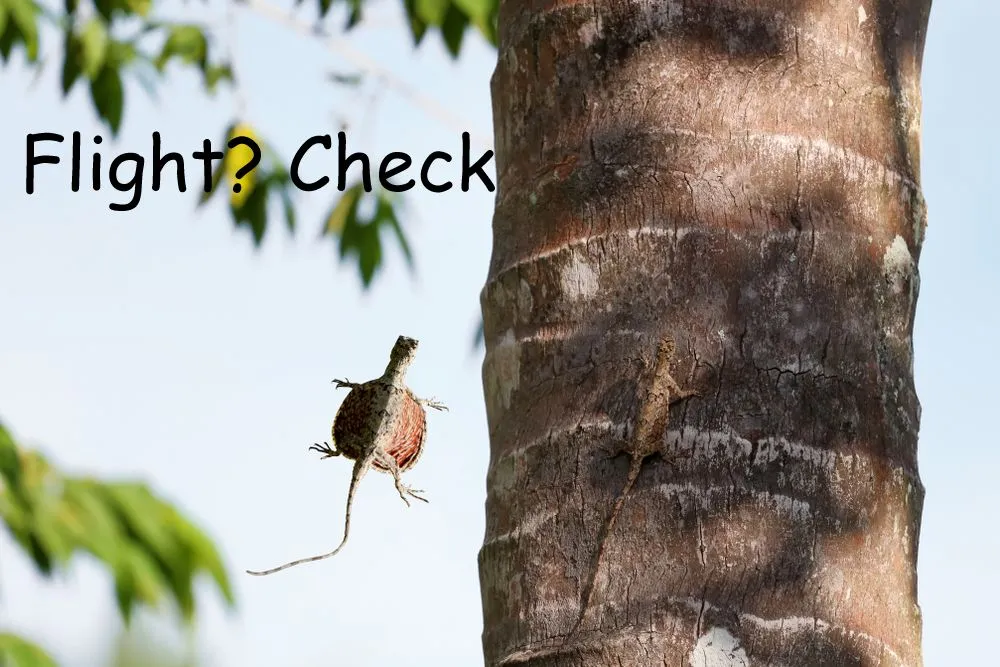
Additionally, our world already has flying lizards! Draco is a genus of gliding lizards that sail from tree to tree on a flap of skin. Their wings don’t work like a bat’s, though. Instead of skin stretched over elongated finger bones, a Draco unfurls a membrane (called a patagium) supported by greatly elongated ribs that fan out like a collapsible umbrella when it leaps. It is a completely independent solution to the same problem of getting airborne. There is one issue though; these lizards are quite small, while dragons are incredibly large. So… how large could a dragon get?
Dragons are known to be fairly large creatures, so while we couldn’t have dragons as large as mountains, we could certainly have fairly large creatures. As an example, let’s look at Quetzalcoatlus, the largest flying animal ever discovered. This pterosaur got airborne even with a wingspan of around 10 to 11 meters (33 to 36 feet), roughly the width of a small plane! That seems to be close to the upper limit for flapping flight, but it’s quite an impressive limit!
Fuel For The Fire
Breathing fire is no easy feat to accomplish, but it’s also not entirely impossible… theoretically! For dragons to breathe fire, they would need fuel and something to ignite it.
For starters, let’s think about the fuel options. It would be absurd to say that dragons could use gasoline as a fuel. There are no known biochemical processes that produce gasoline, but there are a lot of flammable substances, like methane and hydrogen sulphide, that the body naturally produces.
Personally, I think alcohol (ethanol, to be specific) would be a great fuel source. Being a liquid, more of it could be stored in a smaller space, allowing for more fuel to use for the production of fire. Moreover, gases are tougher to control and sprayed aerosols could be controlled more easily (think about the spray from a deodorant).
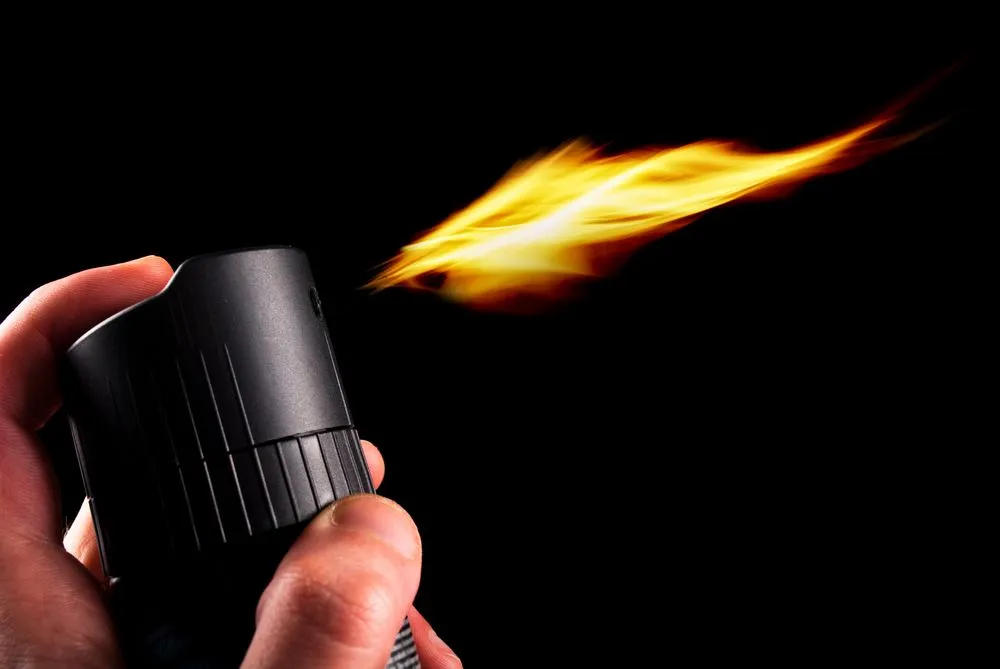
But where would the dragons get the alcohol from? That’s the interesting part. Dragons could generate this alcohol in two ways.
One is through fermentation, which could be done by symbiotic bacteria (the same way we make wine, but this would happen in their bodies). Another way is that dragons could have evolved a pathway of anaerobic respiration (breaking down sugars, in the absence of oxygen) like plants. In both cases, alcohol could be the byproduct, and dragons would use this to their advantage.
Igniting The Flame
There is a big problem though. Pure ethanol only auto-ignites at about 365°C (689°F). That said, when alcohol is sprayed as a fine aerosol with the right pressure and volume, it can catch fire at temperatures well below even 100°C (212°F)… but how would the dragon generate that kind of heat?
Let’s take a look at how this crazy beetle starts a fire.
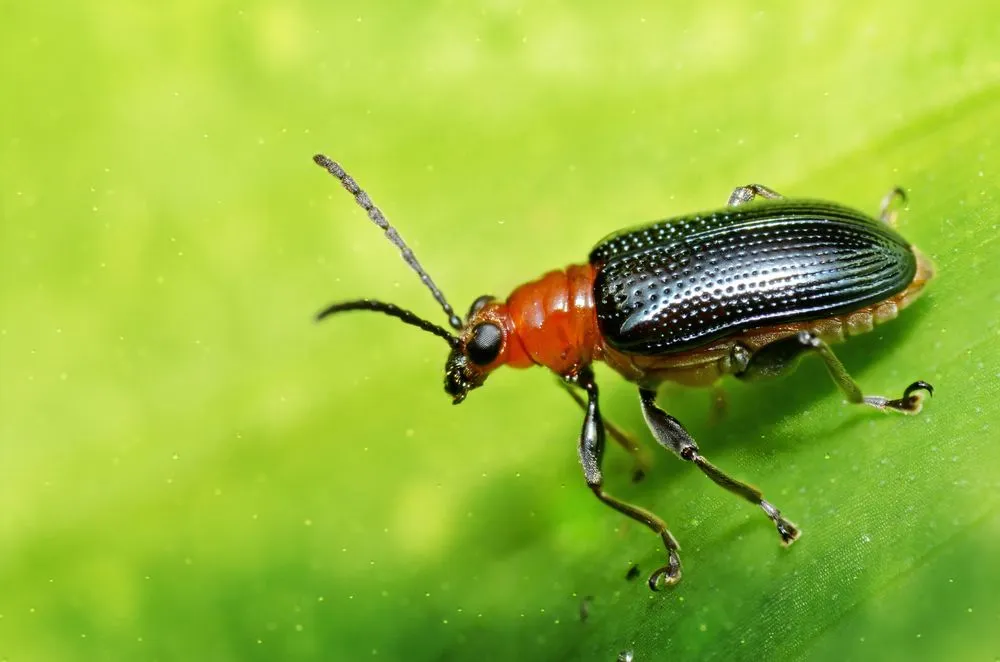
The bombardier beetle, when threatened, creates a small flash explosion from its backside!
The beetle does this by mixing two chemicals (hydrogen peroxide and hydroquinone) that it holds in separate reservoirs. When it is threatened, it squirts both into a reaction chamber lined with enzymes (catalase and peroxidase). These enzymes kick off a violent reaction that releases oxygen gas and enough heat to bring the brew to the boiling point of water, around 100°C (212°F), firing a scalding spray out of its rear end. Watch this crazy creature in action!
Our theoretical dragons could use a similar mechanism. They would only need small quantities of these substances, as they would only need to produce a small ignition spark, making it easier for dragons to start their first breath of fire.
The Armor Of Dragons
Dragons are also known for having scale-like armor. Although not completely invulnerable, it does provide protection from arrows and such, so what exactly would be the mechanics of that?
Well, the answer is quite simple: thicker scales. This paper estimates that humans could have bulletproof skin if it were around 5 cm (2 inches) thick. But what about the scales of a dragon? The skin of a human already has an outer layer of keratin, which is exactly what the scales of lizards are made from! It’s also the same tough material that forms the outer plates (the scutes) of a tortoise shell, layered over a base of fused bone. That composite of hard keratin over bone is far harder to punch through than bare skin. If dragons had scales built like a tortoise shell, they would be impervious to a lot of weaponry.
Additionally, the bigger the dragon got, the thicker its scales would grow and the more indestructible it would become!
What Does the Name "Targaryen" Actually Mean?
If you searched the word Targaryen and ended up here, you probably want the blunt answer first: the name has no literal dictionary meaning. George R. R. Martin invented it. When he wrote the early novels he sketched only a handful of Valyrian words, such as dracarys ("dragonfire"), and it was only later that HBO hired the language creator David J. Peterson to build High Valyrian into a full working language for the television series, developed from 2013 onward. The surname came first, so there is no official translation tucked inside it.
What the name does carry is a lineage. House Targaryen were dragonlords, one of the families that ruled the Valyrian Freehold. Before a cataclysm remembered as the Doom wiped out that empire, a young woman named Daenys the Dreamer foresaw the disaster, and her family fled west to the island of Dragonstone. A century later, Aegon the Conqueror used three dragons to weld the Seven Kingdoms of Westeros into a single realm. Their sigil is a three-headed red dragon on a black field, and their house words are "Fire and Blood." So when someone calls a character a Targaryen, they are really saying "dragon-riding royalty." The word itself is fiction, but its bond with dragons and fire is the whole point.
Were the Targaryens Based on a Real Dynasty?
No royal family has ever actually ridden dragons, so the Targaryens themselves are pure invention. The scaffolding around them, though, is lifted almost directly from real history. English history was the easiest medieval source for Martin to draw on, and the civil wars of his world borrow heavily from England's Wars of the Roses, the fifteenth-century power struggle between rival branches of the same royal family for the throne.

The Targaryens' most infamous habit, marrying brother to sister, also has real precedents. Several royal dynasties practiced close-kin marriage to keep a bloodline "pure," and the biology caught up with every one of them. The Ptolemies who ruled ancient Egypt adopted royal brother-sister marriage; Cleopatra VII was married to and ruled alongside two of her own brothers in turn. Europe's Habsburgs did much the same through cousin and uncle-niece unions, and generations of it produced the notorious "Habsburg jaw" (a jutting lower jaw that doctors call mandibular prognathism) along with a stack of other health problems. Their final Spanish king, Charles II, suffered from rickets and infertility and died without an heir, ending the line.
The lesson is textbook genetics. When a family keeps marrying within itself, harmful recessive traits that a wider gene pool would normally keep hidden begin to pair up and reveal themselves, a phenomenon biologists call inbreeding depression. Martin's dragon kings are fantasy, but their slow genetic unraveling is one of the most real things about them.
Conclusion
The existence of dragons has some very interesting connotations. If there was a creature that was practically indestructible and could breathe fire, wouldn’t it destroy all life around it? I’d like to think that the presence of dragons would create far more interesting creatures that evolve to counter dragons. Maybe we would have fireproof trees and animals that have figured out how to pierce a dragon’s armor.
The possibilities are endless! What other magical creatures could have existed? And beyond existing, we could actually explain their existence! With that in mind though, what crazy creatures in our world are we already ignoring today?
Think about the angler fish that lures in its prey with a light on its head, or the horned lizard that sprays blood from its eyes. If these crazy creatures exist, what else might be lurking just out of sight, somewhere between imagination, evolution and fantasy?
References (click to expand)
- Phyllostomid Bats - The University of Chicago Press. The University of Chicago Press
- Texas Horned Lizard (Phrynosoma cornutum). The Texas Parks & Wildlife Department
- Gutiérrez Velásquez, E. I., Coronado, C. J. R., Quintero Cartagena, J. G., Carvalho, J. A., Jr., Mendiburu, A. Z., Andrade, J. C., … Santos, J. C. (2017, December). Prediction of flammability limits for ethanol-air blends by the Kriging regression model and response surfaces. Fuel. Elsevier BV.
- Aneshansley, D. J., Eisner, T., Widom, J. M., & Widom, B. (1969, July 4). Biochemistry at 100°C: Explosive Secretory Discharge of Bombardier Beetles ( Brachinus ). Science. American Association for the Advancement of Science (AAAS).
- Turner, J. S. (1951, June). Respiration The Pasteur Effect in Plants. Annual Review of Plant Physiology. Annual Reviews.
- J Acton et al. P3_8 Life with Bulletproof Skin. Journal of Physics Special Topics, University of Leicester.
- Bragulla, H. H., & Homberger, D. G. (2009, April). Structure and functions of keratin proteins in simple, stratified, keratinized and cornified epithelia. Journal of Anatomy. Wiley.
- Sian Rutland, C., Cigler, P., & Kubale, V. (2019, March 13). Reptilian Skin and Its Special Histological Structures. Veterinary Anatomy and Physiology. IntechOpen.
- Zhang, W., Wu, C., Zhang, C., & Chen, Z. (2012). Microstructure and mechanical property of turtle shell. Theoretical and Applied Mechanics Letters. Elsevier BV.
- Xing Liang, & Boppart, S. A. (2010, April). Biomechanical Properties of In Vivo Human Skin From Dynamic Optical Coherence Elastography. IEEE Transactions on Biomedical Engineering. Institute of Electrical and Electronics Engineers (IEEE).
- Witton, M. P., & Habib, M. B. (2010, November 15). On the Size and Flight Diversity of Giant Pterosaurs, the Use of Birds as Pterosaur Analogues and Comments on Pterosaur Flightlessness. (V. Laudet, Ed.), PLoS ONE. Public Library of Science (PLoS).
- House Targaryen - Wikipedia
- High Valyrian - Wikipedia
- A Song of Ice and Fire - Wikipedia
- Ptolemaic dynasty - Wikipedia
- Charles II of Spain - Wikipedia