Table of Contents (click to expand)
No, the internet is not going to run out of IP addresses. IPv4 (the older 32-bit system, with about 4.3 billion possible addresses) ran out at the global IANA pool in February 2011, but its replacement IPv6 (128-bit, with 2128 ≈ 340 undecillion addresses) is more than enough for every device on Earth. As of 2026, about half of Google’s users already reach it over IPv6.
The world’s population is constantly increasing, and advancements in technology have made the wonders of the internet accessible to a large chunk of the planet’s population. However, with an ever-increasing number of devices being connected to the internet, we are bound to run into some technical issues.
However, before we tackle the title question and investigate whether we are running out of IP addresses, first we need to understand what an IP address is and what IP addressing means.
What Is An IP Address?
Imagine a situation where you have to send a letter to your friend. You will put your letter in an envelope, write your friend’s address on it, and then drop off the letter at the post office. The postman will retrieve the letter, check the address and deliver the letter to your friend’s house.
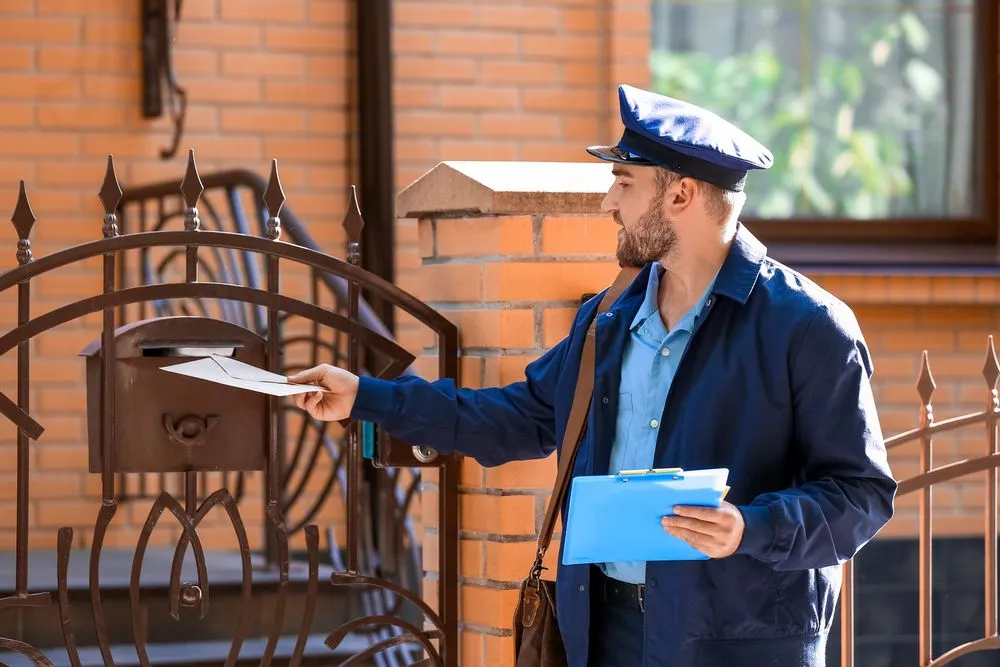
Similarly, if you have to send information to your friend across the internet, it is their IP address that allows the internet to locate their device and make sure that the information reaches them. We hardly ever directly use IP addresses, as they operate “under the hood”, but they’re a crucial feature of the internet that allows information to only reach intended receivers.
An IP address is a device’s address on the internet. IP stands for internet protocol, which is a set of rules ensuring that the data you send reaches the appropriate location. So, reverting to our original analogy, your IP address is akin to your house address that allows the postman (aka the internet) to drop off letters at your house.
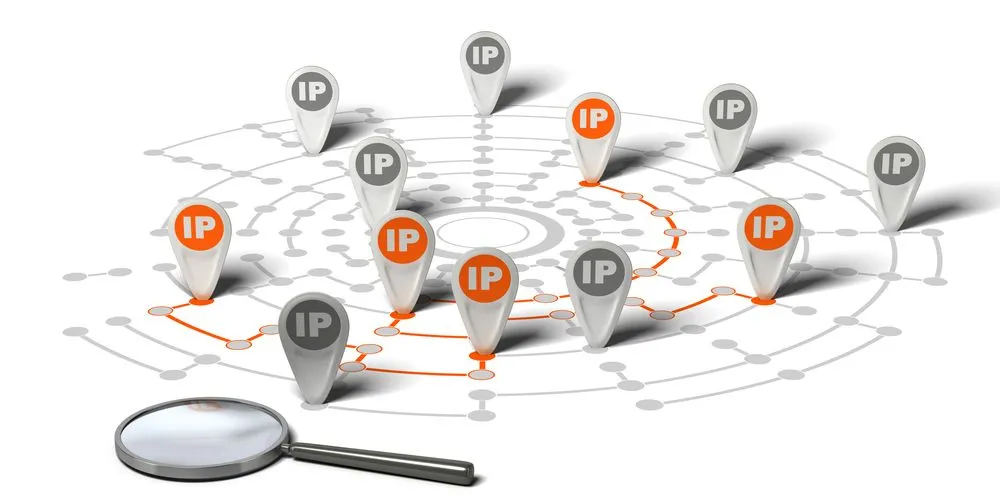
What Does “Running Out Of IP Addresses” Really Mean?
If multiple houses had the same address, the postman would be unable to determine which of them is the intended receiver of the letter, which could potentially lead to the letter ending up in the wrong hands. Similarly, if multiple devices connected to the internet have the same IP address, there could be leakage and the potential misuse of data. Therefore, each device connected to the internet has a unique IP address.
The difference between house addresses and IP addresses is that IP addresses follow a fixed numerical system, since they need to be in a format that can be understood by computers. Currently, most IP addresses consist of four numbers from 0 to 255, separated by three dots.
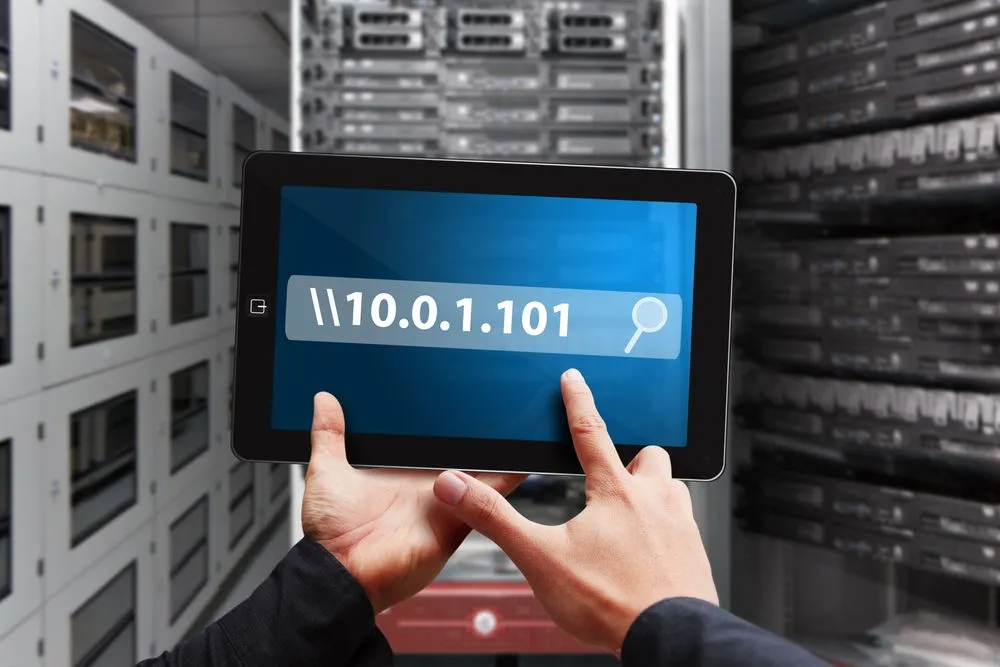
These four numbers from the decimal number system are actually converted to the binary number system, which can be understood by computers. Each of the numbers from 0 to 255 can be represented in the binary system by at most 8 bits ( a bit can be 0 or 1). Hence, our IP address is actually a 32-bit address separated into 4 sets of 8 bits each.
For example, the IP address 168.243.32.5 is equivalent to 10101000.11110011.00100000.00000101
Now, you might want to channelize your inner mathematician to determine how many IP addresses are possible, but there are many constraints, like restricted IP addresses, so I’ll save you the effort. There are around 4.3 billion unique IP addresses possible.
Now, with an ever-increasing global population crossing the 8-billion mark, and nearly universal access to technology, there are many devices connected to the internet, and it is impossible to assign unique addresses for all of them.
What Will Happen If We Run Out Of IP Addresses?
The fact of the matter is that we will not run out of IP addresses. Luckily for us, the Internet Engineering Task Force has been ahead of the curve and saw this shortage of IP addresses coming long ago. The IP addresses described earlier are known as IPv4 addresses. The IETF has developed a new system of addressing, also known as Internet Protocol version 6 (IPv6).
IPv6 uses 128-bit addresses, as compared to IPv4’s 32-bit addresses. IPv6 addresses consist of eight groups of four hexadecimal digits, each of which are separated by colons.
For example, 3001:0da8:75a3:0000:0000:8a2e:0370:7334.
This allows IPv6 to have 2128 addresses theoretically possible, which works out to roughly 340 undecillion (3.4 × 1038), or enough to give every grain of sand on Earth around 1022 of its own addresses. The internet is not going to run short again any time soon.
IPv6 deployment is well past the experimental stage now. As of mid-2026, Google's adoption statistics show that close to half of all users access Google over IPv6 (compared to just 8% in 2016), with India, Germany, the U.S., and France leading the rollout. The transition is happening; it is just happening slowly, because the two protocols are not natively compatible and operators usually run them in parallel ("dual stack") rather than swapping out IPv4 overnight.
Now, many service providers and organizations are moving towards IPv6, as it provides several additional security features. The only problem is that IPv6 is not compatible with existing IPv4 infrastructure, and a lot of work is being done to make this transition as smooth as possible.
In a nutshell, although we are running out of IPv4 addresses, a new addressing system (IPv6) is gradually being implemented to ensure the smooth functioning and onboarding of new devices onto the internet. In other words, we won’t run out of IP addresses anytime soon!