Table of Contents (click to expand)
There is no always-on public Internet on the Moon yet, but the pieces are falling into place. NASA's 2013 laser link beamed data to lunar orbit at 622 Mbps down and 20 Mbps up, in 2025 Nokia delivered the first cellular network to the lunar surface, and NASA's LunaNet relay program aims to give Artemis astronauts reliable, Internet-like connectivity.
Whenever you open up your laptop in a cafe, or scan the nearby area for WiFi spots with your smartphone, dozens of options seem available. There are plenty of locked connections and networks, but even so, it is possible to access the Internet almost anywhere these days.
From the heart of free WiFi metropolises to outlying country villages and towns, being connected to the rest of the world is essential. The most ambitious early attempts to blanket the planet, like Google's Project Loon balloons and Facebook's Aquila drones, were both shelved (in 2021 and 2018, respectively), but satellite constellations such as SpaceX's Starlink have since made it possible to get an Internet connection almost anywhere on the globe.

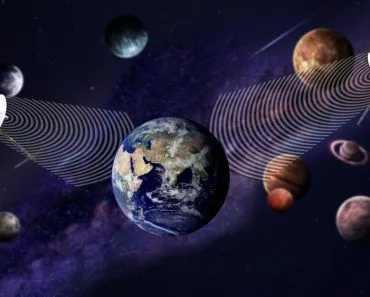
However, given that we’re in such an exciting period of space exploration and discovery, our Internet needs may soon stretch beyond our pale blue dot.
With that in mind, let’s start with Internet access on our closest celestial neighbor, the Moon.
The Ultimate Long-Distance Service Provider
The real value of the Internet is its ability to facilitate the transfer of data between hosts and computers, but that’s not the only way to share information across long distances. For data transfer related to space exploration, radio frequency (RF) data transmission has traditionally been used, as it’s reliable and simple, albeit slow.
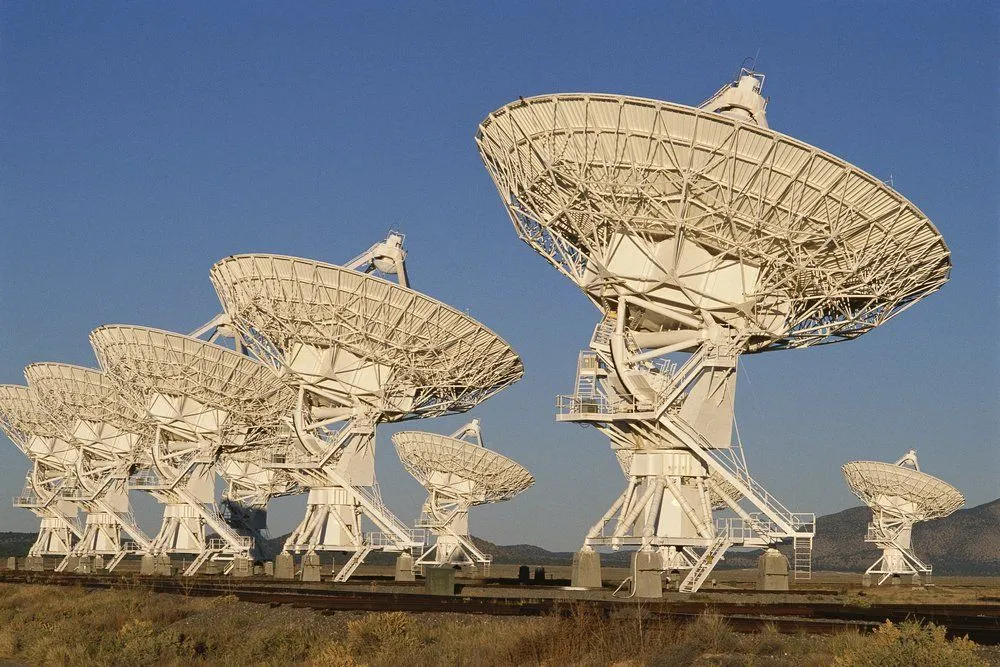
However, the need for rapid information transfer is increasingly important, and with more satellites and long-distance space travel in the future, we’re going to need something much faster. High-resolution images and video take a lot of time to transfer with radio-frequency transmission, and in a society that craves speed and instant gratification, that simply won’t do.
Researchers from MIT Lincoln Laboratory and NASA teamed up to solve this problem, and after years of trial and error, developed a laser-based telescope system that can potentially deliver lightning-fast Internet to moon-bound astronauts, those on the International Space Station, and any other receivers out there in the vastness of space. They tested it in 2013 as the Lunar Laser Communication Demonstration (LLCD), with the receiving terminal flying aboard NASA's LADEE spacecraft in orbit around the Moon.
A set of four telescopes at the ground terminal in White Sands, New Mexico, beam coded pulses of infrared light through the atmosphere, where they are captured by a telescope mounted on a satellite orbiting the Moon. The atmosphere interferes with the beam slightly, which is why four simultaneous beams are used, increasing the chances of the connection remaining intact. The telescope on the satellite focuses the infrared beams onto an optical fiber, where a photo detector interprets the flashes of light into electrical pulses, which are then turned into hard data.

Now, crossing the roughly 385,000 kilometers (239,000 mi) from the Earth to the Moon results in serious challenges, and researchers admit that the signal can be spotty, due to interference from the atmosphere (which bends the light) and the constant recalculations needed to keep the telescopes locked onto the orbiting satellite. Even so, the download and upload speeds from the Earth to the Moon are impressive, comfortably beating a typical home broadband connection.
A 20 Mbps upload speed is striking, given the huge distance that the information has to cross, but the download transfer rate is even faster, an incredible 622 Mbps. That made LLCD roughly six times faster than the best radio system ever flown to the Moon, and NASA notes that optical (laser) links can carry 10 to 100 times more data than radio for the same mass and power.
Why Does Internet On The Moon Really Matter?
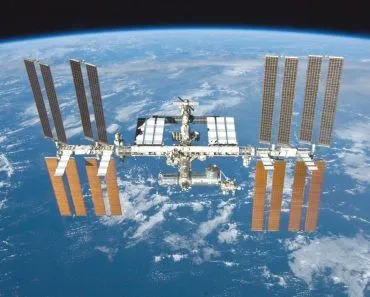
Well, given that most people will never make it to the Moon, or even near a spaceship, it might be hard to think of the practical uses of such a powerful Internet delivery system, but think of all the people who spend months or even years in space! Crew members on the International Space Station will be able to use this technology to watch the latest episodes of their Netflix obsessions. They need to get their fix on too, right?

However, from a more functional and scientific perspective, being able to provide rapid Internet connectivity in outer space means transmitting information back to Earth at a much more functional and efficient rate. We can peer into the depths of space and share what we see with those back on Earth, we can track weather patterns and global imaging much more effectively, and obviously, once we set up a colony on the Moon, we’ll be able to share Snapchat stories with our Earth-bound acquaintances!
While there are certainly limitations to the technology, improvements are inevitable. Reaching the Moon and the ISS was a great accomplishment, but as we go deeper into space, we’ll need to continue expanding the reach of the Internet. Who knows, by the time humans set foot on Mars, they may be able to download a copy of “The Martian” from the red planet itself!
So, Is There Internet On The Moon Right Now?
Not in the way you have it at home, at least not yet. There is no public network you can log into from the lunar surface, and every signal still has to be scheduled through a handful of giant antennas back on Earth. But the gap is closing fast, and the last few years have been busy ones.
The biggest headline came in 2025, when Nokia’s Bell Labs put the first ever cellular network on the Moon. Riding aboard Intuitive Machines’ Athena lander on the IM-2 mission, a shoebox-sized “network in a box” running the same 4G/LTE technology in your phone touched down near the lunar south pole in March 2025. It powered on and traded commands with mission control in California, although the lander tipped over on landing, which left its solar panels poorly angled. With very little power available, the team never managed to place that first lunar phone call before the hardware went cold. Even so, it proved that ordinary cellular gear can survive the trip and switch on, which is a big deal if future Moon bases want their rovers and astronauts chatting over plain old 4G (with 5G to follow).
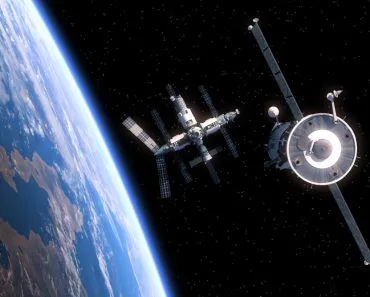
NASA, meanwhile, is building the backbone that would tie all of this together. Its plan, called LunaNet, is essentially a set of shared rules, a bit like the Internet’s own protocols, so that any spacecraft, rover, or astronaut can swap data, navigation, and timing signals no matter who built them. To make it real, NASA is standing up the Lunar Communications Relay and Navigation Systems (LCRNS), a fleet of relay satellites in lunar orbit. Intuitive Machines won the first commercial contract to provide that relay service, and the early satellites are slated to support the Artemis crewed missions later this decade. Crucially, relays parked in the right orbits can reach the far side and the permanently shadowed south-pole craters, places that never have a clear line of sight to Earth.
The speed problem is being tackled too. In 2023, NASA’s Laser Communications Relay Demonstration (LCRD) teamed up with a laser terminal called ILLUMA-T on the International Space Station and pushed data at 1.2 Gbps, almost twice the old LLCD record. Optical links like these are exactly what a future lunar Internet will lean on. So while you still can’t stream Netflix from a crater today, the laser links, the cell towers, and the relay satellites that would make a true lunar Internet possible are all now being tested for real.
References (click to expand)
- Lunar Laser Communications Demonstration (LLCD). NASA
- NASA's First Two-way End-to-End Laser Communications Relay System (LCRD and ILLUMA-T). NASA
- LunaNet: Empowering Artemis with Communications and Navigation Interoperability. NASA
- Lunar Communications Relay and Navigation Systems (LCRNS). NASA
- Nokia's 4G Network Will Be a Game-Changer for Lunar Missions. IEEE Spectrum
- You Can Now Get High-Speed Internet on the Moon. Smithsonian
- Wireless broadband can reach the moon, and maybe Mars. Wired