Table of Contents (click to expand)
Duck Hunt detects your aim with a clever two-frame trick. The moment you pull the trigger on the NES Zapper, the game blacks out the entire screen for one frame to give the gun’s photodiode a "no light" reference. On the very next frame, the screen blacks out everything except a small white square placed exactly where the duck is. If the photodiode sees the light go from black to white, you scored a hit; if not, you missed. The trick only works on CRT TVs, which is why Duck Hunt does not work on modern LCD, OLED, or plasma sets.
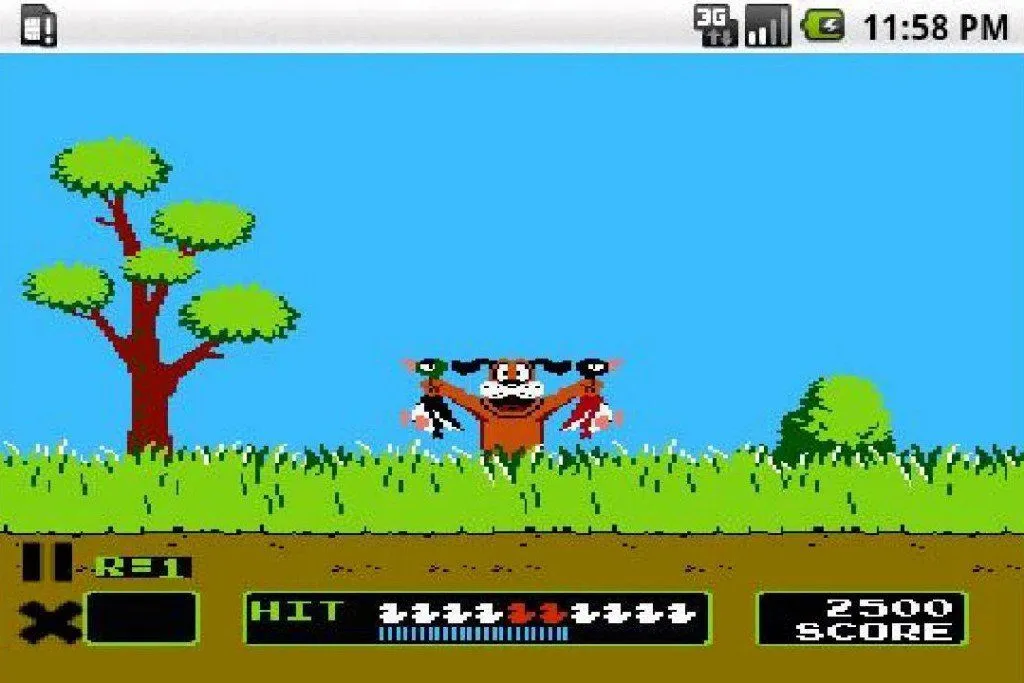
Duck Hunt is a popular 2D shooter video game that was and still is extremely popular among millennials. It was a basic shooter video game that allowed players to point the gun at the TV screen and shoot objects on the game screen.
In this article, we will discuss how the video game figured out where exactly the player was pointing the gun.
What Is Duck Hunt?
Duck Hunt is a light gun shooter video game developed by Nintendo for the NES video game console. The most notable thing about the game is that it can only be played with the NES Zapper gun. Also known more simply as the light gun, it’s used to shoot ducks in the game.
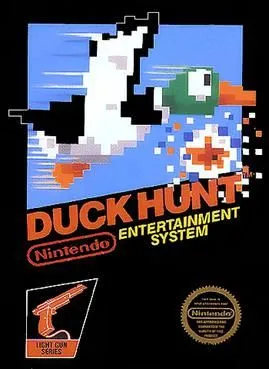
The game is straightforward. When it starts, a duck appears from the bushes and flies (within the boundary of the frame) for 3-4 seconds before going out of frame. You must point the light gun at the duck and shoot it before it disappears. The more ducks you shoot, the higher your score. Easy!
What makes the game interesting is that, unlike a controller, which feeds information to the Nintendo device ‘directly’ (i.e., you don’t need to point the controller in a certain direction for it to work), in the case of this game, you have to point the gun at the correct spot on the TV screen to shoot the duck.
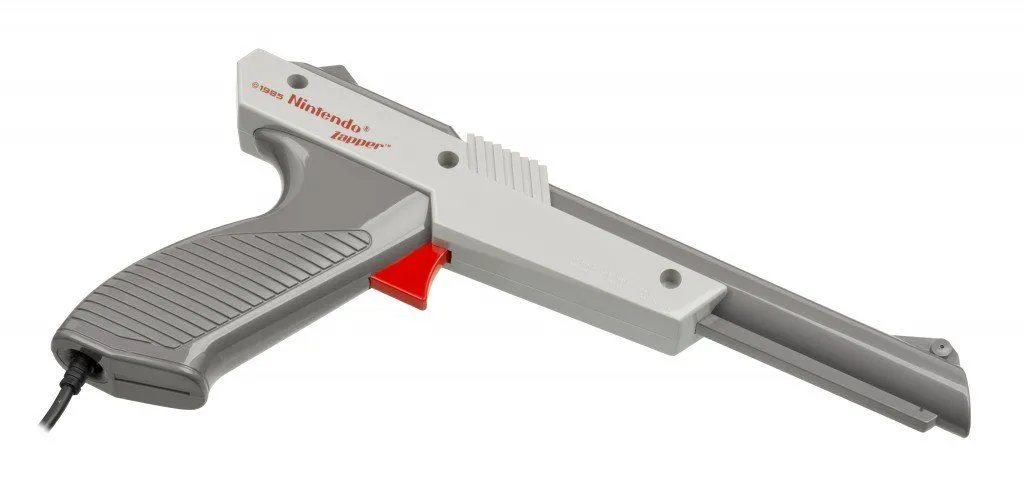
There must be a nifty piece of engineering involved that helps the game determine if the gun was (or wasn’t) pointed at the right spot when the trigger was pulled.
Now, let’s take a look at how the game actually works.
How Duck Hunt Works
The original version of Duck Hunt, which was launched in Japan on the Famicom in April 1984 (and bundled with the NES in North America in October 1985), was designed in such a way that it would only work on CRT (cathode ray tube) screens, not on modern LCD, OLED, or plasma TVs (modern displays buffer the image and introduce latency, breaking the strict two-frame timing the Zapper relies on). (Source) The reason behind that is related to how CRT televisions and the game work together.
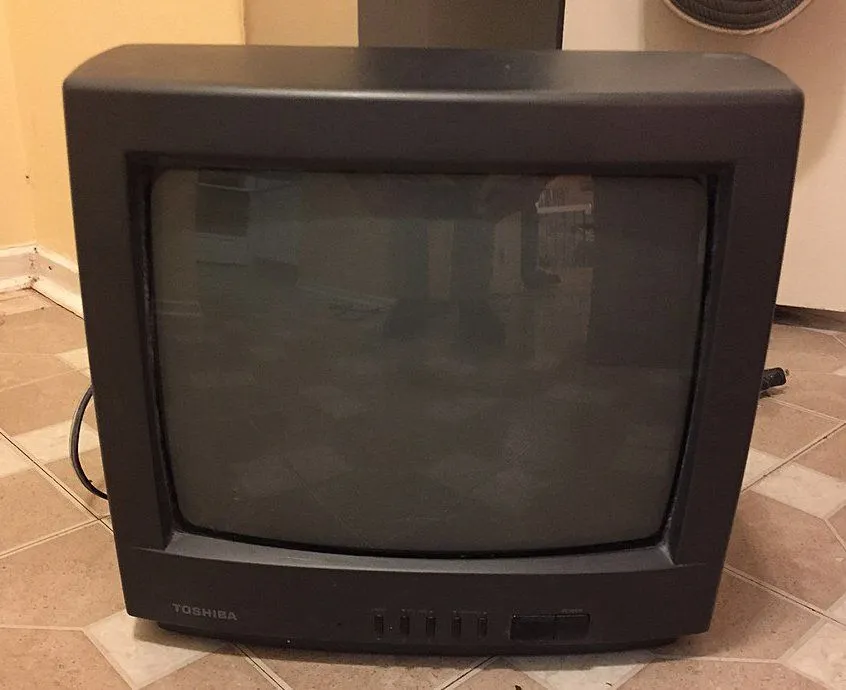
A CRT screen has pixels that glow when electrons hit it. The cathode ray tube sprays a stream of electrons across these pixels, which makes the TV screen glow. This spray sweeps progressively from top to bottom in a left-to-right fashion. This happens so fast (around 60 times per second on NTSC TVs in North America, and 50 times per second on PAL TVs in Europe) that our eyes simply see a normal-looking image on the screen, thanks to the persistence of vision humans are blessed with.
Fun fact: if you have a very high-speed camera, you can actually point it at a CRT screen and observe the pixels being lit up in a left-to-right fashion, line by line. That’s why CRT computer screens look so different in pictures than in real life. We have even explained that strange phenomenon in this article: Why Do Computer Screens Look Different In Pictures Than In Real Life?)
How Does The Game Know Exactly Where You Pointed The Gun?
Coming back to Duck Hunt, the light gun used in the game consists of a trigger and a light sensor (a photodiode). When you pull the trigger, the entire screen goes black for one frame. The light sensor detects that blackness and records it as a reference point, i.e., it understands that “okay, this is black.” In the next frame, only the area around the duck (as in, the duck’s position on the TV screen) is lit up as a white square, while the rest of the screen remains black.
Take a look at the following image to visualize the whole process better:
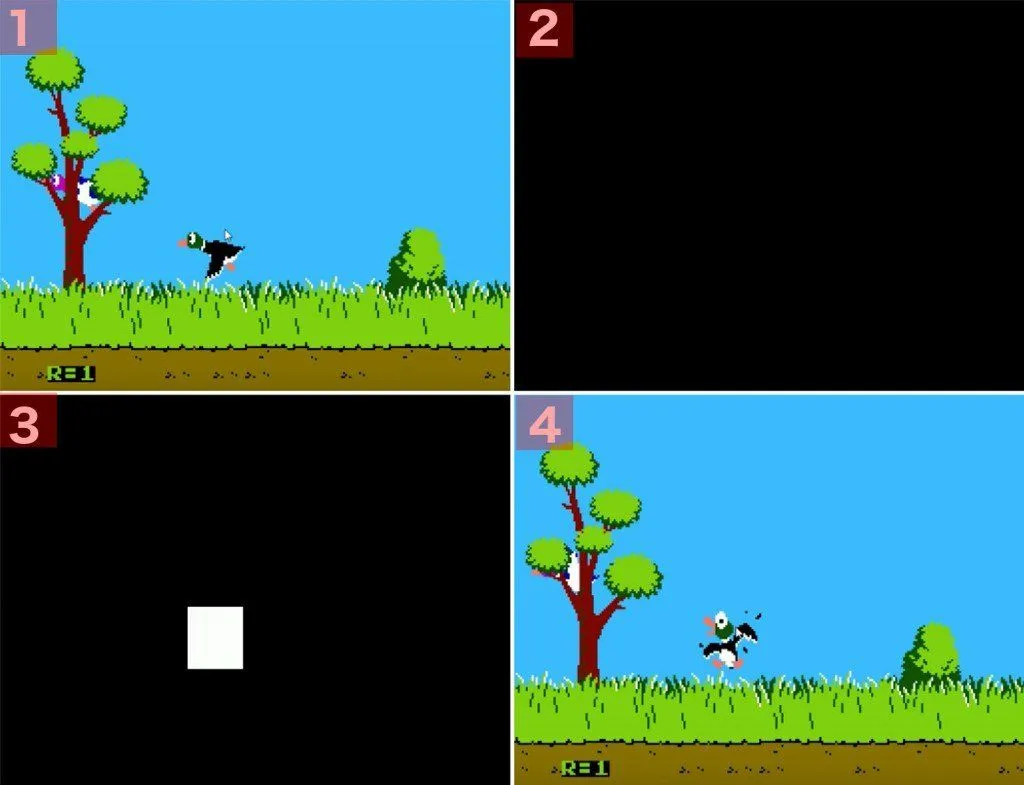
In that split second, when there’s a small white box around the duck, if the gun detects a shift from black to white (i.e., it saw a white pixel instead of the all-black screen from the previous frame), the game knows that you aimed at the right spot on the screen. Voila! The game would then report that you made a successful shot!
On the other hand, if the gun’s photosensor didn’t detect a shift from black to white, the game would know that you didn’t aim correctly at the target, meaning that you missed the shot.
When the game has more than one duck on screen at the same time (the two-duck rounds), the trick is repeated: each duck flashes in its own consecutive frame, and the gun reports a hit on whichever duck was visible the moment it saw white. In a nutshell, the small light sensor in the gun does all the trickery and is a crucial component of the gadgetry that made Duck Hunt a truly remarkable game. It might look basic compared to games today, but plenty of millennials will argue that it is a masterpiece in its own right!
Last Updated By: Ashish Tiwari