Table of Contents (click to expand)
The technology used in cricket centers on the Decision Review System (DRS), which pairs Hawk-Eye ball-tracking for LBW calls with UltraEdge sound-based edge detection (and, historically, Hot Spot infrared imaging). Off the field, the Duckworth-Lewis-Stern (DLS) method resets targets in rain-hit matches. Together they have sharply cut umpiring errors since 2001.
“Cricket is basically baseball on valium.” – Robin Williams
Cricket is one of the most widely followed sports in the world. With an audience base approaching the billion mark, the game has gained some serious fandom over the years. Since the first official cricket match played on March 15, 1877 between England and Australia at the Melbourne Cricket Ground, The Gentlemen’s Game has evolved a lot and technology has played a prime role in this growth.
Every cricket World Cup attracts huge masses from around the world to witness the sporting extravaganza, and each edition leans on technology more than the last. This article discusses some of the most significant changes that science and technology have brought to the game of bat and ball, most of them now bundled together under the Decision Review System (DRS).
Ultra-Edge Technology
UltraEdge (often written ‘Ultra-Edge’) is the edge-detection part of the review system, used in cricket to detect whether the ball made any contact with the bat or not. It is the modern, real-time successor to the old Snickometer (invented by British computer scientist Allan Plaskett in the 1990s) and was developed by Hawk-Eye Innovations. It has been approved for use in international cricket as per the International Cricket Council’s (ICC) guidelines, after being independently tested by engineers at the Massachusetts Institute of Technology (MIT) in Boston.
The principle behind this complex-looking system is pretty simple: record what you want and eliminate the rest. When the cricket ball hits or even touches any part of the bat or the batsman’s body, it produces sound in a particular frequency range (a characteristic of sound that can be measured, much like the resonance of a struck object). A sensitive stump microphone records the audio, and software amplifies that specific frequency while filtering out the rest, displaying it as a waveform on an oscilloscope-style trace.
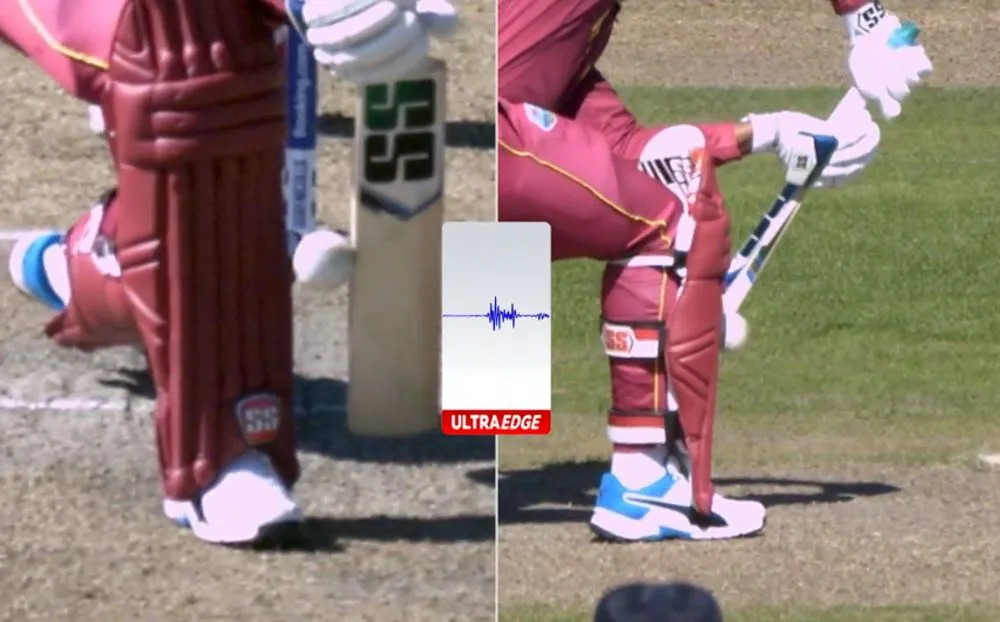
Apart from a sensitive mic, a good slow-motion camera is required that can capture the motion of the ball as it travels across the batsman. The recorded video is then combined with the time-graphs from ultra-edge and is used for reviewing decisions. Different curves represent different sounds on the graph, which will usually appear on your television screen. For instance, a sharp variation means the ball has hit the bat, while a sharp peak implies that the bat has hit the pad.
Ball-Tracking Technology
The Leg-before wicket or the LBW has been one of the most controversial ways of getting “out” in the history of cricket. The rule goes like this: if the batsman blocks the path of a ball using any part of his legs (including the pads and the shoes), that would have hit the stumps (or bails) if its path was not obstructed, then the batsman is called out. Who decides whether the ball could have hit the stumps or not? The umpire (or “referee”).
Though umpires are highly skilled professionals, their human eyes are subject to error, and they can and have surely made mistakes in predicting the path of the ball, eventually resulting in an incorrect decision. This has caused umpires to fall under heavy scrutiny from the media and fans, who put immense pressure on them.
Cometh Trouble Enters Hawkeye
To help in the decision-making process, Hawk-Eye technology was introduced in 2001 (first used during an England v Pakistan Test at Lord’s) and has changed the game immensely. This technique uses six high-speed cameras placed at specific locations around the cricket ground, tracking every movement of the ball from the bowler’s hand to the point where it becomes dead in a synchronized manner. The images from the cameras are then fed into a computer that triangulates them into a 3-D model. The system also extrapolates the trajectory data of the ball, determining the extent of its lateral movement and bounce, thereby predicting its future path.
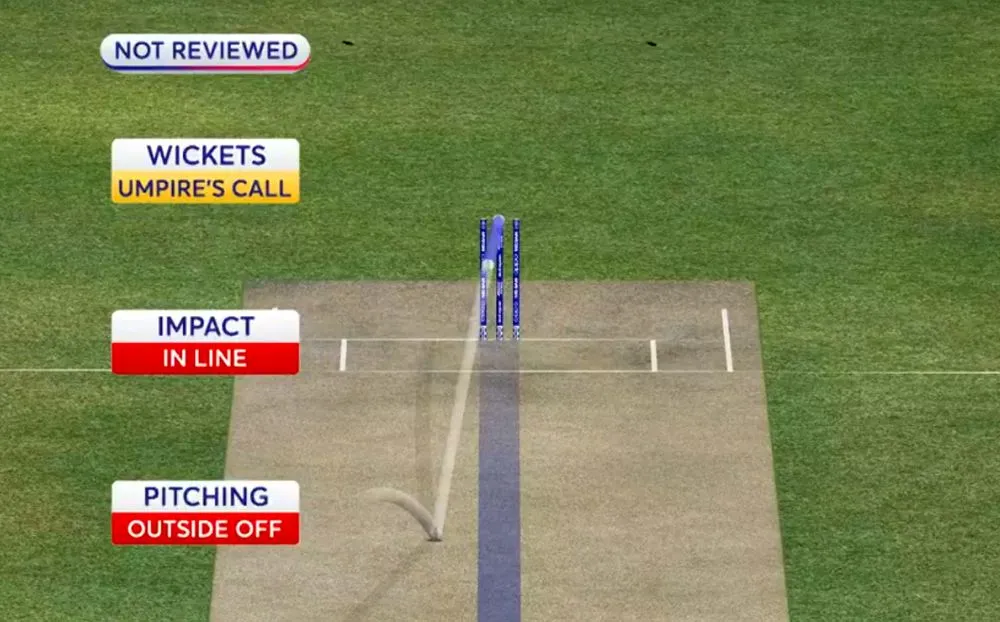
Hawk-Eye is extremely accurate at tracing the ball’s actual path (to within a few millimeters), but predicting where the ball would have gone for an LBW is a tougher ask, with a larger margin of error. That uncertainty is exactly why the ICC built an “umpire’s call” buffer into the rules: if only a small part of the ball is shown clipping the stumps, the on-field umpire’s original decision stands. Even so, ball-tracking has undoubtedly made an enormous impact on how the game is played and reviewed.
The Duckworth-Lewis-Stern (DLS) Method
This method has perhaps been the most talked about and most controversial scientific change brought about in the game of cricket. Rain-outs are a spoil-sport… quite literally. As a result, matches have been called off due to the forces of nature on several occasions. However, there are times when the showers are periodic and short, resulting in the loss of only a few overs. As such, the game can continue, but with different rules. It is here that the method comes in. Devised by English statisticians Frank Duckworth and Tony Lewis and adopted by the ICC in 1999, it was originally the Duckworth-Lewis (D/L) method. After Australian statistician Steven Stern refined it for modern, higher scoring rates, it was renamed the Duckworth-Lewis-Stern (DLS) method in November 2014, and that is the version used at international level today.
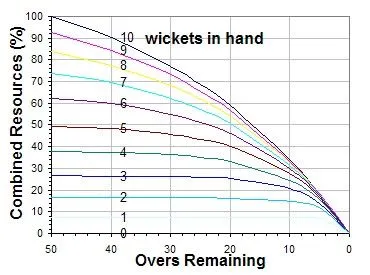
Unlike the other tech-oriented elements explained in this article, DLS is more of a mathematical theory or calculation formula. When time and therefore overs are lost during the innings of one of the teams playing the match, setting an adjusted target for the other team is not as simple as reducing the run target proportionally to the loss in overs. This is because a group with 25 overs to bat and ten wickets in hand can play more aggressively than if they had a full 50 overs and ten wickets, for example, and can consequently score at a higher run rate.
The Calculation Formula
Coming to what most cricket fans often look for, the formula. The essence of the technique lies in the resources that each team uses to score runs. These are wickets in hand and the overs remaining. The DLS method converts the two into a combined percentage score, which is stored in a table or computer. The new target for the team batting second is adjusted in proportion to the initial target using the formula:

For example, if a rain delay means that Team 2 has only 80% of its resources available, and Team 1 scored 300 with 100% of its resources available, then 300 × 80% / 100% = 240 will be Team 2’s target, and the score to tie will be 239. The actual resource values used in the Professional Edition are not publicly available, so a computer that has this software loaded must be used.
Hot Spot
Another piece of technology used for determining the fate of the batsman, Hot Spot is an infrared imaging system that makes use of two or more infra-red cameras, placed on opposite sides of the ground, to determine if the batsman has nicked the ball or not. The basic principle used here is thermal imaging. When the bat or ball makes contact with each other or with the batsman’s pad, the friction briefly heats up that spot.
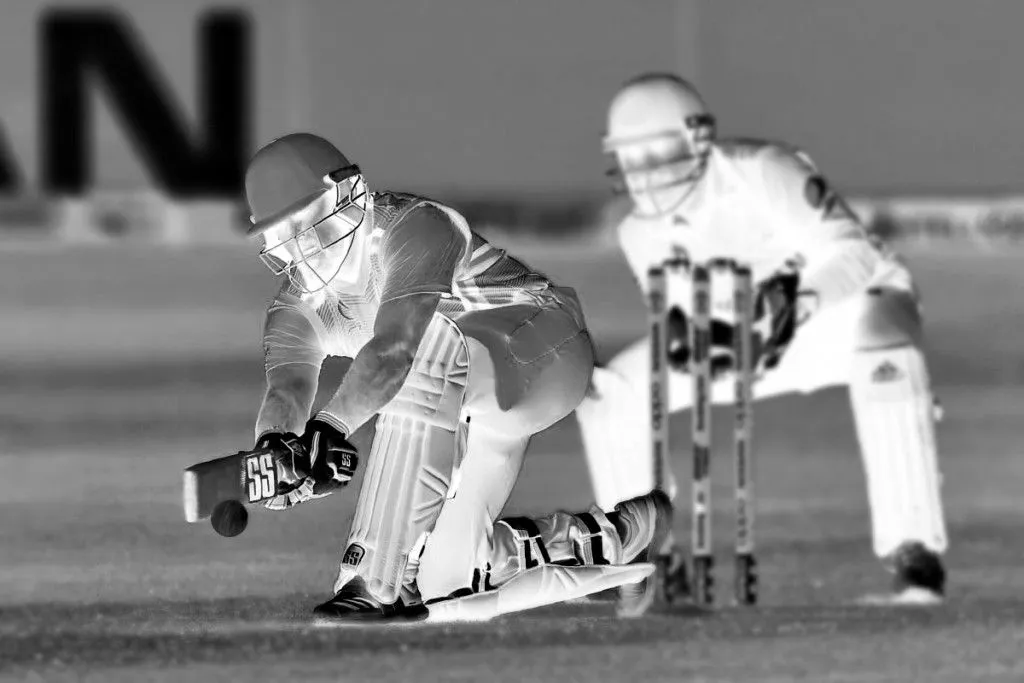
Any suspected edge or bat/pad event can be verified by examining the infrared image, which usually shows a bright spot at the contact point where the friction from the ball has briefly raised the local temperature. When referrals to the off-field third umpire are permitted, this footage feeds into the Decision Review System to enhance the on-field umpire’s accuracy. In practice, though, Hot Spot has been largely phased out at the top level: its high cost and intermittent reliability problems mean broadcasters now lean on UltraEdge and ball-tracking instead, and it was absent from several recent international series.
References (click to expand)
- Ball-Tracking Technology - cdn2.hubspot.net
- Ultra-edge ready for Test use | ESPNcricinfo. ESPN cricinfo
- “Improvement in Hot Spot Technology in Cricket” Technique for the Best - www.ijser.org
- Duckworth Lewis Stern. International Cricket Council (ICC).
- Duckworth-Lewis-Stern method. Wikipedia.
- Hawk-Eye. Wikipedia.
- Decision Review System. Wikipedia.
- Hot Spot (cricket). Wikipedia.