Table of Contents (click to expand)
Active noise-canceling (ANC) headphones use tiny built-in microphones to constantly sample the ambient noise around your ears. A small processor then generates a sound wave that is the mirror image of that noise — 180 degrees out of phase with it — and plays it through the speaker. The two waves collide and cancel each other out through destructive interference, so very little of the outside noise reaches your eardrum. Because all of this requires real-time number-crunching, ANC headphones run on a battery, work best on steady low-frequency sounds (like an aircraft engine or AC hum), and are usually paired with foam-padded cups that physically block higher-pitched noise.
While traveling on a bus, we often tend to pop our earphones in to listen to some good music and pass the time. Unfortunately, it often happens that the ambient noise is so high that instead of listening to the music, we sometimes hear a strange medley of patchy music and irritating noise. At that moment, our eyes enviously wander to someone who can’t seem to stop bobbing their heads, completely lost in their music. In that instant, we know what advantage they have – noise-canceling headphones! We know the feeling, and it’s alright to be a little jealous.
However, all envy aside, have you ever wondered what’s so special about those particular headphones that make them ‘noise-canceling’?
Noise-Canceling Headphones
Noise-canceling headphones are a special type of headphones that minimize unwanted ambient sounds entering your ear through active noise control. Their obvious advantage lies in their ability to reduce unwanted noise and enhance the overall listening experience.

Listening to music with noise-canceling headphones is a wonderful experience, as they enable you to listen to music without having to increase the volume to uncomfortably high levels (which can negatively affect your ears and hearing). These types of headphones are also used by aircraft crew to listen to vital announcements and other pieces of information with much more clarity in the noise surrounding an aircraft.
How Do Noise-canceling Headphones Work?
While listening to music on a pair of noise-canceling headphones, you can immediately sense how awesome they are, as they almost completely block out any unnecessary sound waves from entering your ears. However, if they’re so effective, why can’t regular headphones be noise-canceling in nature?
Passive Noise-canceling
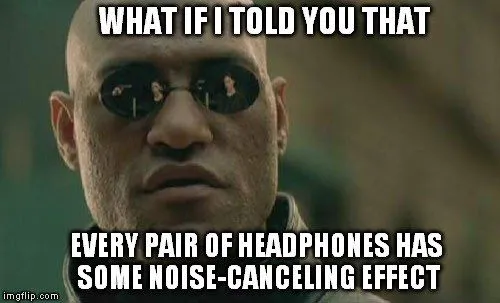
Almost every pair of headphones provides some protection against unwanted noise due to the material itself. The basic design and material block out certain sound waves, especially high-pitched ones (shrill, high-frequency sounds). That being said, the best passive noise-canceling headphones are more specially designed; these headphones have multiple layers of high-density foam (or some other noise-absorbing material) packed inside them. They reduce the noise by 15-20 decibels, but on the downside, they are slightly heavier than regular headphones.
Although these headphones do improve your listening experience, when you are inside an airplane cockpit listening to important pieces of information that could affect the lives of hundreds of people, you need something even stronger.
Active Noise-canceling
In addition to everything that passive noise-canceling headphones do, active noise-canceling headphones take noise reduction to a different level altogether. Their design is such that not only do they have all the noise-absorbing materials packed inside them, but they also employ a novel technique to compensate for the noise coming in.
They Make Their Own Sound Waves!
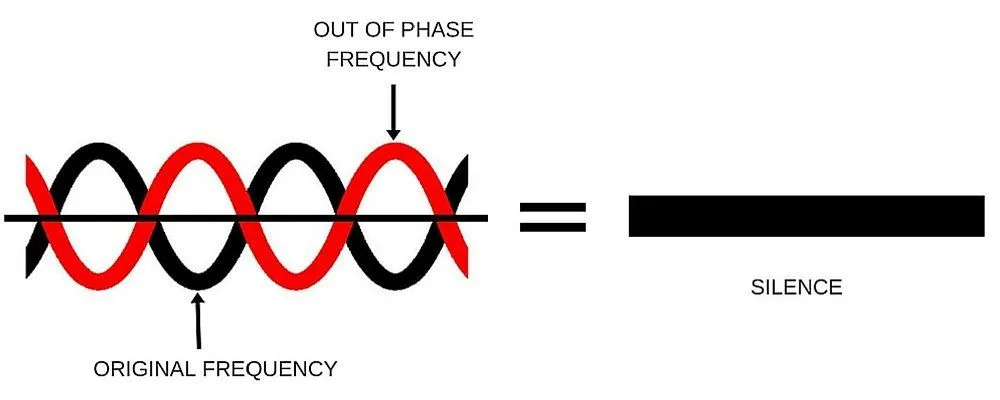
The moment an ambient sound wave (noise from the surroundings) hits this type of noise-canceling headphones, the headphones create their own sound wave that is very similar to the ambient sound waves; the only difference is that the waves the headphones make are 180 degrees out of phase from the ambient sound waves.
In other words, they make sound waves so that the new crests superimpose on the trough of the ambient waves, and the new troughs superimpose on the ambient crests. Check out the figure below for more clarity:
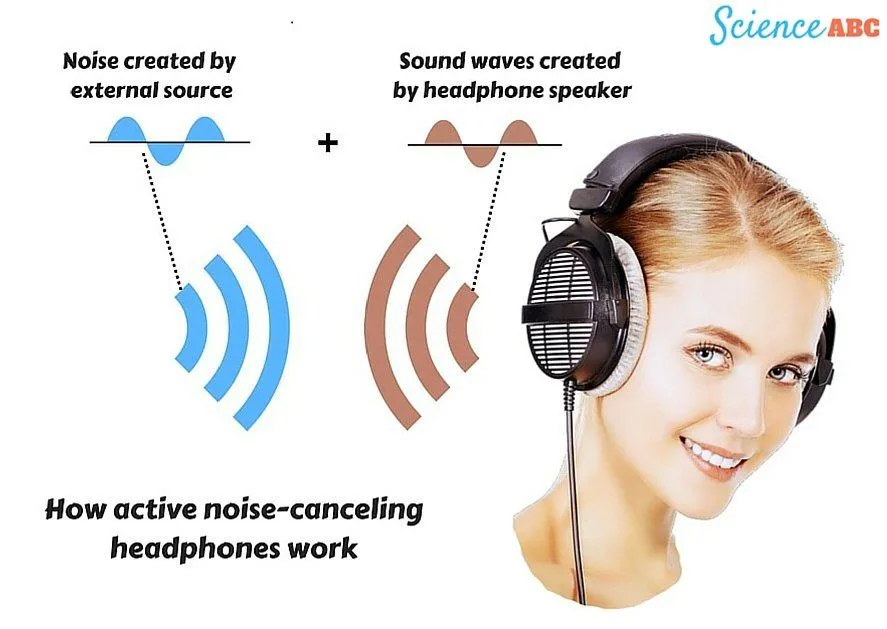
This means that these two ‘oppositely oriented’ waves cause destructive interference and cancel each other out completely. As a result, the listener can clearly hear the sound (e.g., an important message, a music piece) being played on the headphones.
Since these headphones create their own waves, they need an energy source to do so. This is why noise-canceling headphones come with a battery (rechargeable batteries have become quite popular today) that help to create this noise-canceling effect.
While these types of headphones help to hugely improve your music-listening experience, they also play a significant role in the aviation industry and military operations — which is actually where they came from. Bose started selling the first commercial active noise-canceling headset to pilots in 1989, after Amar Bose got fed up with engine noise on a transatlantic flight in the late 1970s.
Feedforward, Feedback And Hybrid ANC
Modern ANC headphones use one of three microphone layouts. Feedforward systems put the mic on the outside of the earcup so the chip "hears" noise before it reaches your ear and can react quickly to it. Feedback systems put the mic on the inside, next to the speaker; they hear what actually reaches your eardrum and correct any noise that still leaks through. Hybrid ANC, used in flagship models like the Sony WH-1000XM5, Bose QuietComfort Ultra and Apple AirPods Pro, combines both — an outside mic for speed plus an inside mic for accuracy — and that's why these models cancel noise so much better than the headphones of a decade ago.
Transparency Mode Is The Opposite Trick
Most modern ANC headphones also offer a "transparency" or "hear-through" mode that does the reverse: instead of cancelling outside noise, it deliberately routes the microphones' audio into your ears so you can hear a flight announcement, a conversation, or traffic without removing the headphones. The same hardware can suppress noise or pipe it in, depending on which way the processor flips the signal.
Why It Works Better On Some Sounds Than Others
You'll have noticed that ANC is brilliant at silencing a steady jet engine drone but barely touches a sudden door slam or someone talking. That is a physics limitation, not a manufacturing one. The chip needs to measure the incoming wave, compute its inverse, and play that inverse back before the original wave has moved on. For long, slow, repetitive low-frequency sounds (below about 1 kHz), that is easy. For short, irregular, high-frequency sounds, the wavelength is too small and the timing window too tight — by the time the headphones have figured out the wave, it's already inside your ear. That is why even the best ANC sets bury low rumble while leaving voices mostly intact, and why passive foam padding still does most of the work at high frequencies.

With further design tweaks and improvements, noise-canceling headphones will likely become much more inexpensive than they are today. I reckon that for people who can’t seem to live without listening to music on their headphones, getting their first pair of noise-canceling headphones will definitely be a dream come true!