Table of Contents (click to expand)
A binaural beat is an auditory illusion. Play two pure tones a few hertz apart, one in each ear, and your brain perceives a third, slow "beat" equal to the difference (say 440 Hz and 430 Hz make a 10 Hz beat). They are popularly used to relax, focus or lift mood, but the scientific evidence for those benefits remains mixed.
We often turn to music to accompany or alter our state of mind. We tend to gravitate towards melancholic music when we’re sad and euphoric music to celebrate our successes. Most of the time, music is the tool that alters and complements our mood best. Listen to a thumping, inspirational national song and you’re suddenly filled with feelings of immense patriotism; listen to a romantic ballad and you find yourself calling up your truest love.

Among these things, certain music is often prescribed as a way to relax, center your attention and decrease anxiety. You may have come across a specific type of music lauded for having these effects: binaural beats. These beats are seen to have effects of increasing confidence, reducing stress, increasing motivation and focusing an individual. Speaking from my personal experience, they’re my go-to for avoiding procrastination and centering my attention, which easily gets pulled in different directions.
However, what are these beats exactly and how do they affect us in such a way? Let’s find out!
How Are Binaural Beats Produced?
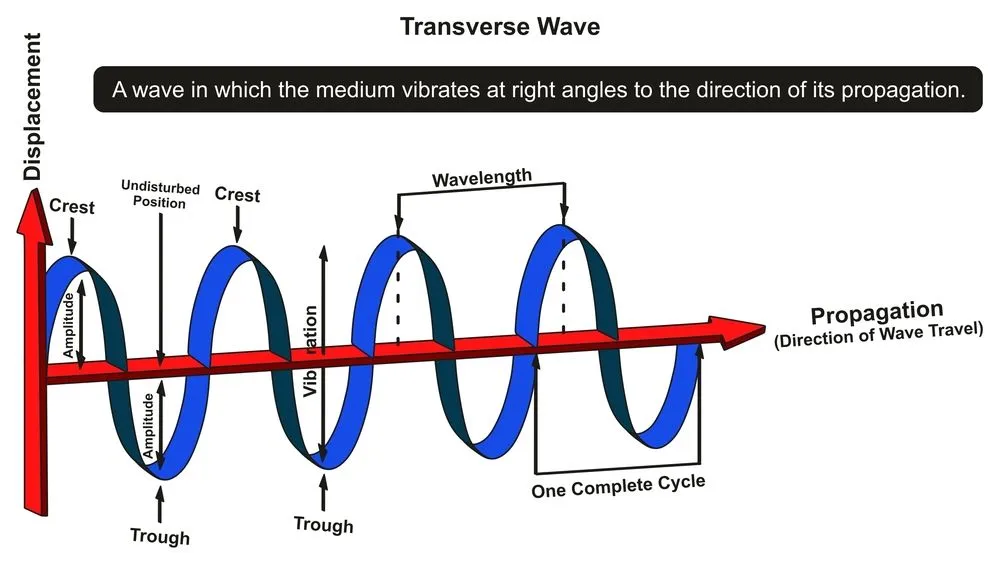
Sound is perceived when an object vibrates. The vibration displaces the particles in a medium and these particles displace their neighboring one, causing the vibration to eventually hit our eardrum. Sound has certain properties, perhaps most notably, it exists as a wave, which makes it travel in crests and troughs. The wavelength of sound is one complete set of a crest and a trough, while the frequency is the number of wavelengths in a unit time.
Constructive Interference
So, when a particular note is played by a particular instrument, it has a specific frequency that makes it peculiar. Let’s say, for instance, that a guitar is playing the A note at 440 Hz; it produces one crisp sound without any interference. Now, let’s have another guitar play on the same frequency with the same note, an A at 440 Hz.
What happens now? The sound just gets louder as the crest from the first guitar matches the crest of the second perfectly, creating a loud noise at every interval. This is “constructive interference”, which is created when two sounds are in phase and the sound is amplified.
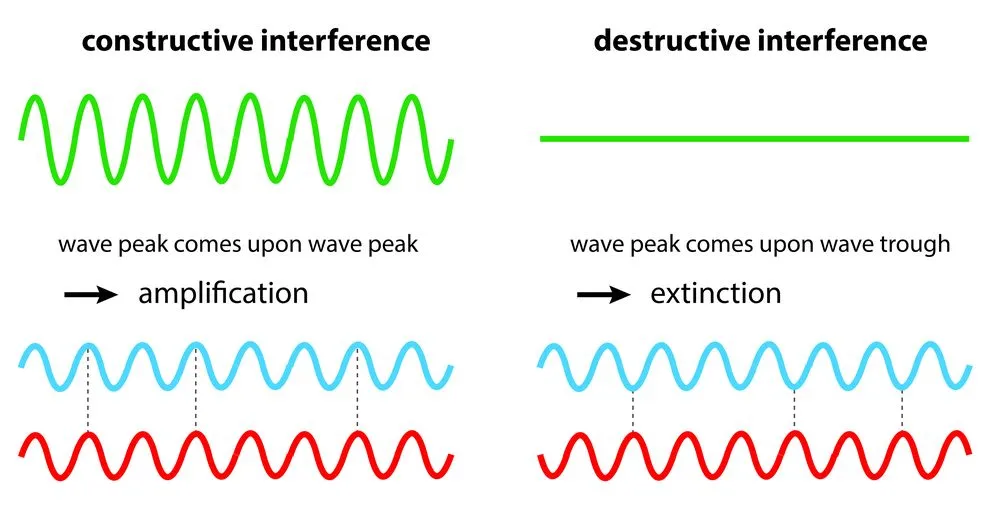
Destructive Interference
Now, let’s change it up a little bit. In this scenario, let’s keep both guitars on the same note and frequency, but let’s have the crest of the first guitar matched with the trough of the second. The sound heard in this instance would be quite soft and completely nonexistent when matched precisely. This is “destructive interference”, when the crests and troughs of two sounds cancel each other out.
This phenomenon gets interesting when the sounds are of slightly different frequencies. In this instance, the first sound from the guitar is the same, 440 Hz. The second one is marginally higher, say 460 Hz. As we initially start playing both the sounds with their crests aligned, one might think that the sound made wouldn’t be much different, but this slight difference creates a wobbling effect. At some intervals, the crest of one sound matches the other, but at other intervals, it doesn’t. This results in a wobbling sound, one that comes on and off at regular intervals as the two sounds repeatedly align and misalign.
This is called beat frequency, and is often used to adjust the tones of two instruments by playing the same note. Where else do we see this phenomenon? You guessed it… binaural beats.
Auditory Illusions
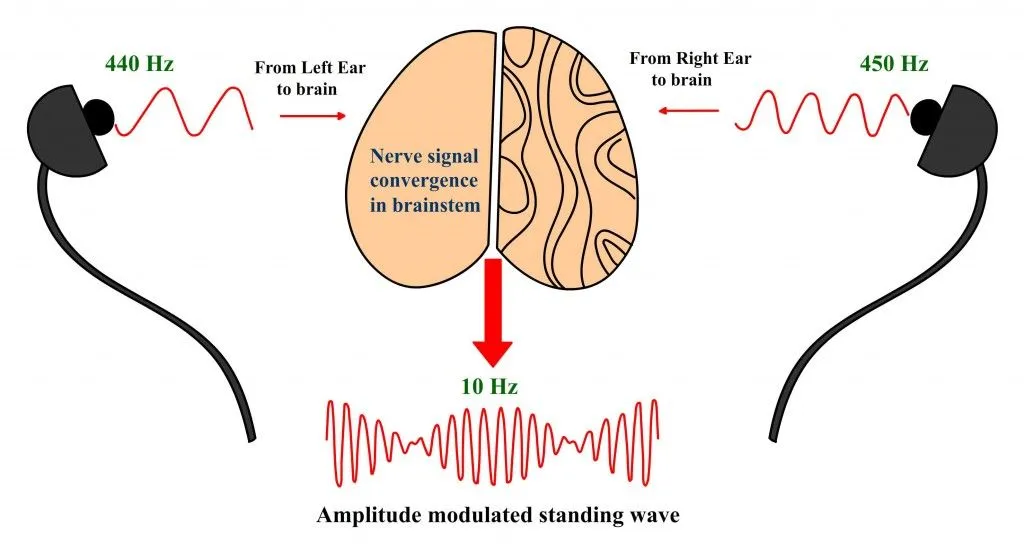
Here’s the twist that makes binaural beats different from the wobble described above: the two tones never actually meet in the air. Each ear hears its own pure sine wave (a wave with a smooth periodic oscillation), and the “beat” is stitched together inside your head. For the illusion to work, the two tones have to be fairly close together, with a difference of less than about 30 to 35 Hz between them. Push them further apart than that and your brain stops fusing them, so you simply hear two separate tones instead of a beat. The carrier tones themselves also need to be reasonably low, below roughly 1,000 to 1,500 Hz, with the effect perceived most clearly when they sit between about 400 and 500 Hz.
Binaural beats only work with headphones, because each tone has to reach one ear on its own. (Play them through a speaker and the two waves mix in the room, giving you the ordinary acoustic beat instead.) This is also where the practice gets its name, binaural: “bi” means two, and “aural” relates to the ear or sense of hearing.
So, when you put on a binaural-beats track in your earphones, the right earpiece may be playing a 440 Hz pure tone while the left plays a 430 Hz pure tone. You then hear a third, slow tone, an auditory illusion created by your brain on top of the two real tones. That third tone matches the difference between them (10 Hz here). You can prove it to yourself: pull out one earpiece and the beat vanishes, because a single ear has nothing to compare against. Put it back and the beat returns.
Where does the brain actually assemble this phantom tone? Not in the ear, but a few steps up the auditory pathway, in a brainstem structure called the superior olivary complex, the first place where signals from both ears come together. Because these neurons compare what each ear hears (the same machinery you use to work out which direction a sound is coming from), they register the small mismatch between the two tones, and the brain interprets it as a single, throbbing beat.
Binaural Beats Benefits
The medical benefits of binaural beats have been a popular topic of research, one that proves to be hit and miss at times.
The repetitive and rhythmic patterns of the beats do help in focusing attention, and there are various frequencies that are believed to invoke a specific response. It is recommended as a way to relax, focus, uplift a person’s mood, increase confidence and achieve a state of flow, among other things. You can download any number of apps or visit various websites where they will advise you on a specific frequency for a specific state of mind you desire. This is because these frequencies relate to those created naturally by our brains.
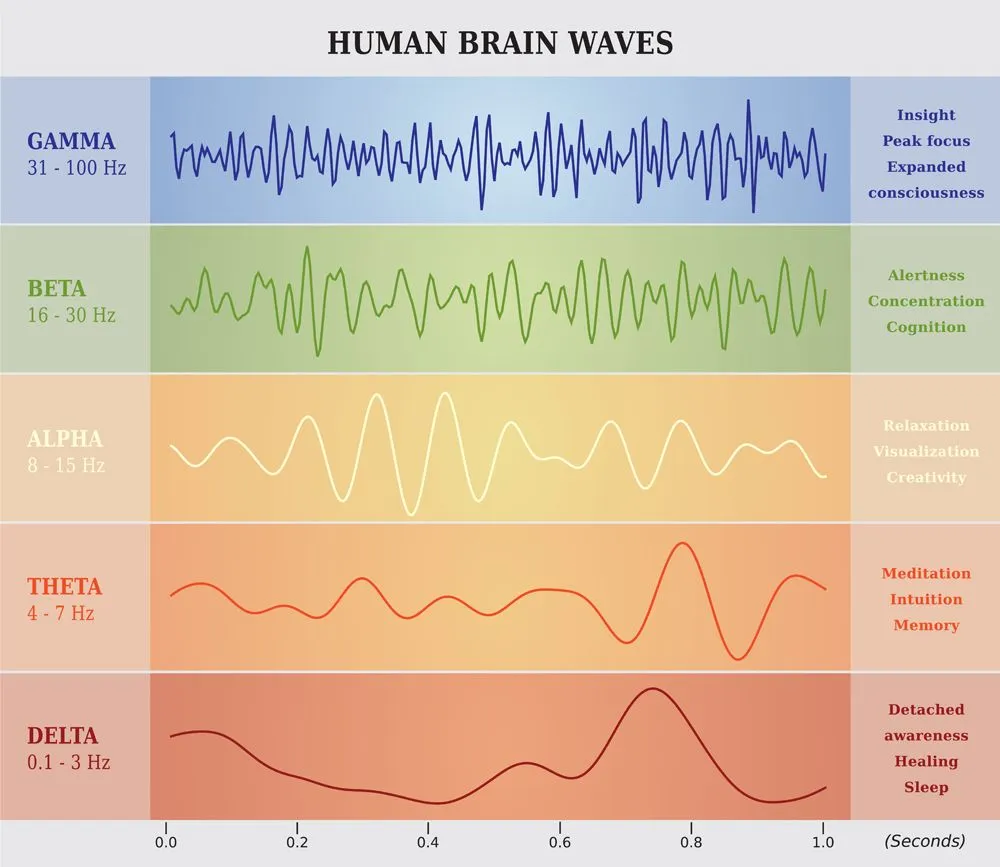
As mentioned earlier, the difference between the two pure tones playing in each ear is the frequency that the brain creates on its own. The brain produces delta (about 0.5 to 4 Hz, linked to deep sleep), theta (4 to 8 Hz, drowsiness and meditation), alpha (8 to 13 Hz, calm wakefulness), beta (13 to 30 Hz, alert focus) and gamma (above 30 Hz) waves in its various states, as shown in the chart. Hence, it is postulated that hearing a binaural beat nudges the brain to fall into step with that rhythm, an idea known as brainwave entrainment (or the frequency-following response). A 10 Hz beat, for instance, is supposed to coax the brain toward its relaxed alpha state.
This proposition doesn’t seem farfetched, but the evidence is genuinely mixed. Some studies report a small lift in mood, a dip in anxiety or a modest bump in attention, and a 2019 meta-analysis pooling 22 studies found a moderate overall effect on cognition, anxiety and pain. Other carefully controlled studies, though, find no measurable effect at all. Crucially, the entrainment idea itself is shaky: a 2023 systematic review of EEG studies found that most of them did not show binaural beats reliably shifting brainwave activity, and concluded that claims of brainwave entrainment should be treated with caution.
It’s also worth not confusing binaural beats with their close cousin, monaural beats. Monaural beats are two tones mixed together before they reach you, so the beat physically exists in the sound itself and you can hear it through a single speaker, no headphones required. A binaural beat, by contrast, is never in the air at all; it only exists once your brain combines the two ears’ signals. The beats also seem to affect each person differently. Larger, longer and more standardized studies are needed before we can say with confidence what binaural beats really do, but until then there’s little harm in slipping on your headphones and finding out whether they help you focus!
References (click to expand)
- Rachel Williams.
- Digital Collections - digitalcommons.ithaca.edu
- http://web.archive.org/web/20200125154233/http://web.stanford.edu:80/group/brainwaves/2006/AuditoryDrivingRitualTech.pdf
- The Effects of Binaural Beats on Emotion and Cognition.
- Binaural beats enhance alpha wave activity, memory, and ....
- Efficacy of binaural auditory beats in cognition, anxiety, and pain perception: a meta-analysis. Psychological Research. PubMed.
- Binaural beats to entrain the brain? A systematic review of binaural beat stimulation on brain oscillatory activity. PMC.