Table of Contents (click to expand)
Large buses skip seat belts because they're inherently safer than smaller vehicles in a collision. Their sheer mass means occupants experience much smaller decelerations in a crash, and their seats are deliberately closely-spaced, tall, and padded (a design called compartmentalization) that cushions passengers like eggs in a carton. Cost and lower typical speeds also factor in, although policy is shifting: the US NHTSA now recommends three-point belts on new large school buses, and nine US states require them.
Did you know the fastest production cars today can clear 300 mph? (The Bugatti Chiron Super Sport 300+ hit 304.77 mph, and a Yangwang U9 Xtreme logged 308 mph in 2025.) However, when cars were first invented, they could only travel a few miles per hour. As speeds climbed, passenger safety became a critical concern for designers and engineers.
That’s how seat belts were invented.
While seat belts are important, have you ever noticed that cars and similar vehicles have seat belts, but buses do not? Why is that?
The Power Of Seat Belts
A seat belt, also referred to as safety belt, is a kind of safety device installed in automobiles to ensure that the occupant of the seat remains secured against any harmful movements that may result from powerful jolts due to a collision, sudden stop, or accident.
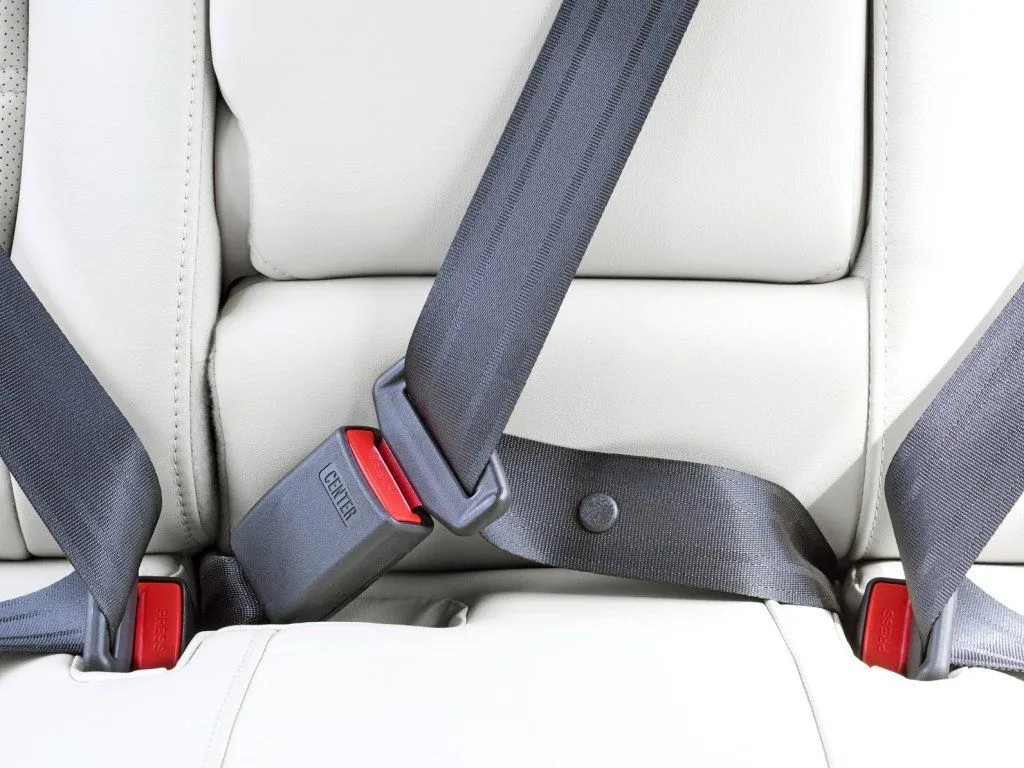
A seat belt plays a crucial role in maximizing the effectiveness of an airbag during an accident. It keeps the passenger in a position that ensures the airbag can work effectively. Additionally, seatbelts offer a comfortable ride by preventing swaying or jerking during turns.
However, it’s puzzling that buses, which carry more passengers, don’t have seat belts. Shouldn’t it be more important to ensure their safety?
Passenger Safety In Buses
Since we’re talking about installing seat belts in buses, let’s first look at the measures of safety that buses already offer over other automobiles.
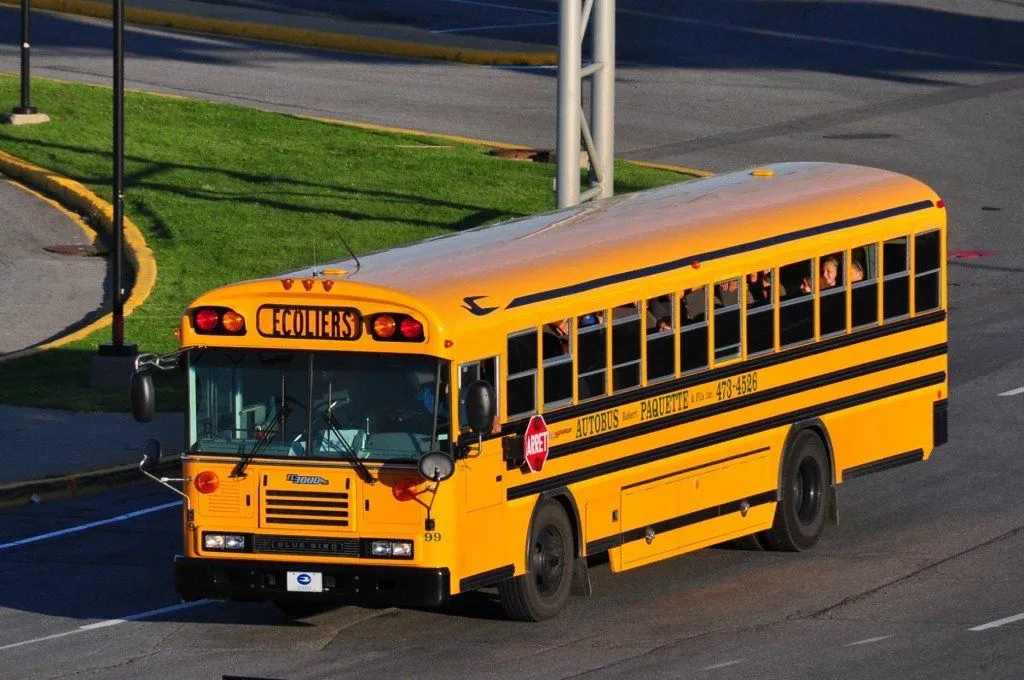
Buses are designed to be safer than most other vehicles on the road. They are much heavier and larger, which makes them less prone to damage in case of a collision.
Additionally, most buses cruise at moderate speeds rather than the highway speeds that make car crashes lethal. The physics that matters most is mass, not "more momentum." When a bus collides with a smaller vehicle, conservation of momentum means the lighter vehicle changes velocity far more than the bus does. The bus barely slows; its occupants experience a much smaller deceleration, which is the variable that does the actual injuring in a crash.
Another factor that contributes to passengers’ safety in a bus is the fact that passengers sit quite high off the ground, i.e., they have a decent clearing from the ground, a highly important natural safety feature that most of smaller automobiles like cars, bikes and SUVs don’t offer. So, in case of a mishap, it is highly likely that the impact will be absorbed by the deck of the bus, and not the occupants.
Why Buses Don’t Have Seat Belts?
Transportation officials have stated that seat belts are not necessary in buses due to compartmentalization. This feature ensures that seats are installed at equal distances from each other, creating small compartments that segregate passengers.
To better understand this concept, consider how eggs are protected from damage by being separated and divided into small compartments.

The design is quite similar in buses; the seat in front of you is high enough and usually decently padded to arrest your motion in the forward direction in the case of a sudden stop or a collision.
However, this is only a passive safety measure and doesn’t ensure absolute safety.
One reason buses, especially school buses, historically did not have seatbelts is cost. NHTSA estimates that adding lap-shoulder belts to a new large school bus increases the price by roughly $7,000 to $11,000, and earlier agency analyses argued that compartmentalization already provided most of the safety benefit. Older NHTSA reports also worried that the added cost could reduce seating capacity and push some children into less-safe ways of getting to school (private cars and walking, which kill far more kids per mile than school buses do).
That position has shifted. In November 2015, NHTSA stated that "every child on every school bus should have a three-point seat belt," and in May 2018 the agency formally recommended that states require lap-shoulder belts on all new large school buses. NHTSA still has not issued a federal mandate (it denied a 2024 petition to do so), but nine US states (California, Florida, Louisiana, Nevada, New Jersey, New York, Texas, Arkansas, and, as of October 2023, Iowa) now require seatbelts on new school buses, and Blue Bird made lap-shoulder belts standard equipment across its school-bus lineup in 2024.
The picture in other countries is different. In the United Kingdom, every coach or minibus first used on or after 1 October 2001 must have seat belts fitted on all forward- and rear-facing seats, and passengers aged 14 and over are legally required to wear them. In Australia, where belts are fitted, occupants must wear them, and most states are progressively rolling belts out across school-bus fleets (Queensland is the mainland exception). Canada amended its Motor Vehicle Safety Regulations in 2020 so that any school bus fitted with belts must use lap-shoulder belts (lap-only is now prohibited), although the federal baseline still relies on compartmentalization.
The short version, then, is that large buses are genuinely safer per passenger-mile than any other motor vehicle on the road, even without belts, but the regulatory drift across the English-speaking world is clearly toward requiring three-point belts on new buses anyway.
References (click to expand)
- Lou, Y., Mehta, G., & Turner, D. S. (2011, September). Factors influencing students’ usage of school bus seat belts: An empirical analysis of the Alabama pilot project. Accident Analysis & Prevention. Elsevier BV.
- Spital, M., Spital, A., & Spital, R. (1986, November 1). The Compelling Case for Seat Belts on School Buses. Pediatrics. American Academy of Pediatrics (AAP).
- Why don't school buses have required seat belts?.
- Why do school buses not require seat belts?.