Table of Contents (click to expand)
An air fryer works on convection. An electric heating element warms the air inside a small chamber, and a fan blows that hot air around the food at high speed, cooking and crisping every surface at once. Because the food only needs a thin coating of oil instead of a deep bath, you get fried-like results with up to 80% less oil.
I found myself at a supermarket recently, looking at things that I most certainly didn’t need and had no intention of buying. Of the many products stacked on the shelves there, the one thing that really caught my eye was an appliance that claimed right on its packaging that it could fry food using nothing but air!
At first, I thought it was some kind of scam or a marketing gimmick to attract the attention of potential customers, as it had just done to me. However, after some quick research, I found out that air frying was, in fact, a real thing! In fact, it has become quite popular these days. I also learned that it has been on the market, flying under the radar, for quite some time now.
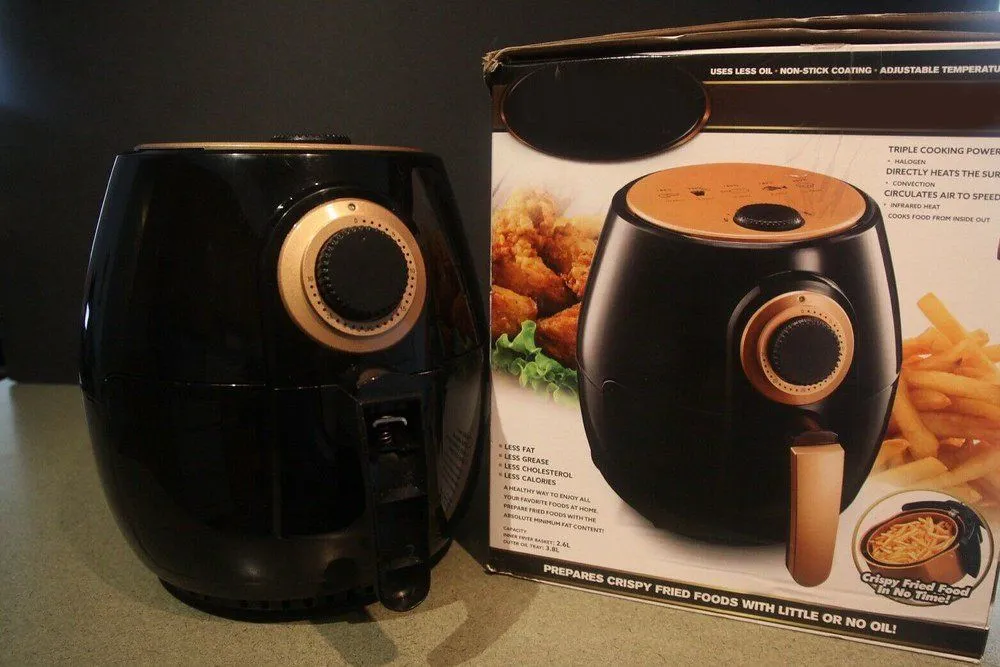
That being said, I still couldn’t understand how the product actually worked. I’m sure many of you don’t understand it either, so here we go, let’s dig into this mystery and find some answers. How can you fry food with nothing but air?
What Is An Air Fryer?
The name is self-explanatory… sort of. An air fryer is a kitchen device that fries food primarily by using air (hence, the prefix). It’s also capable of baking foods, although you may require some additional equipment to use it for baking purposes.
It’s a relatively small appliance, making it quite compact and portable. It sits on the countertop like a crock pot and has a power line that plugs into an electrical supply.
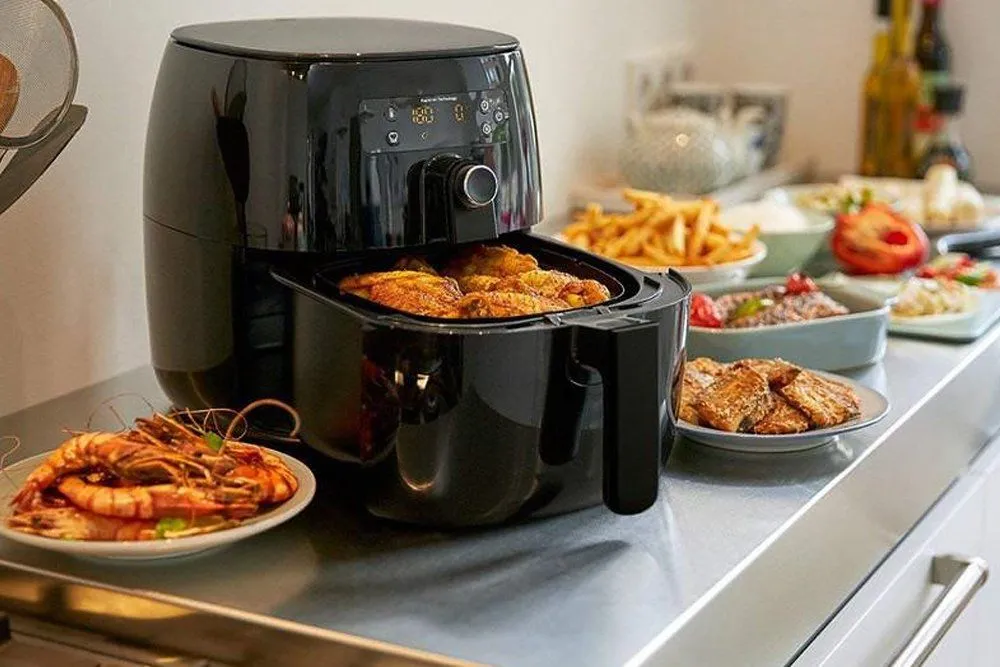
The appliance consists of three major components: a basket that holds the food you want to fry, an electric heating element, and a fan that circulates hot air inside the cavity.
How Does An Air Fryer Work?
Regarding air fryers, it’s often remarked that they’re just amped up countertop convection ovens. They work on the same principle as a typical oven, but they’re faster and more energy-efficient. Let me expound on that a bit further.
An air fryer is essentially a convection oven. And what is convection, you ask? Simply put, convection is just a form of heat transfer.
There are three main ways in which heat is transferred from one place to another: conduction, convection and radiation.
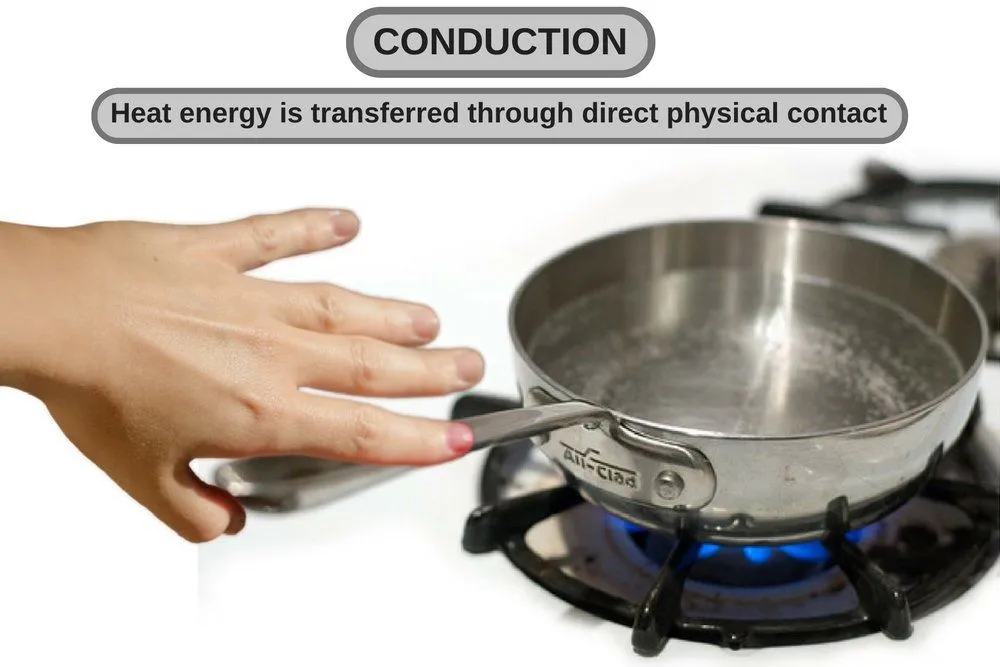
An example of heat transfer through conduction is when you touch a hot stove and burn your finger.
The Sun makes us feel warm during the winter. That is an example of heat transfer through radiation. Similarly, heat transfer through convection occurs when you boil water in a pot. At first, only the water at the bottom gets heated, but gradually, all the water in the pot heats up. This is due to convection.
An air fryer works on the principle of convection. First, its heating element generates heat using electricity, and then a fan inside circulates hot air at a very high speed around the food you wish to fry. This circular movement ensures that the hot air reaches all surfaces of the food.
The air inside is hot, typically up to around 200 °C (392 °F). That high, dry heat is what gives air-fried food its golden, crispy exterior. It triggers the Maillard reaction, the same browning chemistry that crisps a steak or toasts bread, in which amino acids and sugars in the food react to create brown color and roasted, savory flavors. Deep frying produces similar browning by submerging food in oil at 140-165 °C (284-329 °F); an air fryer reaches comparable results with little more than circulating hot air.
Additionally, the food sits on a perforated basket, which increases its contact with the hot air. The small, confined cooking cavity allows the heat to cook the food swiftly and efficiently.
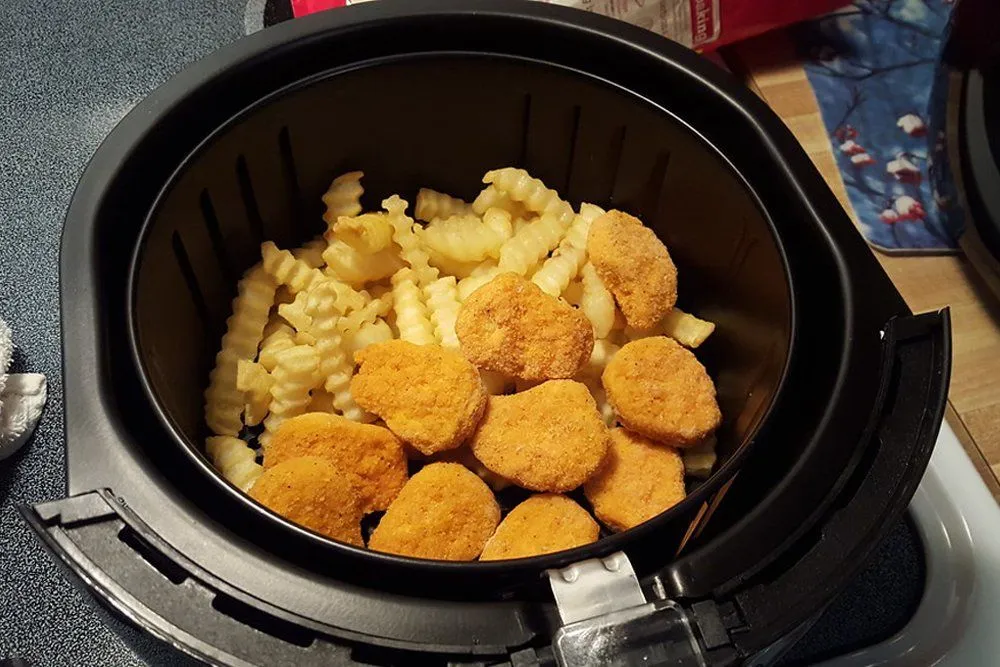
However, a small amount of oil (a very thin layer on the food in the cooking cavity) is, in fact, required to get the best results. The upshot is that you can have crispier food with a lot less oil than traditional frying (up to about 80% less).
It should be noted that lightweight food should not be put inside an air fryer, as the hot air circulating inside may blow it around the cavity. Food with wet batter should also be avoided.
In a nutshell, an air fryer fries food using only a very tiny amount of oil. By cutting out the deep oil bath, it can lower the fat and calories of fried food while keeping it crispy on the outside.
One thing worth keeping in mind: cutting the oil does not make every food automatically harmless. Starchy foods like potatoes still form a compound called acrylamide when cooked at high temperatures, whether you fry, roast, bake or air fry them. The U.S. Food and Drug Administration notes that acrylamide forms from sugars and the amino acid asparagine during high-heat cooking, and that more of it builds up the longer and hotter you cook. So the practical tip is the same in an air fryer as anywhere else: aim for a light golden color rather than a dark brown one.
References (click to expand)
- Prairie Fare: Have You Tried an Air Fryer? NDSU Extension, North Dakota State University.
- Acrylamide and Diet, Food Storage, and Food Preparation. U.S. Food and Drug Administration (FDA).
- Ferreira, F. S., Sampaio, G. R., Keller, L. M., Sawaya, A. C. H. F., Chávez, D. W. H., Torres, E. A. F. S., & Saldanha, T. (2017, November 10). Impact of Air Frying on Cholesterol and Fatty Acids Oxidation in Sardines: Protective Effects of Aromatic Herbs. Journal of Food Science. Wiley.