Table of Contents (click to expand)
A lie detector, or polygraph, does not detect lies. It measures the body’s stress responses, such as heart rate, blood pressure, breathing, and sweating, and assumes a lie triggers a bigger spike than the truth. Because nerves and other emotions cause the same reactions, the test is unreliable: the National Academy of Sciences found its accuracy is well below what its supporters claim.
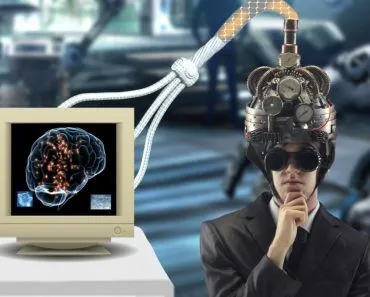
Whether you’ve only seen them in movies, or experienced them firsthand, lie detectors are fascinating aspects of our criminal justice, commercial, and entertainment world. The racing pulse, the quaking lines of a polygraph machine, and the interrogation-style questions to determine whether you’re telling the truth… it all makes for a great scene in a Hollywood thriller, but what’s the real science behind lie detectors?

How can they tell whether we’re telling the truth, and perhaps more importantly, is there any way to fool them?
Lie Detectors: Fancy Stress Tests
The basic idea behind a lie detector is that our bodies can betray us. More specifically, when we lie, the body undergoes certain physiological changes; it makes us uncomfortable and nervous, sometimes manifesting in the form of clammy palms, excessive perspiration, jittery movement or visual tics. Even if you show no outward signs, the body does react physiologically, either through spikes in blood pressure, respiratory activity, and skin conductivity.

Most lie detectors, technically called polygraph machines, consist of four to six sensors attached to the skin in some way to monitor those key vital signs. The process is quite simple, but there is an obvious loophole, which we’ll explore later in the article. The examiner will attach the sensors to your skin and begin asking you a series of questions. Initially, the examiner will ask you “control questions”, which will help to establish a base rate of activity and vital signs for each individual.
These control questions will be simple “yes” or “no” questions, such as “Is your name Mr. [insert name]?” or “Are you a resident of [insert city]?” One of the questions will typically be related to the subject for which you are being examined. For example, if you’re being given a lie detector for criminal reasons, then a common question may be, “Have you ever stolen something?” Most people have stolen something in their lives, but since they’re being investigated, will do their best to appear honest. Telling a simple white lie in one of these control questions will result in a base measurement of your physiological response when you lie.
When the examiner asks the real questions, they compare your responses to those baseline “lie” and “truth” readings. The theory is that your outward appearance and tone of voice may not betray you, but your body will quietly confess through the human stress response. That is the assumption, at least. As we’ll see, the science behind it is shakier than the movies make it look.
Is There Any Way To Beat A Lie Detector?
This is where the polygraph runs into trouble, and where decades of research have piled up against it. There has long been controversy about using lie detectors in criminal investigations, because the machine never actually catches a lie. It catches arousal. And arousal is a slippery thing to pin on dishonesty. Since the “truth” is judged against your own control responses, it logically follows that anything which spikes your stress on a control question, even while you are telling the truth, can muddy the whole readout.
That is the fatal flaw, not a clever trick. The body throws out the same surge of heart rate, blood pressure, and sweat whether you are lying, fighting nerves, recalling something painful, or simply terrified of being wrongly accused. The machine cannot tell those apart. Examiners do take precautions, such as keeping a subject’s hands in plain sight and watching for fidgeting, but they cannot read what is going on inside someone’s head. The result can also be swayed by how much the subject believes the test works, their mental health, and a host of other variables nobody can fully control.

So how reliable is it, really? Not very. In its landmark 2003 review, the National Academy of Sciences concluded that the scientific basis for polygraph testing is weak and that most of the supporting research is of low quality. By its estimate, the common comparison-question test correctly flags a lie only about 70% of the time, and the rate at which it falsely brands honest people as liars is simply unknown. A 2019 follow-up found that verdict still held. The American Polygraph Association advertises accuracy near 90%, but as the American Psychological Association points out, that figure comes from research the industry funded itself and was never independently peer-reviewed. In short, most scientists agree there is little solid evidence that polygraphs can reliably tell truth from lies at all.
That skepticism shows up in the law. Under the Employee Polygraph Protection Act of 1988, most private US employers are barred from making job applicants or workers take a lie-detector test, though government agencies and certain security jobs are exempt. In court the results are usually inadmissible under both the Frye and Daubert standards, with only a handful of states allowing them, and then mostly when both sides agree in advance.
At the end of the day, the polygraph was never the cold, hard truth machine the movies make it out to be. It remains a fascinating and infamous part of our culture, and it can still rattle a nervous suspect, but the science says it measures fear far better than it detects deception, and people should know the truth!
References (click to expand)
- The Scientific Basis for Polygraph Testing. The Polygraph and Lie Detection. National Academies Press.
- Do “lie detectors” work? What psychological science says about polygraphs. American Psychological Association.
- Polygraph. Wikipedia.
- Lie detection. Wikipedia.
- How to Pass a Lie Detector Test. Live Science.
- Beat A Lie Detection Test. MythBusters, Discovery.