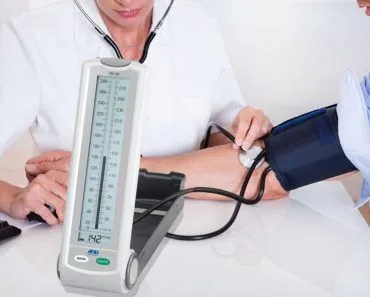
Yes, in principle. Prof. Alexander Niculescu's team at Indiana University built BioM-95, a panel of 95 blood RNA biomarkers that gauges anxiety severity, predicts future worsening, and even suggests which medications may help. It is a promising step toward objectively measuring anxiety, but it remains research-stage and is not yet a routine clinical blood test.
Have you ever tried to tell someone that you’re feeling anxious, but struggled to describe “how” anxious? You could be speaking to a family member, a friend, or a professional. No matter who it is, it is often impossible to describe the sheer range of your feelings. Wouldn’t it be great if someone could just see it for themselves, like they do with simple blood sugar or blood pressure levels?
Well, this is exactly what went through the minds of a professor and his research team at Indiana University School of Medicine. Here’s how they solved the problem. But first, what is the problem?
What Is Anxiety?
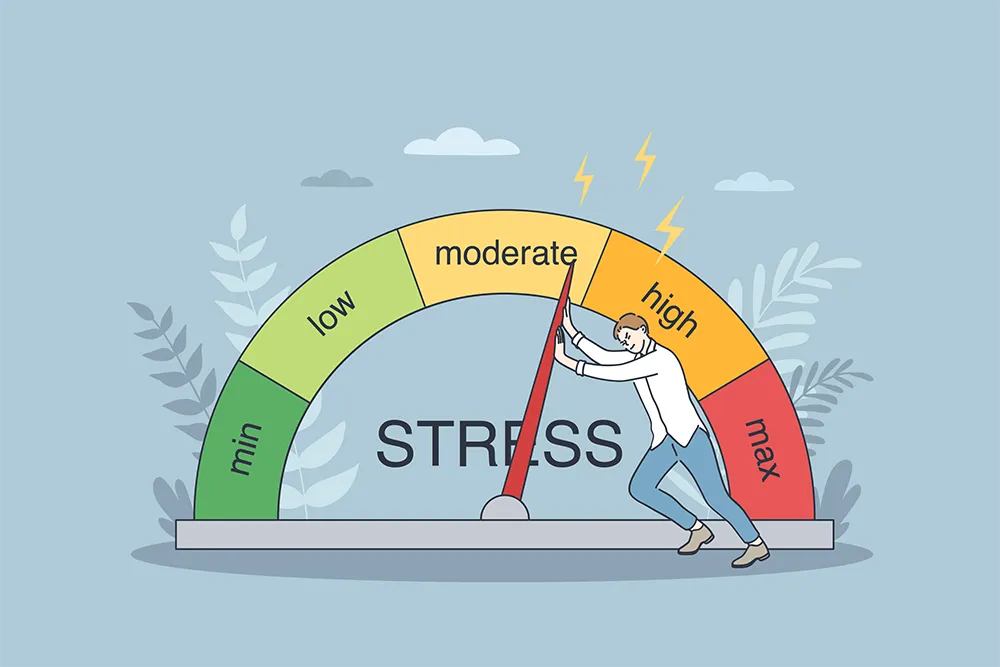
Anxiety is an emotion characterized by feelings of tension, worried thoughts, and physical changes, such as increased blood pressure, as defined by the American Psychological Association. As an emotion, anxiety is something everyone experiences. Since it is very similar to fear, it can even be a protective response.
For example, if you’re crossing a busy street, you will experience some amount of anxiety or fear. Your heart rate increases slightly, and your brain drowns out other stimuli to focus fully on the traffic. Subconsciously, your body undergoes these changes to ensure that you cross safely.
Is Having Anxiety A Medical Illness?
The mere experience of anxiety is not a disease. Anxiety helps everyone cope with particular challenges. However, when your anxiety interferes with your ability to cope and continues to persist over long periods, it becomes pathological anxiety.
Moreover, pathological anxiety or anxiety disorders will also cause you to develop a fear of anxiety itself. This vicious cycle eventually causes various complications, including developing high blood pressure, gastric ulcers, insomnia, and depression. Therefore, it becomes crucial to diagnose and treat it early to prevent any such complications. The question is, how do you diagnose it?
Can You Measure Anxiety?
Measuring anxiety or any other emotion is tricky. It is subjective, as one person’s perception of any emotion will never be the same as another. It would be like marking anxiety on a scale of 1 to mangoes!
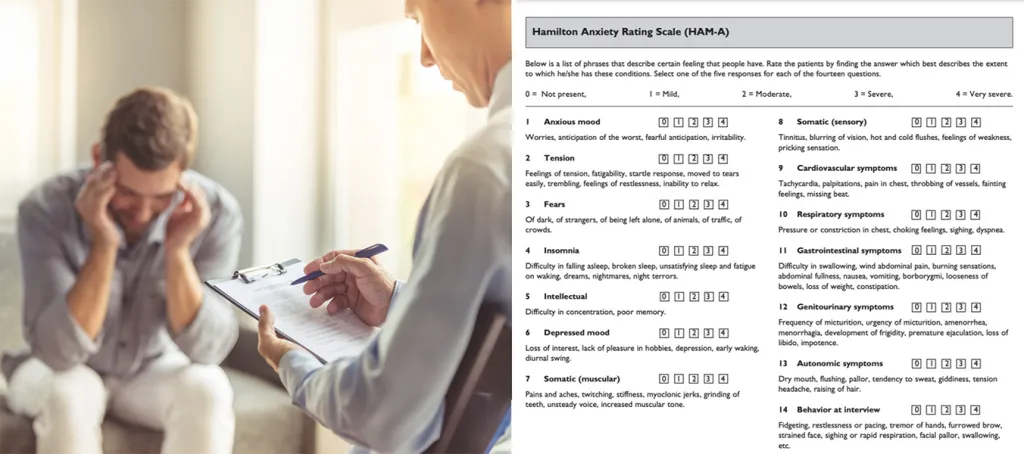
Clinicians were only able to get a rough idea of anxiety levels based on carefully designed questionnaires. Physical symptoms associated with anxiety were easier to note, but very often, patients with anxiety disorders come to experts long after the anxiety episodes have passed. Hence, these symptoms don’t get measured at the right time.
Unfortunately, for the longest time, it seemed that we simply could not put a number on anxiety.
Quantifying Anxiety
However, a pathbreaking study published in the journal Molecular Psychiatry revealed that anxiety could be measured from blood. Prof. Alexander Niculescu, MD, Ph.D., a professor of psychiatry at Indiana University School of Medicine, has spent his life trying to measure the unmeasurable.
He has thus far developed various methods to measure pain, bipolar disorder, and even post-traumatic stress disorder from blood. To face the challenge of measuring anxiety, one of the most common mental health illnesses, there was no one more suited to the task.
A Simple Solution To A Complicated Problem
Niculescu and his research team tackled this challenge with a careful, multi-step approach.
In the first step, they looked for relevant biomarkers in the blood of subjects diagnosed with psychiatric disorders, tracking each person over time as their anxiety shifted between low and high. This was their “discovery” group.
A biomarker, which is short for biological marker, is a measurable indicator of any biological process within the body. They are usually measured from easily accessible sources, such as blood, urine, saliva or even our hair. Just as blood glucose level is a biomarker for blood sugar levels, or BRCA1 mutations indicate an increased risk of breast cancer, Niculescu hoped to find biomarkers that could be used to quantitatively measure anxiety levels in someone. From their discovery group, they identified a large list of markers that changed along with changes in anxiety. They then ran this long list through a method called Convergent Functional Genomics, which cross-checks each candidate against other evidence in the scientific literature to keep only the most credible ones.
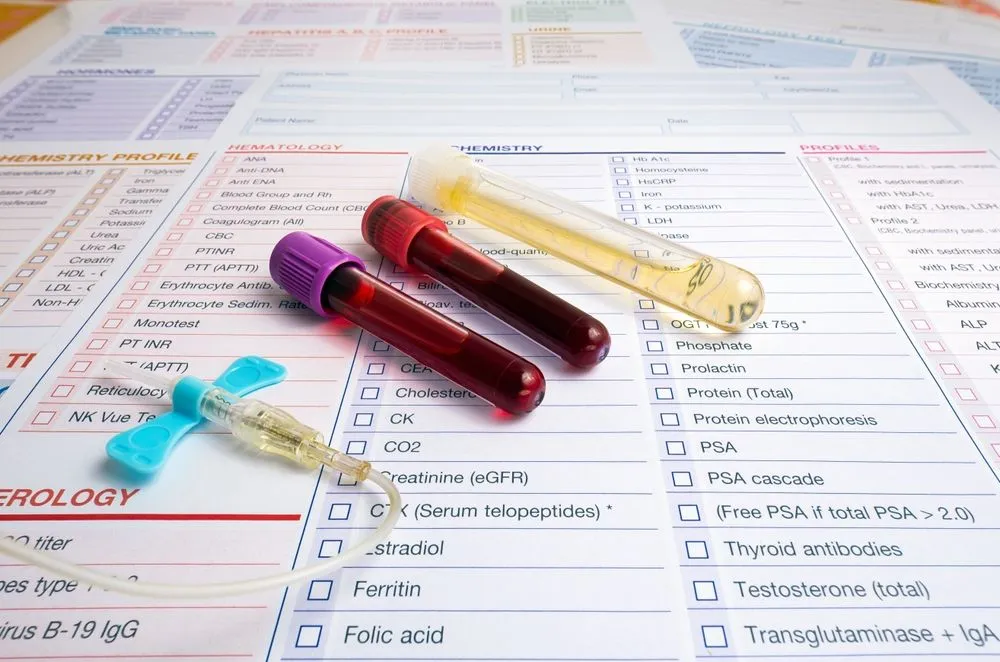
Next, they narrowed down this list of markers by separately validating them in another group of 40 subjects with clinically severe anxiety. They kept even stricter parameters of changes in anxiety, along with changes in the biomarkers. This was their “validation” group. They came down to a panel of 95 biomarkers, known as BioM-95.
Finally, they used these 95 biomarkers to predict anxiety in 197 subjects. This was their final “test” group. Drawing on years of medical record data, they checked how the markers moved in step with each person's anxiety, and even whether they could flag future hospitalizations. The six biomarkers with the strongest overall evidence were GAD1, NTRK3, ADRA2A, FZD10, GRK4, and SLC6A4.
My Anxiety Has A Number, Now What?
The importance of Niculescu’s study is not to replace adjectives like “very high” or “really bad” for your anxiety levels with a number!
With the biomarker panel they developed, the researchers showed that blood markers could predict high or clinical levels of anxiety in people. In principle, this offers a more objective way of diagnosing anxiety, and the same markers could help monitor those levels during treatment.
The researchers note in their paper, “In practice, every new patient tested would be normalized against the database of similar patients already tested, and compared to them for ranking and risk prediction purposes […]”
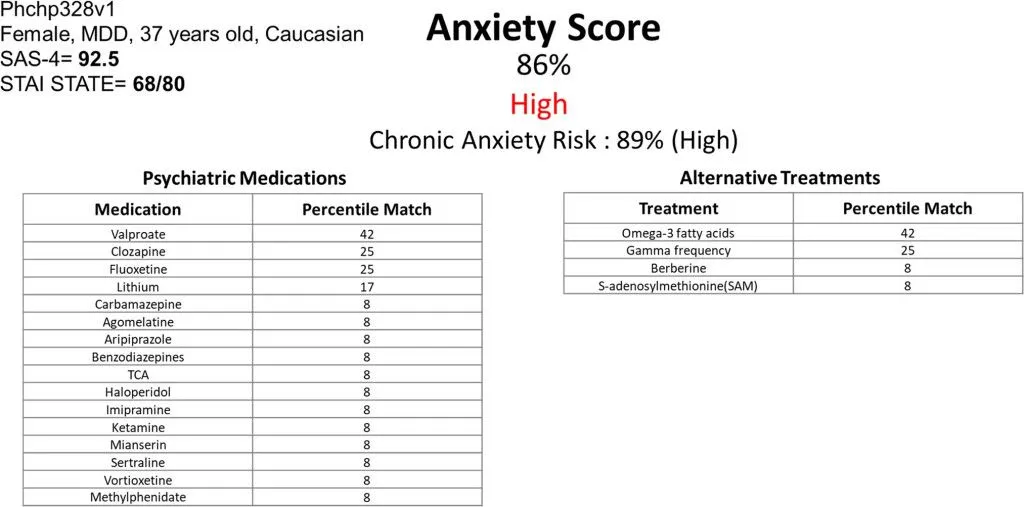
Another interesting possibility is that these biomarkers could help match patients with relevant medications. Until now, treating anxiety disorder has involved a trial-and-error run through the available drugs until you land on the most effective one, which can take a long time. The biomarker signatures hint at which existing medications might work best for a given person, including options such as valproate, omega-3 fatty acids, fluoxetine, lithium, sertraline, and ketamine. The same gene-expression signatures even flagged drugs not normally used for anxiety, such as estradiol and loperamide, as candidates worth repurposing.
What Do I Take Home?
Anxiety disorder has become one of the most common mental health illnesses, affecting 40 million people in the US alone. To date, without adequate tests for diagnosis, monitoring, or prescribing medications, dealing with anxiety disorder has been a difficult task for most clinicians.
Prof. Alexander Niculescu's study is a genuine milestone toward a simple blood test that could one day help predict, diagnose, monitor, and even guide drug treatment for anxiety. A word of caution, though: this is still research-stage science. The test is being developed for wider use by a spin-off company, MindX Sciences, and it has not yet been validated in large, routine clinical practice. So while you can't walk into your doctor's office and ask for a BioM-95 panel just yet, the day when anxiety comes with a number on a lab report may not be far off.
References (click to expand)
- Roseberry, K., Le-Niculescu, H., Levey, D. F., Bhagar, R., Soe, K., Rogers, J., … Niculescu, A. B. (2023, March 7). Towards precision medicine for anxiety disorders: objective assessment, risk prediction, pharmacogenomics, and repurposed drugs. Molecular Psychiatry. Springer Science and Business Media LLC.
- Steimer, T. (2002, September 30). The biology of fear- and anxiety-related behaviors. Dialogues in Clinical Neuroscience. Informa UK Limited.
- Anxiety - StatPearls.
- Baker, A., Simon, N., Keshaviah, A., Farabaugh, A., Deckersbach, T., Worthington, J. J., … Pollack, M. P. (2019, December). Anxiety Symptoms Questionnaire (ASQ): development and validation. General Psychiatry. BMJ.
- IU School of Medicine researchers develop blood test for anxiety. Indiana University School of Medicine.