Table of Contents (click to expand)
Velcro® was invented by Swiss engineer George de Mestral, who in 1941 noticed how burdock burrs clung to his dog and pants after a hunting trip in the Alps. Under a microscope he saw tiny hooks catching loops of fabric, and in 1955 he was granted US patent No. 2,717,437 for the hook-and-loop fastener. The name is a portmanteau of the French words velours (velvet) and crochet (hook).
Velcro. Does the name sound familiar? Or perhaps you’re more familiar with that satisfying sound that it makes
Of course you’re familiar with Velcro®; who isn’t? Today, we find Velcro® in some of the most common things that have become integral parts of our daily lives. Ranging from regular jackets to equipment for astronauts on space missions, Velcro® has stretched itself into many different domains, and more importantly, Velcro does it with style!
However, for as much as you use it, do you know how Velcro® actually came about?
What Is Velcro®?
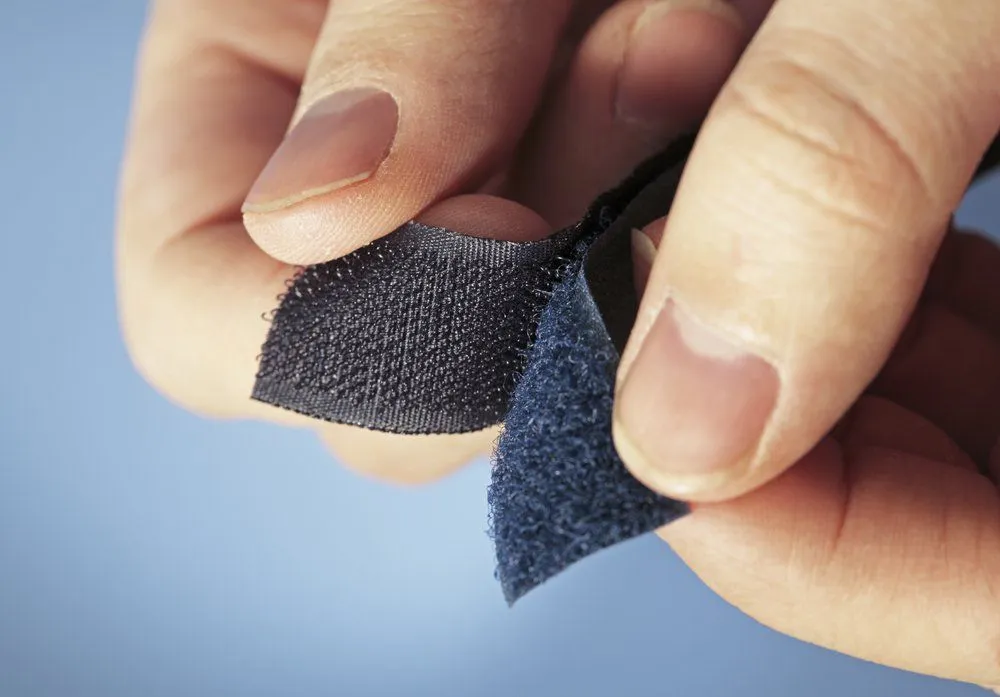
Velcro®, as we generally refer to it, is a hook and loop fastener that is commonly found on a wide range of products, such as shoes, jackets, leashes, keys hangers, and a lot of other equipment in offices, kitchens and garages.
Velcro® is actually the name of the company that originally created the “thing” we generally know as Velcro®. The name itself is a portmanteau coined by inventor George de Mestral, stitching together the French words velours (velvet) and crochet (hook). Therefore, anything that binds and unbinds with that strange ease does not actually mean that it’s Velcro; in fact, if a company markets its product as Velcro®, it can get sued by the original company for a pretty penny! In 2017, Velcro Companies’ lawyers got so tired of the genericized usage that they released a viral “Don’t Say Velcro” music video, begging the public to call the generic product “hook and loop” instead.
The Rise Of Velcro®
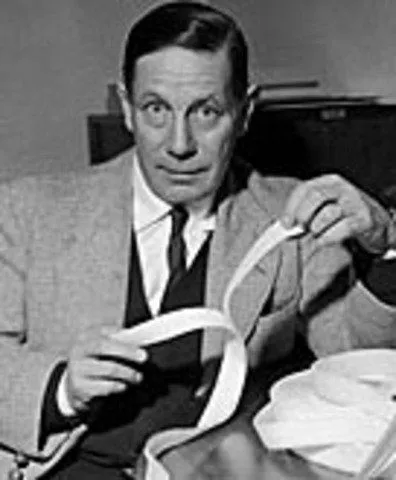
George de Mestral, a Swiss electrical engineer trained at EPFL in Lausanne, is attributed with the invention of Velcro®. How he came to the idea of actually making this thing that we call Velcro is a truly incredible story.
One day in 1941, Mestral returned home from a hunting trip in the Swiss Alps with his Irish Pointer to find both his dog and his own woolen pants thoroughly covered in burrs (the seed sacs of the burdock plant, which latch onto pretty much anything that brushes past them). Most people would have just plucked them off and forgotten about it. Mestral, naturally curious, rushed to his microscope and started examining the burrs stuck to his pants, sensing a lightbulb moment coming on.

Upon closer examination, he observed that there were many small hooks in the burrs that clung firmly to the hoops in the fabric of his pants. This was the ‘eureka’ moment for him; the first idea for what would eventually become Velcro struck him like a bolt. If he could artificially recreate the same thing, by making pairs of hooks-and-loops that bind to each other firmly, then there would be almost no need to tie things up all the time to secure them, nor would zippers (which were quite popular in those days) be necessary any longer. He decided to call the product he formed Velcro®.
Like many inventions, Velcro® also faced a great deal of criticism and ridicule, but Mestral stood by his design and continued to make structural changes to enhance its binding strength. He collaborated with a weaver in Lyon, France (then the heart of European textile-making) to come up with a perfect hook and loop fastener. He noticed that when nylon was sewn under hot infrared light, it formed tougher, more durable hooks on the burr side of the fastener, so he applied that strategy to his design. He filed his first Swiss patent in 1951, received it in 1954, and was finally granted US patent No. 2,717,437 (titled “Velvet Type Fabric and Method of Producing Same”) on September 13, 1955.
How Do Velcro® Fasteners Actually Work?

Peel apart any Velcro® strap and you’ll notice it is really two different tapes. One is carpeted in thousands of stiff little hooks; the other in an equally dense field of soft, springy loops. Press the two faces together and the hooks snag the loops. There’s no adhesive involved at all; the grip is purely mechanical, a scaled-up copy of the burdock burr that first caught de Mestral’s eye and a textbook example of biomimicry. Because he packed roughly 300 hooks and loops into every square inch, thousands of tiny catches share the load at once. No single hook holds much, but together they grip with surprising strength.
The real cleverness is in the direction of the pull. Lift one edge and the hooks release a row at a time, so the tape peels open with almost no effort (and that satisfying r-r-rip). Try instead to slide the two halves across each other, or pull them apart while they lie flat, and every hook has to resist at once. Engineers call these two cases peel strength and shear strength. An industrial-grade fastener might let go at only about 4.2 pounds per inch (0.75 kg per cm) when peeled, yet hold something like 12 pounds per square inch (roughly 0.8 kg per cm²) in shear. That lopsidedness is the whole trick: a shoe strap or a jacket flap bears your weight or the wind while it lies loaded flat, yet pops open the instant you tug a corner.
How Is Velcro® Made?

The loop side is the easy half to manufacture: a fabric woven or knitted from fine synthetic yarn, usually nylon or polyester, and left as a fuzzy carpet of tiny loops. The hook side is where things get interesting. A traditional woven hook tape actually begins life identical to the loop tape, as a cloth full of loops. Those loops are then sliced at precise intervals so that each one becomes a curved half-loop, in other words a hook, and the tape is brushed so that the hooks stand up ready to grab.
Getting there took de Mestral years of trial and error. Cotton hooks wore out too quickly, so he switched to nylon, which he found kept its springy shape (a kind of built-in “memory”) when it was woven under hot infrared light. To trim thousands of loops cleanly and identically, he even built a special cutting machine, borrowing the mechanism straight from a barber’s hair clippers. Many modern fasteners skip the weaving altogether: in molded (or extruded) hook tape, molten plastic is forced through a shaped mould under heat and pressure so that the hooks are formed in a single piece rather than cut. Whichever route is used, a final heat-setting step locks in the shape so the fastener can survive being opened and closed thousands of times.
Unstable Popularity
Velcro didn’t do too well initially; much of that could be attributed to its lack of aesthetic appeal. It came in dull colors and often looked quite ‘ugly’. Due to this, Velcro’s use was initially limited to athletic gear and equipment. Major athletic-shoe brands eventually started using Velcro® straps in children’s shoes, where speed and ease of fastening mattered more than style.
Even NASA helped boost Velcro®’s image by using it in a lot of equipment that went into space along with astronauts. From the early 1960s onwards, Mercury, Gemini, and Apollo crews used Velcro® to secure cameras, food pouches, checklists, and dozens of other small tools in microgravity, without having to fumble with zippers or knots. (A common myth credits NASA with inventing Velcro for the space program. It’s a tidy story, but Mestral had patented his fastener nearly a decade before NASA even existed.) After the Apollo 1 cabin fire in 1967, NASA scrutinized how much Velcro® was inside its spacecraft, since the material burned readily in a pure-oxygen environment, and flame-resistant variants have been used ever since on the Space Shuttle and the International Space Station.

It’s incredible how simple events in our daily life can lead to sparks of inspiration and innovation, resulting in some of the most widely used products, tools, and gadgets on our planet
References (click to expand)
- Velcro. Wikipedia
- George de Mestral. Wikipedia
- George de Mestral. Lemelson-MIT Program
- George de Mestral. National Inventors Hall of Fame
- US Patent 2,717,437: Velvet Type Fabric and Method of Producing Same. Google Patents
- The VELCRO® Brand Trademark Guidelines. Velcro
- How do VELCRO® Brand Fasteners Work? Velcro Brand Blog
- The Story of VELCRO® Brand Fasteners. Velcro
- How a Swiss invention hooked the world. SWI swissinfo.ch
- What is Plastic Hook and Loop? YKK Americas