Table of Contents (click to expand)
A 2-prong plug carries current through a live wire and a neutral wire. A 3-prong plug adds a third prong, the ground, which connects an appliance's metal casing to earth. If a fault makes that casing live, the ground safely carries the current away and trips the breaker, so you don't get a shock.
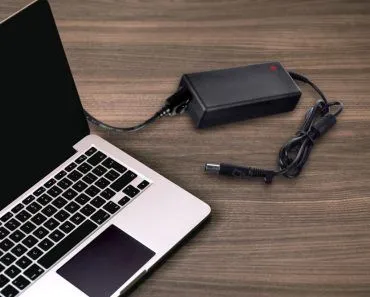
While writing an article recently, my laptop’s battery level dipped under 20%. Naturally, I reached for the charger. Now, my laptop and mobile charger were right next to each other, and since I was in a curious mood that day, it made me think: Why do the two chargers look so different? Specifically, why does my laptop’s charger have a three-pronged plug, while my phone charger’s plug has two?
The Westinghouse company, owned by George Westinghouse, bought Tesla’s patent, as they believed it was the future of long-distance power transmission. Their bet turned out to be a wise one.
A brief history of household electricity
Electrical appliances have become so ingrained in our daily lives that we often take for granted how truly amazing the concept of everyday electricity is.
The electricity we use in life is generated from sources like coal, oil, wind, and more. We harness the power of the elements of nature and use it to wash our clothes and iron them after, toast our bread, straighten our hair, and so much more. Appliances that once felt like signs of the future a few years ago now feel mundane.
Thomas Edison was the first person to figure out a way to supply affordable electricity to households for everyday use. During his era, light bulbs only lasted for a few minutes, so he created a bulb whose filament was in a vacuum, so it wouldn’t burn out.
After inventing the modern-day bulb, Edison set up the first electric station in the world in order to supply electricity to these bulbs in households. This was the Pearl St. Plant in New York City, and it supplied 110 Volts of Direct Current (DC).
If you know a bit about electricity, you probably know that supplying DC to households wasn’t really a sustainable idea. The resistance in the wires from the power station to the houses made them unable to transmit DC over long distances. This is where Nikola Tesla entered the picture.
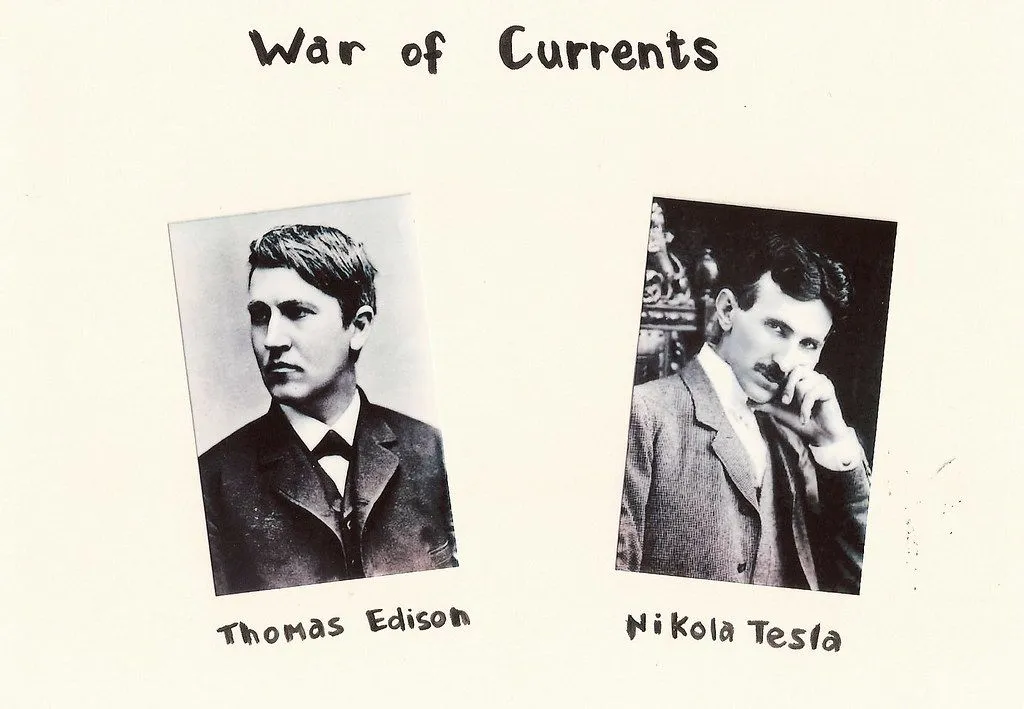
Tesla filed his patents for the system of Alternating Current (AC) in late 1887 (they were granted in 1888), claiming that this would cover the shortcomings of DC. Edison refuted this, and a “War of the Currents” ensued. This war, however, ended with Tesla as the victor, when his polyphase system was used to harness Niagara Falls’ mechanical energy and, in 1896, send alternating current to the city of Buffalo about 20 miles (32 km) away.
The Westinghouse company, owned by George Westinghouse, bought Tesla’s patent, as they believed it was the future of long-distance power transmission. Their bet turned out to be a wise one.
However, once we had figured out a way to supply electricity to houses, how could we use it to power anything but electric bulbs? How could we harness this electricity to power household appliances?
The invention of the plug
Inventors came up with various ways to connect appliances directly to a house’s power supply, but this method posed a few safety hazards, to say the least. Connecting an appliance in this way put not only the appliance, but also its user, at great risk.
To solve these problems, Harvey Hubbell designed a “Separate Attachment Plug” in 1904, so that users wouldn’t have to deal with live wires. He then went on to improve this design and invented a plug with two parts: a portion that would be left in the socket, and another portion in the form of a two-pronged plug that would separate from the socket. This is the original design for the modern-day two-pronged plug.
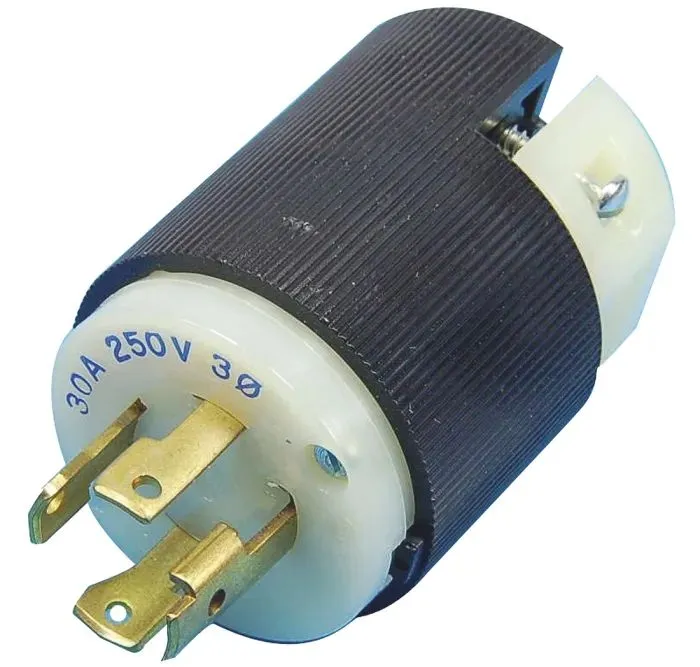
Philip F. Labre patented the grounded three-pronged plug in 1928, with its two flat blades and a rounded grounding pin. This design has largely replaced the two-pronged plug as the norm in modern households. Or at least, it has become the choice in households that value safety or have undergone a safety check at some point in the last decade.
Why exactly is this? Well, that’s the answer this article is seeking, and for that, you need to know exactly how a plug works.
What do prongs do?
In a typical two-pronged plug, one prong is connected to the live (hot) wire, while the other is connected to the neutral wire. The live wire carries current into the appliance, whereas the neutral wire carries the current back from the appliance to complete the circuit.
This two-prong design, however, poses certain safety hazards. Many appliances have a metal casing, and if a fault develops (say a live wire works loose and touches that casing), the metal becomes electrified. Electricity always seeks out the route that offers the least resistance, flowing most heavily through whichever path lets it reach the ground most easily. This is known as the “path of least resistance”.
So, with a two-pronged plug and no grounding, if you touch an appliance whose casing has gone live, your body becomes the path of least resistance. The current flows through you on its way to the ground, causing an electric shock that could easily end up being fatal.
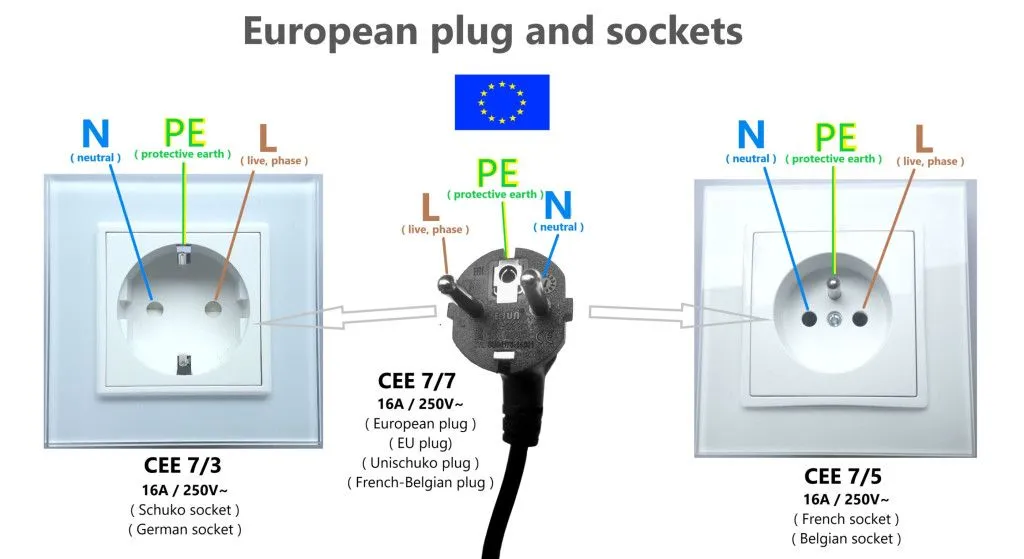
To prevent this, a third prong is added to the plug, known as the grounding prong. It connects the appliance’s metal casing to the grounding wire, which leads safely to the Earth. If a fault electrifies the casing, this low-resistance path carries the current away from you and into the ground, and the sudden surge trips the circuit breaker or blows the fuse before you can be harmed.
Since this alleviates most risks that everyday electricity poses, three-pronged plugs simply make more sense to use. If that is the case, why is my phone charger still two-pronged?
Why is my phone charger a cuboid?
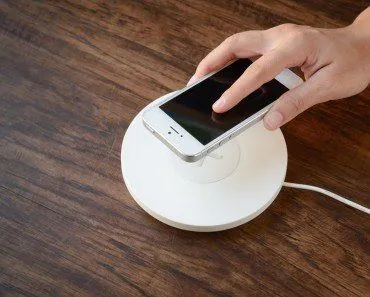
Modern phone chargers are what engineers call “double-insulated” (Class II) devices. Instead of relying on a ground wire, they wrap their live parts in two independent layers of insulation, so even if one layer fails, there’s no exposed metal for you to touch and no need for a third prong. They also draw very little current, which keeps the risk low. A charger with a metal casing or higher power demands, by contrast, is safer with a grounding prong.
So, the next time you wonder why your phone charger has two prongs while a grounded appliance has three, just remember: the third prong isn’t there to power anything. It’s there to quietly stand guard, ready to whisk away a stray current the day something goes wrong.
References (click to expand)
- The Current Wars. Rutgers University
- First US Detachable Electric Plug – Today in History. ConnecticutHistory.org
- US1672067A - Grounding receptacle and plug. Google Patents
- Electrical Safety. Cornell University Environment, Health and Safety
- Grounding Electricity | Ohioline - The Ohio State University. Ohio State University
- A Powerful History: The Modern Electrical Outlet. University of Southern California
- Myth Buster-Topsy the Elephant. Rutgers University
- Household Electric Circuits. Georgia State University
- Appliance classes (Class I, Class II / double insulated). Wikipedia