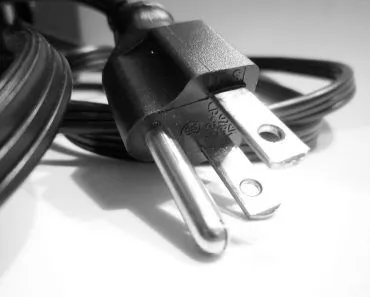
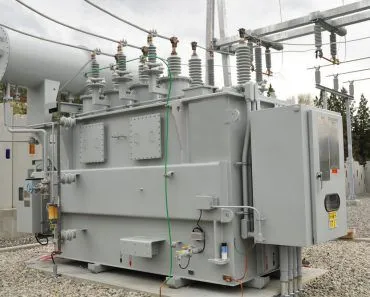
A charger plugged into a wall outlet but not connected to a device still draws a tiny standby current - typically well under 1 W for a modern phone charger, and a few watts for an old laptop brick. It will not damage the charger and is no fire hazard with a well-made unit, but over months and years that 'vampire' draw adds up. Many modern chargers also enter a near-zero 'sleep mode' when no load is detected. For peace of mind and a small saving, switch off the outlet or unplug the charger when you're done.
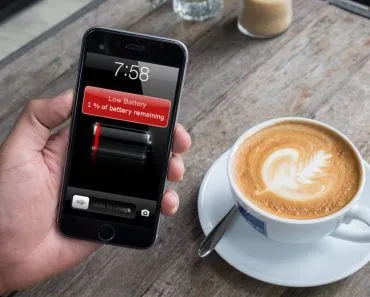
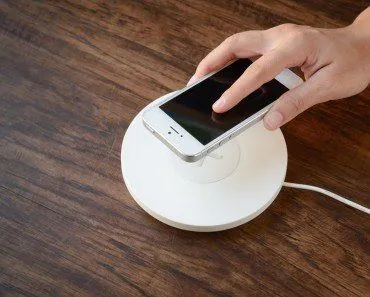
One of the most monotonous, yet universally-necessary activities is charging electronic gadgets using wall chargers. There are some devices whose batteries get charged in no time at all, and these devices make their owners feel proud. However, there is another class of devices that discharge rapidly, but their batteries take forever to charge back to 100%. One can assume that the owners of such devices have terrible social lives.
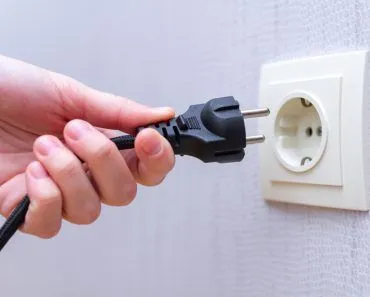
More often than not, we tend to forget to shut off the main power supply after we disconnect a device from its wall charger. Therefore, the wall charger remains connected to the mains, but doesn’t have any ‘load’ connected to it.
So, what happens in this scenario? Does an ‘idle’ wall charger (i.e., one that’s connected to the mains, but isn’t connected to any device) consume any power? More importantly, does it get damaged if it stays ‘idling’ for a long time?
How Does A Wall Charger Work?
A wall charger usually has an input in the range of 100-240 Volts, 50-60 Hz, depending on which country you’re using it in. Its output is much lower - typically 5 V for older USB-A phone chargers, but modern USB-PD chargers can negotiate up to 5, 9, 12, 15, or 20 V depending on the device, and laptop bricks are commonly 19-20 V. Also, the input in the wall charger is AC, whereas its output has to be DC, so that it can be used to charge the batteries of electronic devices.
A typical wall charger (for, let’s say, a smartphone) consists of three main components: an AC-DC convertor, a step-down transformer and a regulator. Note that modern wall chargers come in varying designs and setups, but the basic underlying mechanism remains the same.
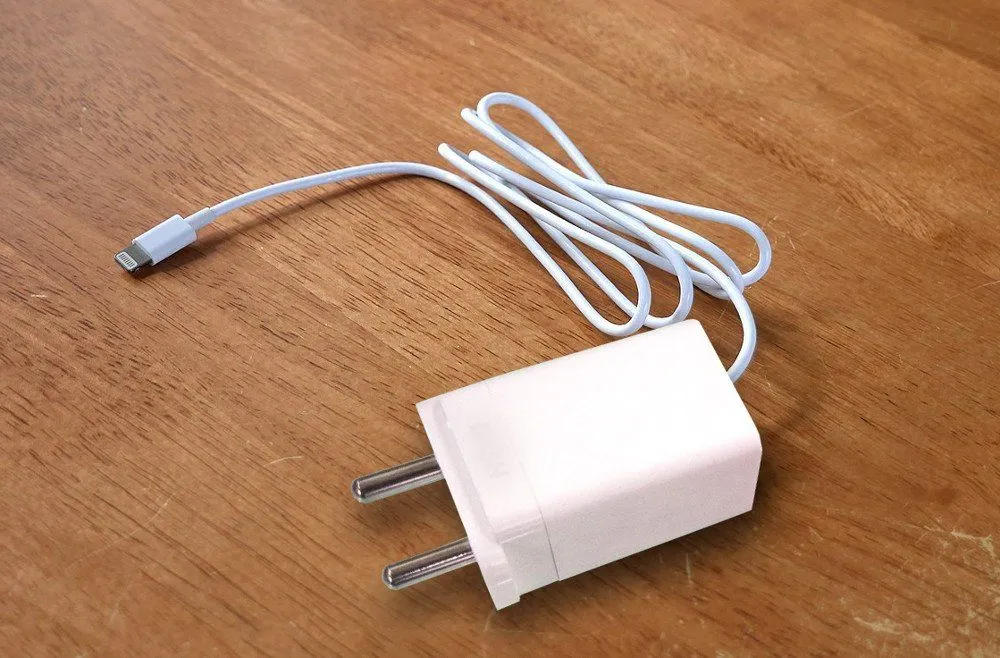
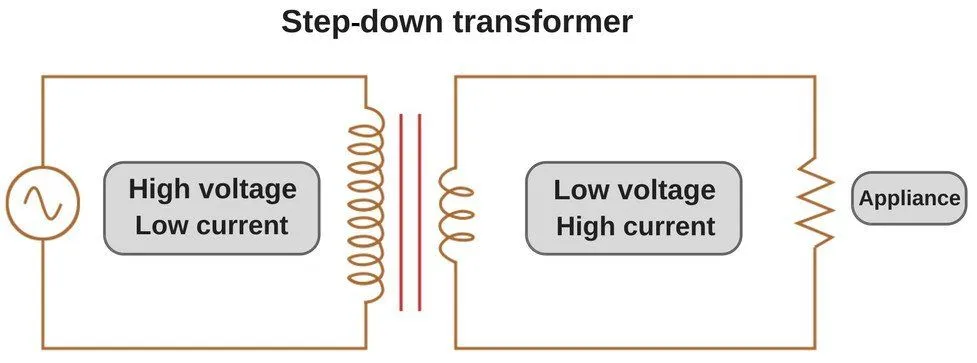
The electricity that comes to our houses from the grid is at a much higher voltage than electronics can tolerate - 100-127 V in the US, Canada, Mexico and parts of Latin America and Japan, and 220-240 V across most of Europe, the UK, India, Australia, and Africa. A voltage this high can obviously not be used in household appliances, which operate at much lower voltages. Thus, the step-down transformer (present inside the wall charger) reduces the high input voltage (coming from the main power source) to a significantly lower output voltage.
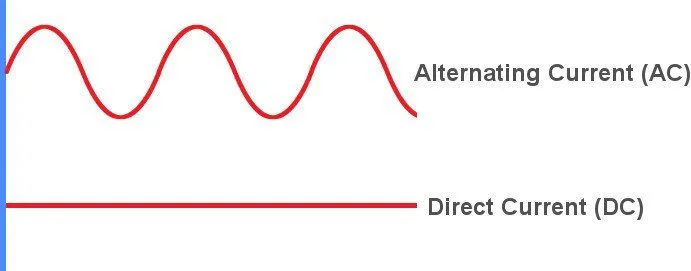
The next part is AC to DC conversion. You see, the electricity coming from a power pole is AC (alternating current), and as such, it must be converted to DC (direct current) so it can be used to charge batteries. You can read about AC and DC in detail in this article: Alternating Current (AC) Vs Direct Current (DC)
Once the step-down transformer reduces the voltage to the order of a few volts and AC is converted into DC, the regulator controls the current to keep the output voltage steady at the level the device negotiates (commonly 5 V for older USB phone chargers, or 9-20 V for fast-charging and laptop chargers). This part is taken care of by the regulator.
Now, let’s address the question posed in the title of the article.
What If A Charger Is Plugged In, But Not Connected To Any Device?
So, you were charging your device (say, a laptop) with a wall charger. As soon as the battery displayed “100% charge”, you yanked out the power cord from the laptop, but forgot to switch off the mains or remove the charger from the wall. What happens then?
In such a situation, the charger will still draw a minimal current from the mains and the regulator will maintain a steady supply of 5 V. Since the charger is not connected to the laptop (the ‘load’), it will result in a waste of electricity, but it would be a very, very small amount. Also, it won’t cause any sort of damage to the charger.
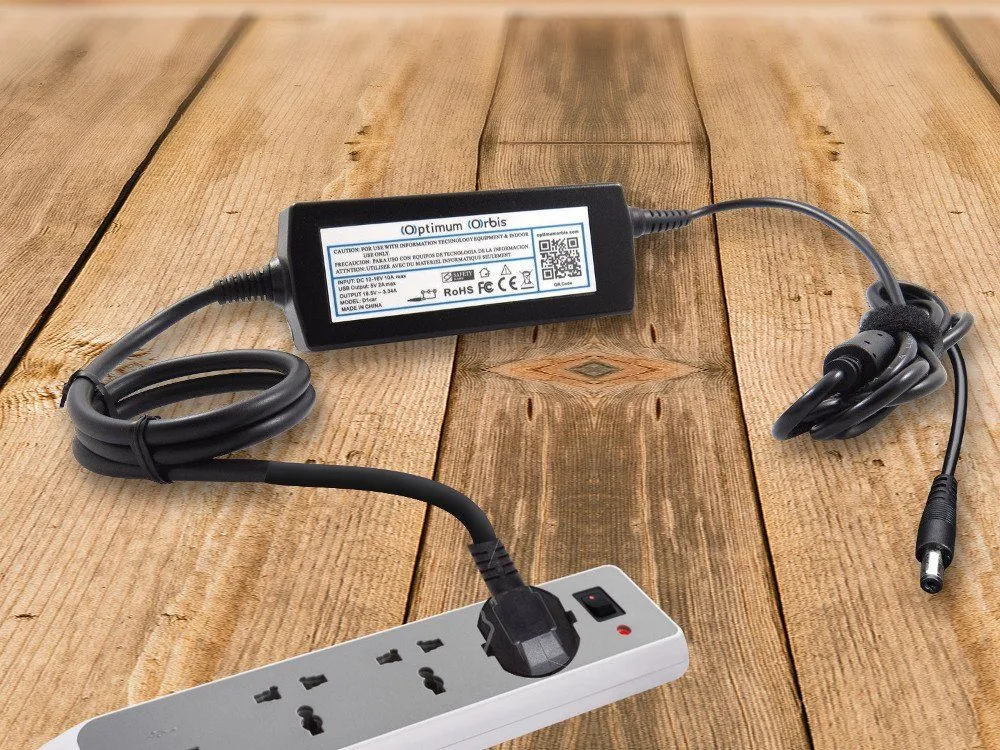
Moreover, some modern chargers even have a ‘sleep mode’, which turns the charger off if it remains disconnected for a long time.
However, if the charger remains connected to the main power source and is not connected to any ‘load’ for days on end, the electricity wastage extrapolated over weeks and months and years may be considerable.
At the end of the day, however small in magnitude, it’s just wasted power – power that you could use to charge your devices many times over. This is also power that a lot of places on Earth still cannot access.
In short, it’s best to switch off the main power source or remove the charger from the wall once you’ve disconnected your device from its charging adapter.
How Much Electricity Does An Idle Charger Actually Use?
“A very small amount” is a fair answer, but how small is small? The honest way to settle it is with a plug-in energy meter, the kind that sits between the wall socket and your charger and reads out exactly how many watts are flowing.

A modern phone charger sitting idle with no phone attached typically draws around 0.1 watt or less. This is no accident: it is now the law in much of the world. The European Union’s ecodesign rules cap the “no-load” draw of a small AC-to-DC charger (those rated up to 49 W, which covers most phone chargers) at just 0.10 W, with ceilings of 0.21 W for larger units and 0.30 W for multi-voltage adapters. Older or cheaply made bricks can pull more, and a chunky laptop adapter from over a decade ago might idle at a few watts.
Now turn that into money. A 0.1 W charger left plugged in around the clock for a whole year uses roughly 0.9 kilowatt-hours of electricity. At a typical US residential rate of about 18 cents per kilowatt-hour, that is close to 16 cents a year (a few pence for UK and Australian readers). Even an old 4-watt laptop brick left idling year-round only adds up to about 35 kWh, or roughly 6 dollars a year.
So why does anyone bother switching it off? Because it adds up across the whole house. The Lawrence Berkeley National Laboratory estimates that standby or “vampire” loads, all the gadgets quietly drawing power while switched off or idle, account for somewhere between 5 and 10 percent of a home’s electricity use. A single forgotten charger is trivial; the dozen always-on devices behind your TV are not. It is the same slow trickle that quietly drains a phone battery even when you are not using it.
Is It Safe To Leave A Charger Plugged In?
This is the worry that nags at most people: if a charger is “always on,” could it overheat or start a fire? For a well-made charger in good condition, the honest answer is that the risk is very low. With no device attached, it barely warms up, because it is only handling that fraction-of-a-watt standby draw.

The real hazards have less to do with the idling and more to do with what surrounds it. A damaged charger is the big one. Frayed cords, bent connectors or cracked insulation can create extra resistance, local heating and, in the worst case, sparks. The Electrical Safety Foundation International advises that you never use a cord or charger that is damaged or hot to the touch. Cheap, off-brand or counterfeit chargers are another red flag, since many are not built with the safety cut-offs of a reputable unit and can short out or come apart.
Ventilation matters too. A charger or charging phone smothered under a pillow or bedding cannot shed heat, which is why the National Fire Protection Association recommends charging devices on hard, open surfaces rather than on a bed or couch. So leaving a quality charger in the wall is genuinely fine; leaving a frayed, no-name one buried under your duvet is the scenario actually worth avoiding.
The simplest habit covers both energy and safety: retire any charger that is visibly damaged, and when in doubt, just flip the switch at the socket.
References (click to expand)
- Efficient Wall Adapter - web.wpi.edu
- MIT School of Engineering | » How does a battery work?. The MIT School of Engineering
- AC Adapters - physics.highpoint.edu:80
- (2012) Cell Phone Charger for the DC House Project. California Polytechnic State University, San Luis Obispo
- Commission Regulation (EU) 2019/1782 - Ecodesign Requirements For External Power Supplies (No-Load Limits). EUR-Lex
- Standby Power. Lawrence Berkeley National Laboratory
- Measuring Standby Power. U.S. Department of Energy (FEMP)
- Average Price of Electricity to Ultimate Customers, Table 5.6.B. U.S. Energy Information Administration
- Electrical Safety in the Home. National Fire Protection Association
- Electrical Safety. Electrical Safety Foundation International (ESFI)