An extension board (or power strip) is a cluster of mains sockets wired in parallel inside a shockproof case and fed from a wall outlet by a flexible cable. The parallel wiring is what matters: each device receives the full mains voltage and operates independently, while a fuse or miniature circuit breaker plus an earth pin protect against overcurrent and electric shock.
To merely label extension boards as an electronic appliance is to do them a gross injustice. With one of these, you don’t have to scale walls to reach that distant power socket, nor are housemates forced to fight over who gets to charge their phone first! Multiple devices can be connected together, and this humble extension board becomes a hub of critical activity.
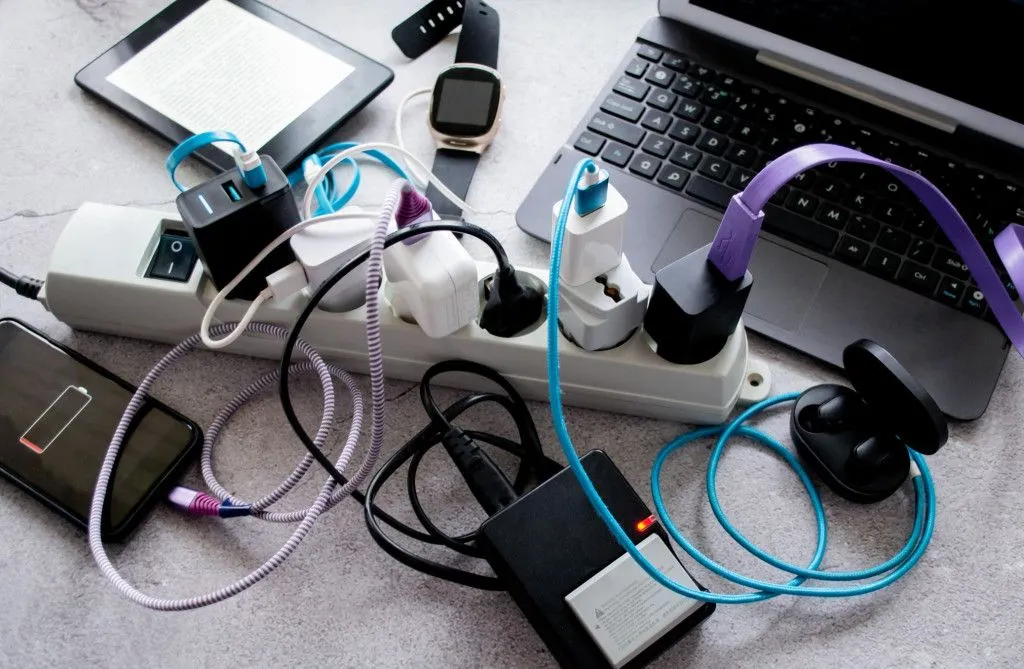
This nifty, plug-and-play device has an equally simple science behind it, so let’s dig in!
How Do Extension Boards Work?
A power strip or an extension board is comprised of multiple sockets connected independently to a flexible power cable and encased in a shockproof plastic shell.
It draws power from the wall sockets and distributes it amongst devices connected to these multiple sockets. Extension boards can vary in design, with some having features like individual switches and LED indicators to indicate which socket is being currently used.
The salient feature of extension boards is that they distribute power equally amongst the connected devices. This allows all devices to function flawlessly, and is achieved by connecting the individual sockets in ‘parallel’ to each other.
Ohm’s Law: How Current Flows In A Circuit?
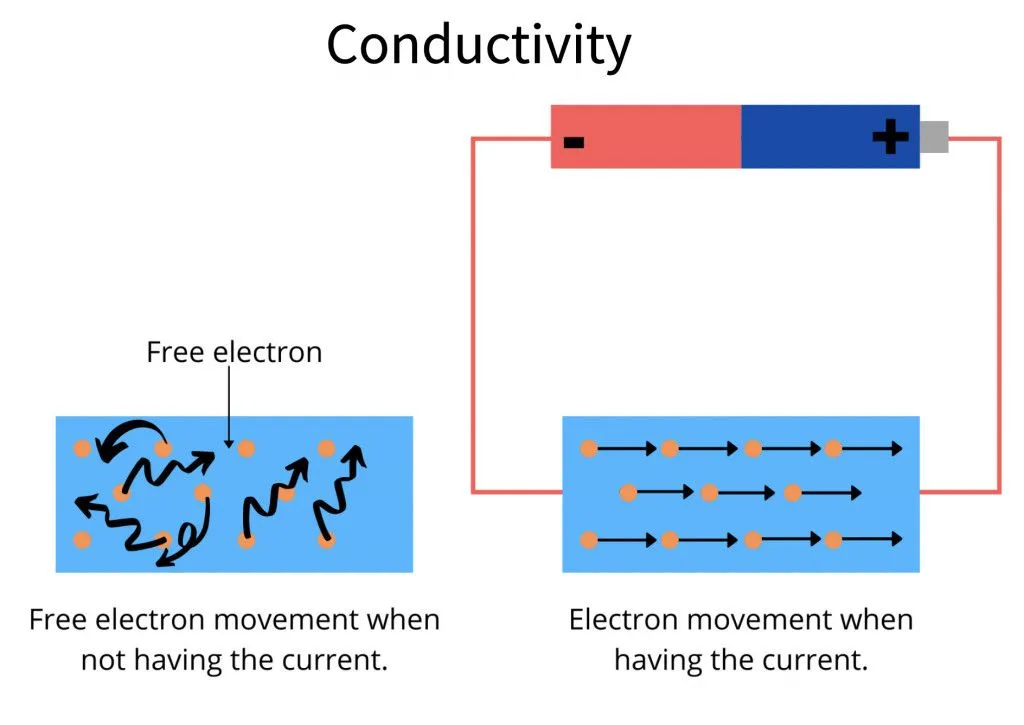
Just like water flows across two areas that have differences in altitude, current flows between two points that have differences in potential.
In order for current to flow through a circuit, it must be connected to a power supply that creates a potential difference. This potential difference is also known as voltage.
The flow of current in a circuit is governed by Ohm’s Law, which expresses voltage as a product of the circuit’s resistance and the current flowing through it.
Mathematically, it is represented as:
V = IR,
where V is the voltage across the circuit, I is the current and R is the resistance provided by the circuit to the flow of that current.
All appliances connected in a circuit consume current, thus causing resistance to it from flowing further onward in the circuit. They are therefore represented as such. Based on the arrangement of resistances in a circuit, a circuit can be classified as series or parallel.
Series Circuits
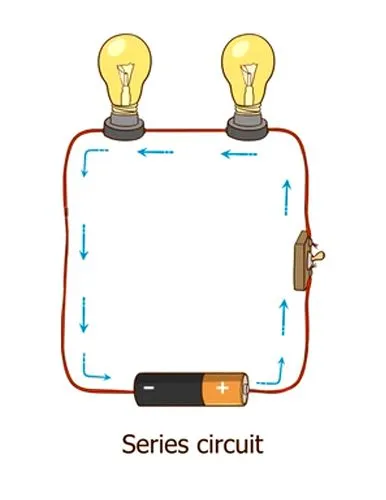
In a series circuit, all resistances (appliances) are connected in a sequence, such that the entirety of the current flows through them. In series circuits, voltage drops across each resistance, whereas the current remains constant throughout. A real-world example of a series circuit is the electric string lights used for festive decoration. One major disadvantage of a series circuit is that the failure of one appliance in the circuit leads to disruption of the entire circuit.
Parallel Circuits
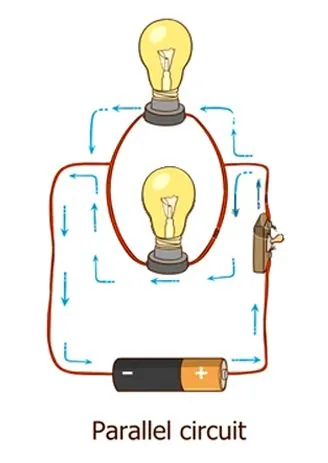
In parallel circuits, all resistances are connected to a common power source, albeit along dedicated individual paths.
As every appliance gets its ‘own’ circuit, all appliances get equal voltage. Their draw of current depends on their individual resistances, making the total current drawn a sum of the individual currents drawn by each appliance. The flow of current in one loop of a parallel circuit is not dependent on others. This makes parallel circuits useful in extension boards.
Surge Protection
While the underlying principle is simple parallel wiring, an extension board has to be designed for the total power its sockets can pull. Engineers actually build in two different kinds of protection, often confused with each other. Overcurrent protection (fuses and circuit breakers) trips when too many devices try to draw more current than the cable and contacts can safely handle, preventing fires from overheating. Surge protection, found only in true “surge-protector” strips, uses components called MOVs (metal-oxide varistors) that briefly become conductive when a voltage spike (from a lightning strike or grid switching) exceeds the rated voltage, shunting the spike to ground before it reaches your electronics.
Power Cable Design
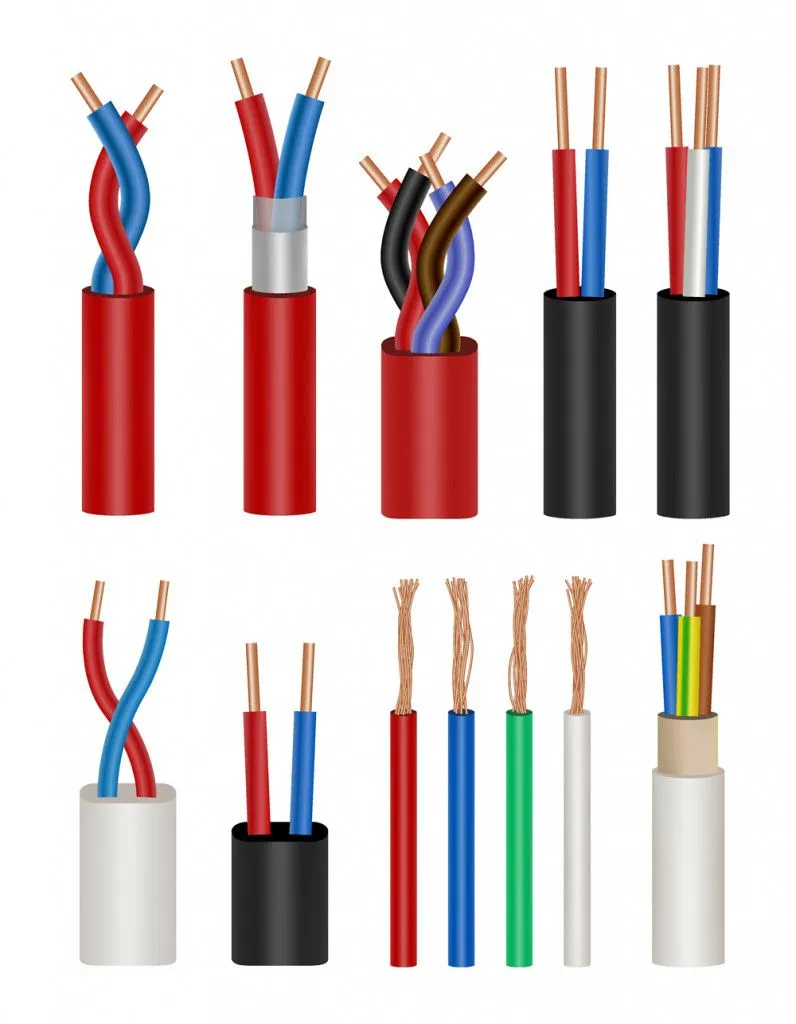
Power supply cables are typically copper (an excellent conductor) and are rated by their load-carrying capacity (the “ampacity”). As a rule of thumb, thicker cables carry more current than thinner ones simply because they have a larger cross-sectional area: more space for electrons to flow means lower resistance (R = ρL/A) and less heat dissipated per ampere. The branching wires and electrical contacts inside the strip have to be rated for the total load too, not just the individual sockets.
When the power draw exceeds the capacity of the supply hardware, it can lead to fires and other catastrophic failures.
Fuse Cut-offs
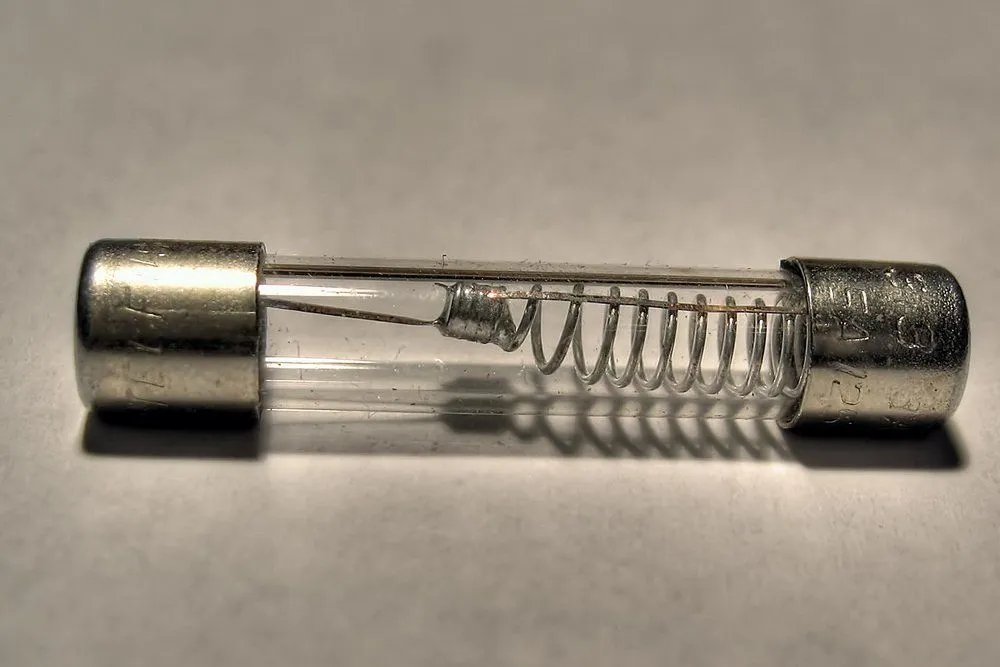
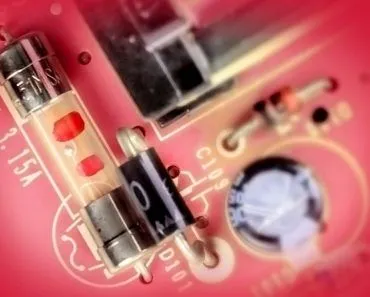
Fuses are safety devices installed between the power supply and the appliances in circuits that are capable of drawing large currents. They are made of a relatively poor conductor, such as an alloy of tin and lead. This enables them to melt when the current exceeds their rated value.
As they melt, the circuit breaks, disrupting the flow of excessive current to appliances and safeguarding them against potential harm. With the use of miniature circuit breakers (MCBs) in modern electrical mains, an additional layer of security prevails against electrical mishaps.
Grounding
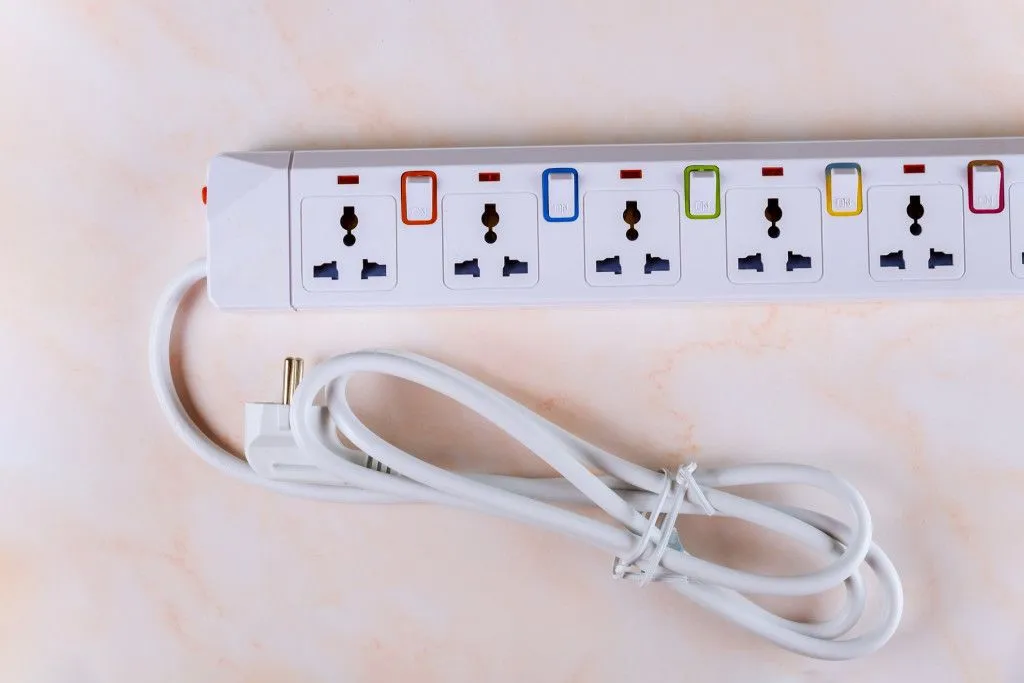
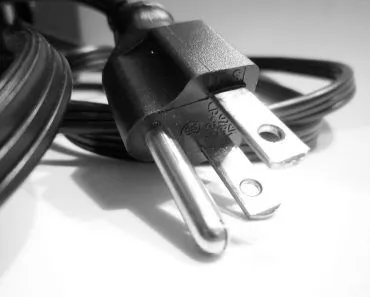
Extension boards normally use a 3-pin plug because of earthing (grounding). The third pin connects the metal chassis of an appliance to the ground wire of your home, which is held at zero potential. If a fault inside an appliance lets live wires touch the casing, the fault current rushes to earth and trips the breaker or blows the fuse, rather than waiting to flow through whoever next touches the device.
It is usually advised not to connect multiple heavy drawing devices to one extension board. However, if it is extremely necessary to do so, one must only use extension cords that are rated to handle such a heavy current flux. Extension boards also come with LED indicators and switches for each socket, giving users additional control. The flow of current to a certain socket can be switched on or off with their respective switch, independently of other sockets.
What Are The Different Types Of Extension Boards?
“Extension board” is really a catch-all term, and walking down the hardware aisle you will meet several cousins that all do slightly different jobs. The simplest is the plain extension cord (or extension lead): a single socket, or just a few, on the end of a long flexible cable. Its whole purpose is reach, getting power from a distant wall outlet to where you actually need it. Two-core cords suit light loads like a lamp or a phone charger, while three-core cords add an earth conductor for appliances with a metal body.

A power strip packs several sockets into one block, often with a master switch and individual switches, so a single wall outlet can feed a whole desk of devices. A surge protector looks identical but adds the MOV clamping circuitry described above, soaking up voltage spikes that a bare strip simply passes straight through to your electronics. A cable reel (or cable drum) is an extension cord wound onto a spool, handy for workshops and gardens where you might need 25 metres (about 80 feet) of slack.
The newest member of the family is the smart or “advanced” power strip, designed to cut standby power. Many gadgets keep sipping electricity even when switched off or idle, and the US Department of Energy notes that this “phantom” (or “vampire”) load accounts for 5–10% of a typical home’s electricity use and can cost the average US household as much as $100 a year. A smart strip senses when a connected device drops into standby and automatically cuts its power, trimming that waste. Many strips now also build in USB-A and USB-C ports, so phones and tablets charge without a separate adapter.
Can You Safely Overload An Extension Board?
Every extension board carries a rated limit, and pushing past it is the single most common way these handy gadgets turn dangerous. In 230-volt regions (the UK, Australia and much of the world) a typical lead is fused at 13 amps, which works out to roughly 3,000 watts (since power = voltage × current, or 230 V × 13 A). In 120-volt North America, a strip is usually rated for 15 amps, or about 1,800 watts. The safe habit is simple: add up the wattages printed on everything you plug in and keep the total comfortably under that ceiling. An electric kettle (around 2,000 W) and a fan heater (around 1,500 W) sharing one 13 A lead already demand 3,500 W, well over the limit, and the result is an overheating cable or a tripped fuse.

Two habits cause most extension-board fires. The first is daisy-chaining, plugging one strip into another to multiply sockets. The US safety regulator OSHA notes that listed power taps “are not to be series-connected to other [power taps] or connected to extension cords”; they should plug straight into a permanently installed wall socket, because the first strip in the chain ends up carrying the combined load of everything downstream. The second is leaving a cable reel coiled while drawing heavy current: with the cable wound tightly on its drum, the heat it generates cannot escape, the insulation can soften and melt, and a fire or shock hazard follows. Reels should always be unwound fully before use.
This is also why heat-producing appliances deserve their own wall socket. OSHA warns that power strips “are not designed for high power loads such as space heaters, refrigerators and microwave ovens, which can easily exceed the recommended ampere ratings.” When in doubt, give the power-hungry appliance a dedicated outlet (ideally one with its own earth pin) and save the extension board for laptops, lamps, chargers and other light loads.
Advancements
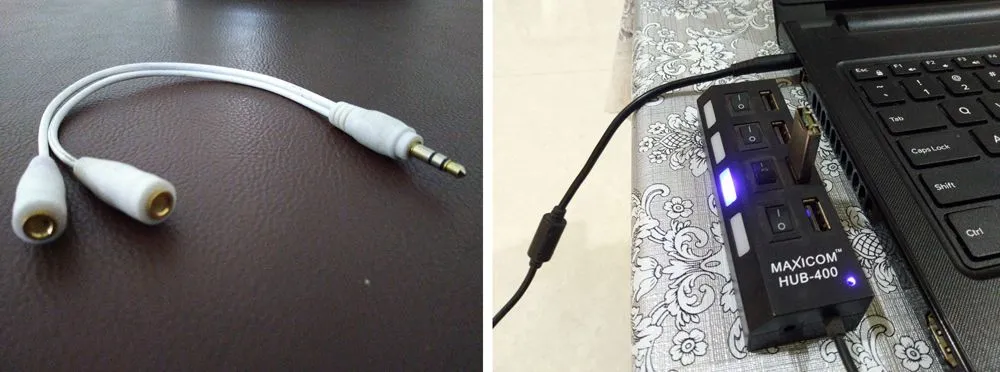
Extension boards are simple electrical tools that offer a simple, yet essential utility: Extending the reach of a power supply to suit your needs. They can be a simple cord that merely connects one appliance to the wall socket, or they can be an extended power strip that enables connecting multiple devices in one place.
Despite the paradigm shift to smart homes and wireless charging, we’re a long way from self-powering devices that work independently for extended periods without a power supply from wall sockets. However, electricity is no longer restricted to the traditional plug and socket system that only supplies electric current. Power supply options that also integrate data transfer capabilities, such as USB and HDMI, are slowly taking over traditional wall sockets, so we can expect ongoing extension technology to be developed around these advancements!
References (click to expand)
- Me E. B. (2019). A Handbook for Electronics Engineering. Made Easy
- Alexander C. K.,& Sadiku M. N. O. (2017). Fundamentals of Electric Circuits. McGraw-hill Education
- Compliance requirements for relocatable power taps or “power strips”. Occupational Safety and Health Administration (OSHA).
- Save Energy in Your Household With A Smart Power Strip. U.S. Department of Energy.
- 3 Easy Tips to Reduce Your Standby Power Loads. U.S. Department of Energy.
- Safety Note 52: The Use of Electrical Extension Systems. University of Reading.