Table of Contents (click to expand)
A GPU (graphics processing unit) is a processor built to run the same mathematical operation across thousands of data points at once. It packs many small cores that work in parallel, whereas a CPU has a few powerful cores tuned for varied, sequential tasks. That parallelism is why a GPU renders high-graphic games far faster than a CPU could.
We’ve come a long way regarding graphics when it comes to gaming. Today’s video games are of the highest graphical quality in history. They are so realistic that even detail given to a strand of hair or a blade of grass is extremely clear in its lifelike appearance. The question is, how did we go from heavily pixelated games to hyper-realistic lifelike gaming? The answer to that lies in the GPU (Graphics Processing Unit) of your gaming console.
Working Of A GPU

A Graphics Processing Unit is a processor that is typically used for processing mathematical and geometric problems. A GPU takes a specialist workload and performs it much more efficiently. The three big GPU makers each have their own design: NVIDIA builds its GeForce RTX cards, AMD makes its Radeon RX line, and Intel offers its Arc series. NVIDIA's chips also run on CUDA, its parallel-computing platform, the full form of which is Compute Unified Device Architecture. AMD and Intel use their own equivalents, but the underlying idea is the same across all of them.
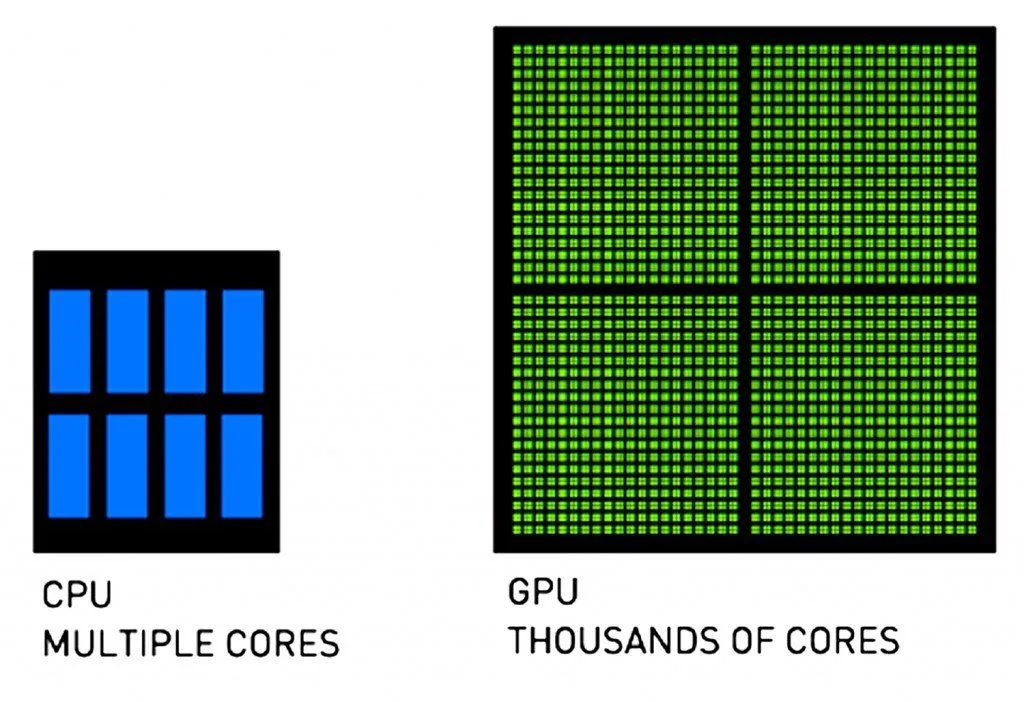
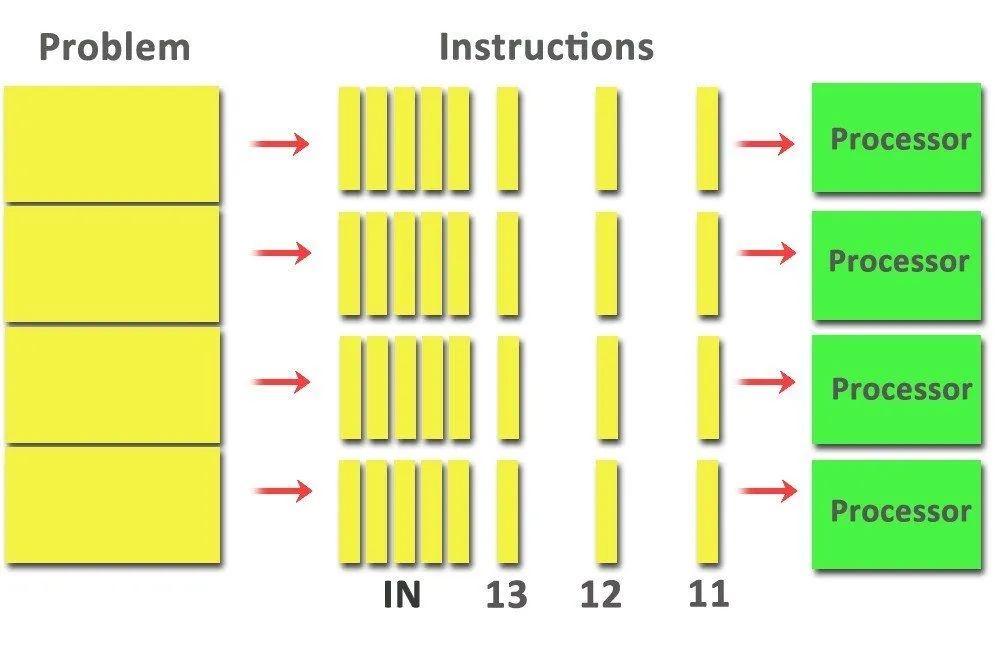
CUDA is the parallel computing architecture created by NVIDIA. Parallel Computing is the process of carrying out parallel computations at the same time. Significant problems are broken into smaller issues and computed simultaneously. To understand how these problems are solved, we need to know what the core of any processing unit does. Although the definition of “cores” can vary, the meaning of a core when it comes to a processor is a unit that receives a set of instructions and performs calculations based on those instructions. A single GPU packs thousands of these small cores (NVIDIA calls them CUDA cores), bundled together into groups known as streaming multiprocessors. A parallel computing problem is broken into smaller units, and each unit is handed to a separate core so that all of them are solved at the same time.
Difference Between A CPU And GPU
A basic analogy can be made to understand the fundamental difference between the CPU and GPU. A CPU can be considered like a Swiss Army Knife, while a GPU is more of a surgical knife. A CPU is very useful for carrying out multipurpose applications, such as music, movies, computing, spreadsheets and even a bit of gaming that is not too graphically demanding.
Now, if we were to dig into more in-depth detail, they differ mostly in their micro-architecture and instruction execution method.
If we are to understand how the micro-architecture differs, we will also need to know about some of the components present within them. The first one is the ALU, also known as the Arithmetic Logical Unit, responsible for the computation processes. The Control Unit is responsible for the operation of the processor, as it tells the memory and ALU how to execute instructions. The Cache is a type of memory that stores data in a queue for the CPU, which helps to avoid any loss of time that it would take for the CPU to access that data from the main memory. The Dynamic Random Access Memory (DRAM) is a type of RAM that helps the processor access types of memory randomly, rather than making it go from a starting point.
Now that we understand the different parts of a CPU and GPU, we can see that the amount of ALUs or cores is much less in a CPU than in a GPU. This is because the central cores of a CPU handle different programs simultaneously. The GPU has many smaller cores, but each works on a smaller portion of the same problem in parallel. The CPU can be summed up as having a lower compute density for an issue as compared to the GPU.
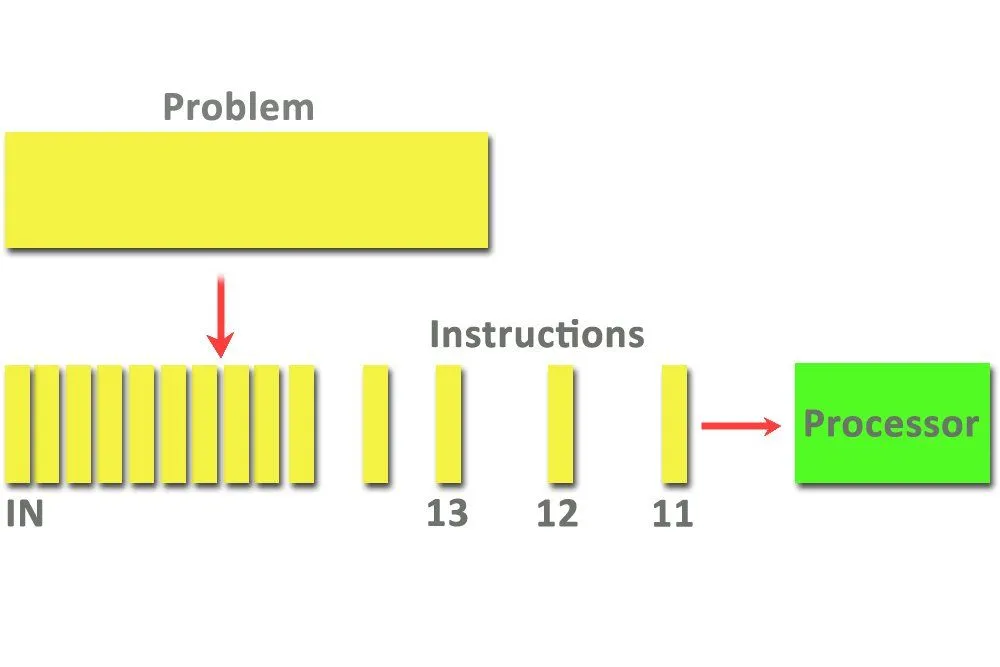
CPU’s have larger cache memories than a GPU. This is because they need more memory to queue up instructions for execution since they have a smaller number of cores. GPUs have less cache memory, as they have a more significant number of cores to handle a large number of instruction executions simultaneously. The method of performance in a CPU is more serial, while the process of implementation in a GPU is more parallel.
GPU And CPU In Gaming
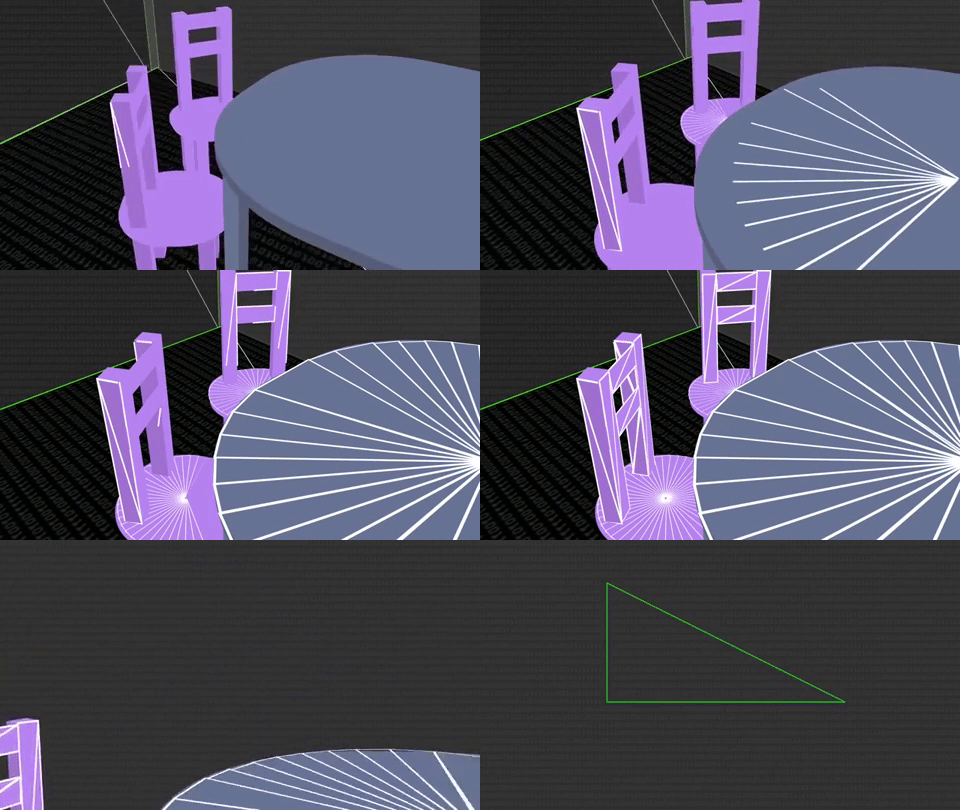
Now that we know the architecture of the CPU and GPU let’s look at how a GPU and CPU perform in gaming. If we were to consider a 3D model, the GPU would be responsible for the shape, color, and texture of the model. The way the GPU goes about this is by dividing all complex surfaces into triangles. Each triangle of specific data is handled by a particular core of the GPU. Now, a CPU would not be able to perform this operation due to its serial approach when rendering a 3D image. It would be unable to work on all the points of an image at once.
The GPU does the artistic work of the game, but the CPU does the organizational job in a game. The CPU is responsible for upholding the rules of gameplay. To give an example of this, if we were playing a shooting game, the CPU is responsible for calculating a factor known as the hitbox. The hitbox is the regional demarcation controlling what effects would be produced if the bullet hits a specific region.

We can safely say that without the immense horsepower the GPU provides, it would be hard to imagine today’s graphically intensive games. Modern cards go a step further with dedicated hardware for ray tracing, which traces the path of light to produce lifelike reflections and shadows, and AI-driven upscaling such as NVIDIA DLSS, AMD FSR, and Intel XeSS, which boost frame rates without sacrificing detail. That same parallel muscle is why GPUs have become the workhorse of artificial intelligence too, training the large neural networks behind today’s AI tools. Constant improvements are made every year to push both games and AI to ever more impressive levels!