Table of Contents (click to expand)
Tidal energy is renewable energy generated from the rise and fall of ocean tides. It is harnessed in two ways: capturing the kinetic energy of moving tidal currents with underwater turbines, or capturing the potential energy of the difference in water height between high and low tide using a dam called a barrage. Because tides are predictable, it is a reliable source of electricity.
What is the most abundant natural resource on Earth? Some might say water, iron or even air. If you’ve guessed the answer as ‘Energy’, then you’re absolutely correct. Energy is the one resource that is present in every nook and cranny of this planet. In fact, Earth is a big ball of energy, filled with energy that is dormant and ready to be harnessed. One might wonder, if that’s the case, why do close to a billion people have no access to electricity? The answer is simple. There isn’t sufficient technology to harness the plethora of energy available.
Things aren’t all bad, however, as humans have found many ways to harness energy from most of the readily available renewable resources.
Tidal energy is one such source of renewable energy. It also happens to be one of the oldest forms of renewable energy generation. The basic concept of tidal energy is the conversion of the kinetic or potential energy derived from tides into electricity.
Before “diving” into the technical aspects of tidal energy, we should understand what causes tides in the first place.
What Are Tides?
A tide is the periodic rise and fall of huge volumes of water as a result of the gravitational forces of the moon and the sun acting on the oceans. The moon’s gravitational pull is strong enough to draw the ocean into a bulge on the side of Earth facing it. A second bulge forms on the far side, where the solid Earth is pulled toward the moon more strongly than the water is, leaving that water “behind.” These two bulges are the high tides, and they are held in shape by the balance between the moon’s gravity and the centrifugal force of the Earth-moon system orbiting their common center of mass.
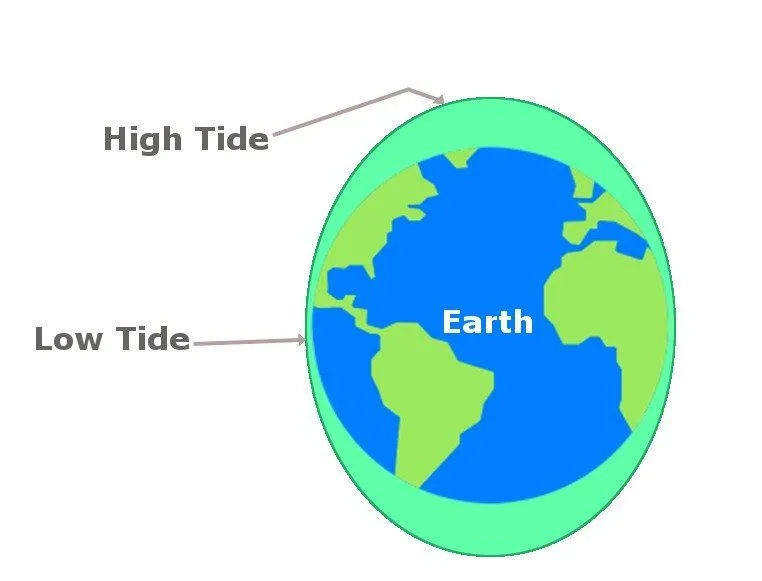
Because Earth rotates once a day through these two bulges, most shorelines experience two high tides and two low tides over the course of a single day. A spot on the coast sees a high tide when it rotates into a bulge and a low tide roughly six hours later, when it has turned a quarter of the way around. Contrary to a common misconception, this daily cycle is not caused by the moon moving closer to or farther from Earth. The moon’s changing distance over the month affects how large the tides are (the biggest occur near a full or new moon), not whether they are high or low on a given afternoon.
Types Of Tidal Energy
Tidal energy is one of the most reliable sources of renewable electricity. Unlike sunlight or wind, two high tides and two low tides are guaranteed every day.
Energy from tides can be tapped in two forms.
- Kinetic energy drawn in from the sea currents:
Kinetic energy is harnessed by employing a setup that is similar to a wind turbine. The density of water is far higher than that of air, so for the same flow speed it carries much more energy. Thus, the blades of a tidal turbine are smaller than that of wind turbine, as they can operate at lower velocities.
2.Potential energy due to changes in water levels :
When the tide changes from high to low and vice-versa, potential energy is generated. In order to tap this potential energy of tides, dams need to be constructed. These dams are called barrages. They capitalize on the differences in water level between high tide and low tide.
Various Setups Used To Harness Energy From Tides.
- Tidal Barrages: A tidal barrage is a dam that taps the potential energy generated by the difference in the height of the high tide and the low tide. The gates of the barrages are kept closed when it is high tide. This results in the water accumulating on one side of the dam. As the tide starts falling, the level of the water on the ocean side of the dam falls. When the difference in height between the two sides is large enough (often a few meters, around 5 m (16 ft) at large sites), the gates are opened.
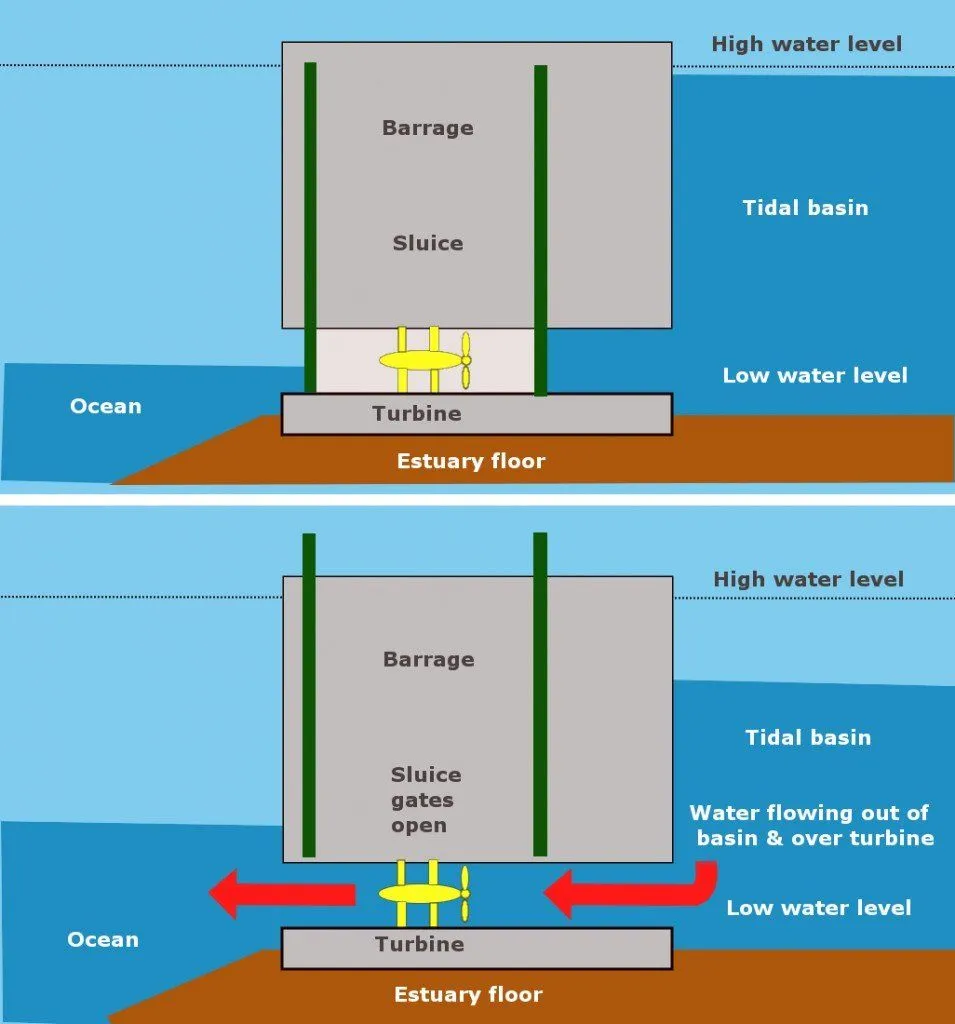 This allows the water to flow through the turbines to the lower side. This sudden movement of water rotates the turbines, which generates electricity. The barrages can generate electricity about 4 times a day due to the two falling and two rising tides.
 - Tidal Stream Systems: These can be regarded as the windmills of the sea since, instead of air, they rely on water currents. The underwater turbines are anchored to the sea bed. These systems exploit the kinetic energy from the water to drive the blades of the rotor.
- Tidal Lagoons: These are similar to barrages, except that lagoons are highly localized and specific to a particular stretch of water. Barrages span the entire width of a river or estuary. In the case of lagoons, the structure is confined to the parts with a high tidal range. Basically, lagoons are miniature barrages, the only difference being that a barrage blocks an entire estuary, whereas lagoons block only a certain part of the river.
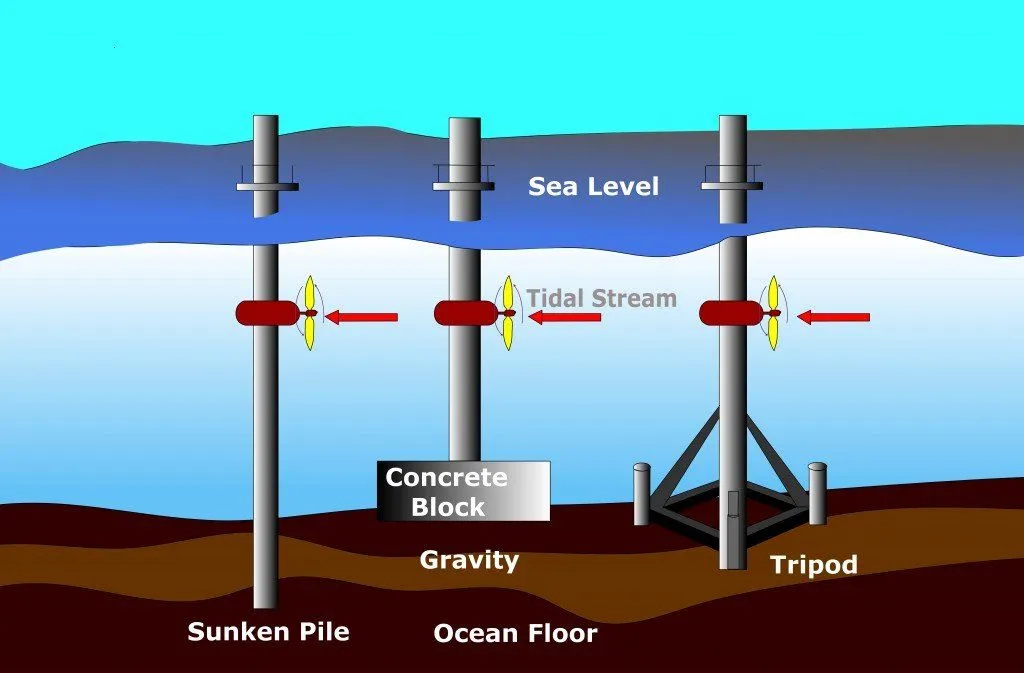
The blades of these rotors are stronger and smaller than those of conventional windmills. This enables them to endure extreme pressure underwater. Tidal streams are gaining popularity, as they are cheaper to set up and maintain. The blades are equipped with a functionality that enables them to change direction according to the flow of current. This tidal stream technology is suitable in areas where the water currents are strong.
These ideas are not just theory. The world’s first tidal power station, the 240-megawatt (MW) barrage on the Rance estuary in Brittany, France, has been generating electricity since 1966. It held the title of largest tidal plant for 45 years until South Korea’s 254 MW Sihwa Lake barrage took the lead in 2011. On the tidal stream side, the MeyGen array in the Pentland Firth off northern Scotland is the largest of its kind in the world, with its first four seabed turbines feeding the grid since 2024.
Although tidal energy is reliable and clean, building it has its fair share of challenges, including high construction costs, disruption to local ecosystems and demanding maintenance in a harsh saltwater environment. Even so, the potential is enormous, and it offers some real advantages over solar and wind, chiefly its predictability: we know exactly when the tides will turn, decades in advance. Let’s hope the governments of the world make the most of this readily available resource in our ongoing efforts to stay green and sustainable for generations to come.