We don’t power cars with solar energy because a car roof is far too small. At noon the sun delivers about 1,000 W/m², and the panels used on cars convert only about 20-25% of it. A roof of 1-2 m² yields a few hundred watts at best, enough to add a few kilometers of range a day, not to drive on.
The human motto is simple: “If it ain’t broke, don’t fix it.”
When we realized that fossil fuels, which still supply the great majority of the world’s energy (coal alone accounts for roughly a quarter of it), are finite and likely to run out, we decided to find a replacement. Sure, we have diesel and petrol and natural gas, but those will also eventually be exhausted.
For the last two decades, humans have been trying to use renewable energy sources as our main energy providers. The sun is available almost everywhere on Earth and is currently one of the most appealing choices for energy generation. It’s quite surprising that we have known about the sun’s power for millennia, but haven’t been able to tap into solar power until recently. There are other sources of power as well, like the wind and tidal energy, but to harness these, more specific locations must be developed.
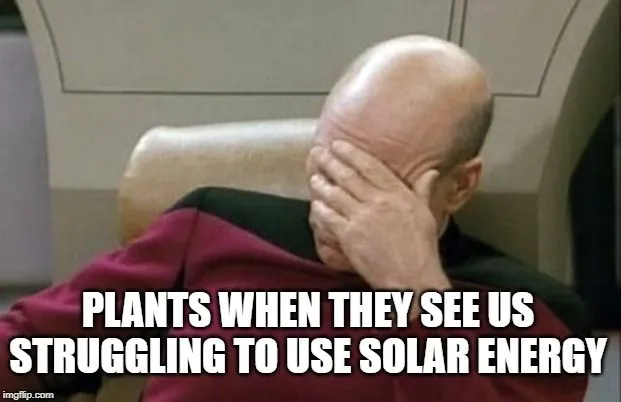
How Did We First Learn About Solar Energy?
Ingenhousz, a Dutch physicist, was the first to discover photosynthesis in plants. It was his conclusion that plants had chlorophyll, which absorbed sunlight and used this light energy, along with atmospheric CO2, to prepare sugar and water. This was way back in 1779. Since human cells don’t contain chlorophyll, we can’t make food for ourselves.
In 1839, Edmond Becquerel, a French scientist (the father of Henri Becquerel, the first man to observe radioactivity) observed that certain materials produced electricity when exposed to light. His discovery was ‘realized’ about a century later when Russell Ohl patented a silicon solar cell in 1946, paving the way for the first practical photovoltaic cell built at Bell Labs in 1954. Initially, solar cells had very low efficiency and weren’t considered a viable source of electricity generation. Today, the best commercial silicon panels convert roughly 22-27% of incoming sunlight into electricity, and most rooftop panels you can buy sit around 20%.
Potential Of Solar Energy
Solar energy harvesting is still at an early stage of development. We have so much more to learn and experiment within this field, but this natural source has tremendous potential. The sun hits us with almost 173,000 terawatts of energy at any moment which is almost 10,000 times the energy requirement of the earth! (Source)
In spite of all this loss, if a single hour of solar radiation could be fully harnessed, it would be sufficient to power the whole world for an entire year! If this isn’t potential, I don’t know what is! Now, are there any risks when it comes to tapping into this resource?

If There Is So Much Potential, Why Don’t We Use It?
Scientists around the world are very excited by the prospect of using this energy, and a multitude of applications that run on electricity have been designed so they could run on solar panels.
People have tried using solar energy to power bulbs, watches, mobile chargers, and countless other products, but none of them have been successful enough to be commercialized and broadly replace existing products. Basically, as much as we would like to incorporate this energy source into our daily lives, there are limitations to its use.
In recent times, with the advent of electric cars, the idea to fuel them with solar energy also gained momentum. Firstly, electric cars (even though they run on electricity and don’t use fossil fuels) are still NOT GREEN! People suffer from the misconception that not using fossil fuel means “green”, which is kind of absurd, considering the electricity we use is generated by burning the very same fuels! So technically… not green.
However, what if your car had solar panels that could charge it? Now that would indeed be a green machine!
When Tesla unveiled the new Roadster in 2017, it floated a solar roof option, and the Cybertruck was teased with an optional solar tonneau cover too. Tellingly, Elon Musk has since called a car roof “the least efficient place to put solar,” and Tesla never shipped a factory solar roof. The Karma Revero does offer a small solar roof, but it only tops up the battery rather than running the car.
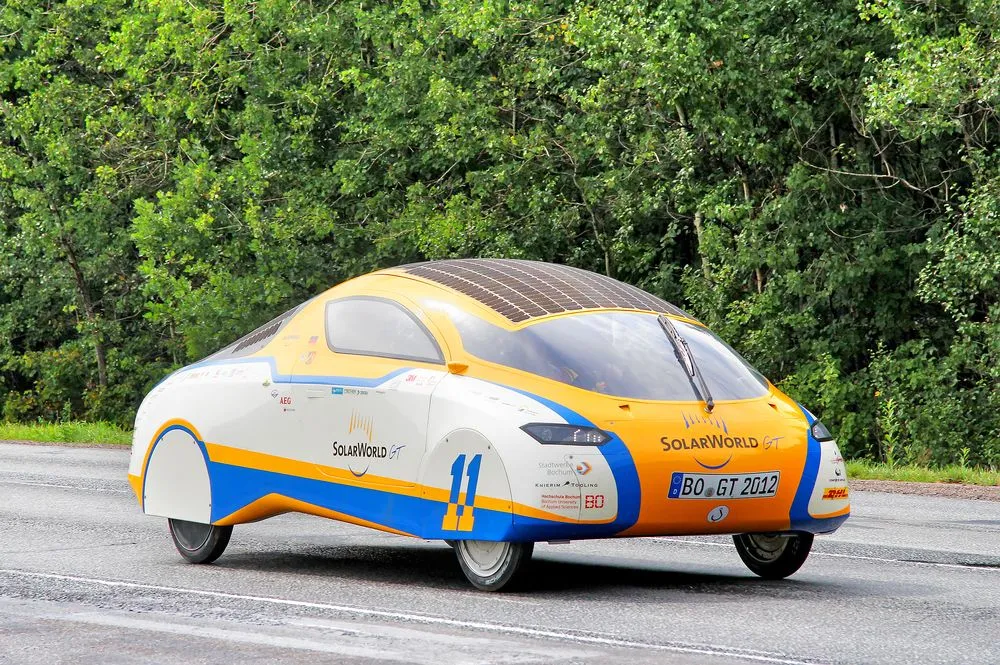
Even the highest-efficiency solar cells ever made, four-junction concentrator cells that reach about 47.6% in the lab under concentrated light, never make it onto a car. Those are research devices, not the flat ~20% panels you can actually bolt to a roof, so there is real doubt that a solar roof could power all the essential functions of a car.
What’s Stopping Us From Harnessing Solar Energy?
The efficiency of the currently used solar panels is subject to the fulfillment of different criteria, including the following:
- Type of solar panel – There are basically three types of panels, of which mono-crystalline solar panels are the most efficient, poly-crystalline panels come in next, and thin-film panels are the least efficient. Depending on the type of solar panels used, the amount of electricity generated will vary significantly.
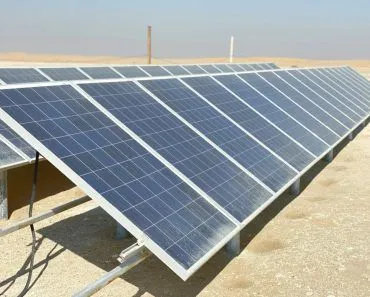
- Area – Solar panels need a lot of surface to add up. At peak noon sun (about 1,000 W/m²), a 1 sq ft (0.09 m²) patch of ~20% panel makes only about 18 W. A car roof of roughly 10-25 sq ft (1-2.3 m²) tops out at a few hundred watts in full sun, and over a real day that works out to only about 1-2.5 kWh, enough to add maybe 10-40 km (6-25 mi) of range, not to actually drive on.
- Temperature – Moderate sunny temperature is ideal, as extremely high temperatures can reduce the efficiency of the solar panels. What do people do in winter or when it’s raining? Cars must work in all weather conditions, so if a solar panel limits the car’s functionality, it becomes practically useless.
- Shade – Shade falling on the solar panels reduces its efficiency and can reduce the efficacy of the entire solar system. There is bound to be shade when the car is parked or when it’s placed in a garage because our current infrastructure and cultural norms are not designed with solar cars in mind.
- Lifetime – PV cells are not permanent. They lose output at a median rate of about 0.5% per year, so a panel keeps roughly 88% of its rated power after 25 years. On a car, baking on a hot roof and flexing with the body, they would likely fade faster.
- Cost – More importantly, the cost of the panels and the R&D required to power the electronics using the sun’s energy outweighs the benefits that solar panels provide.
Most cars today that have solar roofs use the energy only to top up a few basic functions. Charging an EV battery from a roof panel alone for 300 miles (about 480 km) of range would mean leaving it parked in the sun for weeks, which is obviously impractical.
What Happened To The Solar-Powered Car Startups?
A handful of companies have tried to beat the math anyway, and the results show just how hard it is. The Dutch startup Lightyear built the sleek Lightyear 0, whose roof and hood solar could add a little daily range to its 61.2 kWh battery, but the company went bankrupt in early 2023 before it could reach mass production. Germany’s Sono Motors, which had taken more than 45,000 reservations for its solar-skinned Sion, cancelled the car the same year and pivoted to selling solar kits for buses and trucks.
As of 2026, the most prominent survivor is California’s Aptera, a teardrop-shaped three-wheeler covered in solar cells. Its huge, aerodynamic body lets it claim up to about 40 miles (64 km) of free range per day from the sun in ideal conditions, far more than a flat car roof could ever manage, and the company has been targeting its first customer deliveries around the end of 2026. The lesson from all of them is the same: solar can meaningfully supplement an electric car, but only when the whole vehicle is redesigned around catching light.
While there is still time before we will be able to drive cars fully powered by solar energy, there are some alternatives, such as solar power stations, which are being designed to reduce our reliance on fossil fuels for electricity.
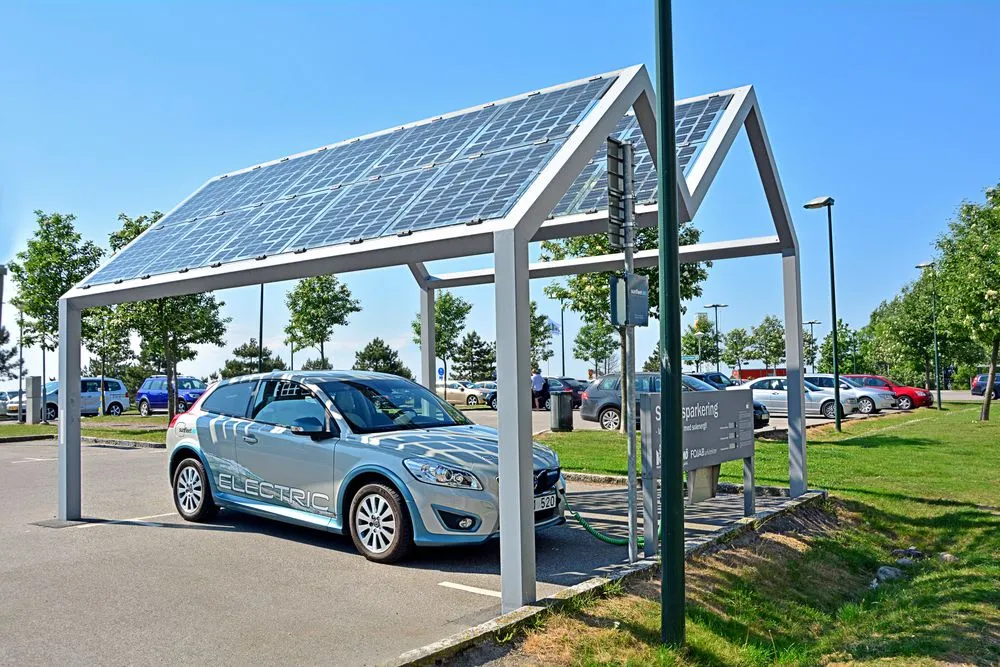
Generating electricity from solar panels is not an easy task. Considering the efficiency of the panels, in order to power cars or household electricity needs, we would need panels that are much more efficient, but we’re simply not there yet.
While there are some design issues that prevent us from using solar roofs on cars, there is also the cost of the panels coupled with the complexity of the electronics that the cars may require. Solar-powered vehicles are surely the future, but not the near future. As the cost of solar panels continues to fall and their efficiency increases, things will begin to look much “brighter” for this alternative and sustainable option!
References (click to expand)
- Shining brightly. MIT News, Massachusetts Institute of Technology.
- History of Solar Energy in California. Go Solar California.
- Jan Ingenhousz. Encyclopaedia Britannica.
- Solar-cell efficiency. Wikipedia.
- Coal. Global Energy Review 2025. International Energy Agency (IEA).
- The future of solar EVs dims: Lightyear is bankrupt, Sion fights for its life. Electrek.