70mm film records each frame on a strip more than twice the area of a standard 35mm frame, yielding much higher resolution, finer color and a wider native aspect ratio (typically 2.20:1, up to 2.76:1 for Ultra Panavision 70). A standard 70mm frame is broadly comparable to a 6K-8K digital image, while IMAX 70mm (15-perf) is often estimated at 12K-18K. Digital cinema, by contrast, is cheaper, easier to distribute, scales cleanly from 2K to 4K and 8K, and dominates today's theatres - but loses the grainy, organic look that 70mm devotees prize.
The battle between old-school nostalgia and modern gadgetry has been raging for centuries, but it seems to have reached a fever pitch in recent decades, given our rapid improvements in technology, increase in consumer demand, and cultural divides between old and new. Vinyl or MP3? Satellite or cable? Books or Kindles? Batman or Superman?
This struggle between modernity and tradition is particularly obvious in the world of film, where aging film buffs and modern indie film fans frequently duke it out over which type of film is better – 16mm, 35mm, 70mm, IMAX, digital…?
With the recent resurgence of throwback film techniques (most notably, Quentin Tarantino’s use of 70mm film to shoot his 2015 western thriller The Hateful Eight), a whole new generation of people are being exposed to some nearly forgotten film styles, and an ancient debate is heating up once again.
70mm Film
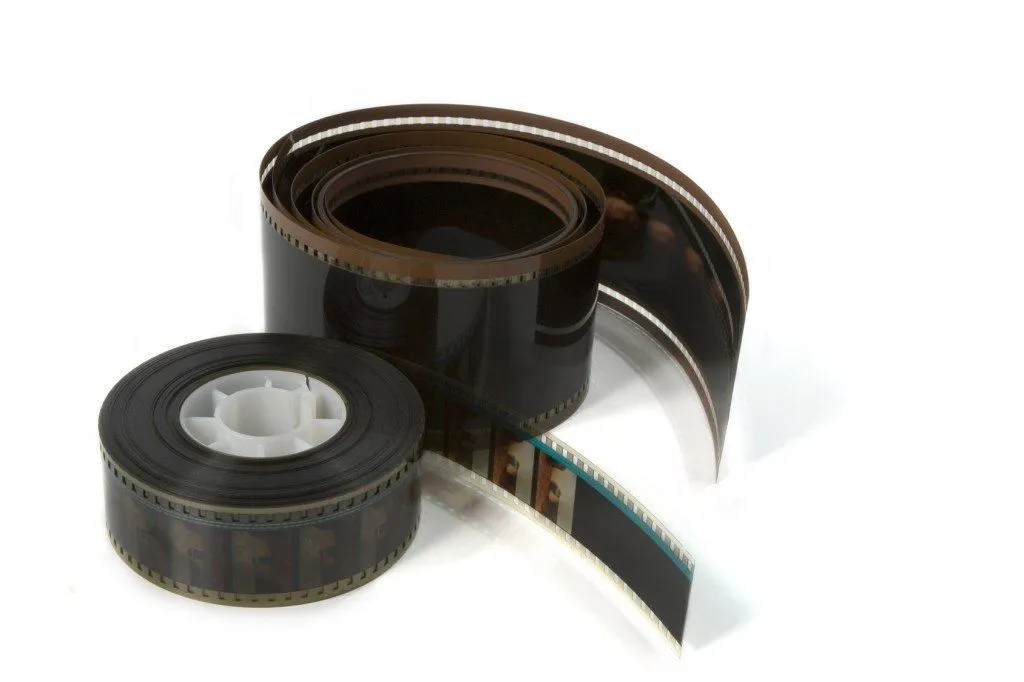
As the advertisements for Tarantino’s latest film proudly proclaimed, the movie would be available for viewing in “Glorious 70mm – Ultra Panavision 70”, and most people had no idea what they meant. Well, 70mm is just another variety of analogue film, more specifically, a film reel with frames that are 70mm in width. The gauge for most motion pictures is 35mm, and while most movies are still wonderful to watch, the difference when you jump to a 70mm gauge is quite noticeable.
Improvement In Resolution And Aspect Ratio
The resolution of 70mm film is much better than 35mm, providing a richer visual experience and extremely detailed images that are a joy to watch. The 70mm film produces a much higher resolution than its 35mm counterpart due to its larger size. This enhanced resolution contributes not only to a more detailed image but also to a broader color range, resulting in vivid and vibrant visuals. 70 mm film also changes the aspect ratio of the film, stretching it to a wider 2.2:1 ratio, rather than the typical 1.37:1 (known as the Academy ratio) or 16:9 (widescreen ratio). This makes 70mm films ideal for larger and wider screens (for example, IMAX films shoot on a special type of 70mm film).
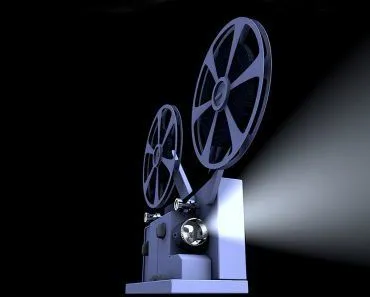
To project a movie shot on 70mm film, a specially equipped projector capable of accommodating the film’s larger size is required. The larger film strip allows a much larger and wider frame, which translates into a sweeping, panoramic viewpoint when projected. This has made 70mm film enjoyment for epic-scale movies.
Now, it’s important to remember that Tarantino is far from the first person to use 70mm film for a movie; in fact, the technology dates back to the very beginning of cinema. Throughout film history, when a director wanted to shoot an epic film, such as Ben-Hur or Lawrence of Arabia, they would choose to shoot on 70mm film. This was perfect for the Panavision movie palaces that featured extremely wide screens and could accommodate the wider image of these early “blockbusters”. However, as the decades passed, movie theaters evolved (and shrank), the popularity of the lighter and less expensive 35mm film grew, and 70mm film fell from popularity, despite its undeniably better quality.
The equipment to transport, store, and play 70mm film was expensive, bulky, and difficult to manipulate, as were the cameras used to shoot with that type of film. Today, there are limited resources in terms of projectors that can play 70mm film, let alone projectionists trained to expertly show these types of films on a regular basis.
Although enjoying a larger picture detail and resolution, the usage of 70mm film comes with some challenges. Producing and processing 70mm film is expensive, as it requires more materials and specialized equipment. Furthermore, due to the fragile nature of celluloid, it is susceptible to damage and degradation over time.
Essentially, 35mm film did to 70mm film what digital film is currently doing to 35mm film… making it obsolete. 35mm film was more manipulable for different formats, and could be squeezed and bent more easily without distortion, unlike 70mm film.
The Digital Revolution
Traditional motion pictures are recorded on analog film frames, whereas digital film is recorded as digital video images. That is a fundamental difference that creates a very different visual experience for movie-goers who prefer “the real thing”. Unlike traditional film, digital does not require physical film stock. The camera’s sensor transcribes light entering the lens into data, which is then processed and stored in a digital format. This shift from analog to digital storage not only reduced the cost but also increased speed and convenience.
Moreover, digital projectors can be much cheaper and simpler to operate than their 70mm counterparts. The setup includes a server to store the digital files and a digital projector. The film is played directly from the server, thus reducing the risk of wear and tear on the film.
HD To 4k
High-definition video (Hi-def) has even better resolution, and this has since been followed up by 2K and 4K, creating an arms race to create the most incredibly clear and detailed movies on the market. Digital film is useful and preferred in many instances because it can be crunched down to whatever size is most convenient, without losing much resolution. For example, a new movie that is shot on digital film, rather than celluloid film, can be manipulated and shrunk to fit on the screen of a tablet or smartphone without compromising picture quality.

In a mobile, device-oriented society, this flexible capability makes it more profitable and sensible for most directors to shoot films in a digital format. Even most old movies have been re-recorded in digital formats for that same reason – ease of distribution and consumption.
One might think that with our ever-advancing digital technology, the resolution would be far better in a high-definition digital film, making the discussion of 70mm vs. digital superfluous. However, high-format celluloid films (70mm) have relatively comparable, if not better, resolution than high-definition digital films. There is also an authentic edge to old-school cinematography, which is often lost in the glossy, sterile, and polished appearance of digital projection.
Visual Differences Between 70mm And Digital
70mm film provides a grainy texture that many filmmakers and viewers resonate with for its real and physical touch to the images. It excels in representing natural light and colors, thus delivering a unique aesthetic that digital film often finds challenging to replicate.
On the other hand, digital film gives continually sharp and clear images. Post-production tasks such as edits and color grading are also simpler. As 4K and HDR technologies become widespread, the difference between digital and 70mm format in image detail is decreasing. However, a film recorded on standard 70mm (5-perforation) is broadly comparable to a 6K-8K digital format, while scenes shot on IMAX 70mm (15-perforation) are often estimated at 12K-18K equivalent, although the higher numbers are debated and partly marketing-driven.
While neither of these two formats can be called “better” than the other, the decision of whether to support or see a digital film vs. a 70mm film truly comes down to personal preference. For traditional film lovers, a movie shot in 70mm will always be superior to the plasticized images of a digital film, whereas superhero blockbuster fans are almost certainly digital film supporters, considering those CGI effects and epic battle scenes would likely be impossible without digital magic!
Is 70mm The Same As IMAX? (IMAX 70mm vs Digital IMAX)
Not quite, and this is where most of the confusion creeps in. A standard 70mm frame (the kind Tarantino used) is five perforations tall and runs vertically through the projector, giving that wide 2.20:1 picture. IMAX also uses 70mm film, but it turns the stock on its side and runs it horizontally, 15 perforations per frame, which is why cinephiles call it “15/70”. That produces an enormous frame of about 69.6 by 48.5 mm, close to nine times the area of a 35mm frame and around three times a standard 70mm frame, in a tall, almost-square 1.43:1 aspect ratio built for those towering IMAX screens.

“Digital IMAX” is a different animal entirely, because there is no film involved at all. IMAX introduced a dual-projector digital system in 2008 that paired two 2K projectors, and in December 2014 it rolled out IMAX with Laser, a dual 4K laser setup. Digital IMAX screens usually show a wider but shorter 1.90:1 image rather than the full 1.43:1 of 15/70 film, so you literally see less picture from top to bottom. According to figures compiled on Wikipedia, digital IMAX tops out at a perceived resolution of roughly 2.9K, while true 70mm IMAX projection is estimated near 12K. That gulf is exactly why film purists sometimes tag the smaller digital auditoriums with the nickname “LieMAX”.
So when a film like Christopher Nolan’s Oppenheimer advertises “IMAX 70mm”, it means the real thing: giant, horizontally-run 15-perforation film. A ticket that just says “IMAX” at your local multiplex almost always means the digital version, which is brighter and far more convenient, but not the same beast.
What Resolution Is 70mm Film, And Is It Better Than 4K?
Film does not have “pixels” the way a digital sensor does, so any resolution figure is really an estimate of how much fine detail the emulsion can resolve. With that caveat in mind, a standard 5-perforation 70mm frame is broadly comparable to a 6K to 8K digital image, and the much larger 15/70 IMAX frame is often estimated at around 12K, with some enthusiasts pushing figures as high as 18K (those top numbers are debated and partly marketing).

Set against a modern 4K digital master (roughly 4,000 pixels wide), even ordinary 70mm comfortably pulls ahead, and IMAX 70mm is in another league. It is worth remembering, though, that a lot of the “70mm” you actually watch has passed through a digital scan and edit at some point, and that resolution is only one ingredient. As with megapixels on a camera, dynamic range, color depth, grain and the sheer size of the projected image all shape what your eye registers as “sharp”. That is a big part of why a 70mm print can look richer than a technically clean 4K projection, and why directors keep dragging these heavy, expensive reels back into cinemas.