The main difference between Bluetooth and Infrared transmission is that Bluetooth does not come with any positional constraints, while Infrared is a line-of-sight technology.
Whether you want to transfer extremely important files, like funny memes or the latest movies, to your friend’s phone, or change the channel on your TV without having to pull yourself off the comfy couch, technology is always there to make things easier for you.
In the former case, the Bluetooth feature of your smartphone enables you to share files with your peers, while in the latter, it’s the infrared rays that allow you to change the channel from a considerable distance.
Since both of these technologies operate wirelessly, one might think that they are somehow associated, but is that true? What makes bluetooth and infrared different from each other?
Bluetooth
Bluetooth is a wireless technology standard that uses short-wavelength UHF radio waves in the 2.4 GHz ISM band (2.400–2.4835 GHz) to transmit and receive data over short distances. Classic Bluetooth typically reaches about 10 meters, while modern Bluetooth 5 and Bluetooth 6 (released by the Bluetooth SIG in August 2024) can stretch effective range to several hundred meters in open conditions using long-range coded modes.
 If you have a smartphone, then you likely know about Bluetooth and what it does. It helps you wirelessly connect with other devices in the vicinity, such as your headphones, headset or someone else’s phone, and also exchange data.
The advantages of Bluetooth include low power consumption (especially with Bluetooth Low Energy, or BLE), no requirement for additional hardware beyond the devices being connected, and simplicity of use. BLE in particular has made Bluetooth the default link for fitness trackers, smart-home sensors, wireless earbuds and modern game controllers.
Infrared Transmission
‘Infrared transmission‘ derives its name from infrared light rays. Infrared rays have a wavelength that is greater than visible light, extending from the nominal red edge of the visible spectrum at 700 nanometers to 1 mm. Most consumer infrared devices, like TV remotes, use near-infrared light at around 940 nm, modulated on a carrier frequency of about 38 kHz so that the receiver can ignore ambient light and sunlight.
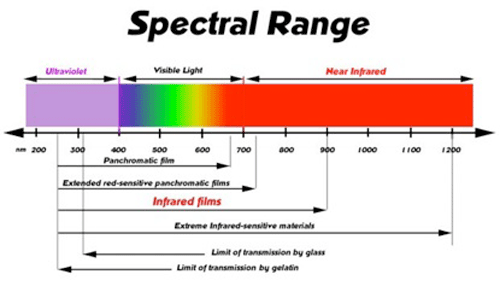
It’s interesting to note that most of the thermal radiation emitted by objects at room temperature is infrared; but since infrared rays aren’t visible to the naked eye, you don’t usually see any mysterious radiation emanating from people’s bodies!

Infrared signals use pulses of infrared rays to connect two devices locally and exchange information between them. These are most commonly used for short-range or medium-range communications between two devices. The most common example of infrared communication is your TV remote control; infrared rays are what allow you to change channels, increase/decrease volume, and perform plenty of other ‘remote’ operations without having to leave the couch.
Bluetooth Versus Infrared
Both Bluetooth and Infrared transmission help to connect with nearby electronic devices and exchange data, but there are a few key differences between them. Let’s have a look:
Device Position
This is where Bluetooth comprehensively trumps infrared connectivity. You see, infrared is a ‘line-of-sight’ technology, i.e., you have to keep the two devices that you are trying to connect in front of each other without any substantial obstruction in between.
This is why you have to point your TV remote right at the TV’s face to lower the volume on a particularly loud channel.
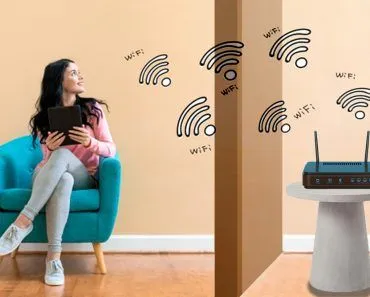
Bluetooth, on the other hand, does not come with any such ‘positional’ constraints. You can be carrying the phone anywhere within the transmission range and you should be able to transfer photos to your computer without any problems. In fact, it works even when you’re in a different room altogether – separated by walls!
Transmission Range
The transmission range, i.e., the distance up to which two devices can connect and exchange information, of Bluetooth is more than that of Infrared. A typical TV-remote-style infrared link works only over a short, line-of-sight distance of roughly 5 to 10 meters. Bluetooth’s effective range depends on its power class and version: low-power Bluetooth devices like earbuds and wearables typically reach about 10 meters, Class 1 devices are rated up to 100 meters, and Bluetooth 5’s long-range coded mode can push that to several hundred meters in open, line-of-sight conditions.
Method Of Operation
While a Bluetooth-enabled device can connect with multiple devices at a given time, Infrared usually connects on a ‘one-to-one’ basis, i.e., you can connect a device with only one other device at a time. That’s why, unlike Bluetooth, an infrared link can only push data to one device at a time. You can’t simultaneously fire the same beam at, say, a laptop and a printer. This may not always be considered as a drawback; since it’s a one-to-one system, the chances of interference in data transmission from other connected devices are far lower than the chances of that happening with Bluetooth.
Applications
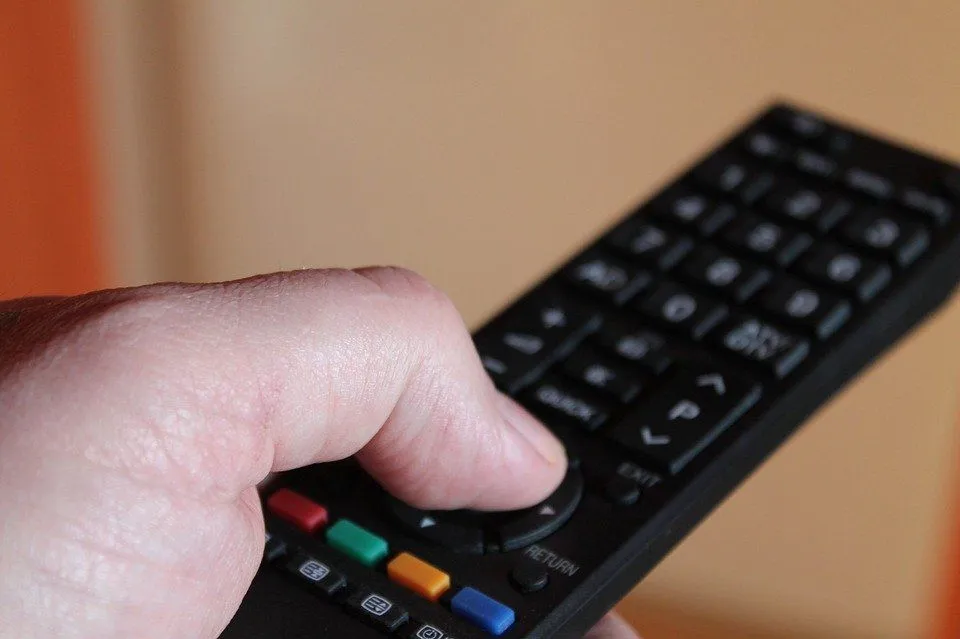
Due to the limitations on the relative positioning of the devices involved, infrared transmission is mostly used in systems that are expected to remain stationary or have little movement with respect to each other. As mentioned earlier, TV/DVD remotes are the best, and are the most commonly used examples of Infrared. Apart from that, infrared transmission has historically been used in wireless mice, keyboards and early PDAs, although these peripherals have largely shifted to Bluetooth or proprietary 2.4 GHz radio dongles. Infrared still shows up in pulse oximeters, some industrial sensors, motion detectors, and short-range data links between consumer electronics.
In today’s world of smartphones and tablets, Bluetooth has become synonymous with the wireless sharing of data.

It’s also used for a wireless communication between a phone and a headset, streaming audio in Bluetooth-enabled speakers, local connectivity between computers, and plenty of other applications that require wireless data transmission.
Therefore, while both technologies have their uses and benefits, it entirely depends on users to decide which technology they think responds best to their needs, and hence, is best suited for them.
Is Bluetooth A Type Of Infrared?
This is one of the most common mix-ups, so let’s settle it straight away: no, Bluetooth is not infrared, and it doesn’t use infrared at all. The confusion is understandable, since both are invisible and both let your gadgets talk without wires. But they live in completely different neighborhoods of the electromagnetic spectrum.

Bluetooth is a radio technology. It works at 2.4 GHz, which is in the microwave region of the radio band. You can turn that frequency into a wavelength with the simple relation λ = c / f, where c is the speed of light (about 3 × 10⁸ m/s). That gives a Bluetooth wavelength of roughly 12.5 cm (about 5 inches). Infrared, by contrast, is a form of light just beyond the red end of what your eyes can see, with wavelengths between about 700 nanometers and 1 millimeter. The near-infrared used by a TV remote sits near 940 nm. So a single Bluetooth wave is hundreds of thousands of times longer than the infrared pulses from your remote.
That difference in wavelength is exactly why the two behave so differently. Long radio waves diffract around furniture and slip through walls, which is why Bluetooth doesn’t care where your phone is. Infrared, being essentially light, gets blocked by anything opaque, which is why you have to aim a remote. You can actually see infrared light if you point a remote at a phone camera, which detects near-infrared, and press a button.

Why Do Newer TV Remotes Use Bluetooth Instead Of Infrared?
If you’ve noticed that a streaming remote for a Roku, Fire TV or Apple TV doesn’t need to be pointed at the screen, while the old cable-box clicker absolutely does, you’ve spotted the infrared-versus-Bluetooth split in everyday life. The classic remote uses an infrared (IR) LED that flashes a coded beam of near-infrared light at a sensor on the front of the device. Because it’s line-of-sight light, you have to aim it, and a hand, a cushion or a closed cabinet door is enough to block the signal.
Newer “voice” remotes increasingly use Bluetooth (often Bluetooth Low Energy) or another 2.4 GHz radio link instead. Since these are radio waves, they don’t need a clear sightline. You can change the channel with the remote face-down on the sofa, from across the room, or even with the box tucked inside a media cabinet. Radio also makes a two-way link practical, which is what lets these remotes carry a microphone for voice search and pair to the box like a Bluetooth headset would.
There’s a catch, which is why many remotes are hybrids that include both. Infrared remains the universal language for sending basic commands like power and volume to a TV or soundbar made by a different manufacturer, so a Bluetooth streaming remote often keeps a small IR emitter just for those. The trade-off is the same one this whole article is about: infrared is cheap, simple and immune to radio interference but demands line of sight, while Bluetooth is more flexible and supports richer features at the cost of pairing and a bit more power. If you’d like the bigger picture on the radio side, we cover it in how far Bluetooth can reach and how to extend it.