There are so many programming languages because no single language is best for every job. Each one is designed around different trade-offs: the kind of problem it solves, its level of abstraction, its speed, and its programming style (paradigm). C and C++ favor speed and control, Python favors readability and is now the go-to for AI and data science, JavaScript runs the web, and Rust adds memory safety. Roughly 9,000 languages have been created, though only 50 to 100 see wide use today.
When it comes to programming languages, there is a plethora to choose from. Moreover, there are tons of them out there for different applications. The primary function of a computer program is to solve a problem with a set of given instructions (or code). However, if all of them can solve problems, why is there a need for so many? Can’t one program do it all? To answer these questions, let’s look at what it takes to execute a computer program.
Hardware That Computes The Program
Almost all computing of any nature (with a few exceptions) is done in the Central Processing Unit (CPU). The modern-day CPU that we have today contains many microelectronic components. The CPU can be further divided into smaller computing units known as Logical Transistor Gates, commonly known as logic gates. The primary function of these logic gates is to implement three primary operators: AND, OR and NOT gates.
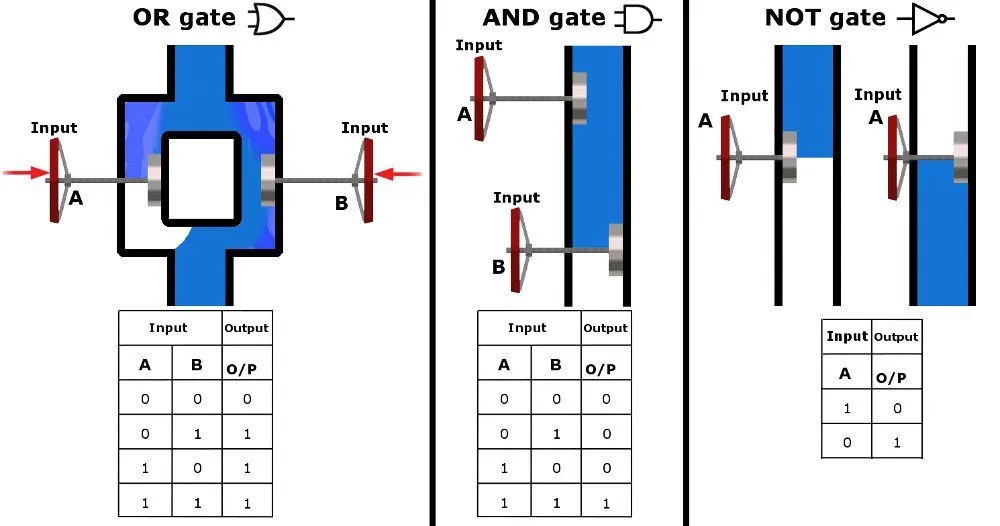 The above logical operators work on a number system known as a binary, which works on a numeric system of only 0s and 1s. 0 signifies no electric current passing through the transistor, and 1 implies that there is an electric current passing through the transistor.
The most bizarre phenomenon is, if you combine just the above logical operators with binary, you will be able to express all of the logic we know, including arithmetic operations, integers, and almost everything else you can imagine. A modern-day CPU has something called a microcode preinstalled within it. A microcode contains a set of basic instructions used to carry out more complex executions, known as machine code.
Levels Of Software For The Execution Of Code
Now that we know the hardware behind the execution of computer code (there’s much more, but for the sake of simplicity, I will stick to the parts where the main computation occurs), let’s move on to how many levels of software are needed for the execution of the software. The first program needed is the Assembler, which helps in the conversion of the assembly language into machine code. An assembly-level language is a lower level language that acts as a correspondence program between a high-level programming language (e.g., Python, C++, Java) and the machine code. The layout of any software architecture is as follows:
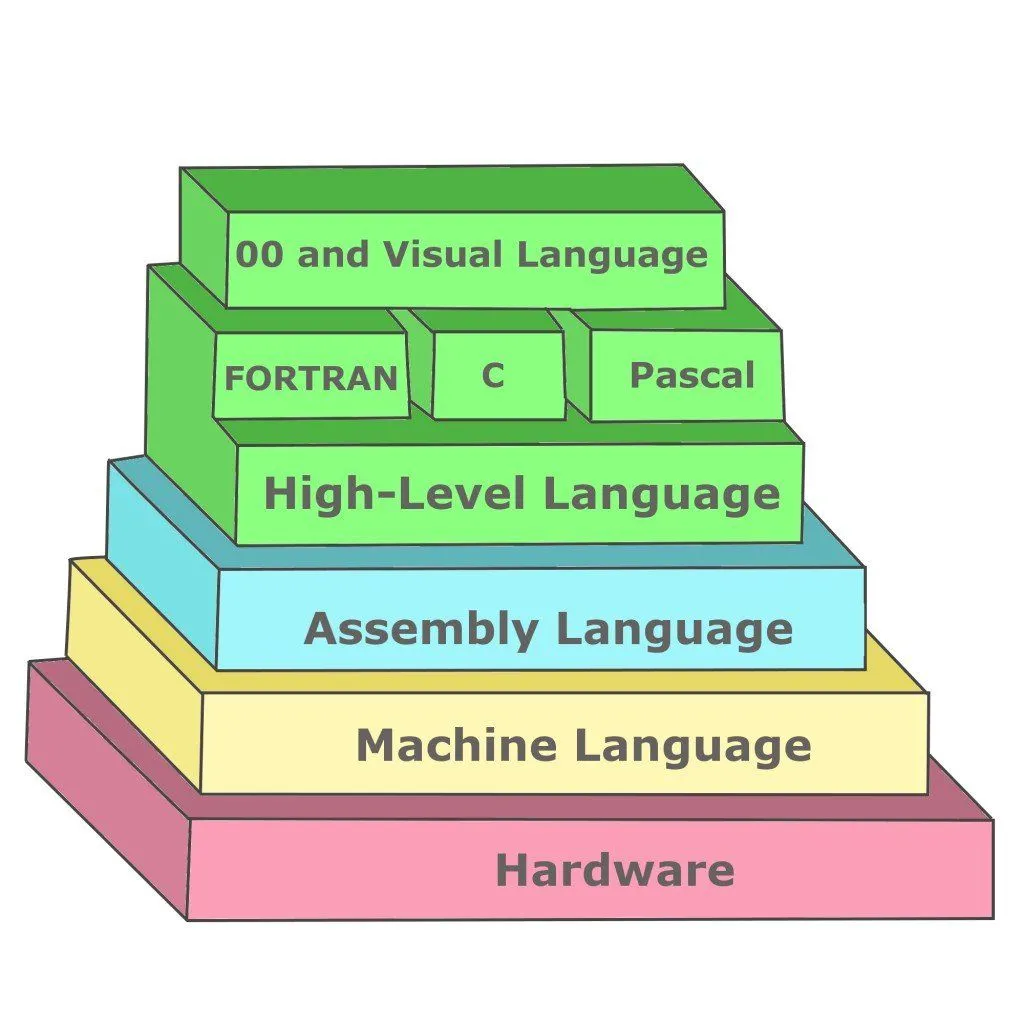
The next important program is the Compiler. The compiler takes high-level abstract language and converts it into assembly language, and sometimes machine code as well. The last final program (or package) that brings everything together is the Operating System. The operating system is basically a program that starts when your computer starts and runs until the computer is shut down. The operating system is also responsible for managing complicated tasks, such as file management, input & output management. This functions so that every time you want to execute a program, you don’t have to keep reimplementing it again and again. It also makes the interactions of the user function in a more intuitive way, rather than always trying to communicate with the computer in the form of 0s and 1s.
One Size Does Not Fit All
Now we understand that all the different programming languages go through the same form of execution. One program should fit for all causes, right? Wrong. It would be an ideal world where we only needed one program for everything and anything. All programming languages do serve the same purpose, whether it is C++, Java, Python, etc., but all of them are necessary for different reasons.
What creates the need for different programming languages is that each is built around a different set of trade-offs. When a language is created, its designers chase a particular goal, whether that is raw speed, easy readability, safety, or a tidy way to model a specific kind of problem. No single language wins on all of those at once, so each one ends up good at some things and clumsy at others. Languages also belong to different families, or paradigms: imperative ones spell out step-by-step instructions, object-oriented ones bundle data and behavior into objects, and functional ones lean on stateless functions and avoid changing shared state. With all of that in mind, let’s take a look at some of the most widely used languages and what each is good for:
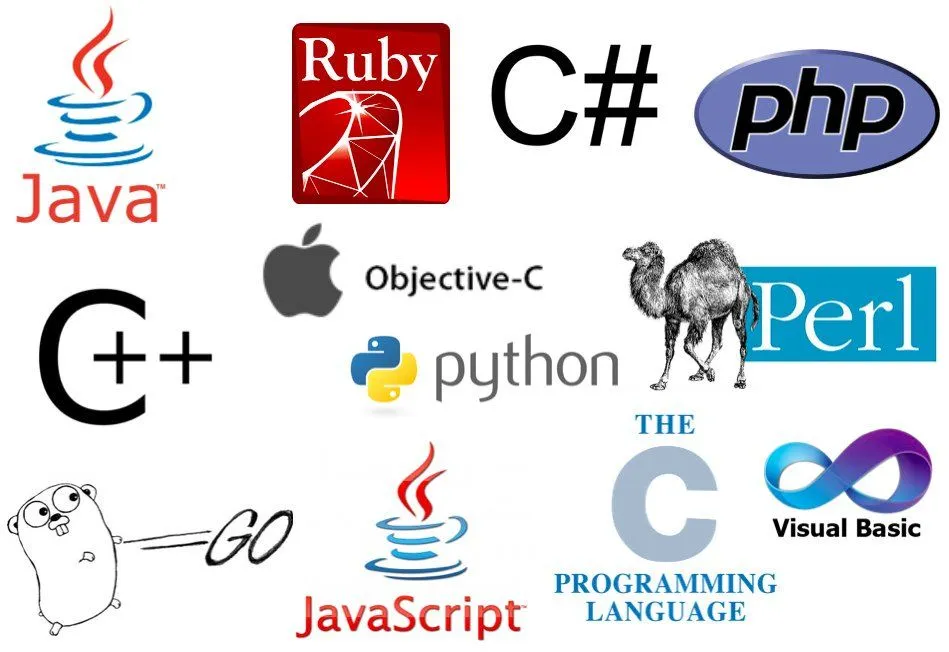
- C: This is the influential general-purpose language that much of modern computing is built on, including parts of operating systems like Windows, Linux, and macOS. It sits close to the hardware, which makes it fast and memory-efficient, but it also leaves memory management entirely up to the programmer.
- C++: This is an extension of C, created by Bjarne Stroustrup, that adds object-oriented features. It is widely used for performance-heavy work such as computer games with high-end graphics, web browsers, and parts of operating systems, because it gives fine-grained control over memory and runs very quickly.
- Java: This is a popular general-purpose language used heavily for large business and enterprise systems, web backends, and Android apps. Its slogan was “write once, run anywhere,” since Java programs run on a virtual machine rather than directly on the hardware. (For new Android development, Google now recommends Kotlin, a newer language that runs on the same virtual machine.)
- Python: This is a general-purpose language prized for being easy to read and quick to write. It is not as fast as C or C++, but it is excellent for web development, automation, and data handling, and it has become the dominant language for artificial intelligence and machine learning. It is now among the most popular languages in the world.
- JavaScript: This is the language of the web, running inside virtually every web browser to make pages interactive. With tools like Node.js it also runs on servers. TypeScript, a superset of JavaScript created by Microsoft, adds optional type checking that catches errors early, which is why it is increasingly favored for large web projects.
- HTML/CSS: Strictly speaking these are not programming languages at all. HTML is a markup language that gives a web page its structure, while CSS handles styling and layout. Backend languages such as Python or PHP often generate HTML and send it to the browser to be displayed.
- PHP: This is used to add functionality on the server side of websites. It lets you retrieve data and generate HTML in useful ways before it is sent to a user’s browser. Large platforms, including the software behind WordPress and the early versions of Facebook, were built with it.
- R: This is a language built primarily for statistics, data analysis, and visualization, and it is a favorite among statisticians and researchers.
- Rust: This is a newer systems language designed to be as fast as C and C++ while preventing whole classes of memory bugs at compile time. That focus on memory safety has made it one of the most admired languages among developers, and US agencies such as CISA and the NSA now point to memory-safe languages like Rust to reduce security vulnerabilities.
- Go and Swift: Go (from Google) is built for simple, fast networked and cloud services, while Swift (from Apple) is the main language for building iPhone and Mac apps. Both are examples of newer languages created to fit a specific problem domain better than the older general-purpose options.
So Why Do New Languages Keep Appearing?
If we already have all of these, why do people keep inventing more? Part of the answer is history. The first widely used high-level language, FORTRAN, was created by an IBM team led by John Backus in 1957 for scientific and mathematical work. C arrived around 1972 at Bell Labs, Python in 1991, and newer entries like Go, Swift, and Rust all appeared in the 2010s. Each was built to fix something its predecessors did poorly, whether that was readability, safety, speed, or working well with a new kind of hardware.
The other part of the answer is variety of purpose. Some languages aim to be general-purpose, while others are designed for one narrow job, like R for statistics or SQL for databases. They also sit at different levels of abstraction: low-level languages give you tight control over the machine but make you do more of the work, while high-level languages hide those details so you can write less code. Add in different paradigms and personal preference, and it is no surprise that, by some counts, roughly 9,000 programming languages have been created over the decades, even though only 50 to 100 are in wide use today.
As you can see, although every one of these languages ultimately boils down to instructions for the same kind of hardware, each has its own strengths and ideal use cases. In the end, the choice of a language depends on the problem you are solving, the performance you need, and which language you and your team are most comfortable with.
References (click to expand)
- Computer programming language: Definition, Examples, and History. Encyclopaedia Britannica
- The Top Programming Languages 2025. IEEE Spectrum
- 2025 Developer Survey: Most Popular Technologies. Stack Overflow
- A History of C++: 1979 to 1991, by Bjarne Stroustrup. AT&T Bell Laboratories
- The Urgent Need for Memory Safety in Software Products. Cybersecurity and Infrastructure Security Agency (CISA)
- Why Are There So Many Programming Languages? Stack Overflow Blog