Table of Contents (click to expand)
Yes, a grenade can explode if shot, but it is unlikely with a handgun. A pistol bullet usually just dents the hard casing without reaching the detonator. A high-velocity rifle round, however, can punch through and set off the main charge. MythBusters confirmed a .308 rifle shot detonated a grenade, while a pistol round did not.
The very thought of war can be a scary thing for most of us ordinary folk, but it is still fascinating as to how the different kinds of weapons function (even though we condemn their use). We know about a range of weapons that are employed by any fighting force, which include guns, missiles, tanks, grenades, etc. When any weapon is designed, it is usually done so in a fashion so that it delivers maximum damage to the target and is in the safest possible state in the hands of the person about to deploy it against a target. When thinking about some of these tools of military might, a funny question came to mind: what would happen if a grenade was shot by a gun? To answer this question, let’s first start by understanding how a grenade works.
Grenades
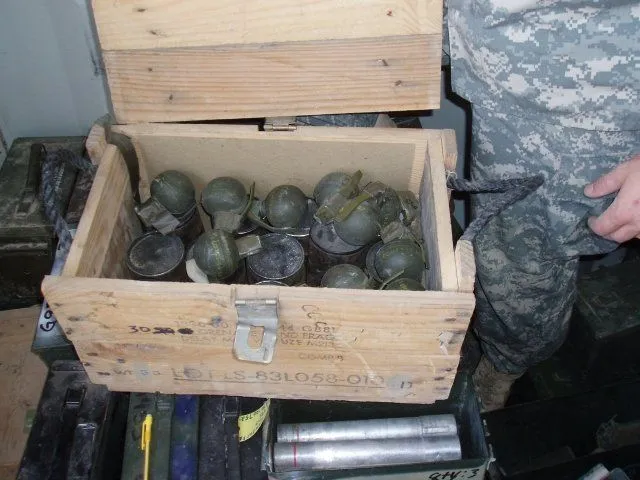
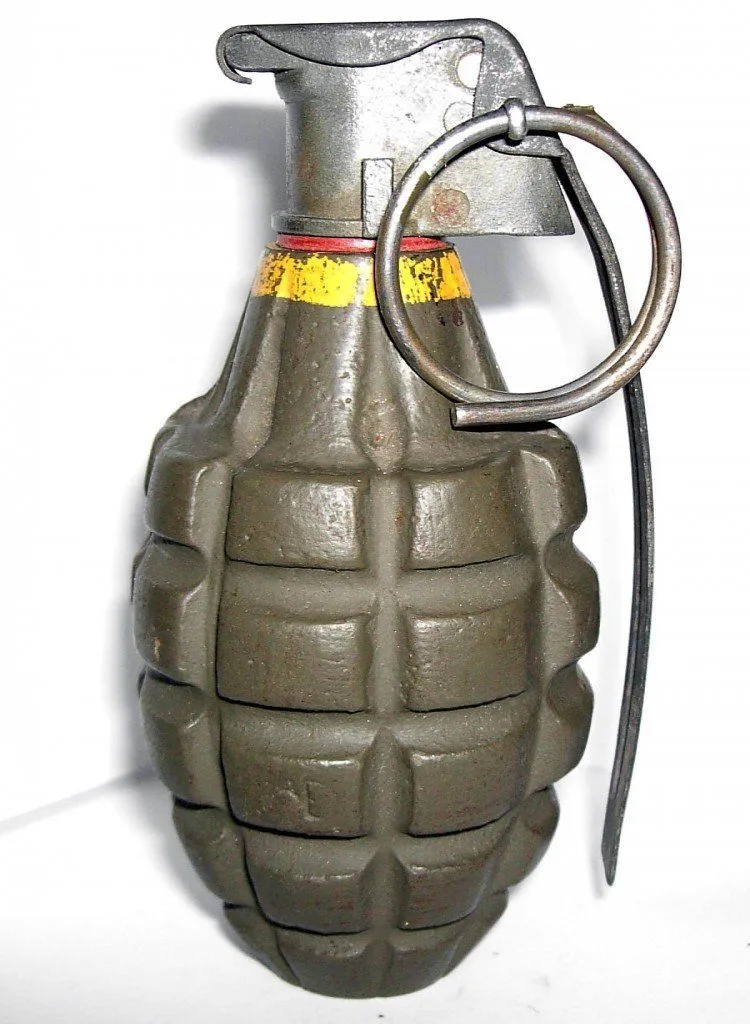
A grenade is an explosive that is usually thrown by hand; it is classified as a projectile weapon. However, grenades need not always be thrown. Grenade launchers are also used to increase the projectile range of the grenade being delivered. A grenade generally consists of a main explosive charge, a detonator, and a spring-loaded striker held back by a safety lever (the "spoon") and a safety pin. Before the grenade is thrown, the user pulls the safety pin but keeps the spoon pressed against the body. The moment the grenade leaves the hand, the spoon flies off and the spring drives the striker into a small percussion primer. The primer ignites a slow-burning pyrotechnic delay element, which takes roughly four to five seconds to reach the detonator. The detonator then sets off the main charge, causing the grenade to explode.
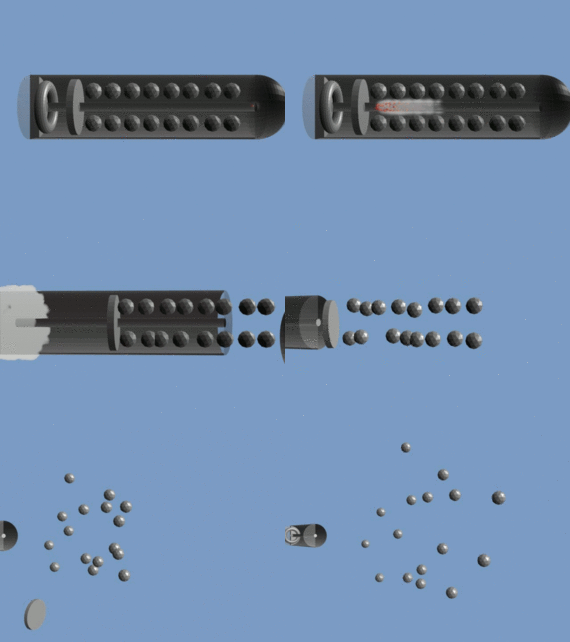
Now that we understand the mechanism of how a grenade basically works, let’s move on to the different types and their bodies. The three main kinds of grenades are fragmentation, high-explosive concussion, and smoke grenades. There are other types of grenades, but these are the main ones. Fragmentation grenades are the most commonly used types of grenades in the army. They disperse shrapnel upon detonation. The body of a fragment grenade is usually made of steel or some kind of hard synthetic substance. The body of a fragmentation grenade ensures that even if a certain amount of damage occurs to the grenade, such as splintering or dents, the grenade still does not detonate. Grenades can usually be visualized in the shape of pineapple, but can also be more circular. There is also a stick design (the German Stielhandgranate) that dates back to World War I and World War II.
Bullets
A bullet is fired from a firearm, classifying it as a kinetic projectile. As we all know, guns come in all different shapes, sizes and power ranges. Similarly, bullets are made from a variety of materials, such as copper, lead, steel and even wax! The design of bullets must be done with a number of critical parameters in mind. The first problem a bullet encounters is in the barrel of the gun, where it must form a firm seal with the bore of the gun. If a strong seal is not achieved, then gas from the propellant leaks past the bullet, which leads to a loss of accuracy and efficiency for the bullet. The bullet design must also be such that it does not damage the bore, so the covering of the bullet cannot cause too much friction with the bore of the gun.
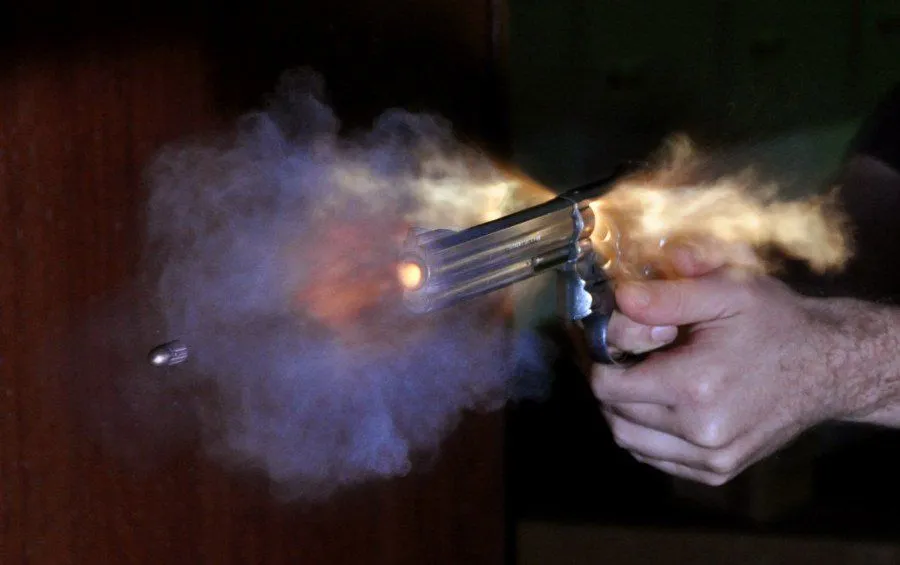
The physics of a bullet after it leaves a gun also plays a pivotal role in the effectiveness of the bullet. In fact, there is a special branch of physics that deals with this, known as ballistic physics. The two important things that affect the physics of a bullet are its shape and the spin imparted by the spiral grooves cut into the inside of the gun barrel, known as rifling. Any slight asymmetry in the shape of the bullet is largely cancelled out by the spin that the bullet picks up as it travels down a rifled barrel. However, a spin rate far greater than the optimum can have adverse effects, such as causing a lightly built bullet to fly apart in mid-air or simply landing it off the mark. With smooth-bore firearms, the preferred form for bullets was of a spherical shape. These unstable bullets tumbled erratically and provided only moderate accuracy. Even so, the aerodynamic shape changed little for centuries. In general, when it comes to the construction of a bullet, shapes are a compromise between aerodynamics, interior ballistic necessities, and terminal ballistic requirements.
Grenade Vs. Bullet
To pit a grenade against a bullet might seem straightforward, but it is a bit more complicated, based on a few conditions. Let’s take the case of a fragment grenade and an ordinary handgun bullet. In such a case, for the bullet to make the grenade explode, it needs to penetrate through the hard outer fragment shell. This poses a problem for bullet penetration, as the hard exterior would almost certainly leave a dent, but it wouldn’t be deep enough to reach the detonator. Even if it did reach the detonator, it probably wouldn’t have enough kinetic energy to ignite the detonator to light the main charge, which would then result in the main charge explosion.
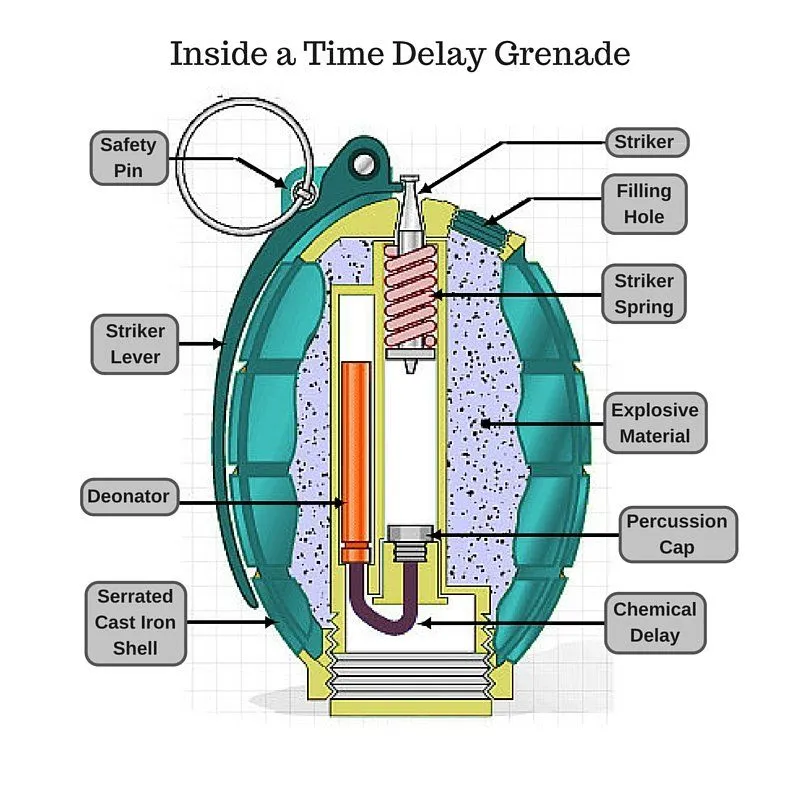
Now, in a second case, where we use the same fragmented grenade, but this time with a very high-caliber sniper rifle, things would end much differently. Sniper rifles fire heavy, high-velocity rounds that are far more aerodynamic and carry much more kinetic energy than a handgun bullet (they are not themselves explosive). In this case, the round could punch through the casing and deliver enough of a shock to the main charge to set it off. This is roughly what the team on the show MythBusters found in their episode "Fire in the Hole": a .45 pistol round and 12-gauge buckshot failed to detonate a live grenade, but a single .308 rifle round set off its explosive filler almost instantly.
Thus, in conclusion, it’s hard to make a grenade explode just by shooting a normal handgun at it, but with a powerful enough sniper rifle, it’s possible to penetrate deep enough into the main charge and make a grenade explode with a single, well-placed shot!
Do Grenades Explode On Impact?
If shooting a grenade is a stubborn way to set one off, you might expect that simply hurling it hard against a wall would do the trick. For most grenades, it won’t. The standard fragmentation grenade is deliberately built not to explode on impact. As we saw earlier, it relies on a time-delay fuze: once the spoon flies off, a slow-burning element takes roughly four to five seconds to reach the detonator, no matter what the grenade strikes along the way. That delay is a safety feature. It gives the thrower time to take cover, and it means a dropped or fumbled grenade does not detonate the instant it hits the ground. Wikipedia’s overview of grenades notes that fuze-delayed designs are the predominant system in use today, precisely because impact fuzes are so troublesome: make the primer sensitive enough to fire reliably on landing and it also tends to fire when accidentally knocked, but make it more stable and it may fail to go off on soft ground.

That said, impact grenades do exist. The British No. 69 of World War II had a body made of Bakelite plastic and an "all-ways" percussion fuze. As it flew through the air, a linen tape with a lead weight on the end unwound and armed the fuze, so that the grenade exploded the moment it struck a target, whichever way up it landed. More sophisticated modern examples include the Russian RGO grenade and its close cousin the RGN, whose dual-action fuze arms after about 1 to 1.8 seconds and then detonates on contact with almost any surface, including sand, snow or water. If the grenade somehow fails to hit anything, a backup pyrotechnic delay of roughly 3.2 to 4.2 seconds sets it off anyway. So while a classic pineapple grenade waits out its timer, plenty of purpose-built munitions really do go bang on contact, much like a missile’s contact or proximity fuze.