Table of Contents (click to expand)
No, we will not run out of cloud storage anytime soon. Every cloud platform is physically backed by hard drives, SSDs, and tape that sit inside data centers, so it does have a limit. But that limit is staggeringly high (hyperscale operators like AWS, Microsoft, Google, and Meta already store thousands of exabytes between them), and new data centers keep coming online faster than we fill them, especially as the AI boom drives an unprecedented buildout.
Remember back in the day when your friend had an awesome new movie and you had to go to his place and watch it with him? How about when all the photos you had were saved on a DVD, or when you went to the internet and downloaded your favorite songs before saving them on an iPod or a mix CD?

Yeah, those were the good ol’ days for sure, but humans have advanced and developed far more powerful alternatives for storage devices. There came small discs and memory cards, which are still in use now, albeit less than they used to be just a few years ago.
However, the main problem still persisted. Since the data was stored in a physical device, in order to take that data with you, be it songs or movies or anything else, you had to carry that physical device with you.
And that was when we looked up at the sky and saw our savior—the cloud.
What Is Cloud Storage?
Cloud storage is different from your usual physical storage, since you don’t have to carry your movies, music, and videos everywhere with you on some physical device to enjoy them. You now have access to Netflix, where you can just browse from a wide range of collections of movies and shows that are not stored on your device. Or Spotify, where all the songs from all of your favorite artists are in one place, without actually taking up any space on your phone, and so on.
(Cloud storage is the bucket where your files live; cloud computing is the broader idea of renting CPUs, GPUs, and software services that operate on those files.)

These are just a couple examples of services that use cloud storage, but we use many more in our daily activities. Put simply, we can say that cloud storage is storing your data in a place that is not a physical device, but a place that you can access through the internet on the go.
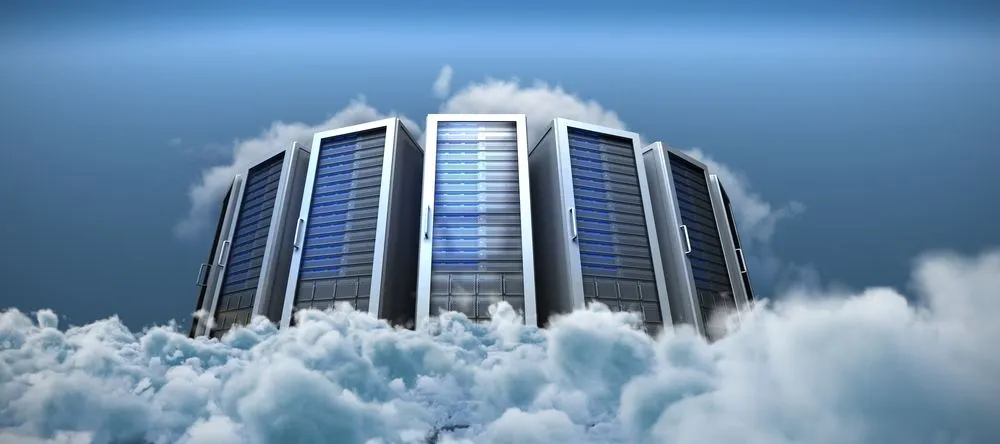
The name might make you think that you’re storing the data somewhere high up in the sky among the clouds, but that’s not technically the truth. Cloud storage is driven by huge storage units located somewhere on Earth that can be accessed to store and retrieve your data.
Think of it as a huge well. Your water is your data and there is a two-way pipeline running from your house to this well. You put your water into the well whenever you want to store it and then take it out of the well whenever you’re thirsty. This way, you don’t have to carry a huge source of water with you everywhere you go (although yes, pipes are physical; in the case of cloud storage, the internet plays a role that is not physical).

How Does Cloud Storage Work?
The cloud storage system uses a network of servers to save the data fed into it by millions of users. We first connect to virtual servers; these are not physical servers, just systems that sort the data and then send it to actual servers, via the internet. Depending on the size as well as the type of the data, the virtual servers then direct the data to different physical servers.

In most cases, the data that we upload is sent to multiple different servers across the world so that even if any one of those servers goes down, we can still access our data through a different server.
So, instead of being an actual cloud and hanging out in the sky, the cloud storage system is just a network of huge storage facilities that are spread across the world, connected by the internet, using virtual servers.
So Will We Ever Run Out Of Cloud Storage?
Since cloud storage also uses huge storage units that are physical in every sense of the word, technically they do have a limit. These storage units are huge racks of hard drives that are similar to the hard drives we use, but much much bigger. Now, even though there is a limit to how much data they can store, we need to understand that it’s a huge number.
Let’s talk in numbers for a minute to put things in perspective.
The largest storage facility in the cloud network has a limit of 1 billion TB.
The average size of a movie is around 4 GB.
A single facility can hold 250,000,000,000 movies.
(For comparison, IMDb lists well under a million titles in total.)
There are hundreds of such storage facilities around the world with similar storage capacities.

These data facilities are also maintained such that they never get full. More and more facilities like this are being constructed to increase the storage capacity of cloud storage. The only way for us to run out of these storage units is when we don’t have the material to build them, which is technically a possibility, but certainly not for the foreseeable future.
If anything, the opposite is happening: the AI boom of 2024–2026 has triggered the biggest data-centre buildout in computing history. AWS, Microsoft, Google, and Meta alone are spending more than $300 billion a year on capex, much of it on new exascale facilities to host LLMs, training data, and user content. According to IDC, the world’s total stored data is on track to pass 200 zettabytes (200,000,000,000 TB) by the end of 2025, with about half of it living in the cloud.
Conclusion
There is a theoretical limit to cloud storage, but that limit is already so huge that it doesn’t seem to be a problem in the near future. Even if we start inching closer to that limit, there are people who are making sure that new storage units are being created all the time, so the limit would never be reached.
So to conclude, unless we run out of the material to make these huge storage units, which already have more than enough space on them, we won’t realistically run out of cloud storage anytime soon!
References (click to expand)
- What is Cloud Storage? | IBM. The International Business Machines Corporation
- Rajan, A. P., & Shanmugapriyaa. (2013). Evolution of Cloud Storage as Cloud Computing Infrastructure Service (Version 1). arXiv.
- Zeng, W., Zhao, Y., Ou, K., & Song, W. (2009, November 24). Research on cloud storage architecture and key technologies. Proceedings of the 2nd International Conference on Interaction Sciences: Information Technology, Culture and Human. ACM.