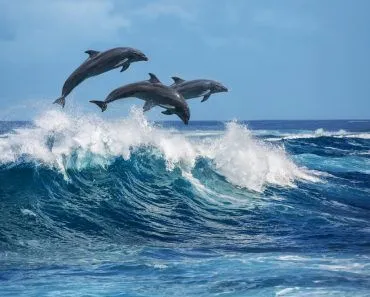
Dolphins do help humans, other dolphins, and whales, and they have been recorded shielding swimmers from sharks. But they rarely help for free: research suggests much of this behavior is reciprocal altruism, where a highly intelligent, social animal helps now in the expectation that the favor may be returned later.
Let’s consider an incident from 2011. Two ecologists from the Leibniz Institute of Freshwater Ecology and Inland Fisheries in Germany were surprised to observe a series of peculiar interactions between a bottlenose dolphin and a pod of sperm whales.
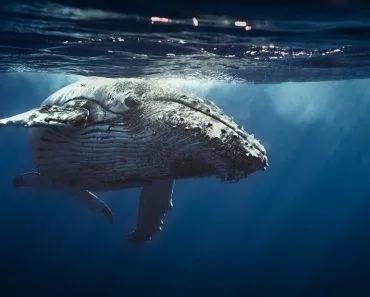
Now, in general, bottlenose dolphins are very social creatures. They’ve been known to interact with multiple species of animals, such as rough-toothed dolphins, gray whales, and humpback whales.
Sperm whales, on the other hand, are a shy species. They’re placid mammals who mostly opt out of interacting with other species of animals. So, when these two species of marine mammals teamed up, their interactions confused the heck out of researchers.
The interactions were observed over a period of eight days in the waters around the Azores, roughly 1,600 km (1,000 mi) off mainland Portugal. The researchers, behavioral ecologists Alexander Wilson and Jens Krause, noticed that a bottlenose dolphin was seemingly adopted into the pod of sperm whales. This particular dolphin happened to suffer from a spinal deformity that gave its back half an unmistakable “S” curve.
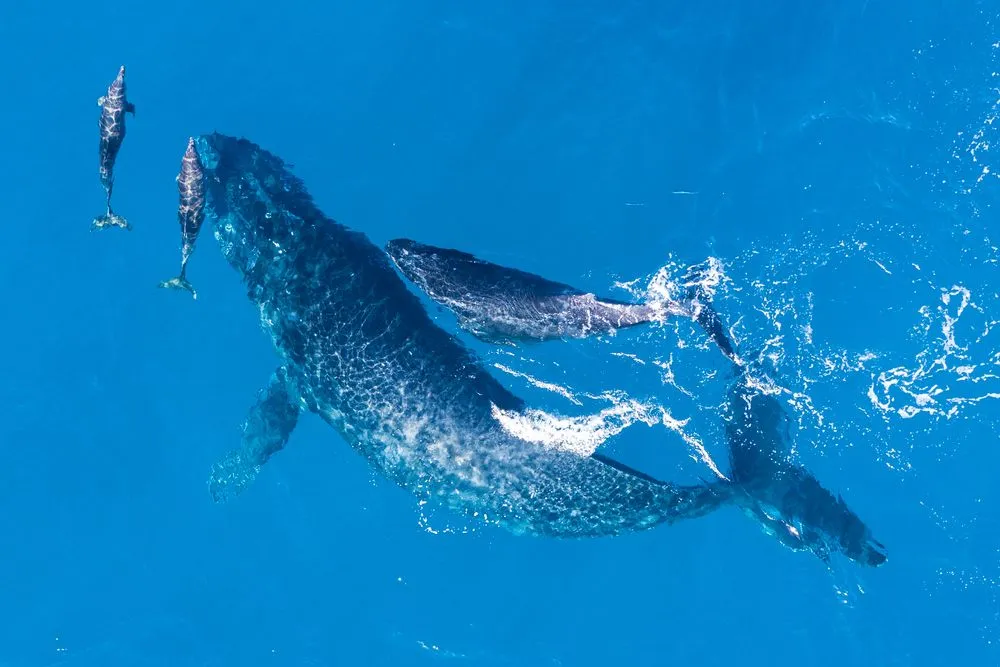
Due to the deformity, the dolphin could not swim at the same pace as members of its own pod, but it could swim with the slower sperm whales. The dolphin swam, foraged, and played with members of the sperm whale pod for as long as the ecologists observed it.
Another incident in 2008 involved another group of whales and another bottlenose dolphin, this one a local celebrity named Moko. Two pygmy sperm whales, a mother and her calf, had become stranded on Mahia Beach in New Zealand. Conservation officers tried desperately for about an hour and a half to lead them back into deeper waters, with no success.
Then Moko, through no external coercion or influence, decided to “help” the two whales. Within a matter of minutes, the dolphin had managed to lead them through a narrow channel and back out to sea.
Never before had this specific inter-species pairing been observed.
Bottlenose dolphins have specifically been known to engage in seemingly unexplainable behaviors. They seem to be ever-present constants in a rich history of reports indicating or recording their altruistic tendencies. So, what is it about bottlenose dolphins that makes them engage in such behaviors?
Do All Dolphins Engage In Altruism?
Delphinidae, as a family, in particular, has been a major proponent of a practice known as reciprocal altruism. How does reciprocal altruism work? Let’s consider the following situation.
Animal A helps animal B. Animal A does not immediately expect rewards from animal B, but rather hedges its bets for a future possibility of a reward from Animal B.
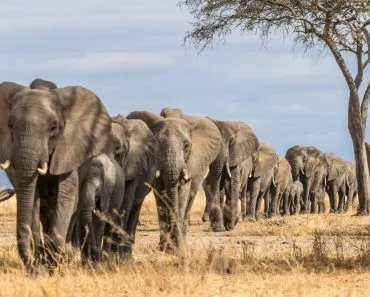
It is easy to accept reciprocity in altruistic behaviors within populations of the same species, like vampire bats or impalas. It boosts evolutionary mechanisms, like kin selection, within the population.
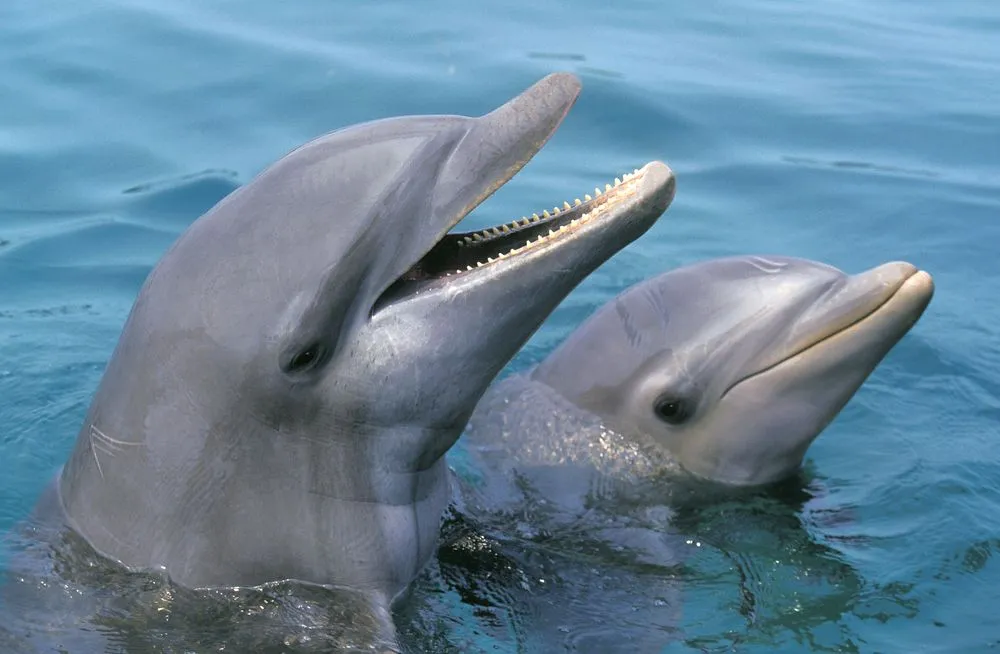
However, how does altruism make sense for inter-species interactions? After all, kin selection doesn’t work for populations that are not genetically compatible with each other.
Think of it like this, in a population of vampire bats, altruism enables kin selection that always works to increase the overall fitness of the vampire bat population.
Now, think of Moko helping out the two pygmy sperm whales. The dolphin gains no immediate personal reward, nor does it boost the overall fitness of its population.
So, What Drives Them Into Such Interactions?
A lot comes down to the common aspect of higher intelligence amongst members of the Delphinidae family. They’re smart enough to be “self-aware” or possess “a theory of mind”. This enables them to isolate incidences of altruism as conscious efforts of maintaining and manipulating channels of communication between themselves and other animals.
Think of it like this, dolphins treat altruism as tit-for-tat incidences. If a dolphin helps you out, odds are it will probably remember helping you out, and if in a bind, it could check and see if you would return the favor. If you don’t, it will stop helping you out.
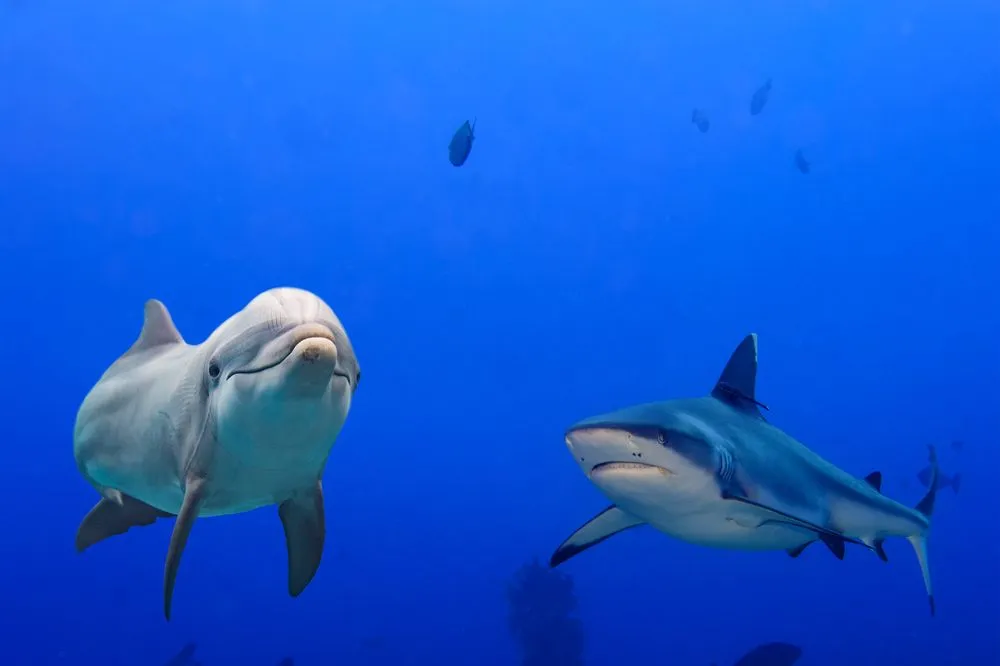
We can see this with sharks and dolphins. Dolphins are generally antagonistic to sharks, and even when sharks are stuck in a bind (like a literal fishing net, for example) dolphins aren’t too fussed in terms of helping them out.
In a sense, dolphins have evolved to favor reciprocal altruism in a way that is similar to humans. Humans aren’t completely altruistic in our interactions, but we are aware that we can use altruistic behaviors to our benefit. Even if humans do engage in purely altruistic interactions with no ulterior motives, we are aware that it does benefit us on some level.
What About Helping Humans?
So far, we’ve talked about dolphins helping whales and other dolphins, but what about us? There’s a long history of dolphins seemingly going out of their way for humans, and it tends to follow the same pattern: a species they have no quarrel with, helped in a way that costs the dolphin very little.
The most striking case happened in 2004 at Ocean Beach near Whangarei, New Zealand. A group of lifeguards, including veteran swimmer Rob Howes, his teenage daughter, and two other young women, were swimming offshore when a pod of bottlenose dolphins suddenly herded them into a tight bunch. The dolphins circled the swimmers, slapping the water with their tails for roughly 40 minutes. It was only when a nearly 3 m (10 ft) great white shark came into view that the lifeguards realized what was happening: the dolphins had penned them in to keep the shark from getting a clear run.
Stories like this are why dolphins have such a friendly reputation, and bottlenose dolphins in particular are famously curious about people. But it’s worth being clear-eyed about it. We don’t actually know that the Ocean Beach dolphins were thinking about the humans at all. Bottlenose dolphins routinely mob and harass sharks to protect their own pod, and a group of swimmers may simply have been swept up in that defensive behavior. Either way, the outcome was the same, and it lines up neatly with everything else we’ve seen: dolphins extend their helpful, social tendencies to species they don’t consider a threat, and humans usually make that list.
Are Dolphins Always Friendly?
For all their good press, dolphins are not the gentle pacifists we like to imagine. The same bottlenose dolphins that shepherd stranded whales back to sea can also be strikingly violent, and the evidence for it washes up on beaches.

Along the northeastern coast of Scotland, researchers noticed that most harbor porpoises found dead had not drowned in nets or died of disease. They had been beaten to death. A 1998 study in Proceedings of the Royal Society B found that the stranded porpoises carried multiple broken bones, ruptured internal organs, and rake marks that matched the spacing of bottlenose dolphin teeth. The dolphins were killing porpoises they had no intention of eating, a behavior grim enough to earn its own name: “porpicide.”
Even more unsettling, the same team found that five of eight dead dolphin calves from that population had been killed the same way, most likely by adults of their own kind. Because harbor porpoises are roughly the size of a newborn dolphin, the researchers suggested the porpoise attacks and the calf killings might be two faces of the same aggression. It was the first documented evidence of infanticide in any cetacean.
So are dolphins friendly? Often, yes, especially toward humans and species they have no quarrel with. But “friendly” and “harmless” are not the same thing, and a wild dolphin is still a large, powerful predator with a temper.
Do Dolphins Have Emotions And A Sense Of Self?
Part of what makes dolphin altruism so fascinating is the suspicion that there might be a genuine inner life behind it. Earlier we mentioned that dolphins seem to be “self-aware,” and that isn’t just a figure of speech.
In a landmark 2001 study in the Proceedings of the National Academy of Sciences, Diana Reiss and Lori Marino marked two captive bottlenose dolphins and gave them access to mirrors. Both dolphins twisted and turned to inspect the marks on their own bodies in the reflection, much the way we would in a bathroom mirror. It was the first solid evidence of mirror self-recognition in a non-primate, a mental feat previously seen only in humans and great apes. To pass the test, an animal has to grasp that the reflection is itself.
There are hints of an emotional life too. Female bottlenose dolphins have repeatedly been seen carrying their dead calves for hours or even days, nudging the lifeless body to the surface and, in cases recorded in the Mediterranean, whistling over it. Scientists are careful not to call this “grief” in the human sense, because we simply can’t ask a dolphin what it feels. But the behavior is consistent, it is costly, and it looks a great deal like mourning.
None of this proves that dolphins have morals or a conscience. What it does suggest is a mind complex enough to keep track of who helped whom, which is exactly the machinery that reciprocal altruism runs on.
A Final Word
Dolphins do engage in altruistic behaviors, but they don’t dish it out for free. They’ve been known to help out other dolphins, whales, and even humans, but we rarely see them helping out animals like sharks, which have a known antagonistic relationship with them.
They’re highly intelligent and social animals that have a complex method of “punishing” animals with a recorded history of antagonism (such as sharks) versus “rewarding” animals with a recorded history of cooperation (such as whales or other dolphins).
Maybe dolphins are just genuinely helpful for the heck of it, or perhaps they engage in helpful behaviors to create a sort of “tit-for-tat” score card… we don’t conclusively know yet.
What we do know is that we’re just beginning to scratch the surface in terms of research conducted on inter-species behaviors, altruistic and otherwise!
References (click to expand)
- (2017) Essay Bestial boredom: a biological perspective on animal .... ScienceDirect
- (2003) Biological Altruism - Stanford Encyclopedia of Philosophy. Stanford Encyclopedia of Philosophy
- Biological Altruism: Why Do Animals Help Each Other?. Carolina Biological Supply Company
- Wilkinson, G. S. (1990, February). Food Sharing in Vampire Bats. Scientific American. Springer Science and Business Media LLC.
- Connor, R. C., & Norris, K. S. (1982, March). Are Dolphins Reciprocal Altruists?. The American Naturalist. University of Chicago Press.
- Dolphin is one whale of a lifeguard (Moko rescues stranded pygmy sperm whales). NBC News / Associated Press.
- Dolphins protect swimmers from shark (Ocean Beach, New Zealand, 2004). NBC News / Associated Press.
- Patterson, I. A. P., et al. (1998, July). Evidence for infanticide in bottlenose dolphins: an explanation for violent interactions with harbour porpoises?. Proceedings of the Royal Society B. The Royal Society.
- Reiss, D., & Marino, L. (2001, May). Mirror self-recognition in the bottlenose dolphin: A case of cognitive convergence. Proceedings of the National Academy of Sciences.
- Pedrazzi, G., et al. (2022). First Report of Epimeletic and Acoustic Behavior in Mediterranean Common Bottlenose Dolphins Carrying Dead Calves. Biology. MDPI.