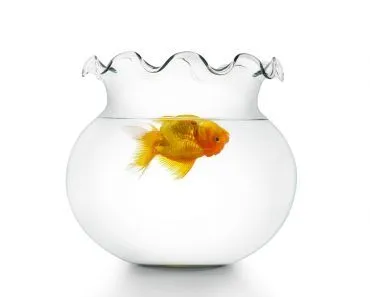
The “goldfish has a 3-second memory” claim is a myth. Controlled experiments going back to the 1960s have shown that goldfish can remember objects and feeding cues for weeks, learn to push levers for food, and use visual landmarks to find their way around. A 2022 study at Ben-Gurion University even trained goldfish to “drive” a wheeled tank toward a target on land, a feat that requires much more than three seconds of working memory.
Have you ever walked into a room, and then completely forgotten what you came in for? We often compare this frustrating experience to the life of a goldfish, as though they are always forgetting what they were just doing.
But do goldfish actually have a 3-second memory? The short answer is NO.
In that case, what is their actual memory span and why do so many people still make fun of this poor fish?
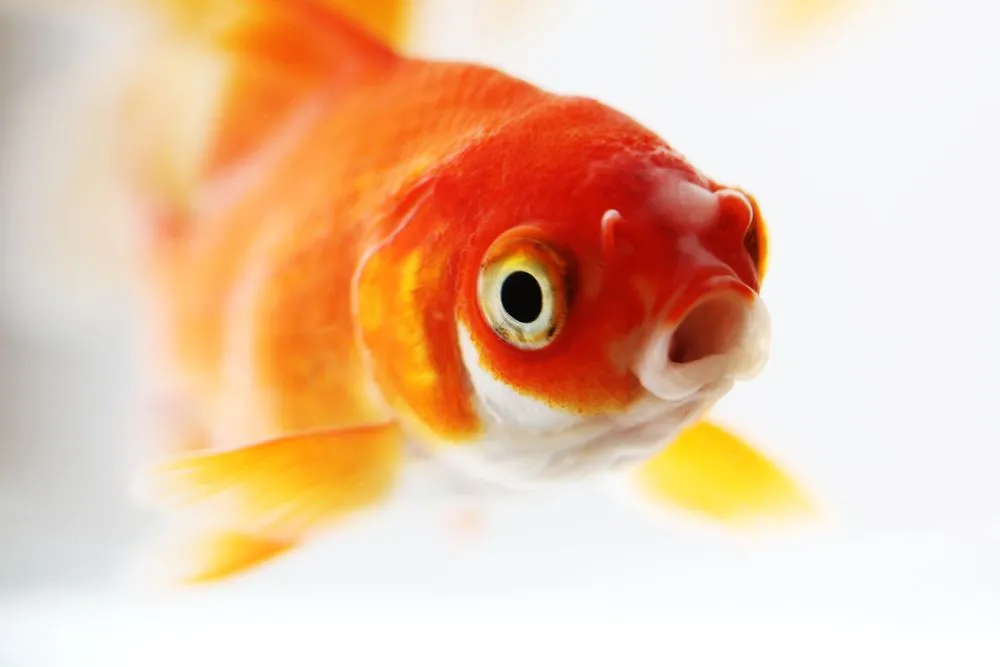
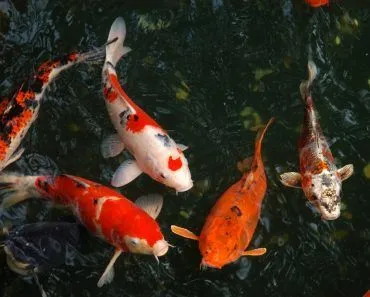
Goldfish (Carassius auratus) that swim inside your fish tank are much smarter than you think. This myth about them being dumb has prevailed, even though scientists have known about their memory skills since 1960. In fact, people generally look down on fish, though some of them may be smarter than chimpanzees (our relatives, evolutionarily speaking).
How Was This Myth Busted?
Although it’s not clear where this myth comes from, it is easy to debunk it. A 15-year-old boy named Rory from Australia did a simple experiment to prove how foolish this claim truly is.
He placed a red Lego piece on one side of his fish tank and then dropped food next to it. Initially, the goldfish avoided the Lego out of fear, but after some training, it seemed to have gotten used to the foreign object. Eventually, the goldfish started associating the red Lego with food.
He tested this by feeding the goldfish for a week without putting in the Lego piece. If it had a poor memory, then Rory putting the Lego piece back in should have scared the goldfish away, just as it did the first time. However, Rory found that the fish swam towards the Lego piece faster than before, showing that these fish can effectively retain knowledge.
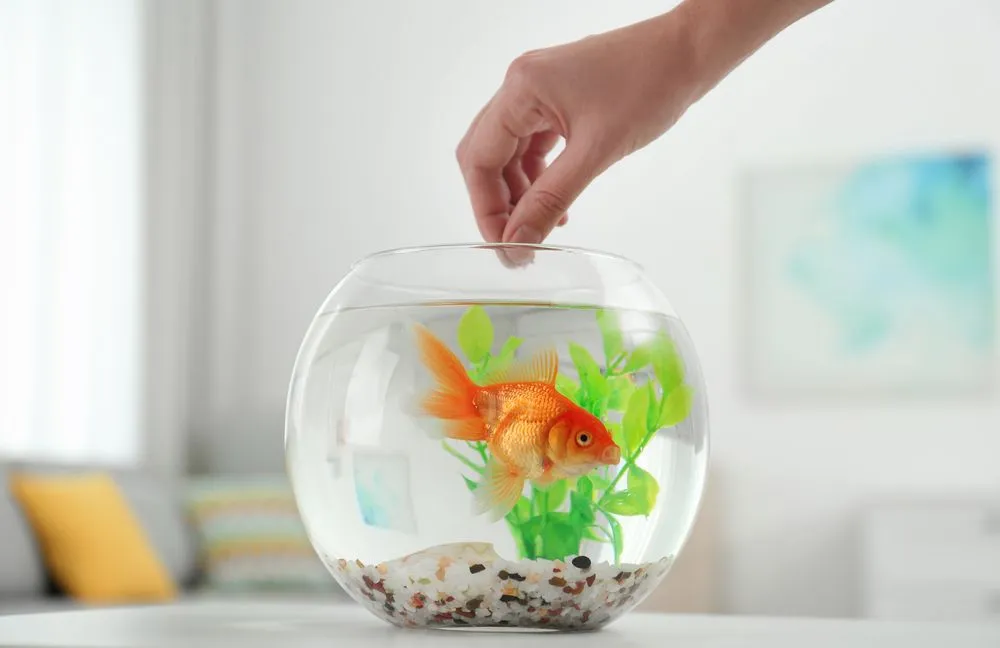
Scientists, over the years, have conducted many such experiments on goldfish to better understand their learning and memory capabilities.
Kevin Warburton from Australia described in his study that goldfish can use landmarks to find food faster.
Several different groups of fish were fed in identical spots in their respective fish tanks, but some had ‘landmarks’ to help them find the food faster. One example of a landmark was a pillar of Legos right next to where the food would be deposited. The fish that could see the landmark went to the correct spot 95% of the time, even before the food was introduced. Fish without a landmark went to the proper place first about 60% of the time, as a comparison.
Not only can fish remember how to avoid the bad and seek the good, but they can also develop their own systems for remembering things, similar to how we navigate the streets in the towns where we live.
How Long Can They Actually Remember Something?
While it’s hard to determine how long a goldfish can remember something from a single exposure, it’s clear that they can remember and learn for extended periods of time.
A study conducted by researchers at the University of Plymouth tested goldfishes’ ability to learn over a 3-month period. They first taught the goldfish to press a lever in order to get food. All the goldfish in this study managed to do so within seven days of their training, but the goldfish also learned to do something even cooler!
Researchers upped the ante by restricting the time when the food would be accessible to them. Instead of pressing the lever whenever they wanted food, goldfish only went towards the lever at the available time. While this data doesn’t argue for Einstein-like intelligence, it shows that fish can certainly remember things for more than 3 seconds.
A more recent and frankly extraordinary 2022 study from Ben-Gurion University went a step further. Researchers built a small wheeled platform topped with a fishbowl and a camera that tracked where the goldfish swam inside it; the cart then drove in whichever direction the fish was swimming. Within a couple of weeks of training, the goldfish were reliably steering this “fish-operated vehicle” across a room toward a colored target to claim a food reward, navigating around obstacles in the process. That kind of spatial learning would be impossible if their memories really did reset every three seconds.

Do Goldfish Even Have a Brain?
If a goldfish can learn all of that, you might be wondering what it is working with up top. Yes, goldfish absolutely have a brain. It is small and tucked in behind those big eyes, but it is a genuine vertebrate brain, complete with a forebrain region called the telencephalon that handles much of their learning and memory.

The interesting part is how familiar that little brain turns out to be. Within the goldfish telencephalon sits a structure called the lateral pallium, and when researchers damaged it in a 2010 study, the fish suddenly struggled to solve spatial tasks they had already mastered and could no longer relearn them. Damaging the neighboring regions caused no such problem. The team concluded that the goldfish lateral pallium behaves like the hippocampus, the part of our own brain that builds maps and memories of places. In other words, the fish that follows your finger to the corner of the tank is leaning on memory circuitry that traces back to an ancestor we share.
So the next time someone calls a goldfish brainless, they are not just being unkind, they are being inaccurate. These fish are running real memory hardware, simply on a smaller scale than ours.
Where Does the “Goldfish Memory” Saying Come From?
When we say someone has a “memory like a goldfish,” we mean they forget things almost the instant they happen. It is one of those phrases everyone understands, yet almost no one can tell you where it began. The honest answer is that the historical trail is thin, and no one knows for certain who first pinned the insult on this particular fish.

The most common explanation points at the bowl rather than the brain. For generations, goldfish were kept in small, bare, round bowls where they had little to do but circle endlessly, looking for all the world as though every lap were a fresh surprise. That image, helped along by countless cartoons and throwaway jokes, slowly hardened into a supposed fact. The exact number attached to the myth was never fixed either, which is a giveaway that no real measurement was ever behind it. You will hear three seconds, five seconds, even seven seconds, depending on who is telling the story.
The saying took such a beating that it became a favorite target for science shows. In a 2004 episode of MythBusters, the hosts trained goldfish to run an underwater obstacle course keyed to colors and shapes. More than a month later, the fish still remembered the route and finished it without any prompting, earning the claim its well-deserved “busted” stamp. The phrase may live on as a handy insult, but the biology behind it never held water.
Why Do I Need To Know This?
Goldfish are members of a group called ray-finned fish, which are the most diverse group of vertebrates in the world.
It’s important to know how fish memory works for a variety of reasons. Perhaps you’re an avid fisher and want to know how often you should switch your lures to keep that trophy bass guessing. Maybe you’re worried that your water-bound pets will forget you when you go on vacation. You might even be a scientist trying to determine if your new life-saving drug impacts memory.
Several major drugs have been suspected of impairing memory, like Dizocilpine. Some researchers even set out to determine if this was the case and found that Dizocilpine did, in fact, significantly impair the memory of goldfish.
A Final Word
Finding Nemo has made us all love our water pets even more, but in reality, these fish are smarter than the movies make them out to be. The lack of interest and awareness has led to this short-memory myth being perpetrated for quite a long time. Whatever the reason for your curiosity about goldfish memory, they deserve far more credit than 3 seconds. These colorful chubby pets will always have a special place in our memory, and you might even be in theirs!
References (click to expand)
- Goldfish three-second memory myth busted - ABC News. The Australian Broadcasting Corporation
- Warburton, K. (1990, September). The use of local landmarks by foraging goldfish. Animal Behaviour. Elsevier BV.
- Gee, P., Stephenson, D., & Wright, D. E. (1994, July). Temporal Discrimination Learning Of Operant Feeding In Goldfish (Carassius Auratus). Journal of the Experimental Analysis of Behavior. Wiley.
- Deal, C. K., & Volkoff, H. (2020, November 6). The Role of the Thyroid Axis in Fish. Frontiers in Endocrinology. Frontiers Media SA.
- GOMEZ, Y., VARGAS, J., PORTAVELLA, M., & LOPEZ, J. (2006, May). Spatial learning and goldfish telencephalon NMDA receptors. Neurobiology of Learning and Memory. Elsevier BV.
- Broglio, C., Rodríguez, F., Gómez, A., Arias, J. L., & Salas, C. (2010). Selective involvement of the goldfish lateral pallium in spatial memory. Behavioural Brain Research. Elsevier BV.
- Givon, S., Samina, M., Ben-Shahar, O., & Segev, R. (2022). From fish out of water to new insights on navigation mechanisms in animals. Behavioural Brain Research. Elsevier BV.
- Sinking Titanic / Goldfish Memory / Trombone Explosion (2004). MythBusters. Discovery Channel. IMDb.