Table of Contents (click to expand)
Sharks don’t die the instant they stop swimming, but obligate ram ventilators like great whites and hammerheads must keep moving to push water over their gills, so they can’t settle down for a long nap. Instead they rest in motion, drifting in “sleep swimming” or “yo-yo swimming” while the spinal cord, not the brain, steers. Bottom-resting sharks like nurse sharks pump water themselves and can genuinely sleep on the seafloor.
Imagine you’re a great white shark swimming along the coast of South Africa. You find that you’ve covered a lot of distance for the day, close to 70 kilometers. You’re feeling tired and want to stop for a quick nap.
Nothing in this hypothetical scenario should strike us as odd. It is a general rule of life that a tired animal usually goes to sleep. Unfortunately, this rule has a few exceptions.
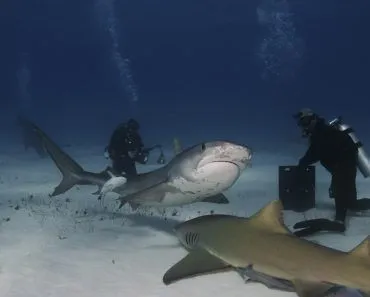
Certain species of sharks, like great whites and hammerheads, will actually drown themselves if they stop swimming. However, other species, such as nurse sharks and tiger sharks, don’t suffer the same fate. In fact, nurse sharks have earned a reputation for being notoriously lazy. They spend most of their day sleeping in large groups!
So, what do great whites and hammerheads specifically lack that confines them to a perpetual life in motion? And if these species never stop moving, how do they sleep?
All sharks are incredibly adept at absorbing oxygen. In fact, sharks can absorb up to 80% of oxygen in their environments with oxygen levels as low as 1%.
By comparison, humans can absorb a measly 25% of available oxygen, even in high-oxygen environments with oxygen levels as high as 21%.)
A Ph.D. student at the University of Miami tagged three mako sharks and three blue sharks with both PSAT (pop-off satellite archival tags) and satellite position-only tags (SPOT) to try and find out exactly how little oxygen a shark can tolerate.
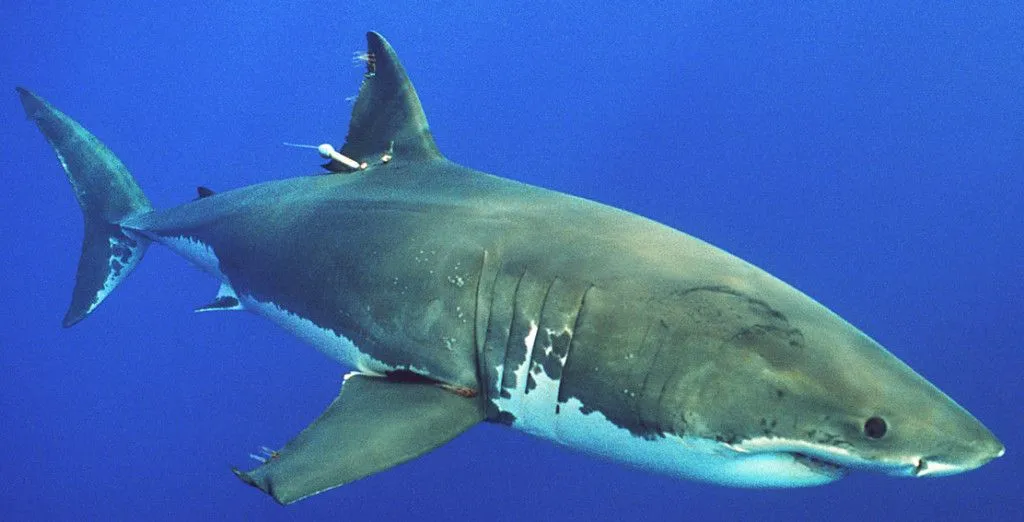
She found that although both tagged species (Makos and Blues) made infrequent visits to low-oxygen depths, they still did fairly well in those environments when they did dive into them.
How Do They Do This?
The secret lies in their mode of respiration. Sharks such as makos, great whites, and hammerheads require a continuous supply of flowing water to breathe. More specifically, they require water to flow over, into, and past their gills (where oxygen absorption takes place).
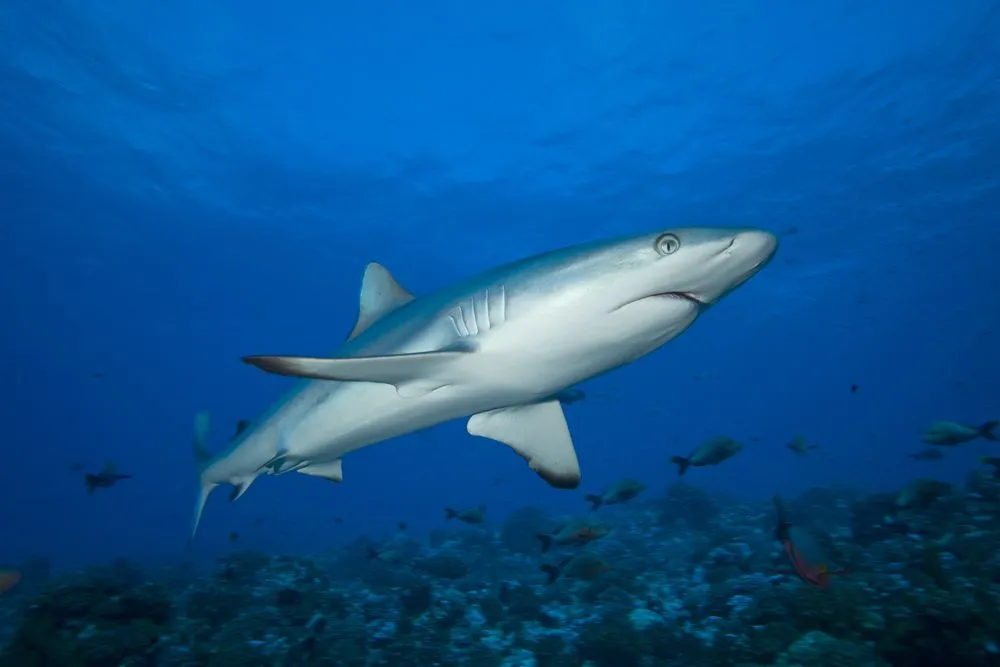
They facilitate this continual supply by simply opening their mouth to force or “ram” a supply of water into the opening. Naturally, this water flows towards the gills. This method of respiration is known as “ram ventilation.”
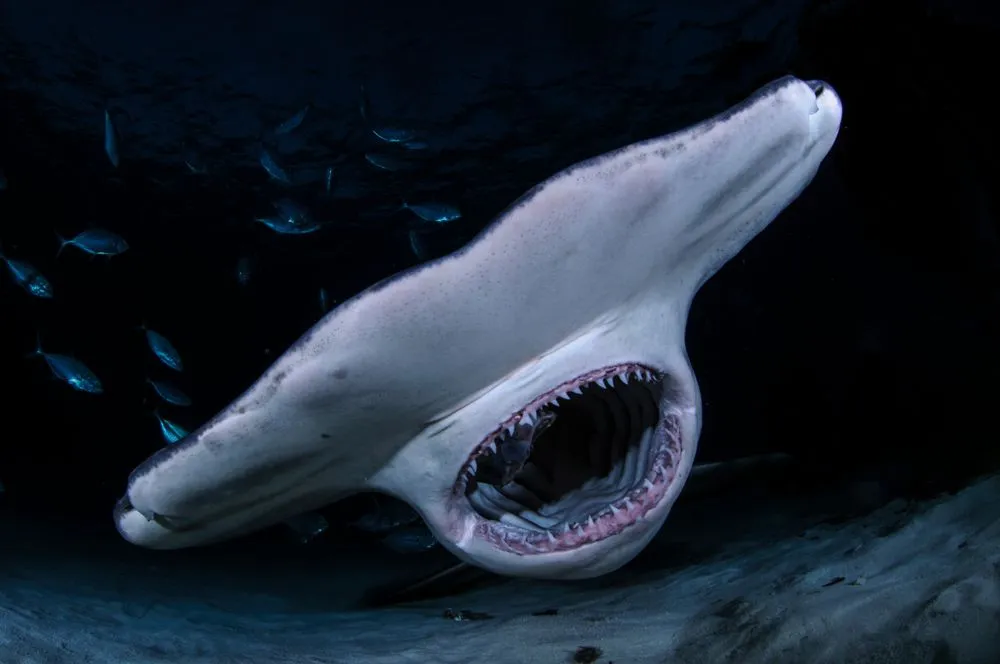
However, there is one major drawback here. To maintain a continual supply of flowing water, the fish must also maintain a perpetual level of motion. Essentially, they can never stop swimming, or else they will drown.
Other sharks, such as nurse sharks, have found a way around this problem. More accurately, nurse sharks needed to find a way around this type of respiration.
Nurse sharks are famously slow swimmers. For an animal that needs to swim to be alive, this doesn’t bode well. Even if nurse sharks were to trudge to the beat of ram ventilation, they swim slow enough to make the effort pointless.
Instead, they adopted buccal pumping as a mode of respiration. In buccal pumping, nurse sharks can let in water using their cheek muscles, then draw it into their mouths and push it toward the gills. This allows the sharks to stop moving, but keep breathing.
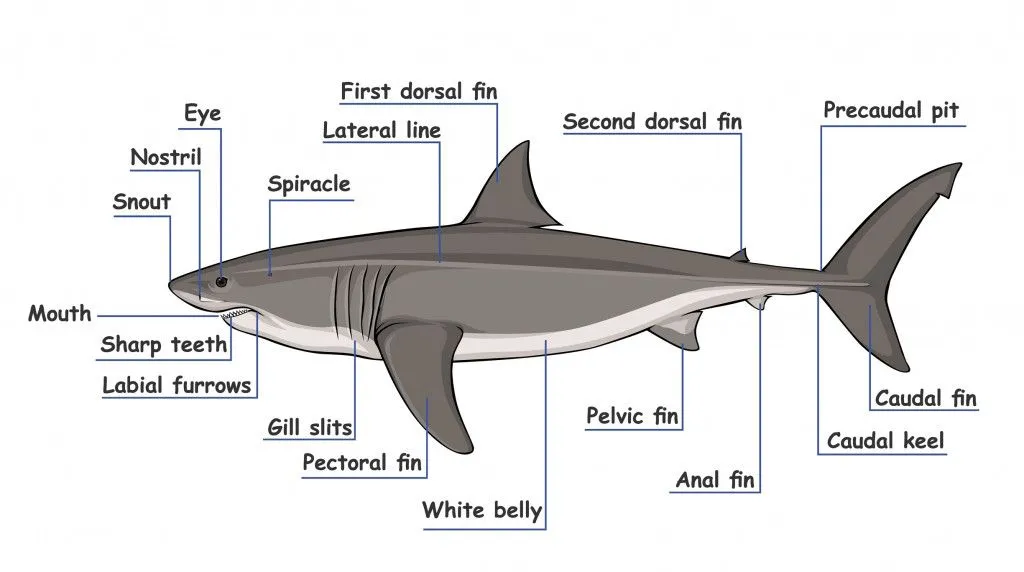
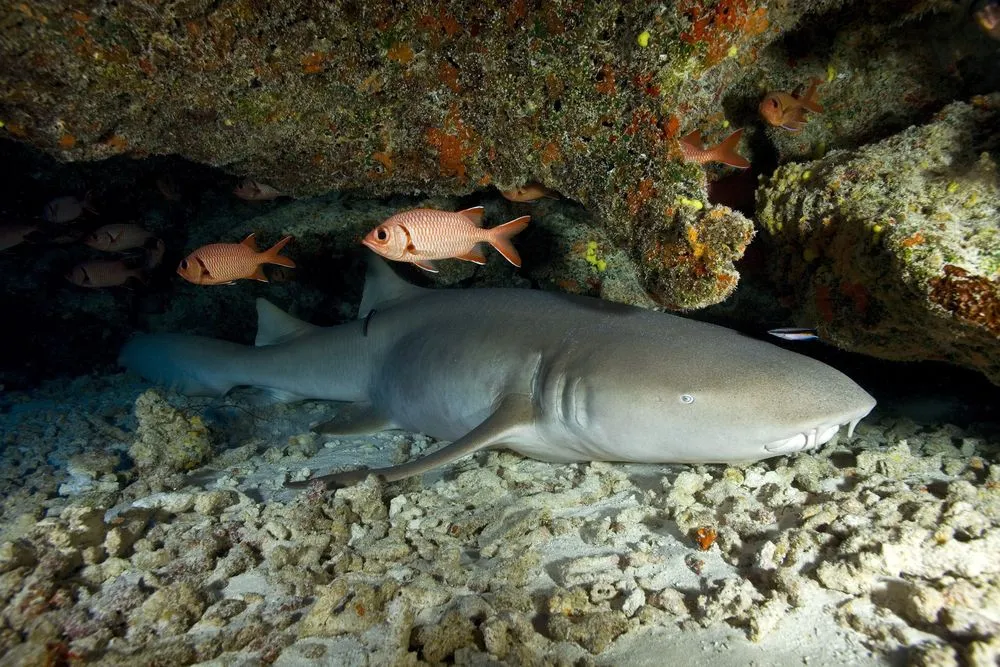
They can even nap on the sea bed or bury themselves in the sand. When they do so, specialized structures called spiracles (located behind their eyes) lets them pull in surrounding water through their gills, even if their mouths are covered.
Sharks that have adapted themselves to buccal pumping can rest or nap for a bit in peace, but they can’t do so the way most bony fish can, by floating in place. Sharks don’t have a swim bladder, so they need to sleep on the sea bed or on support structures, such as reefs, as they aren’t naturally buoyant. This ensures that they won’t sink.
What About Sharks That Can’t Stop Swimming? How Do They Sleep?
Technically, not in the way you do.
For a long time, scientists weren’t even sure sharks slept at all. That changed in 2022, when researchers measured the metabolism of draughtsboard sharks (a bottom-dwelling species) and found a clear sleep state: a lower metabolic rate and a flat, settled body posture, even though the sharks often kept their eyes open. So at least some sharks genuinely sleep. The catch is that obligate ram ventilators like great whites can’t lie down to do it, so they take their rest while still on the move.
Nurse sharks rest on the seafloor, for example.
Hammerheads and great whites engage in restful mechanisms, such as “sleep swimming” and “yo-yo swimming”.
Sleep swimming involves a shark cruising along with the current while the part of the brain that normally drives swimming switches off. A bundle of nerves in the spinal cord, called a central pattern generator, takes over and keeps the rhythmic swimming motion going, ensuring the shark doesn’t stray off course.
Yo-Yo swimming is a tactic that sharks employ when they need to catch some restful zzzzzs. Sharks use this method when they navigate really long distances. They go up the water column, towards the surface, or sometimes even break through the surface and then drift back down the water column without expending too much effort or energy.
Great whites have been observed yo-yo swimming while migrating between Australia and South Africa.
A Final Word
So, if you really are a shark swimming along the coast of South Africa, chances are good that you might not be able to stop and nap.
However, what you can do is shut off your brain and let your spinal cord take the reins, allowing you to move with the current or even glide up and down the water column and engage in “brief” restful periods.
References (click to expand)
- Sharks FAQ – Discover Fishes - Florida Museum. The Florida Museum of Natural History
- Kelly, M. L., Collins, S. P., Lesku, J. A., Hemmi, J. M., Collin, S. P., & Radford, C. A. (2022, March). Energy conservation characterizes sleep in sharks. Biology Letters. The Royal Society.
- (2019) Examining Shortfin Mako and Blue Shark Movements in .... escholarship.org
- Kelly, M. L., et al. (2022). Energy conservation characterizes sleep in sharks. Biology Letters, The Royal Society. PMC / NCBI.