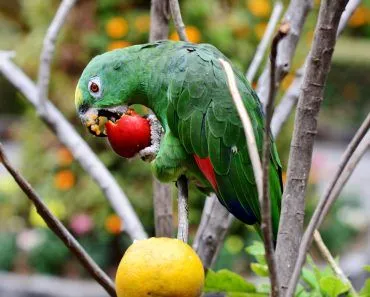
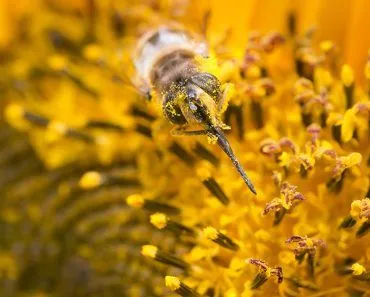
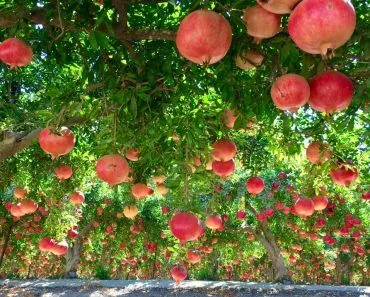
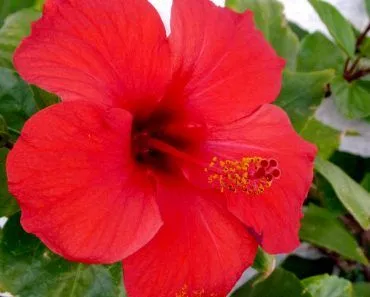
Birds shape forests in two big ways: they pollinate flowers and disperse seeds. Nectar-feeding birds like hummingbirds, sunbirds and honeyeaters carry pollen between blooms, while fruit-eating birds swallow fruit and drop the seeds in their droppings. By favoring certain colors and fruit sizes, birds steer which plants thrive and where they grow.
Birds may be known for their beautiful calls and flashy feathers, but forests couldn’t care less about those details! For fruiting trees, the most important thing birds do is eat and poop! Over time, this can change the very composition of the forest… but how?
How Do Birds Pollinate Flowers?
Before there can be fruit, there has to be pollination, and birds help with that too. Pollination by birds even has its own name: ornithophily. It is far less common than pollination by insects, but in some corners of the world it is the main show.
The cast of avian pollinators changes depending on where you are. In the Americas, hummingbirds do the job, hovering in front of a bloom and sipping nectar with a long, brush-tipped tongue. Across Africa and Asia, sunbirds take over, usually perching to feed rather than hovering. In Australia, honeyeaters are the headline pollinators. It is worth keeping these groups straight: hummingbirds live only in the New World, while sunbirds are strictly an Old World group, so the two never share a forest.
Plants that court birds tend to advertise in similar ways, a package botanists call the bird pollination syndrome. The flowers are often red, orange or another bold color that pops against green foliage, since birds see reds especially well and most insects do not. They form sturdy tubes that match a long beak, hold lots of thin, watery nectar to fuel a bird's high-energy lifestyle, and usually give off little or no scent (birds barely smell, so perfume would be wasted on them). As the bird drinks, its forehead or beak brushes the flower's pollen and ferries it to the next bloom.
Bird pollination is a regional specialty rather than a global rule. Roughly 7,000 plant species in the American tropics are pollinated by hummingbirds, and about a quarter of the 900 or so Salvia (sage) species in Central and South America rely on birds. North of Mexico, only around 130 native plant species are bird-pollinated, a reminder that this partnership is concentrated in the tropics, southern Africa and a handful of islands.
What Is Seed Dispersal?
Many flowering plants and trees rely on other organisms for both pollination and seed dispersal. When compatible pollen lands on a flower through the intervention of an insect or bird, it initiates the fruiting process. Pollen and ovule together create the seed, and that seed is encased in flesh and other structures to protect it.
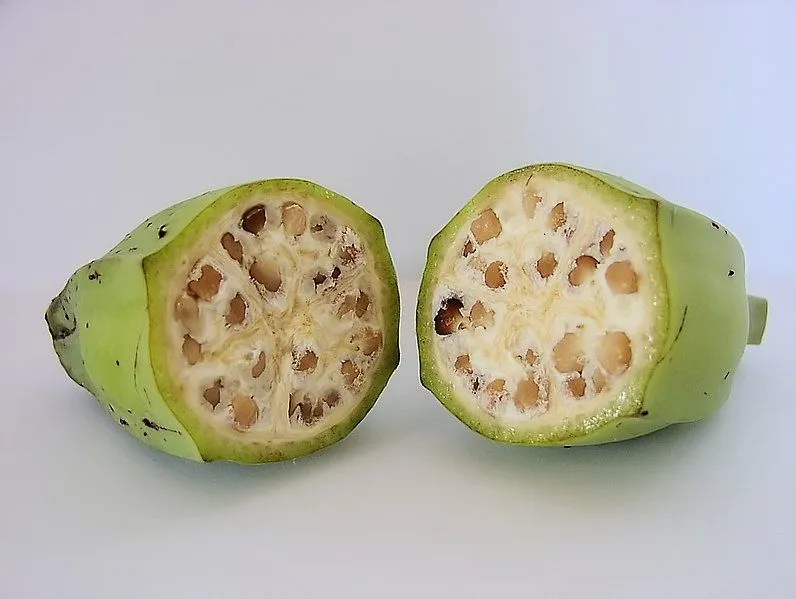
The flesh is often sweet and delicious, which is what we consume as fruit! The fruits we get in our supermarkets are selectively bred, so there is a lot of flesh. Wild fruits are very seedy, with very little flesh to enjoy. However, it’s still nutritious enough to benefit animals that eat and disperse the seeds.
Why do seeds need to be dispersed in the first place? Why can’t they just land below the parent tree?
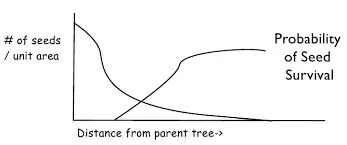
There are two conflicting theories about this. The first says that parent trees benefit their offspring, sheltering them from the elements. This is known as the nurse effect.
These trees would not benefit from wider dispersal.
The second theory is that as distance from the parent tree increases, so do the survival chances of the offspring. Far away from the parent tree, there is less competition, more light, and more resources. Dispersers then are like buses, taking the seeds to their final stop.
Birds are some of the most important frugivores and seed dispersers that exist. A large number of birds feed almost exclusively on fruits. Birds like hornbills are critical to incredible habitats like tropical rainforests.
How Do Birds Choose Fruits In A Forest Full Of Them?
Forests can be competitive places. If a bird flies into a rainforest, they have their pick of fruits. Plants therefore need to outcompete other plants, and ensure that their fruits are eaten and their seeds dispersed.
Plants that are attractive to seed dispersers may increase in population. There are many ways to be attractive. Fruits can be made sweeter and more palatable. Trees may fruit at different times of the year so that birds have no choice but to eat their fruits! Even their color may play a role.
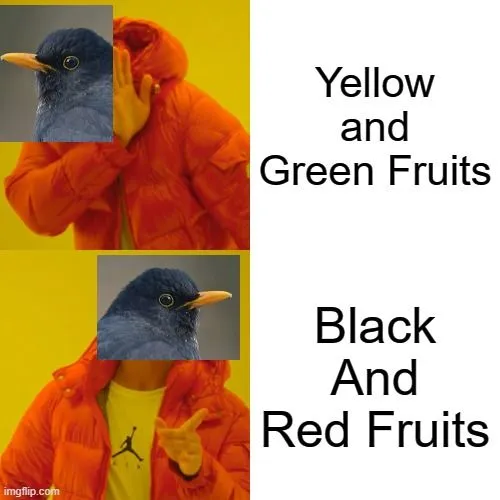
Birds tend to have excellent color vision. One study tried to understand what colors birds like best, and whether this is a preference they are born with, or whether this preference develops over time. To do this, they tested four species (three bulbuls and one barbet). All of these birds rely heavily on fruits for nutrition. Across the board, the birds chose red and black fruits and tended to avoid green!
Since the fruit they eat depends on its colors, trees with these color fruits tend to flourish more readily.
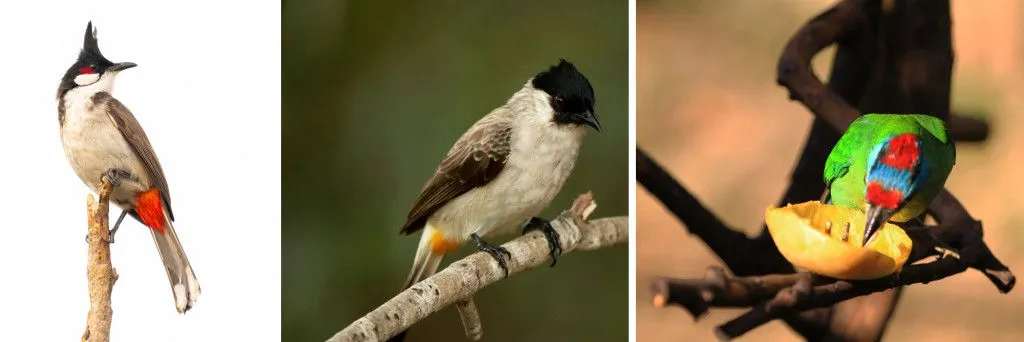
Why might birds develop such a preference? One reason could be that green is often a signal for unripeness, whereas black always means palatability. It’s also possible that black and red are simply more visible in the lush greenness of a forest.
Whatever the reason might be for color preference in birds, the study also suggested an important outcome. The preference of bird frugivores matched the frequency of these black and red fruiting plants in the wild! This means that preferred fruits are dispersed, and grow more than non-preferred fruits that are green and yellow.
Birds shape plant frequencies because they are picky eaters.
Can All Birds Eat All Fruits?
The bigger the bird, the larger the fruit it can eat. Trees may evolve towards larger or smaller fruit sizes, depending on who they want their fruit to be eaten by. This means that the average size of the bird community determines what fruits will be eaten and what trees consequently grow after seed dispersal.
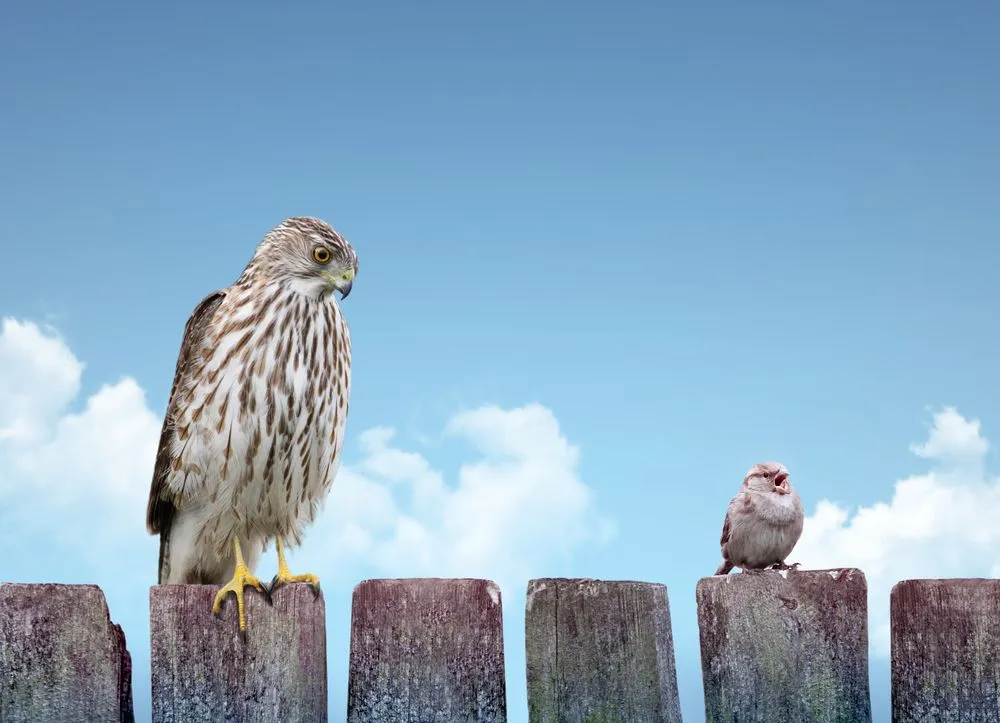
One study examined how logging can change a bird community, and how those bird communities shape the forest. In logged forests, the average size of the bird community was smaller. Smaller birds eat smaller fruits, and the birds who were disrupted by logging disperse fewer seeds from large-fruited trees. Over time, this could lead to a reduction in trees with large fruits.
Different birds disperse different seeds, so changing a forest can have a significant impact on the future plant community.
Forests Are The Products Of Choices That Birds Make
Plants spread their seeds in three broad ways: by wind, by water, and by animals. Frugivory, where animals eat fruit and pass the seeds, is the animal route, and it does most of the heavy lifting in tropical forests. Seed dispersal, along with pollination, is a key driver of vegetation patterns within biomes. Plants that are attractive to animal dispersers often increase in population. Populations of key dispersers can greatly influence where and how much a certain plant will grow.
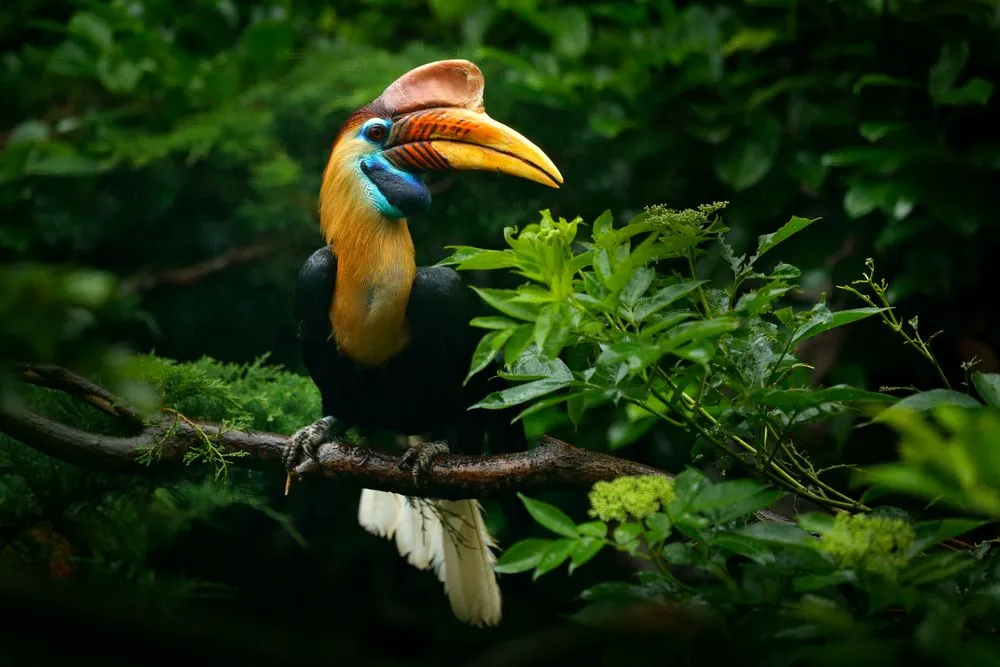
Fruit choice by birds, and the birds that are available to make those fruit choices, shape forests.
Birds are not the only frugivores and seed dispersers, but the effect they have is incredibly important to biome stability and diversity!
References (click to expand)
- Gagetti, B. L., Piratelli, A. J., & Piña-Rodrigues, F. C. M. (2016, May 6). Fruit color preference by birds and applications to ecological restoration. Brazilian Journal of Biology. FapUNIFESP (SciELO).
- Duan, Q., Goodale, E., & Quan, R.-. chang . (2014, July 17). Bird fruit preferences match the frequency of fruit colours in tropical Asia. Scientific Reports. Springer Science and Business Media LLC.
- Willson, M. F., Graff, D. A., & Whelan, C. J. (1990, August). Color Preferences of Frugivorous Birds in Relation to the Colors of Fleshy Fruits. The Condor. Oxford University Press (OUP).
- Velho, N., Ratnam, J., Srinivasan, U., & Sankaran, M. (2012, September). Shifts in community structure of tropical trees and avian frugivores in forests recovering from past logging. Biological Conservation. Elsevier BV.
- Wied, A., & Galen, C. (1998, July). Plant Parental Care: Conspecific Nurse Effects InFrasera SpeciosaAndCirsium Scopulorum. Ecology. Wiley.
- Augspurger, C. K. (1984, December). Seedling Survival of Tropical Tree Species: Interactions of Dispersal Distance, Light-Gaps, and Pathogens. Ecology. Wiley.
- Cronk, Q., & Ojeda, I. (2008). Bird-pollinated flowers in an evolutionary and molecular context. Journal of Experimental Botany. Oxford University Press (OUP).
- Bird Pollination. Celebrating Wildflowers. U.S. Forest Service, U.S. Department of Agriculture.