Table of Contents (click to expand)
Spiders don’t get stuck in their own webs because only the capture spiral is coated in glue, while the spokes and frame are dry, non-sticky silk the spider walks along. Their legs also help: tiny branched hairs and a non-stick chemical coating reduce contact with the glue, and careful leg movements pull free before the droplets can grab hold.
Spiders have fascinated mankind since time immemorial. These web-making arachnids have some truly interesting powers and skills. For example, ounce for ounce, the dragline silk of an orb-weaver is stronger than steel and tougher than Kevlar. There are some other mind-blowing qualities that spider silk possesses that humans are trying to emulate artificially.
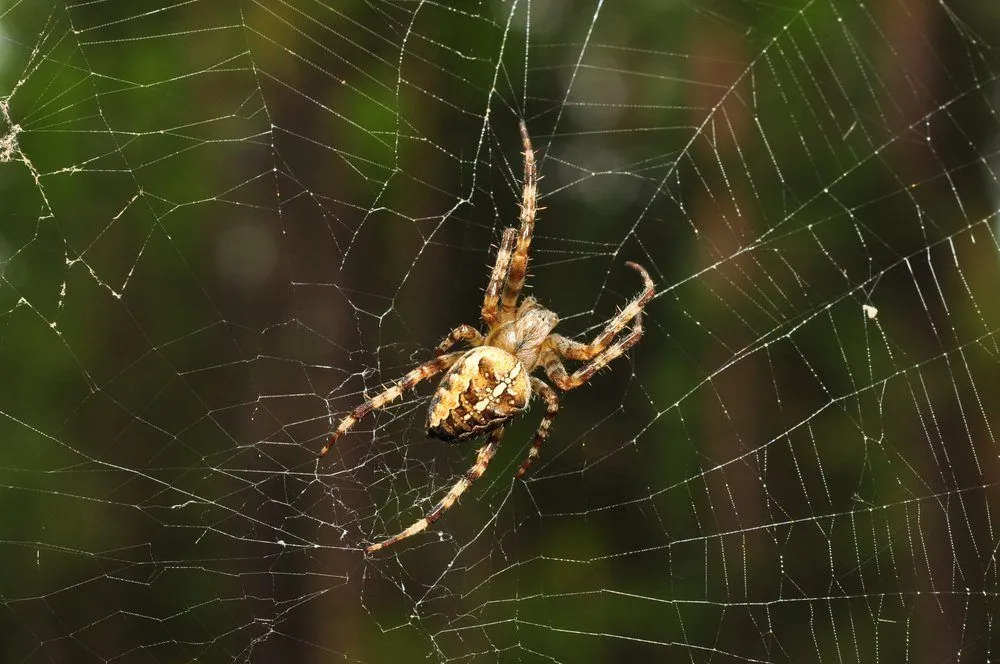
Spiders use their webs for a variety of functions; trapping and immobilizing their prey is the main one, obviously. These webs are so strong and thickly woven that it is almost impossible for tiny creatures (on the order of spiders) to escape once they are stuck. However, what about the spiders themselves? Let’s take a closer look at how spiders avoid getting trapped in their own webs.
What’s So Special About Spiders?
The sticky webs of spider silk are a formidable way to ensnare prey, so researchers and laymen have always been interested in how spiders themselves avoid getting trapped in the sticky net. For years, people assumed that spiders simply coat their legs in some special oil that repels their own glue. That guess turned out to be only half the story, and a 2012 study by William Eberhard and Daniel Briceño finally pinned down what is really going on.
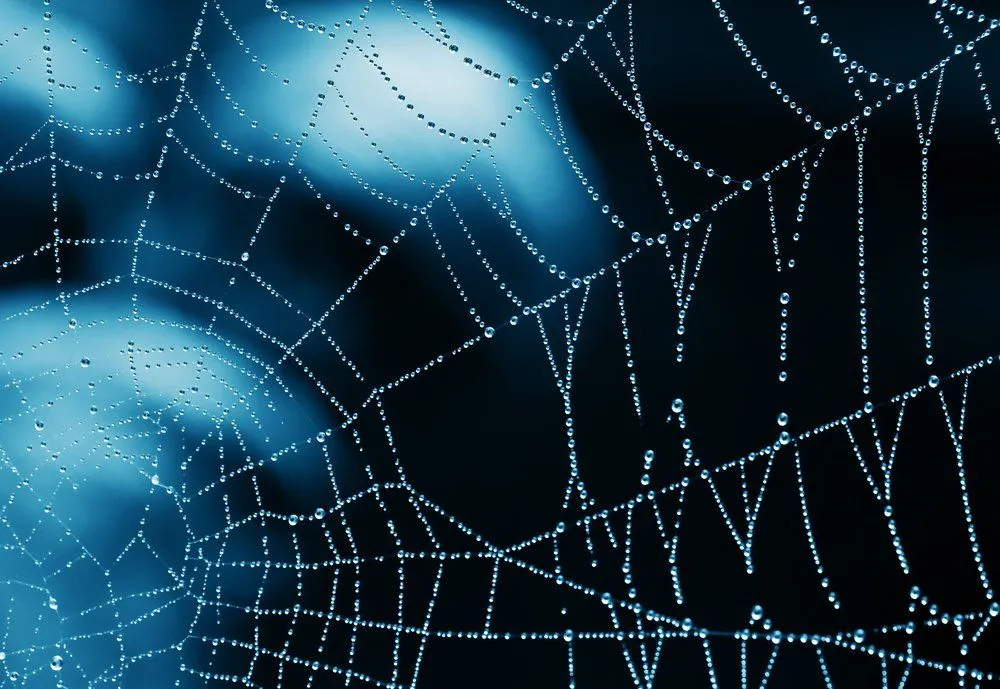
It comes down to a few tricks working together. First of all, spiders produce different kinds of silks; some are sticky and some are not. Only the intricate capture spiral (the part responsible for snaring prey) is coated in the gluey substance, while the spokes and the frame holding the web together are dry, non-sticky silk. The spider, who wove the whole thing, knows all too well which threads carry glue and which ones are safe to stand on, so it travels along the dry scaffolding and barely touches the sticky lines. This is the biggest reason a spider doesn’t get trapped by all those ‘gluey’ threads.
Apart from this, the spider’s legs are built for the job. Most spiders have two claws at the tip of each foot, but web-spinning species have a third, a smooth middle hook that grips and releases the silk as the spider hauls itself along. The third claw works alongside dense, branched hairs (called setae) that line the legs. Those hairs keep the leg from pressing flat against a sticky thread, so the glue droplets can only touch a few bristles at a time instead of grabbing the whole foot.
The 2012 study added the last piece of the puzzle. When the researchers washed the spiders’ legs with hexane and water, the legs suddenly stuck to the silk far more readily, which means a non-stick chemical coating normally protects them. On top of that, spiders move their legs with care, pushing against the gluey lines and peeling away again before the droplets can take hold. Sticky silk, dry scaffolding, special claws, bristly hairs, a non-stick coating, and practiced footwork all add up to a spider that can live in a trap of its own making.
Do Spiders Cocoon Or Wrap Themselves?
If you have ever watched a spider bundle something up in silk, you may have wondered whether spiders ever cocoon themselves, the way a caterpillar seals itself away before becoming a moth. The short answer is no. Spiders don’t pupate, so they never spin a cocoon around their own body to transform inside it. What people usually see is a spider wrapping one of three other things: its prey, its eggs, or a resting shelter it can tuck into.

The most familiar wrapping is prey wrapping. Once an insect blunders into the sticky spiral, the spider rushes over and swathes its prey in silk to pin its struggling legs and keep it from escaping. This silk comes from dedicated aciniform glands, separate from the glands that build the web itself. Some spiders take it to an extreme: studying the venomless orb-weaver Philoponella vicina, biologist William Eberhard found a spider making roughly 28,000 wrapping movements and binding a single fly in over 140 metres (about 460 feet) of silk, squeezing it so hard that the insect’s legs snapped and its eyes buckled inward.
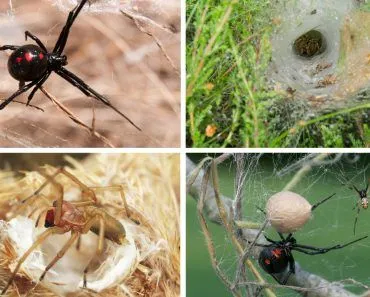
The second kind of wrapping is the egg sac, which people often loosely call a cocoon. A female lays her eggs onto a small silk pad and then wraps and covers them in layers of tough silk (from the cylindrical glands), forming a spherical or disk-shaped sac that shields the eggs from predators, parasitic wasps, and swings in temperature. So when someone asks why a spider wraps itself in web, the real answer is usually that she is protecting her eggs, not encasing her own body.
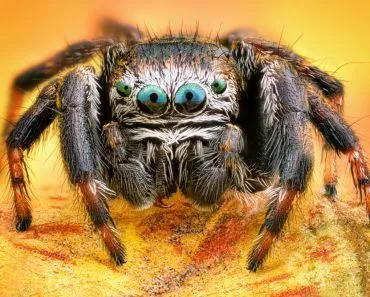
The closest a spider comes to genuinely enclosing itself is a silk retreat. Jumping spiders, for instance, build no snare web at all; instead they spin loose, sack-like retreats that they use for molting, overwintering, and simply hiding at night. When it is time to shed its old exoskeleton, a spider seals itself in one of these shelters or hangs from a silk line, since it is soft and defenseless until the new cuticle hardens. That is as close to a self-made cocoon as the spider world gets.
Amazing Silk
Scientists (and plenty of regular people!) are captivated by the qualities of spider silk. Making it involves a one-way change: a water-soluble protein liquid stored inside the spider turns into a sturdy, solid, water-insoluble thread. The trigger is the act of drawing the silk out. As the protein is pulled through the spinning duct, shearing forces and a drop in acidity make the long molecules line up and lock together into the strong fiber we see. Plenty of animals spin silk, from silkworms to caddisfly larvae, but few use it in as many ways as spiders do, including catching prey, mating, building draglines, and protecting themselves and their eggs against predators.
It goes without saying that spiders are truly some of the most interesting creatures in nature. It comes as no surprise, therefore, that we have countless portrayals of spiders in popular culture. The things that we discussed above are the things that we know, but there is always the possibility that there are still many areas and facets to spider skills that are still entirely unknown to mankind.
References (click to expand)
- How do spiders avoid getting tangled in their own webs?. The Library of Congress
- Briceño & Eberhard (2012). Spiders avoid sticking to their webs. Naturwissenschaften / Smithsonian
- Fancy footwork and non-stick leg coating helps spiders not stick to their own webs. Smithsonian Institution
- Spiders avoid sticking to their webs: clever leg movements, branched drip-tip setae, and anti-adhesive surfaces. PubMed
- Spider - Eggs and egg sacs. Encyclopaedia Britannica
- The spider that crushes its prey with 140 metres of webbing. National Geographic
- Jumping Spiders. National Pest Management Association (PestWorld)
- Growing Spiders. Arachnophilia, Cornell University Library