Table of Contents (click to expand)
"Daddy long-legs" is a common name for three very different animals: cellar spiders (family Pholcidae — true spiders with eight legs and silk), harvestmen (order Opiliones — arachnids that look like spiders but don't make silk or venom), and crane flies (family Tipulidae — long-legged flying insects, not even arachnids). Of the three, only cellar spiders are actually spiders, and despite a persistent myth, their venom is harmless to humans.
Imagine that you’re cleaning out your dusty old basement, moving boxes upstairs before a big move to a new house. Aside from boxes full of junk you’d forgotten about, the basement is probably also filled with various creepy-crawlies who enjoy the dark, damp solitude. Upon picking up a box in the corner, don’t be surprised if you see a cluster of tiny legs scurry out of sight, or hang on for the ride!
Spiders freak a lot of people out, but when it comes to "daddy long-legs," there isn't much to worry about — assuming you're talking about the spider. The name actually gets attached to three different animals: cellar spiders (Pholcidae), harvestmen (Opiliones), and, especially in the UK and Australia, crane flies (Tipulidae). For this article, we'll focus on the cellar spiders, the Pholcidae — a true-spider family with around 2,055 species in 97 genera, according to the latest World Spider Catalog.
Daddy Long Legs Info
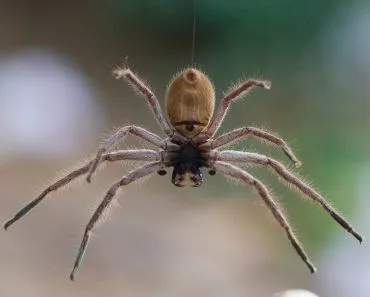
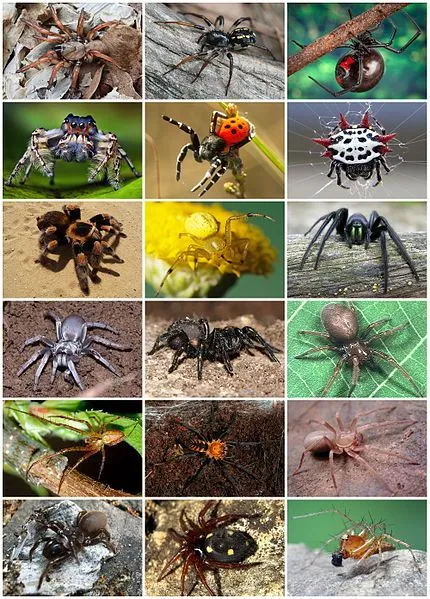
Cellar spiders belong to the Pholcidae family and are araneomorph spiders, meaning that their fangs are diagonally positioned and cross like scissors when grasping prey (in contrast to mygalomorph spiders like tarantulas, whose fangs point straight down). That creature you spotted in the basement is only one of roughly 2,055 species across 97 genera currently described in the World Spider Catalog (and plenty more await formal description). They range in size from 2-10 mm in body length, but their legs can stretch up to 50 mm (about two inches), hence the very fitting name. In color, they range from cream to dark brown, and some of the larger species sport colorful markings on the body. Depending on the species, they can have either six or eight eyes — most have eight, but a few genera like Spermophora have lost the median pair and have only six.
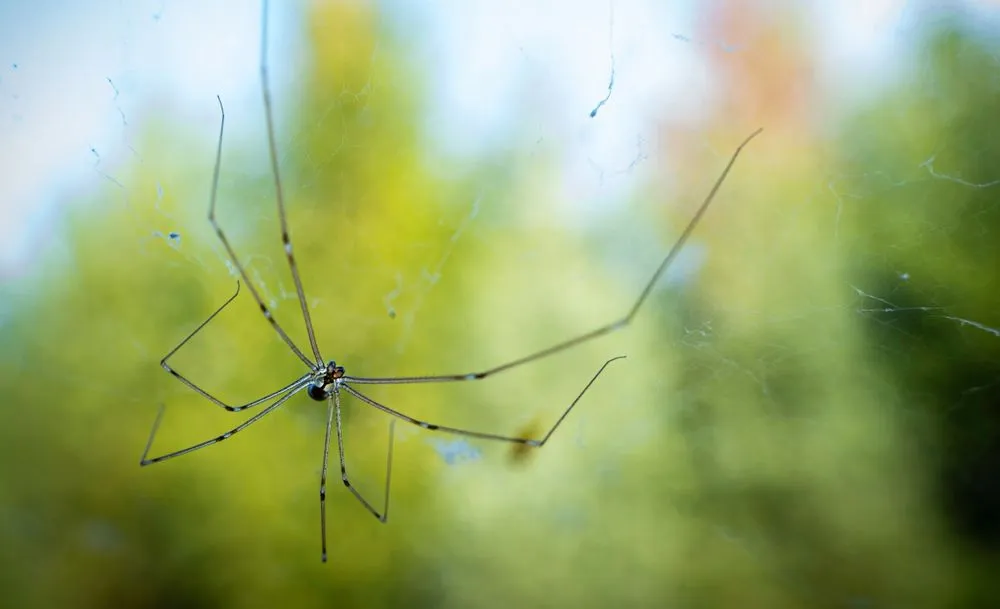
As noted, the same nickname is also commonly applied to Opiliones (harvestmen), an order of arachnids with two eyes and a fused-looking body that can't make silk or webs and have no venom glands at all. They're close cousins of true spiders but technically not spiders themselves. In the UK and Australia, "daddy long-legs" usually means the crane fly (Tipulidae) — a six-legged flying insect, no relation to either group. For the rest of this article, we'll stick with the Pholcidae, the only ones that are actually spiders.
Daddy Long Legs Habitat
Found on every continent except Antarctica, these spiders take roughly a year to mature and can then live a further two to three years as adults — three years total is about the documented maximum. Their habitats include dark, damp and isolated places, such as caves, in plant detritus, under rocks and loose tree bark, but human habitations are also popular, where they are often found in attics, cellars, beneath decks and in other areas that are rarely cleaned or disturbed (garages, basements, sheds etc.).

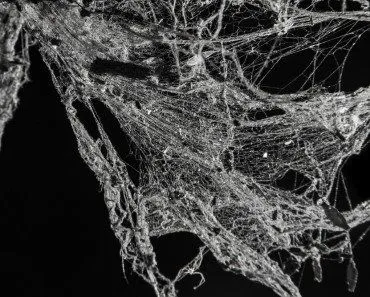
These spiders create messy webs that make it difficult for prey to escape, but they aren’t spectacular hunters; many species are happy to scavenge prey caught in other spiders’ webs or take whatever stumbles into their own messy snare. Despite having such long legs, these spiders don’t move around much, and tend to remain in the same locations after developing a routine, i.e., sleep in a dark crevice, stand for hours on a leaf or web, then return to their dark crevice. It is believed that this lack of mobility is why there are so many different species. Essentially, as soon as any obstacle arose between two parts of the same population, the separated groups diverge, resulting in a new species. In some cases, there will be a dominant species on one hillside or mountaintop, while a completely different species is dominant on the neighboring peak!
There are many different names for these spiders, due to their global ubiquity, including cellar spiders, carpenter spiders, skull spiders and vibrating spiders. This final name can be attributed to the defense strategy of some species, which consists of spinning or vibrating very quickly, causing their webs to shake and become a blur, making it more difficult for predators to target them. This may also ensnare any potential prey that came too close to the web, but has not been fully trapped yet. They may not be great fighters, but they are masters of distraction and moving quickly to escape when they need to!
Are Daddy Long Legs Poisonous?
You've probably heard the legend that daddy long-legs are the most venomous spiders in the world but have fangs too short to pierce human skin. It's a great story — and it isn't true. The myth likely caught on because pholcids really do prey on dangerous spiders like redbacks and black widows (Latrodectus), which they subdue by flicking silk at them from a safe distance rather than by out-venoming them. Mythbusters tested the bite in 2004 and found pholcids can penetrate human skin, but the bite barely registers. A 2019 venom analysis of the cellar spider Physocyclus mexicanus (Zobel-Thropp et al., Frontiers in Ecology and Evolution) confirmed it: the venom is potent against insects but only weakly toxic to mammals, and the amount delivered is tiny. They pose no real threat.
One frequently repeated tidbit needs a footnote: that "400-million-year-old daddy long-legs fossil" you may have read about is actually Eophalangium sheari, a harvestman (Opiliones) from the Rhynie chert — not a Pholcidae spider. The oldest unambiguous pholcid fossils are far younger, preserved in roughly 99-million-year-old Cretaceous Burmese amber, with most well-studied specimens coming from younger Miocene Mexican amber (~23 Ma). Harvestmen really are that ancient and almost morphologically unchanged across most of their fossil record; cellar spiders, the actual spiders in this article, are much more recent on the scene.
Leg Threading
(A small correction worth flagging while we're here: the well-known "leg-threading" grooming behavior — pulling each leg through the chelicerae to clean it — is most carefully documented in harvestmen, not in pholcid spiders, and is another one of those things that gets cross-attributed between the two when both are called daddy long-legs.) Cellar spiders do groom themselves regularly, but their legs do not grow back if pulled off, so curious children should avoid being cruel if they catch one.
Finally, while mating and reproductive habits are often the first thing researchers like to learn about a species, much of their mating rituals and behaviors are unknown to us. Due either to their small size, reclusive nature, or altered behavior when observed in a laboratory setting, we know that the male spins a small "sperm web," charges his pedipalps (modified mouthparts near his head) with sperm from it, and then inserts those palpal bulbs into the female's reproductive opening (the epigyne) during a long, intricate copulation. In at least one well-studied species, Holocnemus pluchei, the two sexes alternate which pedipalp is in use, in a two-phase mating. Females store the sperm internally and later attach the egg sac directly to their fangs, carrying it around until the spiderlings emerge — they do not deposit the eggs in the ground. Males and females often share the same web during and after mating. Larger species are easier to study, but for tiny specimens, their reproductive style is still something of a mystery!
A Final Word
Whether you like spiders or not, there is a good chance that there is a Daddy Long Legs somewhere in your house right this minute! However, don’t freak out, as these harmless creatures are good for managing other bugs in the house, pose no venomous threat to you, and don’t tend to move around very much, so don’t worry about them crawling on your face while you sleep!
References (click to expand)
- A PHOLCID SPIDER (HOLOCNEMUS PLUCHEI) BY ....
- Eberhard, W. G., & Briceño, R. D. (1983, September). Chivalry in pholcid spiders. Behavioral Ecology and Sociobiology. Springer Science and Business Media LLC.
- Zobel-Thropp, P. A., Mullins, J., Kristensen, C., Kronmiller, B. A., David, C. L., Breci, L. A., & Binford, G. J. (2019, July 12). Not so Dangerous After All? Venom Composition and Potency of the Pholcid (Daddy Long-Leg) Spider Physocyclus mexicanus. Frontiers in Ecology and Evolution. Frontiers Media SA.
- Eberle, J., Dimitrov, D., Valdez-Mondragón, A., & Huber, B. A. (2018, September 19). Microhabitat change drives diversification in pholcid spiders. BMC Evolutionary Biology. Springer Science and Business Media LLC.
- Pholcidae - World Spider Catalog (Natural History Museum Bern)
- Long-bodied Cellar Spider (Penn State Extension)
- Spider Myths: "Daddy-longlegs are one kind of spider" (Burke Museum, University of Washington)
- Crane flies: facts about daddy long-legs (Natural History Museum, London)