Table of Contents (click to expand)
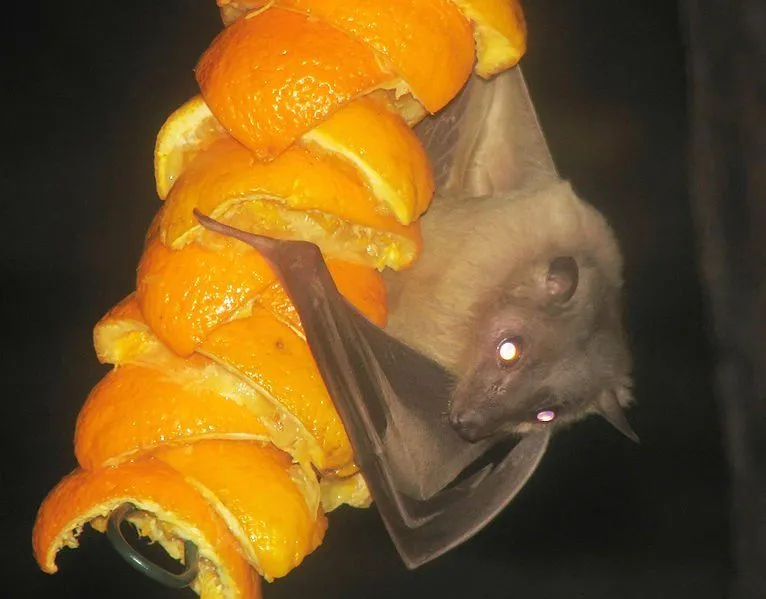
Frugivores are animals whose diet is wholly or mostly fruit. They are a specialized subset of herbivores, and obligate frugivores get almost all of their calories from fruit. Familiar examples include Jamaican fruit bats, flying foxes, toucans and hornbills, orangutans, and the maned wolf of South America, whose fruit-rich diet helps disperse seeds across tropical forests.
Frugivores are animals that thrive entirely or predominantly on fruits and fruit-like plant parts. They sit within the broader category of herbivores, but unlike a typical leaf-eater, a frugivore gets the bulk of its calories from ripe fruit. Many herbivores and omnivores nibble fruit when it is around, and studies suggest roughly one in four mammals eats fruit as part of its diet. Only a smaller group, however, builds its life around it. The Jamaican fruit bat, the giant flying foxes of Asia and Australasia, and even some fish in the family Characidae (the pacus and tambaqui of the Amazon) are hardcore frugivores.
Are Frugivores Herbivores? Frugivore Vs Herbivore Vs Omnivore
In everyday speech, any animal that eats plants gets called a herbivore, which puts a fruit bat and a cow in the same box. Frugivores do sit under that broad umbrella, since fruit is plant matter. Ecologists who study diets closely, however, often treat fruit-eating as a category of its own, and for good reason: a ripe mango and a mouthful of grass are very different meals.
Leaves and grass are loaded with tough, fibrous cellulose, which takes a lot of digestive machinery to break down. Fruit pulp, as we will see below, is rich in water and easy carbohydrates. In a 2014 study that sorted 139 species of land mammals by what was actually found in their stomachs, researchers Pineda-Munoz and Alroy listed frugivory as one of seven separate dietary specializations, alongside herbivory, granivory (seeds), insectivory (insects), carnivory (meat), fungivory (fungi) and gumnivory (tree gum). They also pointed out that diets built on fruit and seeds call for less physiological specialization than cellulose-rich herbivore diets.
So where do omnivores fit in? The same study calls an animal a specialist when a single food type makes up 50 percent or more of its diet, and a generalist when no single food crosses that line. The authors even suggested retiring the word “omnivore”, because it hides how picky most so-called omnivores actually are. Interestingly, when these mixed feeders do eat plants, the plant part of the menu is mostly fruit and seeds. By this yardstick, a frugivore is simply an animal for which fruit is the main course, not an occasional dessert.
How Frugivores Help In Seed Dispersal
Many evolutionary biologists believe frugivory evolved through ‘mutualism’ to facilitate seed dispersal. Mutualism is an interaction in which both partners benefit, and in the fruit-eating process the plant and the frugivore each gain something. Frugivores subsist by eating fruit; when they eat the fruit (seeds included) and then travel to a new spot, they spread those seeds in their droppings, where many later germinate. Scientists argue that this kind of mutualism has helped flowering plants (angiosperms) diversify since the Cretaceous, when fleshy fruits first became widespread roughly 80 million years ago.
Frugivory Vs Granivory
In contrast to granivory, a form of seed predation in which the animal chews and digests the seeds along with the fruit, frugivory leaves the seeds intact from mouth to droppings. Interestingly, most of this mutualism is concentrated in the tropics, where fruit-producing plants are plentiful all year round.
How Plants Have Adapted To Attract Frugivores
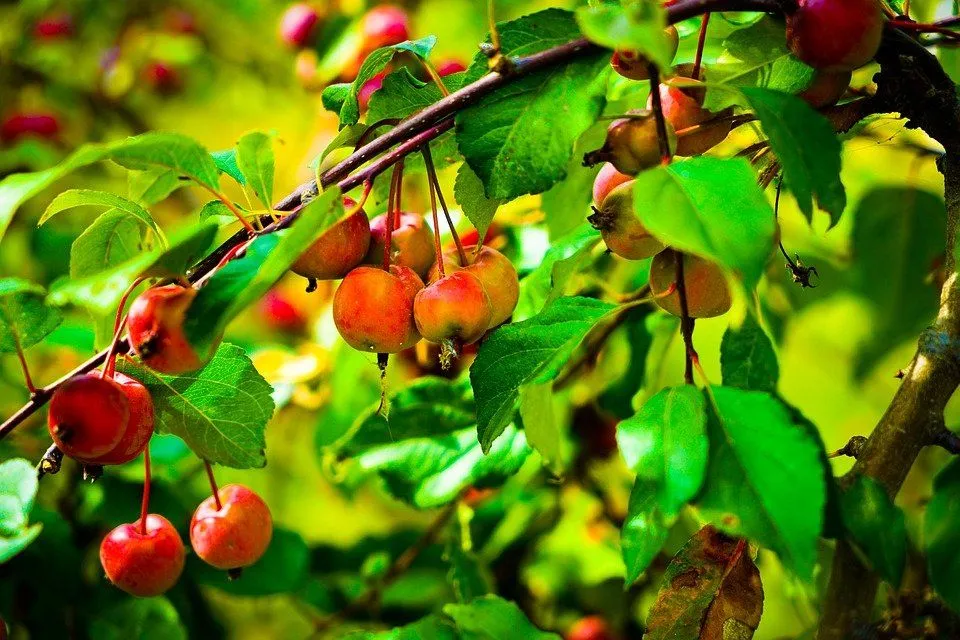
To encourage seed dispersal, fruit-producing plants have evolved a suite of adaptations that attract frugivores. Many fruits sport bright colors and pleasing aromas to flag themselves to passing eaters. Fruit pulp is also rich in water and carbohydrates, while being low in lipids and proteins, which makes it an easy, quick-energy meal. Seeds, in turn, have adapted to survive inside the digestive systems of frugivores for extended periods. Many seeds actually become more permeable to water after passing through the digestive system of frugivores, which gives them a better shot at germination. Some mistletoe seeds will even start germinating inside the gut of a bird that has just eaten the fruit.
How Frugivores Have Adapted Themselves To Survive On Fruits
Like plants, frugivores have evolved a few adaptations of their own to be efficient seed dispersers. Their digestive systems are tuned to process large amounts of fruit without grinding up the seeds inside. Some fruit-eating birds have a notably short intestine, allowing them to pass seeds through quickly. Other frugivores have short gut-retention times for the same reason, so seeds come out the other end whole and viable. The Jamaican fruit bat, for example, can move a fig seed from mouth to dropping in as little as 15 to 20 minutes, which is part of why it is such an effective forest regenerator.
Examples Of Frugivorous Animals
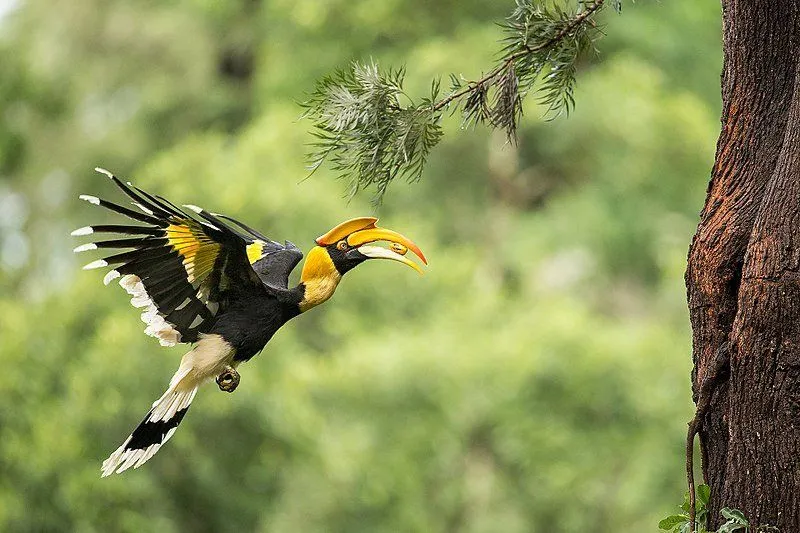
Birds get the lion’s share of attention from researchers working on frugivory, and for good reason: they are some of the most efficient seed dispersers on the planet. A long-running study by ecologists Bette Loiselle and John Blake of the University of Missouri-St. Louis, working in Costa Rican wet forest, showed how the local extinction of seed-dispersing frugivorous birds can sharply reduce seed viability and the spread of the plants that depend on them. Hornbills, aracaris, cotingas and toucans are some of the most familiar examples of frugivorous birds. Hornbills alone are known to carry seeds from more than 700 plant species, and toucans regularly disperse seeds over distances of several kilometers. Some frugivorous birds lean heavily on fruit only during the nesting season, when they need a steady stream of carbohydrates, and when the supply of preferred fruits runs out they will resort to acrid, bitter berries that other animals avoid.
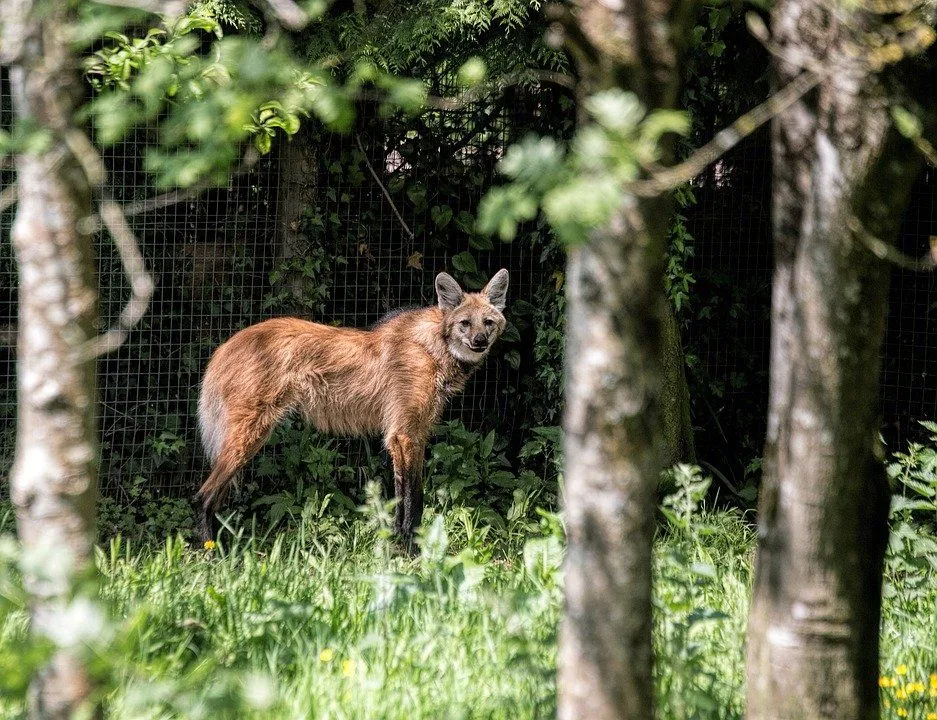
Mammals count as frugivores when they reliably move seeds around in the course of eating fruit. The maned wolf (Chrysocyon brachyurus) of the South American grasslands is a textbook example. Despite being a canid, roughly half of its diet is plant matter, and the single most important food item is a tomato-like fruit called lobeira, or “wolf apple” (Solanum lycocarpum). The Portuguese name lobeira literally means “fruit of the maned wolf,” which gives you some idea of how tightly the two are linked. Many researchers consider the maned wolf one of the most important mammalian seed dispersers on the continent.
Among primates, orangutans are heavyweight frugivores. Ripe fruit makes up roughly 65 percent of what they eat day to day, and in a good fruiting season that figure can climb closer to 90 percent. When fruit is scarce they fall back on flowers, leaves, honey, insects, bark and vines. Owl monkeys (genus Aotus) of Central and South America are another well-studied primate frugivore, with fruit making up anywhere from a fifth to nearly nine-tenths of the diet depending on the species, the habitat and the season. They prefer small, ripe fruits and often forage in large-crown trees in search of them.
Do Any Animals Eat Only Fruit?
Here’s the catch with a fruit-only diet: fruit is brilliant for quick energy but poor in protein. That is why most frugivores quietly top up their menu with something else. Even the animals we think of as the ultimate fruit lovers are rarely strict fruitarians.
Take the Old World fruit bats (family Pteropodidae), the group that includes the flying foxes. A review in Mammal Review noted that most fruits are low in protein and that studies in captivity have shown these bats need extra protein. In the wild, they appear to get it from pollen, leaves or insects. Leaves bring minerals to the table as well. In feeding trials with 23 wild-caught Tongan fruit bats (Pteropus tonganus), 82.7 percent of the bats ate the leaves on offer, and the regular leaf-eaters took in up to 46 percent more calcium than the bats that skipped their greens.
Then there is the oilbird (Steatornis caripensis) of tropical South America, a genuine fruit-only specialist. According to the Cornell Lab of Ornithology’s Birds of the World, its diet consists exclusively of oil-rich fruit pulp from three plant families: laurels (Lauraceae), palms (Arecaceae) and incense trees (Burseraceae). It is also the only nocturnal, fruit-eating bird in the world that flies, and it finds its way in the dark using audible clicks, a form of echolocation. Its chicks are raised on the same rich pulp and get so fat that, at their peak, they can weigh up to 57 percent more than an adult.

For a long time, oilbirds were thought to spend every day in huge cave colonies and carry fruit back there at night, where many of the seeds simply germinated in the dark and died. When researchers fitted oilbirds in Venezuela with GPS loggers, they found the birds spent only about every third day in a cave. On the other days they sat quietly in rainforest trees, regurgitating seeds. Their farthest foraging sites were, on average, about 44 km (28 miles) from the cave, and the farthest recorded site was 73.5 km (46 miles) away. That led the team to suggest that the oilbird is perhaps the most important long-distance seed disperser in the forests of tropical America.
Significance Of Frugivores
Plants colonize new ground largely through seed dispersal, so losing a region’s frugivores can knock an entire ecosystem off balance and, in time, drive plant species to extinction. This is especially clear in the tropics, where 60 to 90 percent of tree species rely on animals to move their seeds and where the loss of even a single large fruit-eater can ripple through the forest. In the Amazon, for instance, overfishing of large fruit-eating fish like the tambaqui (Colossoma macropomum) has reduced populations of some species by around 90 percent, leaving a clear seed-dispersal gap in flooded forests. Similarly, ecologists have shown that losing a single large monkey species can reshape plant communities, because monkeys carry seeds over long distances that smaller frugivorous birds simply cannot match.
References (click to expand)
- Loiselle, B. A., & Blake, J. G. (2002, January). Potential consequences of extinction of frugivorous birds for shrubs of a tropical wet forest. Seed dispersal and frugivory: ecology, evolution and conservation. Third International Symposium-Workshop on Frugivores and Seed Dispersal, São Pedro, Brazil, 6-11 August 2000. CABI Publishing.
- Fleming, T. H., & John Kress, W. (2011, November). A brief history of fruits and frugivores. Acta Oecologica. Elsevier BV.
- Morales, J. M., García, D., Martínez, D., Rodriguez-Pérez, J., & Herrera, J. M. (2013, June 11). Frugivore Behavioural Details Matter for Seed Dispersal: A Multi-Species Model for Cantabrian Thrushes and Trees. (A. Hector, Ed.), PLoS ONE. Public Library of Science (PLoS).
- Pratt, T. K. (1984, May). Examples of Tropical Frugivores Defending Fruit-Bearing Plants. The Condor. Oxford University Press (OUP).
- Pineda-Munoz, S., & Alroy, J. (2014). Dietary characterization of terrestrial mammals. Proceedings of the Royal Society B: Biological Sciences.
- Courts, S. E. (1998). Dietary strategies of Old World Fruit Bats (Megachiroptera, Pteropodidae): how do they obtain sufficient protein? Mammal Review.
- Nelson, S. L., Kunz, T. H., & Humphrey, S. R. (2005). Folivory in fruit bats: leaves provide a natural source of calcium. Journal of Chemical Ecology. PubMed.
- Oilbird (Steatornis caripensis). Birds of the World. Cornell Lab of Ornithology.
- Holland, R. A., Wikelski, M., Kümmeth, F., & Bosque, C. (2009). The Secret Life of Oilbirds: New Insights into the Movement Ecology of a Unique Avian Frugivore. PLoS ONE.