Table of Contents (click to expand)
Without cockroaches, many species of wasps would go extinct because they rely on cockroaches for food. Additionally, animals and birds that typically prey on cockroaches would also be affected. Forests would also be impacted because cockroaches help trap nitrogen in the soil, which is necessary for tree growth.
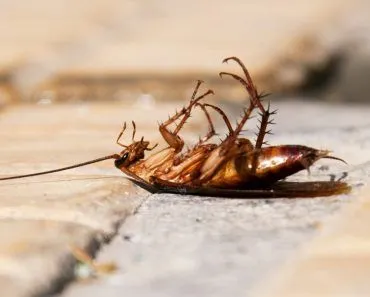
Cockroaches are one of those unfortunate insects that the majority of human beings despise. There is something unnerving about their mere presence that sends people dancing all over the room, terrified of having these bugs underfoot. Most of the time, cockroaches do not harm anyone directly, but they are still hated by millions of people around the world.
For the same reason, many people might wish for a world that is free of cockroaches. With all this talk of cockroaches over the years, a number of stories and myths have developed. For example, there is a very popular myth associated with cockroaches that they can survive a nuclear explosion (which we have actually debunked in this article). However, what would happen if, somehow, cockroaches were completely wiped out?
Let’s see how the world would be if there were no cockroaches at all.
The World Of Cockroaches
There are somewhere between 5,000 and 10,000 species of cockroaches across the globe. Some of those species are actually quite attractive (believe it or not) and certain species even have the ability to glow in the dark (giving fireflies a run for their money).
However, there are only a few species that commonly infest households and instill such disgust in people. The most common household cockroaches are Blattella germanica, the German cockroach; Periplaneta americana, the American cockroach; Supella longipalpa, the brown-banded cockroach; and Blatta orientalis, the Oriental cockroach.
Danger To Certain Species Of Wasps
Srini Kambhampati, a professor and chair of the biology department at the University of Texas, elaborated on the question of cockroach disappearance and what would happen if they were to suddenly become extinct. There are a number of creatures who prey on cockroaches, such as rats and mice. What’s even more interesting is that even humans eat cockroaches in some parts of the world. However, we are not saying that humans, rats, and mice would suddenly go extinct if cockroaches disappeared, but yes, they would be affected in slight ways.
There are also certain creatures, like parasitic wasps, that completely rely on cockroaches for their survival, as they specialize in parasitizing on cockroach eggs, so these wasps would definitely go extinct.
Danger To Common Animals And Birds
It’s understandable that people aren’t particularly interested in the survival (or rather, extinction) of certain parasitic wasps, but the disappearance of cockroaches would also impact the animals and birds that prey on cockroaches. These include domestic cats, raccoons, opossums, lizards, geckos, frogs, certain spiders, and a variety of insectivorous birds.
it’s beginning to seem like we would be a bit more than concerned if these fast-moving bugs were suddenly wiped off the face of the planet!
Yes, Even Forests Need Them!
This factor concerns humans in a rather direct, undeniable way, and it just may change your opinion on these foul little bugs.
According to Kambhampati, most cockroaches feed on decaying organic matter, which traps atmospheric nitrogen. In forests, cockroaches feed on decaying leaves and wood (which also trap nitrogen). When cockroaches excrete, nitrogen is mixed into the soil. And yes, you guessed it, nitrogen is a vital contributor to the growth of trees and is therefore essential to forests.
Hopefully I don’t have to explain why forests are extremely important for our survival…
Maybe you need to take a more benevolent look at the cockroach you spy scurrying around in the corner of your house. Don’t forget, at a very fundamental level, cockroach poop is protecting our very existence!
The Recyclers: How Cockroaches Feed The Soil
It’s worth pausing on how cockroaches pull off this nutrient trick, because the mechanism is genuinely clever. Most cockroaches are detritivores, meaning they live on decaying leaves, rotting wood, animal droppings and dead matter that almost nothing else wants to eat. By shredding that tough, microbe-rich litter, they speed up the work of the bacteria and fungi that ultimately turn it back into soil.

Here’s the part most people never hear about. Unlike most insects, cockroaches don’t simply flush nitrogen out as waste. They stockpile it in their fat bodies as uric acid, and a bacterium that has lived inside cockroaches for more than 140 million years, called Blattabacterium, recycles that stored nitrogen back into usable amino acids and vitamins (Sabree and colleagues, PNAS, 2009). That partnership is exactly why cockroaches can thrive on the nitrogen-poor scraps of a forest floor where pickier insects would starve. When a cockroach finally excretes, that reclaimed nitrogen goes straight into the ground, where tree roots can take it up. Strip the cockroaches out and you slow one of the small, unglamorous engines that keeps a forest fertile.
Believe It Or Not, Some Cockroaches Pollinate Flowers
This one tends to surprise people, so brace yourself: a handful of cockroach species moonlight as pollinators. It’s rare, with only around a dozen plant species worldwide known to depend on cockroaches for pollination, but it’s real and well documented.
In 2020, a team led by Wujian Xiong and Jeff Ollerton reported in the American Journal of Botany that a small Chinese vine, Vincetoxicum hainanense, is pollinated mainly by the cockroach Blattella bisignata. The plant’s pale flowers open at night, and the cockroach was the only visitor carrying pollen from plant to plant. It was the first record of specialized cockroach pollination in the milkweed family (Apocynaceae). Other examples have turned up in Chile and in South American rainforests, where night-active roaches quietly ferry pollen for flowers that bees never visit. So for at least a few endangered plants, losing cockroaches wouldn’t just be inconvenient, it could mean losing the only pollinator they have.
So Would It Actually Be Bad If Cockroaches Went Extinct?
Here’s the twist that reframes the whole question. When you picture "all cockroaches," you’re almost certainly picturing the grubby kitchen invaders. But of the roughly 4,500 known cockroach species, only about 30 are pests, and just a handful (the German, American, Oriental and brown-banded roaches) ever bother humans (Smithsonian). That means more than 99% of cockroach species are wild, forest-dwelling insects that most of us will never see.

So the honest answer is split. If only the pest species vanished, humans would barely notice the ecological cost, since they live in our buildings rather than out in nature. But wiping out every cockroach is a different story. You’d push specialist parasitic wasps to extinction, thin out the predators that snack on roaches, slow nitrogen recycling on forest floors, and strand a few plants without their pollinator. None of that ends the world overnight, and it wouldn’t be the catastrophe that losing bees or all insects at once would be. But "would it be bad?" has a clear answer: yes, in quiet, cumulative ways that ripple through the ecosystems we depend on. As it happens, there’s no sign cockroaches are going anywhere; they’ve survived for hundreds of millions of years and are remarkably hard to kill off. If you want the fuller picture of their day job in nature, we dig into the role cockroaches play in the wild in a companion article.
References (click to expand)
- What If There Were No Cockroaches? - Live Science. Live Science
- What if There Were No Cockroaches? | HowStuffWorks. HowStuffWorks
- Cockroach FAQ - marlin. The University of Massachusetts Amherst
- Nitrogen recycling and nutritional provisioning by Blattabacterium, the cockroach endosymbiont. PNAS (2009). PubMed
- Specialized cockroach pollination in Vincetoxicum hainanense. American Journal of Botany (2020)
- How Many Species of Cockroaches Plague Humanity? Smithsonian Magazine