Rewilding is a conservation strategy that restores ecosystems by protecting core wild areas, reconnecting them, and reintroducing keystone species such as predators and large herbivores so nature can regulate itself with minimal human intervention. Its three main types are Pleistocene, passive, and translocation rewilding.
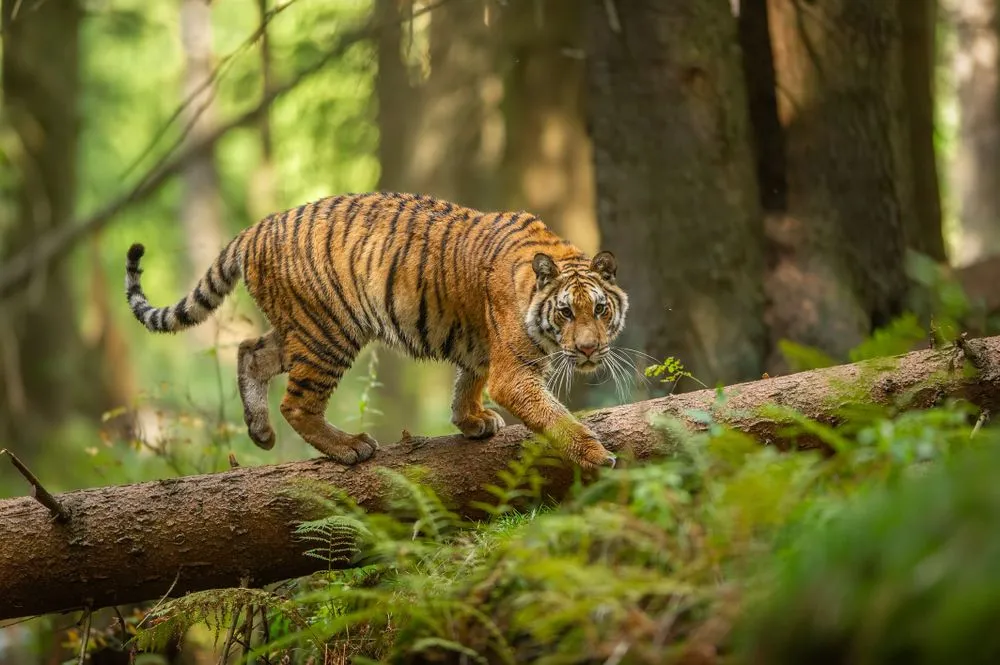
Have you ever imagined a world without majestic beasts like elephants, tigers, wolves, cheetahs, pumas or jaguars? A world where you could go on wilderness adventures, but instead of seeing charismatic species like tigers and bears, you would only spot their prey? Unfortunately, at the rate at which we’re going, we will likely live in such a world soon.
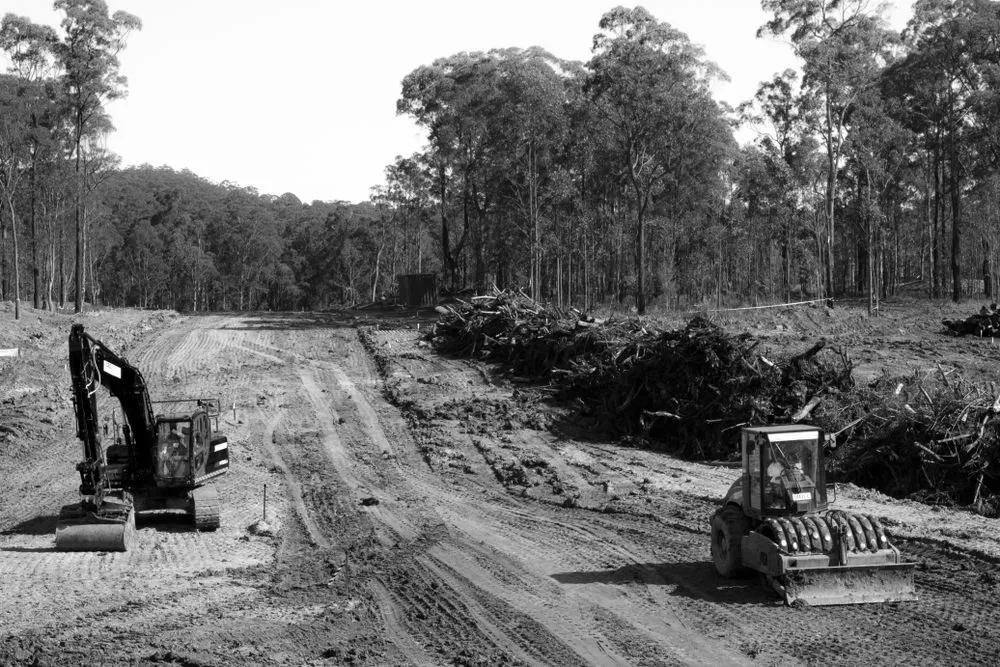
Ever since humanity expanded its population and territories, we have caused irreversible damage to natural habitats. We are indiscriminately demolishing our forests and exploiting animals and their homes, with an exceptional bias towards larger-sized species (or megafauna). While doing so, we seem to have forgotten that losing such mesmerizing species not only pushes them towards extinction, but also causes the ecosystem to cease functioning, which directly affects our well-being.
Conservationists around the world predicted such repercussions aeons ago and have been sounding alarms about the rapid alteration of habitats ever since. Do you remember all the conservation targets set by the Convention on Biological Diversity (CBD), or the Millennium Ecosystem Assessments reminding us of how fast ecosystem services are changing, or the Living Planet Reports by the World-Wide Fund for Nature (WWF) informing us about the rapid decline of wildlife species? Sadly, most of these calls have gone unheard and most targets remain unachieved. As a result, we are now entering an era of no return.
Today, many organizations are listening to scientists more actively, and as a result, a growing number of novel approaches to managing biodiversity loss have emerged over the past decade, going beyond the conventional approach of managing ecosystems. One of the more popular strategies among these is rewilding.
What Is Rewilding?
Rewilding aims to restore ecosystems (and their interlinked processes) by protecting core wilderness areas, ensuring connectivity between these areas, and safeguarding keystone species. This approach focuses on introducing (or reintroducing) predator or dominant herbivore species in order to restore ecosystem processes and functions to the state before humans heavily altered them. The concept of rewilding was coined around 1990 by Dave Foreman (a wilderness activist) and later developed into a scientific framework by conservation biologists Michael Soulé and Reed Noss.
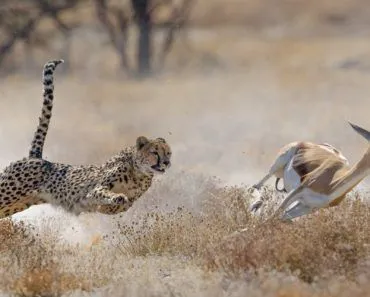
Now, you may wonder why the emphasis is only on predators and herbivores, such as wolves, bison, and bears. Well, such species help restore ecological functioning, trophic networks, and food chains via top-down control. For instance, cheetahs are higher on the food chain, which is why they can control prey populations, such as deer, which are at lower trophic levels. The control of prey populations helps to regulate (and regenerate) food and water resources. This top-to-bottom control of populations is therefore imperative to repair or re-initiate key ecosystem functions.

Some readers who are more familiar with ecosystem management may note that rewilding sounds a lot like habitat restoration. In fact, rewilding does broadly fall under the larger framework of restoration. However, the major difference is that this approach specifically seeks to restore ecosystems by reintroducing species into habitats. Restoration, on the other hand, aims to improve ecological conditions for a few select threatened species.
Why Is Rewilding Important?
Rewilding is important for many reasons. It helps rebuild ecosystem diversity, structure and resilience. It provides connectivity from one core area to another, which is vital for predators and other wide-ranging species that need to move between many reserves for food, dispersal, and shelter.
Humans also benefit from rewilding. For starters, healthy ecosystems provide us with clean water and air, and also help in better sequestering carbon. In addition, strong and interconnected ecosystems offer better protection against the effects of climate change. Rewilded ecosystems can provide many resources for local economies, while also providing livelihoods to local communities via nature tourism.
What Are The Different Rewilding Approaches?
Overall, there are three main types of rewilding: Pleistocene, passive, and translocation. Although their overall aim is to restore ecosystems and wildlife, they differ in their application based on the level of human intervention required to improve the functions of rewilded ecosystems.
Pleistocene Rewilding
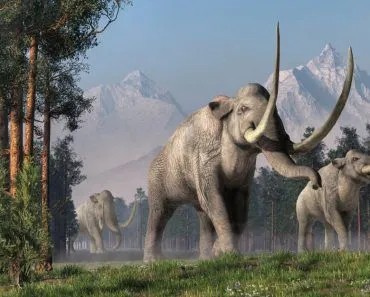
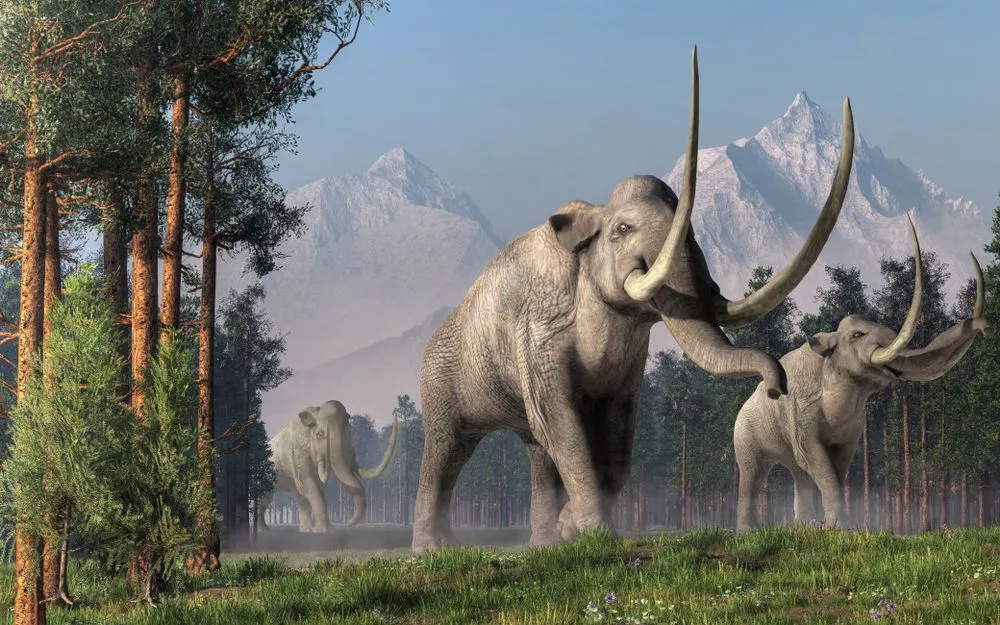
Do you remember the Pleistocene epoch (the age of repeated ice ages, lasting from about 2.6 million to 11,700 years ago) that ended with the mass extinction of much of the world's megafauna? Well, this rewilding approach aims to reintroduce species that are living relatives of the megafauna lost during the Pleistocene. Supporters of the Pleistocene rewilding approach believe that the mass extinction left several ecosystems unbalanced. Hence, by reintroducing extant megafauna, they will be able to re-institute evolutionary and ecological processes that were eliminated in the past.
Passive Rewilding
Passive rewilding is almost the exact opposite of Pleistocene rewilding. This approach aims to reduce human intervention by giving back cultivated lands and letting nature work its magic in an undisturbed way. This approach requires little to no human intervention, making it possible for ecological succession to flourish in cities and croplands.
Translocation (Or Trophic) Rewilding
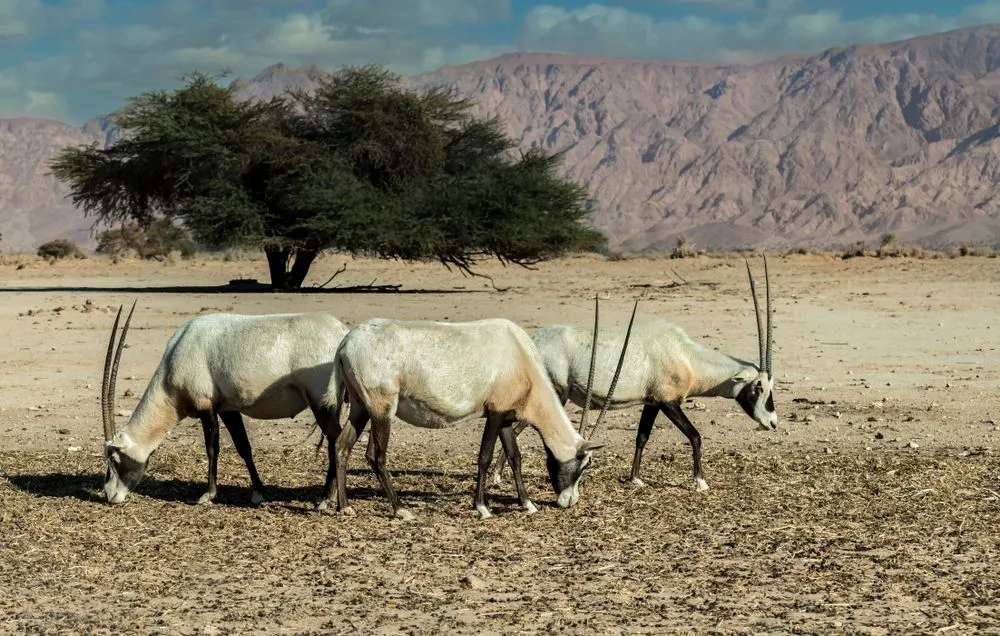
Compared to Pleistocene and passive rewilding, translocation rewilding is a far more active approach, one that involves the reintroduction of species with more recent origins. This approach aims to restore and reinitiate dysfunctional ecosystem processes either by (1) reintroducing species in an area from which they were locally extinct, or (2) releasing species into an existing population to improve their chances of survival.
Examples Of Rewilding Efforts
Many countries have recently adopted different rewilding strategies. However, the one region that dominates with respect to rewilding habitats and wildlife is Europe. Several species are now making serious comebacks in Europe, thanks to persistent efforts by conservationists towards reintroducing species, increasing their protection, and creating corridors to enable their movement.
For instance, many European countries have recently observed stable populations of brown bears, Iberian wolves, elk, golden jackals, and red deer. The Iberian lynx, once the world’s most endangered cat, is a striking example: reintroductions and captive breeding lifted its population from roughly 100 animals in the early 2000s to more than 2,000 by 2024, prompting the IUCN to downgrade it from Endangered to Vulnerable that year.
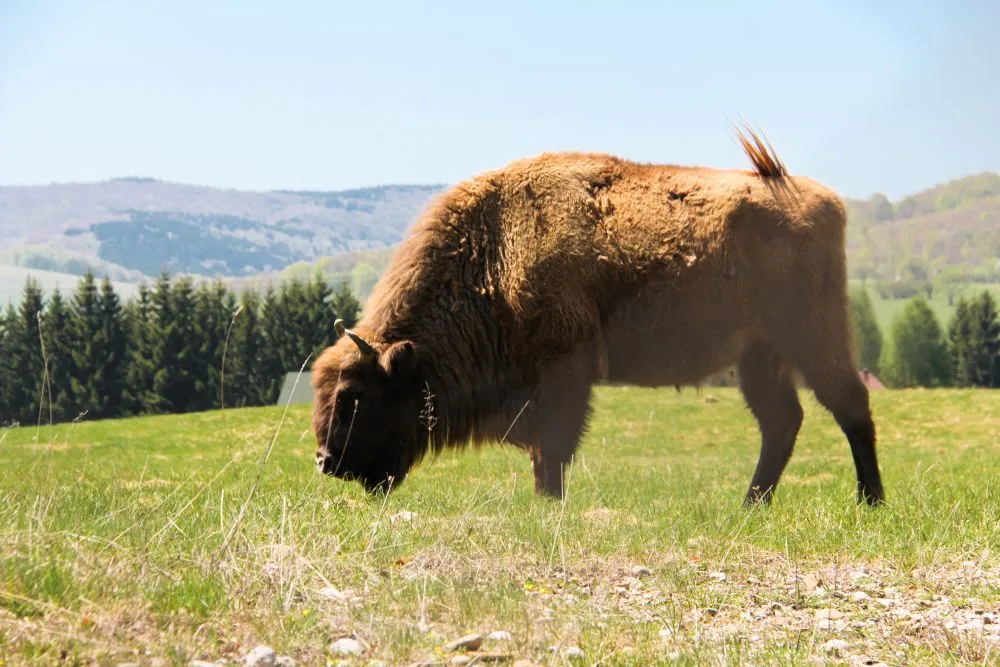
However, the bison is Europe’s most successful rewilding story. Bison are some of the largest mammals in Europe, and were once widespread across the continent. However, by the late 1920s, the species had been wiped out in the wild by habitat destruction and overhunting, surviving only as a few dozen animals in zoos and private collections. Today, the bison have made a miraculous comeback (via translocation rewilding) thanks to the tireless efforts of several conservationists, organizations, and institutes. From those handful of survivors, the free-roaming population has rebounded to around 7,000 individuals, enough for the IUCN to upgrade the species from Vulnerable to Near Threatened in 2020.
In other parts of the world, such as in Yellowstone National Park in America, the reintroduction of the grey wolf has been highly successful. The grey wolf was wiped out of Yellowstone by the mid-1920s, the result of decades of hunting and government predator-control programs. In the decades that followed, scientists began questioning whether the ecosystem was healthy, as the wolves' disappearance had led to an enormous increase in elk populations, which in turn drove the overgrazing of grasses, shrubs and trees. The degradation of the vegetation worried scientists as plants died and the soil eroded.
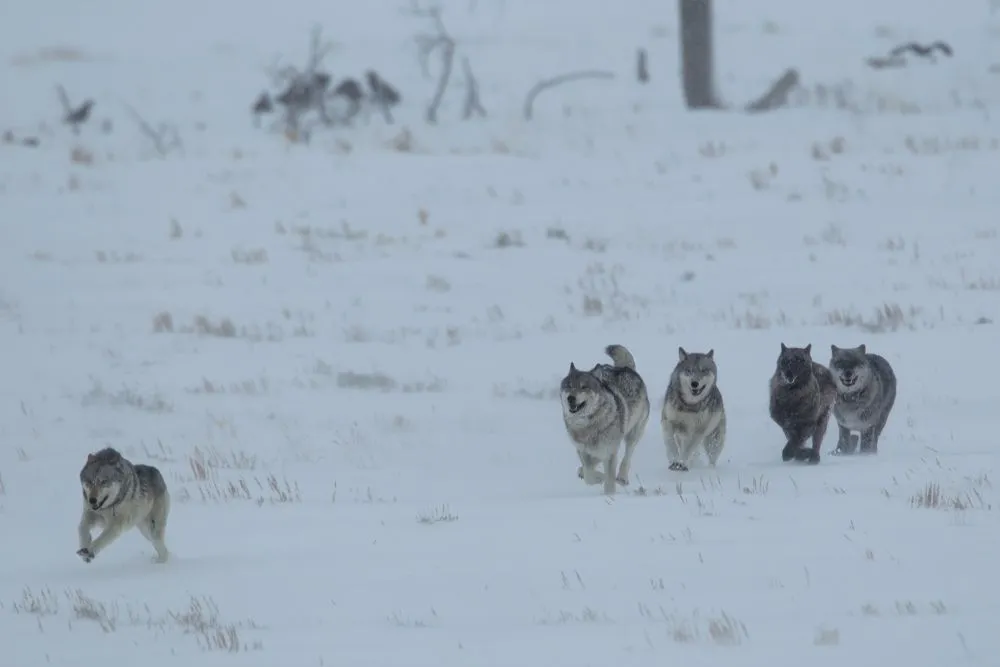
In 1995, 14 gray wolves captured in Alberta, Canada were brought into the park (i.e., translocation rewilding). Rather than being set loose immediately, they were kept in fenced acclimation pens for about 10 weeks so they would settle into their new territory instead of trying to head home, a technique known as a soft release. The following year, 17 more wolves from British Columbia joined them. The reintroduction worked: from that founding stock the population climbed to a peak of 174 wolves in 2003 and now hovers around 90 to 110 across roughly a dozen packs. Their return has had an enormous impact on keeping the elk population in check and protecting the valleys from overgrazing.
Although rewilding has been welcomed by many communities, it has also given rise to a few issues, primarily that of human-wildlife conflict. This is because living alongside wild animals is not always easy, nor is it welcomed by many people. However, awareness programs for local communities can help counter or even change these attitudes towards reintroduced wildlife, ensuring that such strategies can continue to undo the damage we have inflicted on the natural world.
References (click to expand)
- Perino, A., Pereira, H. M., Navarro, L. M., Fernández, N., Bullock, J. M., Ceaușu, S., … Wheeler, H. C. (2019, April 26). Rewilding complex ecosystems. Science. American Association for the Advancement of Science (AAAS).
- Sandom, C., Donlan, C. J., Svenning, J., & Hansen, D. (2013, February 25). Rewilding. Key Topics in Conservation Biology 2. Wiley.
- Josh Donlan, C., Berger, J., Bock, C. E., Bock, J. H., Burney, D. A., Estes, J. A., … Greene, H. W. (2006, November). Pleistocene Rewilding: An Optimistic Agenda for Twenty‐First Century Conservation. The American Naturalist. University of Chicago Press.
- What is rewilding? - True Nature Foundation - truenaturefoundation.org
- What Is Rewilding?. rewilding.org
- What is rewilding?. Rewilding Europe
- 1995 Reintroduction of Wolves in Yellowstone. yellowstonepark.com