An invasive species is a non-native plant, animal or microbe that establishes in a new habitat and spreads rapidly, harming the local environment, economy or human health. By outcompeting native wildlife and disrupting food webs, invasive species are a key driver of biodiversity loss worldwide, and they now cost the global economy at least $423 billion a year.
Walk through almost any city park, from London to Los Angeles, and you’ll see plants and animals that feel like a natural part of the place. Yet plenty of them are not local at all. Did you know that the flocks of pigeons cooing on every ledge are rock doves originally from Europe, North Africa and Asia, now among the most widespread urban colonizers on the planet? Or that many of the ornamental shrubs and shade trees lining our streets were brought in from continents away? Australia takes this to an extreme, famously struggling to control its feral populations of… well, just about everything.
But what does this mean? Why do we use words like “struggling” and “control” when talking about invasive species? Many people support the idea that if a species has established itself, we should look after it because biodiversity is biodiversity, no matter its origin. In our modern age of rampant climate change and species extinction, why is there still a focus on invasive species and their management?
What Are Invasive Species?
A species becomes ‘invasive’ when it is introduced to a habitat outside its natural range, spreads quickly, and causes harm to the local environment, economy or human health. That last part matters: conservation agencies such as the U.S. Geological Survey stress that an invasive species is not just any newcomer, but one that does damage. This is the key difference between the terms ‘introduced’ and ‘invasive’. ‘Introduced’ applies to any organism that has turned up in a non-native habitat, whether or not it manages to establish itself. Many introduced species die out, or stay so minimally present that their effect is barely felt, and some are even beneficial. The same species that is harmless (or rare) back in its native land can become a runaway invader once it lands somewhere new.
These invaders can overcome the challenges they face in their new habitat and rapidly take over. Now, this may take anything from days to weeks to decades, depending on many factors, including the number (and frequency) of introductions to the new area, whether the new climate is drastically different from that of the native region, and the rate at which the species can reproduce. To give you some idea, a rabbit (capable of producing about 50 offspring per year, and can utilize a wide range of resources) is far more likely to be invasive than an African forest elephant that produces one live birth every five years or so. Genetics play a large and important role in determining whether an organism can or cannot become invasive.
Invasive Species Impact: How Do Invasive Species Affect Biodiversity?
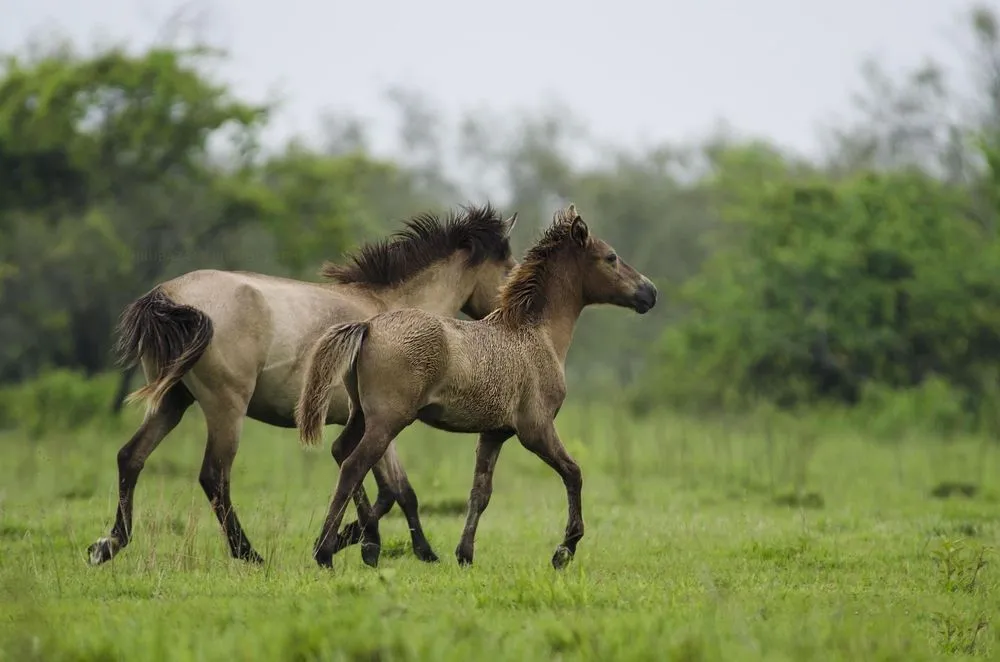
Colonizing species often have features and characteristics that the new ecosystem does not recognize. The ‘brumbies’ or feral horses that run wild in the Australian outback have converted large tracts of crucial water-filtering swamp systems, into hard, dry swaths of land, because that land is not adapted to the presence of hooves. Horses are not native to Australia and were only introduced in 1788 by the Europeans for utility and farm work. The hooves till the land and mash out the mud, creating channels and destroying these bogs. The water rushes into streams and rivers instead of passing slowly through the filter system. As a result, the native biodiversity that took millennia to adapt to and depend on this system is disappearing.
Invasive Animals
Invasive predators such as feral cats, rats, mongooses, pigs and others are extremely dangerous in introduced lands where the prey have never encountered such creatures and have adapted no defenses against them, leading to rapid extinction. Invasive mammalian predators are implicated in a staggering 58% of all bird, mammal and reptile extinctions recorded worldwide (Source).
Invasive Plants
Invasive plants are no less dangerous for species survival, as they usurp water and soil nutrients. The water hyacinth is notoriously invasive in many stream systems worldwide. This plant rapidly expands and covers entire streams, cutting off air and sunlight, sucking out the oxygen and killing the other organisms in the water. It’s much harder for most of us to notice (or even care about) invasive plants, when in truth they are often easier to spread and tougher to eradicate, causing as much damage as any animal or microbe, if not more. An area that is adapted to short shrubbery and few tall plants may be impacted by a very tall invasive tree that cuts off sunlight, heat and rain from reaching the floor. This can affect all the plants that fall beneath its canopy, as well as reptiles that need sunlight to warm up, or the tree may house insects that were never supposed to be there!
Introduction Of Invasive Species: Intentional Or Accidental?
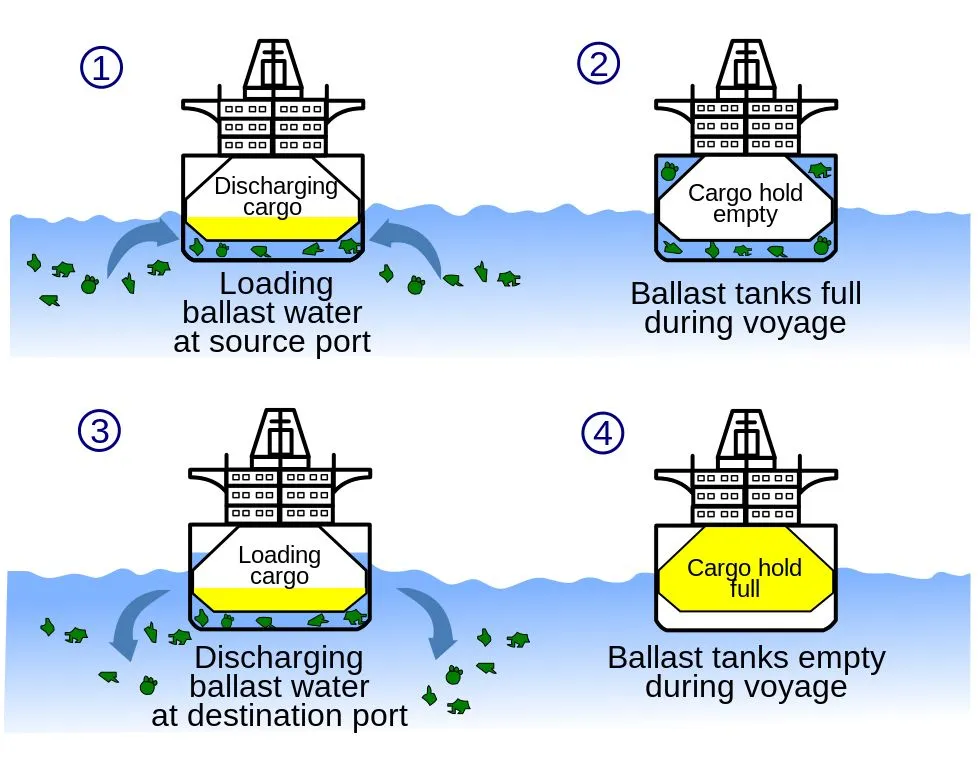
Nine out of ten times, introductions are caused by humans. This may be intentional for a particular purpose: cane toads, for instance, were deliberately released in Australia in 1935 to control cane beetles in sugar fields (they failed at the job and became a plague of their own), while kudzu was promoted across the southern United States from the 1930s for erosion control before it earned its nickname, “the vine that ate the South.” Sometimes the introduction is accidental. A classic example is the ballast water that ships take on to stay stable. That water can contain countless microbes, plants, fish and other small animals that are carried thousands of kilometers (thousands of miles) and dumped into entirely new waters.
Why Are They Important At All?
The reason that studies on invasive organisms require so much attention now more than ever is based on two critical points.
The first is because of the direct impact of invasive species on local biodiversity, which has been highlighted throughout this article. They cause a drastic reduction in the biodiversity of an area because of how they usurp resources. They add stressors to native species that are already having to adapt to changes in their habitat, climate and resources.
The sheer scale of the problem is hard to overstate. In a landmark 2023 assessment, the United Nations’ Intergovernmental Science-Policy Platform on Biodiversity and Ecosystem Services (IPBES) reported that more than 37,000 alien species have been introduced by humans around the world, of which over 3,500 are harmful invasives. These species have been a major factor in 60% of recorded global plant and animal extinctions, and they cost the world economy at least $423 billion every year, a figure that has roughly quadrupled each decade since 1970.
The second reason is not so obvious. In the age of climate change and rapid species extinctions, it is fascinating to think that some species can adapt to drastic changes in temperature, climate, food, water and other habitat factors. Studies are now focusing on understanding how they can do this, which may reveal if we can formulate strategies for the conservation of sensitive species that are more vulnerable to the effects of climate change. Invasion geneticists try to find patterns among various invasive organisms to learn what factors make them invasive.
There is still a great deal of debate and controversy over the ethics of invasive species control. Many countries carry out eradication drives, which include controlled and supervised poaching, hunting, shooting or poisoning. Genetic management strategies are also developing at a rapid pace.
It must be understood that every ecosystem is extremely complex, with infinite layers and maintained within a very delicate balance. It is a Herculean task to comprehend the cascading consequences on the environment of any action that we take. Invasive species are as much of an environmental hazard as any other, and effective management strategies could not be more urgent at this crucial time.
References (click to expand)
- Slow birth rate found in African forest elephants - BBC News. BBC Online
- Feral horses. Invasive Species Council (Australia).
- Doherty, T. S., Glen, A. S., Nimmo, D. G., Ritchie, E. G., & Dickman, C. R. (2016, September 16). Invasive predators and global biodiversity loss. Proceedings of the National Academy of Sciences. Proceedings of the National Academy of Sciences.
- Media Release: IPBES Invasive Alien Species Assessment (2023). IPBES Secretariat.
- GISD. iucngisd.org
- What is an invasive species and why are they a problem? U.S. Geological Survey.