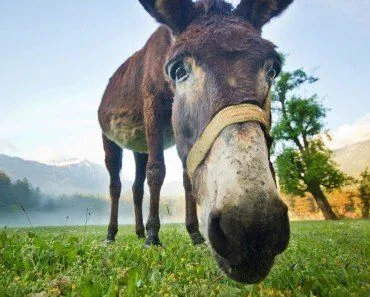
Animals have tails because they earn their keep. Depending on the species, a tail helps with balance, steering, swatting away insects, gripping branches like a fifth limb, keeping warm, or signaling mood. Our own ancestors lost theirs roughly 25 million years ago, once we no longer needed a tail in the trees, leaving only the tailbone behind.
Remember when Hagrid gave Dudley a tail for trying to steal Harry’s birthday cake? The humor in that, of course, stems from the fact that humans don’t have tails, but what if we did?
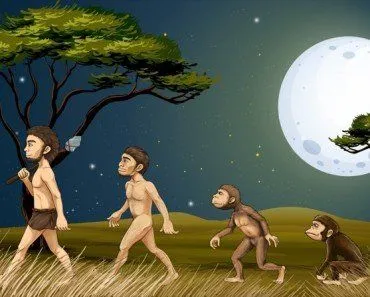
At a certain point in our evolutionary history, our ancestors did have tails. In fact, every one of us still grows a small tail in the womb, around the fifth or sixth week of development, before the body reabsorbs it. We lost the grown-up version because we had no use for it anymore. Organs and body parts like this are called vestigial, and we actually have a number of them! In terms of tails, however, most of us are aware of this evolutionary story from our school science texts.
Early Humans And Their Tails
When early humans began living on the ground, the tail was no longer essential, as compared to when our ancestors were arboreal. Essentially, we didn’t have to hang around in trees anymore, so our use for the tail was limited. In fact, it would have been a hindrance for easy movement, so over many generations, it disappeared. We still have a tailbone (the coccyx), which gives our pelvic muscles something to attach to and helps support us while sitting, but we don’t have a visible tail anymore.
So why did our branch of the family tree drop the tail in the first place? In 2024, researchers writing in the journal Nature pinned down a likely culprit: a tiny piece of jumping DNA (an Alu element) that slipped into a gene called TBXT in an ape ancestor around 25 million years ago. That single change scrambled how the gene builds a tail, and it neatly lines up with the great divide in the primate world: monkeys kept their tails, while apes (including us) did not.
Animals have preserved their tails because they still have a use for them. However, all animals use their tails for non-uniform purposes, although they mostly have to deal with balancing, defense and navigation. Only a few domesticated animals use tails to express emotions and communicate. Here are some ways in which animals use their tails:
Prehensile And Non-Prehensile Tails
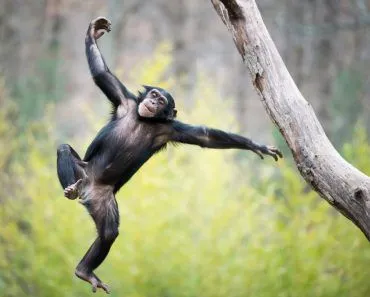
Tails can be prehensile and non-prehensile; prehensile tails are those that can be used for grabbing and holding things. A prehensile tail acts like a fifth limb, strong enough to wrap around a branch and even take an animal’s full body weight. This is also one reason some animals have such long tails: a tree-dweller needs plenty of length to reach, grip, and balance. The famous owners of prehensile tails are the New World monkeys of Central and South America, such as spider monkeys and howler monkeys, which can hang from a branch by the tail alone while leaving their hands free to grab fruit. A few other tree-climbers, including kinkajous and some opossums, have them too. Most other animals have non-prehensile tails.
Swatter Tails
When you are being annoyed by flies and insects, you use a swatter, because you have hands to hold it. Cattle, horses and most other animals are bothered quite a bit by flies and insects biting at them all the time. Their tails act as a swatter in the absence of hands.
Tails To Protect From Cold
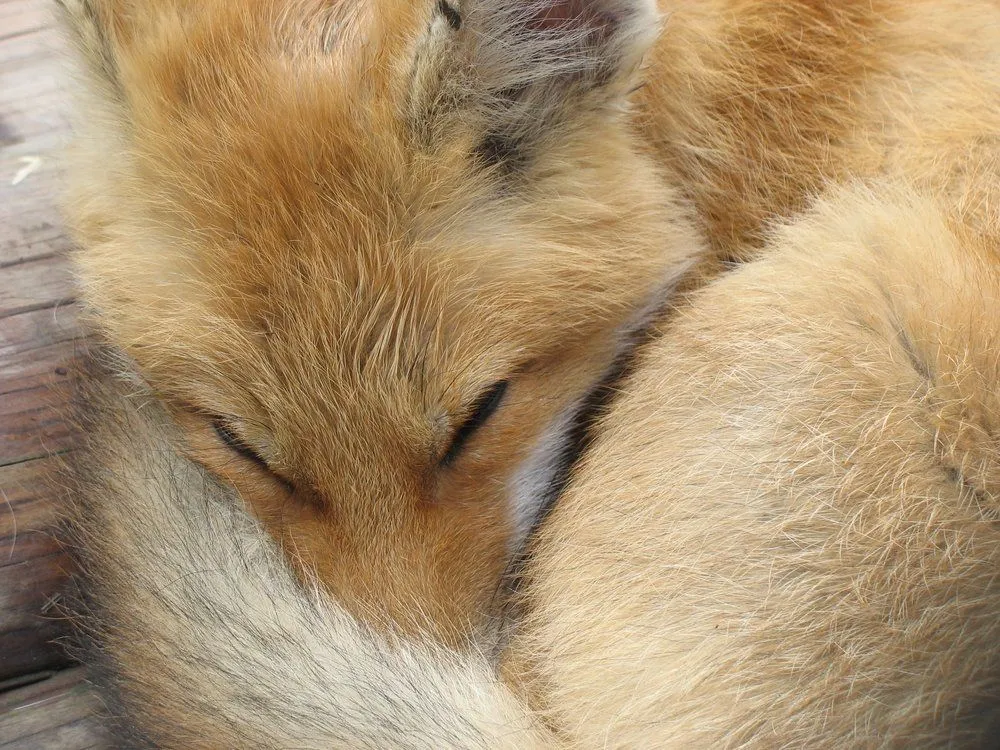
Animals living in colder regions curl up and use their furry tails like a built-in blanket. The Arctic fox is the classic example: it wraps its thick, bushy tail around its body and over its nose to trap warmth and cut down heat loss in sub-zero weather.
Tails For Balancing
For most animals, the tail also helps maintain balance while navigating tight spaces, or acts as a rudder to steer the body. The cheetah is a striking example: when it chases prey at full speed, it swings its long, muscular tail to the opposite side of a turn, counterbalancing the move so it can change direction almost instantly without tumbling.
Tails For Communication
Domestic animals also use their tails to communicate. Dogs wag their tails to express affection, and hold it straight out when angry, whereas cats hold up their tails for affection and wag it when they are displeased. No wonder these two species don’t get along; their tails can’t even communicate!
Gross Info Alert! A hippo (usually a dominant male) spins its short tail like a propeller while it poops, flinging the dung in a wide arc to scent-mark its turf so other hippos know to keep out.
Certain lizards use their tail in a very unique way. Many have built-in weak spots (called fracture planes) in their tail bones, so when a predator grabs hold, the tail snaps off cleanly. The detached tail keeps twitching and wriggling for a few minutes, which distracts the predator while the lizard scampers off to safety, leaving the attacker with nothing but a tail for lunch. The lizard can then grow a new tail, though the replacement is usually made of cartilage rather than bone. Pretty amazing!
Some Animals Carry A Packed Lunch In Their Tail
Here is a use that rarely makes the school-textbook list: a few animals treat the tail as a pantry. The African fat-tailed gecko is the poster child. It lives in the dry Sahel and savannah of West Africa, where a meal is never guaranteed, so it banks surplus fat in its plump tail and draws on that reserve when prey is scarce. With a well-stocked tail, the gecko can go days on end without eating. The tail even doubles as a health gauge: a thin, stick-like tail is a sign the animal has been burning through its savings and is underfed or stressed, while a fat one means it is doing just fine.

Mammals do it too. Fat-tailed sheep, raised across the dry, cold regions of Africa and Asia, store a thick wedge of fat in and around the tail. That stockpile acts as a survival buffer, releasing energy through a drought or a hard winter when the pasture has gone dormant. In both cases the tail works a bit like a camel's hump: a portable fuel tank that lets the animal ride out the lean stretches.
Do All Animals Have Tails?
Not even close. Plenty of animals get by perfectly well without one. Most invertebrates (the insects, spiders and worms that make up the vast majority of animal species) have no tail at all. Among amphibians, adult frogs and toads are tailless, which is why their scientific order is literally named Anura, meaning "without a tail." A tadpole hatches with a tail and swims with it, but during metamorphosis the body breaks the tail down and recycles the material into new limbs and organs, so the adult frog hops away with nothing left behind.

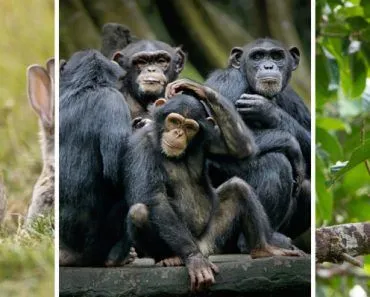
Even among mammals there are tailless members. The whole ape family (gibbons, orangutans, gorillas, chimpanzees, bonobos and us) lost the tail, and its absence is the single easiest way to tell an ape from a tail-bearing monkey. So the pattern is less "everyone has a tail" and more "a tail sticks around only where it still earns its keep." When a lifestyle stops rewarding one, evolution is happy to let it go.
What If Humans Still Had Tails?
We came surprisingly close to keeping them, and every one of us still builds a tiny tail in the womb before the body reabsorbs it. Very rarely, that reabsorption does not finish and a baby is born with a soft, fleshy "true" human tail. It is genuinely rare: across more than a century of medical literature only a few dozen well-documented cases have been described. A true tail is covered in normal skin and made of fat, connective tissue, muscle, blood vessels and nerves, but crucially it contains no bone, cartilage or spinal cord. Because there is muscle inside, some of these tails can even twitch. Like the tailbone itself, a true tail is a vestigial echo of our past; surgeons can remove one with a simple operation, and the child is otherwise completely healthy.
Doctors are careful to separate a true tail from a "pseudo-tail", which looks similar from the outside but is something else underneath: often a sign of an irregular tailbone or a spinal condition such as spina bifida, and sometimes containing bone or part of the spinal cord. That difference matters a great deal medically, which is why any tail-like growth in a newborn is imaged before anyone reaches for a scalpel. So could humans have tails? In a sense a few of us briefly do, but it is a developmental hiccup rather than a working comeback of the limb our ancestors swung from the trees with.
References (click to expand)
- Why do four-legged animals have tails? What is the purpose of a tail? - UCSB Science Line. The University of California, Santa Barbara
- On the genetic basis of tail-loss evolution in humans and apes - Nature (2024)
- Coccyx (Tailbone): Anatomy, Function & Common Conditions - Cleveland Clinic
- Prehensile tail - Wikipedia
- Tail - Wikipedia
- Rapid evolution of a retro-transposable hotspot of ovine genome underlies the alteration of BMP2 expression and development of fat tails - NCBI PMC
- Hemitheconyx caudicinctus (Fat-tail Gecko) - Animal Diversity Web, University of Michigan
- Frog (Anura) - Encyclopaedia Britannica
- Tail Resorption During Metamorphosis in Xenopus Tadpoles - NCBI PMC
- Vestigial Tail (Human Tail): What It Is & Treatment - Cleveland Clinic
- A tale of two "tails:" A curiosity revisited - Journal of Pediatric Neurosciences / NCBI PMC