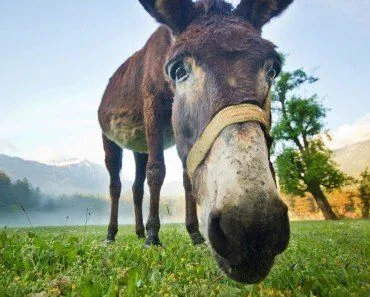
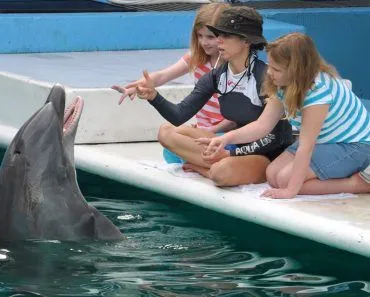
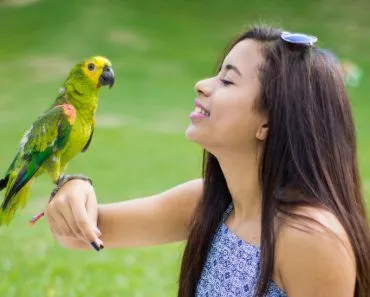
No, animals don't speak a hidden language we just can't understand. They communicate richly using calls, body language, gestures, and scent, but their vocal tracts can't produce the range of sounds the human mouth and larynx can, and their brains lack the specialised language regions (Broca's and Wernicke's areas) and the FOXP2 gene support that let humans string words together into syntax.
Scientists have long pondered whether each animal species has a different language, much like different human languages, that we cannot understand. Linguists and psycholinguists agree on the fact that the way animals communicate through various calls does not fit the definition of human languages.
Animal calls are not considered a language because the calls are restricted to signals related to foraging (food) activities, mating, and signals to warn about the presence of predators. They lack the characteristic of productivity (in psycholinguistic terms) that all human languages share. That is, humans create new expressions every day by combining different words to convey meaning. Animal calls are fixed in their meaning, while human language goes further and includes expressions of abstract and complex ideas that do not have a restricted scope.
However, Animals DO Communicate…
As the famous adage tells us, ‘People speak with their eyes’, but people who study humans believe that people speak with their entire bodies. To convey a message, one does not always need words. Have you ever shared a private joke with your friend across the table? All you did was give them a smug smile. Although animals do not possess the ability to speak words, they can communicate in much the same way as humans do.
Although animals do not have words, they communicate using other methods, such as gestures, movements, vocal calls and their sense of smell. In short, most of their communication is non-verbal.
If Animals Can Utter Noises, Why Can’t They Talk?
Simply because they do not have the flexibility in their hardware to do so! Let’s look at why humans are able to speak in order to understand what animals lack.
Human and animals both have the prerequisite organs that produce sound, such as lungs, throat, voice box, lips and tongue. The difference lies in the movement and relative position of these organs that make it possible for us to speak.
When we speak, we release controlled puffs of air from our lungs, which have to pass through the voice box, formally called the larynx, in the throat to continue its journey to the mouth, where it is expelled. The larynx is made up of cartilage and muscle, on top of which is a stretched membrane called our ‘vocal cords’. When the puff of air reaches the vocal chords, they vibrate to produce sound. We can loosen or tighten our chords to produce high- or low-pitched sounds. When you think about it, this is the same mechanism/ hardware that animals and birds have that they use to growl, meow, chirp, screech…
The Magic Of Word Utterance
The sound from the throat journeys into our mouth, where it can be shaped by the movement of our tongue and lips. Think of any alphabet whose sound does not involve movement of either your lips or tongue…I bet you can’t!
When we developed from apes, a lot of our features were modified and improved to better shape sounds along the way. The mouth started getting smaller and the neck grew longer. The lower jaw became less protruded, making it more flexible for movement. To better understand the jaw’s contribution, try a little exercise. Say the letters of the alphabet aloud as you open your mouth and hold your jaw fixed in a position, only moving your tongue and lips. Don’t cheat! With your jaw open, you cannot use your lips to say letters like b, f, m, p, or o! Those letters involve opening your jaw further and shaping the lips.
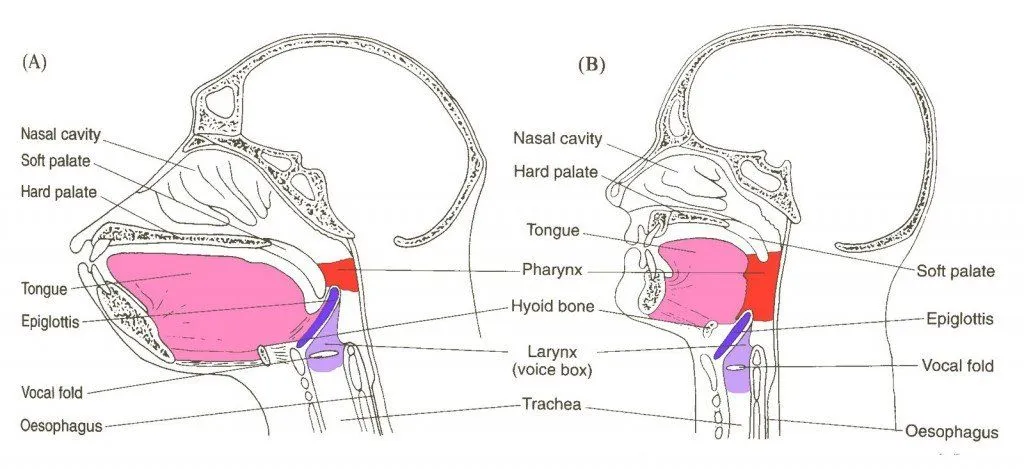
As the jaw reduced, the tongue was pushed inside the throat, making the larynx move lower. Since more space was now required for the tongue and larynx, the neck became longer. All other animals, including our closest animal relatives – chimpanzees – lack the flexibility of the vocal tract (tongue, chords, lips and jaw) to produce complex sounds that resemble utterances like human language.
Along with this motor component of speaking, humans can put words in a sequence to convey meaning due to the developed neocortex. More specifically, this is made possible by highly developed language-related sections called Broca’s and Wernicke’s Areas. A gene called FOXP2 is also closely tied to our ability to speak (when it is mutated, children develop severe verbal dyspraxia), although the gene supports speech rather than single-handedly producing it.
In summary… well done, humans!
Do Animals Understand Each Other?
Here is a question that puzzles a lot of people: if a sparrow in California meets a sparrow in New York, do they understand each other? Within a species, the answer is usually yes, but with a twist that looks surprisingly like our own regional accents. Many animals that learn their calls (rather than being born knowing them) develop local dialects. Young white-crowned sparrows, for example, pick up the song of their neighborhood by listening to the adults around them, and the result is that birds from one valley sing a recognizably different version than birds a few kilometers (a couple of miles) away. The same has been documented in city-dwelling monk parakeets, whose contact calls differ from one European city to the next because the calls drift culturally, not genetically (Behavioral Ecology, 2023).

What about different species understanding one another? They often do, at least for the messages that matter most. Eavesdropping on the alarm calls of other species has been shown experimentally in roughly 70 vertebrate species (Magrath et al., Biological Reviews, 2015). A squirrel or a small bird will dive for cover when it hears a neighboring species sound the predator alarm, gaining extra eyes on the lookout for hawks and cats. Sometimes the calls simply sound alike, and sometimes an animal learns over time which foreign call means danger. So animals do understand each other in the practical sense of reacting correctly. What they are not doing is swapping sentences or trading stories. They are reading a small, fixed set of urgent signals, not decoding a shared grammar.
Can Animals Understand Human Language?
If you have ever sworn your dog knows exactly what you are saying, you are not entirely wrong. A handful of animals comprehend human words to a genuinely impressive degree, even though none of them grasp language the way a human child does. A border collie named Rico could reliably fetch more than 200 objects by name, and researchers showed he could infer a brand-new object's name by elimination and remember it weeks later, a shortcut called fast mapping that was once thought to be uniquely human (Kaminski, Call and Fischer, Science, 2004). Another border collie, Chaser, was trained over three years to recognize the proper-noun names of 1,022 separate toys, and she could tell the difference between a name and a command (Pilley and Reid, Behavioural Processes, 2011).

The ceiling, though, is comprehension, not conversation. Alex the African grey parrot learned around 150 English words and could label colors, shapes and small numbers. Kanzi the bonobo responded correctly to many novel spoken requests, sometimes outperforming a young toddler on the test. Yet even the brightest of these animals show no sign of hierarchical syntax, the open-ended ability to nest clauses and build endlessly new sentences that every human language depends on. So can animals understand human language? In small, concrete chunks, yes, and that is remarkable. Using it to think and talk the way we do is a different ability altogether, and it remains ours alone.
References (click to expand)
- Animal language - Wikipedia. Wikipedia
- Can animals understand human language? | HowStuffWorks. HowStuffWorks
- Do animals have language? - Michele Bishop | TED-Ed. TED Conferences, LLC
- BBC - Earth - Can any animals talk and use language like humans? - www.bbc.com
- Magrath, R. D., et al. Eavesdropping on heterospecific alarm calls: from mechanisms to consequences. Biological Reviews (2015). PubMed / NCBI
- Multilevel Bayesian analysis of monk parakeet contact calls shows dialects between European cities. Behavioral Ecology (2023). PMC / NCBI
- Kaminski, J., Call, J., Fischer, J. Word learning in a domestic dog: evidence for 'fast mapping'. Science (2004). PubMed / NCBI
- Pilley, J. W., Reid, A. K. Border collie comprehends object names as verbal referents. Behavioural Processes (2011). PubMed / NCBI