Deer are crepuscular animals with eyes packed with rod photoreceptors, so their pupils dilate fully at night to gather as much light as possible. When a car's headlights suddenly hit them, those wide-open pupils are overwhelmed and the deer is temporarily blinded - it can't see the car, the road, or a safe escape route. The "freezing" is not bravery or stupidity; the deer simply stands still and waits for its eyes to adjust to the glare, which takes several seconds and often costs it its life.
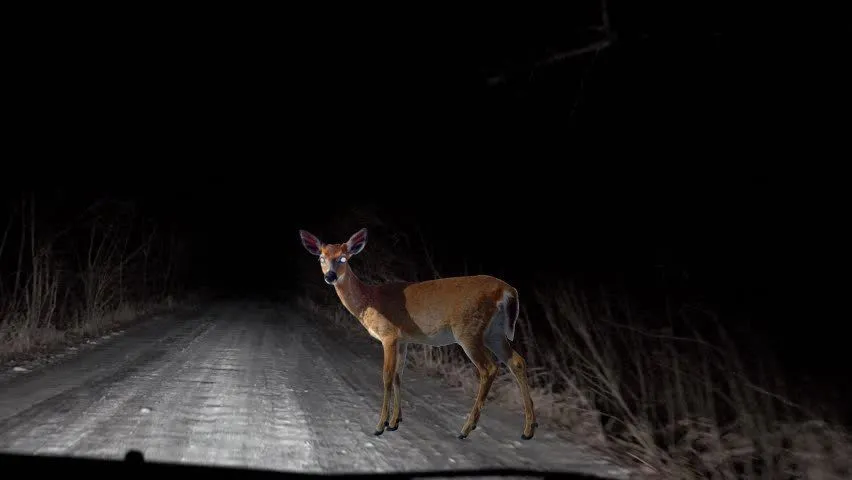
This is something that is known by few people, and experienced by fewer still. For those who don’t know about it, if you ever happen to be driving on a road at night that is surrounded by woods with a sizable population of deer, you might suddenly find a deer standing on the road ahead of you.
Now, spotting a deer in the center of the road ahead of you might not be very unusual in heavily forested areas, but the deer’s behavior might seem strange. It’s highly likely that the deer, despite seeing that it’s standing in the path of an automobile with illuminated headlights, won’t budge an inch! It will simply keep standing there for at least a minute or two!
Considering that wild animals usually tend to run away from humans at even the faintest of sounds, this steadfast attitude of deer is extremely peculiar. Why do you think deer freeze in headlights?
Deer Vision
Some people might think that deer are simply stubborn, which is why they choose to block the road in the middle of the night.
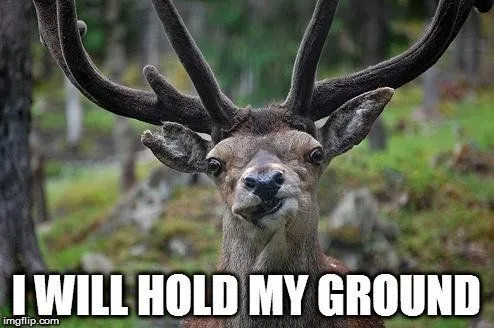
However awesome and exciting that might sound, it doesn’t appear to be the real reason behind deer’s steadfastness on the road. Rather, it has everything to do with the deer’s eyes.
You might have learned in high school biology classes that the retina of human eyes consist mainly of two types of photoreceptors, called cones and rods. While cones are responsible for our ability to discern between colors (color vision) and produce sharp, crisp images on the retina, rods help us see in low-light conditions.
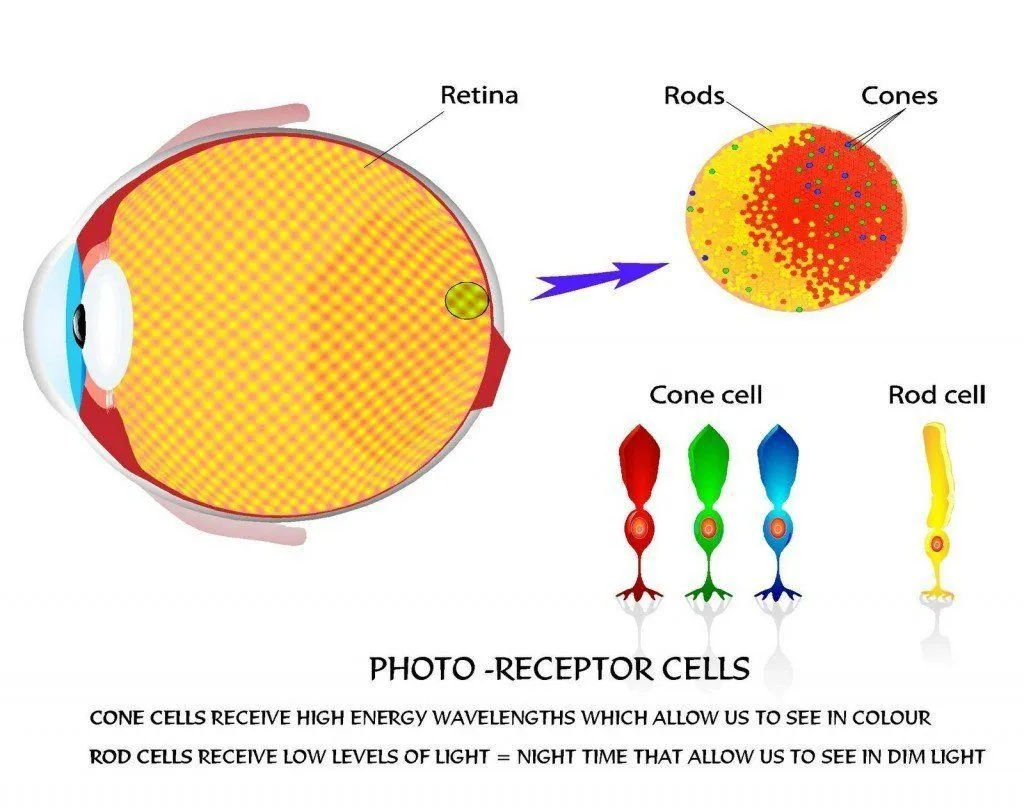 Rods are a thousand times more sensitive to light than cones and are also better at sensing motion. That’s why nocturnal animals usually have more rods in their eyes than their diurnal counterparts (i.e., animals that are mostly active during the day). Animals like cats, dogs and owls are some of the most common animals that have far better night vision than humans.
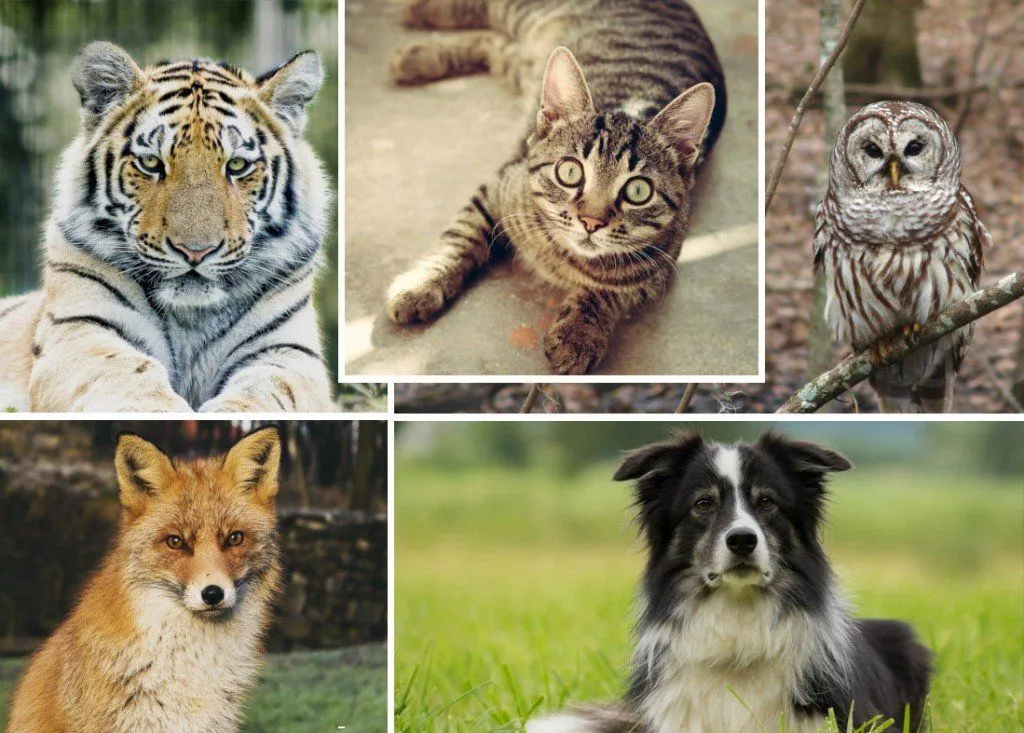
Similarly, deer also have fantastic night vision, thanks to the presence of a high number of rods in their eyes. This is precisely why they stand still in front of a vehicle at night, seemingly bathing in the headlight beams.
Why Do Bright Lights Stun Deer?
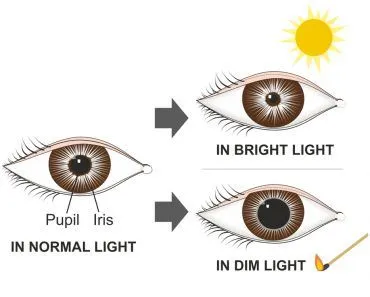
You see, a deer is a crepuscular creature, meaning that it’s primarily active during twilight (typically an hour before and after dawn/dusk). This implies that when there is absolute darkness outside, namely at night, a deer’s pupils are fully dilated to capture as much light as possible.
However, when a deer’s eyes are suddenly struck by the beam of a car’s headlights, its fully dilated pupils become blinded by the abundance of light, so it cannot see at all. Not knowing what to do about the sudden light surge in its eyes, a deer will just stand still and wait for its eyes to adjust to the blinding light.
So, there is neither bravery nor foolishness behind a deer’s act of blocking a car’s path in the middle of the night; it’s just anatomy!
Are Deer Actually Attracted To Headlights?
This is one of the most common things people search for, and the honest answer is no, deer are not drawn to your headlights the way a moth is drawn to a porch light. A deer that ends up bathed in your high beams is almost always there because the road simply runs through its habitat. Highways and country lanes cut straight across the woodland and field edges where deer feed at dawn and dusk, so a deer stepping onto the verge after dark is ordinary behavior, not the light reeling it in.

So why does it look like the deer wants to be there? Two things. First, as we have seen, the glare overwhelms its dark-adapted eyes, so it stays put rather than running blind into the unknown. Second, freezing is a deer's deep-rooted answer to a sudden threat. In the wild, holding perfectly still is a survival trick that helps prey go unnoticed by a predator, so when something unfamiliar and overwhelming appears, a deer's first instinct is to lock up and wait, not to bolt. Worse, a panicked deer that finally does move can dart in an unpredictable direction, sometimes straight toward the very vehicle it is trying to escape, which only reinforces the myth that the animal was chasing the light.
Why Do Deer Eyes Glow In Headlights?
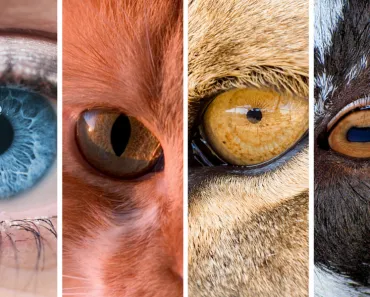
If you have ever swept your headlights across a roadside at night and seen two bright coins of light staring back, you have met the deer's secret weapon for the dark: a layer called the tapetum lucidum. It sits just behind the retina and acts like a tiny mirror. Light that the rods miss on the way in gets bounced straight back through the retina, giving those photoreceptors a second chance to catch it. That double pass is what makes a deer's night vision so much better than ours, and it is the same reason so many animals' eyes glow in the dark when your beams hit them, because some of that reflected light escapes back out of the eye toward you.

In deer and their hoofed relatives, this reflector is a tapetum fibrosum, built from neatly stacked sheets of collagen fibers rather than the crystal-packed version found in cats and dogs. The glow it throws back is usually a greenish or golden shine, though the exact color varies between individuals and populations. So the famous eyeshine and the dreaded freeze are really two sides of the same anatomy: the tapetum and a retina crammed with rods make the deer brilliant at seeing in near-darkness, but they also leave it badly dazzled the instant a bright, artificial light cuts through the night.
What Should You Do When A Deer Freezes In Your Headlights?
Knowing why the deer won't move is little comfort at 60 mph (about 100 km/h), so it helps to know what actually keeps you safe. Deer-vehicle crashes are not a rare freak event: the Insurance Institute for Highway Safety recorded 235 deaths from collisions with animals in the United States in 2023, and in earlier crash reviews roughly three-quarters of the animals struck were deer. Most of these collisions cluster around dawn and dusk, when deer are most active and the light is poor.

The single most important rule, according to highway-safety agencies, is do not swerve. Brake firmly but stay in your lane, because many of the worst crashes happen when a driver yanks the wheel to dodge a deer and ends up in oncoming traffic, a ditch, or a tree. Where there is no oncoming traffic, switching to high beams helps you spot eyeshine sooner and gives you more time to slow down. Remember too that deer rarely travel alone, so if one crosses, expect others close behind. Sounding your horn in short bursts may nudge a deer off the road, though you should not count on it, since a recent study of captive white-tailed deer found that an individual deer's temperament, not the kind of headlight facing it, decides whether it freezes or flees. The reliable defense is simply to slow down and stay alert on wooded roads after dark.
References (click to expand)
- Rods & Cones. Rochester Institute of Technology
- Deer in the Headlights - Science Q&A. The New York Times
- Potential Spectral Tuning of the Tapetum Lucidum in a Broadly Distributed Ungulate. Journal of Experimental Zoology Part A. PMC, NIH
- Why Do Some Animals' Eyes Glow in the Dark? The Science of Eyeshine. The Nature Conservancy
- Headlights and Hesitation: How Vehicle Lighting Affects Deer Behavior in Imminent Collision Scenarios. Savannah River Ecology Laboratory, University of Georgia
- Fatality Facts: Collisions with fixed objects and animals. Insurance Institute for Highway Safety (IIHS)
- Deer in headlights. Texas Department of Transportation (TxDOT)