Horses need shoes because domestication made them work harder than their hooves can naturally handle. Heavy riding, pulling, and travel over hard or uneven ground wear the hooves down faster than they grow back, hurting the horse’s gait, balance, and soundness. Nailed to the insensitive outer hoof wall, horseshoes protect against that wear and add grip.
Clip-clop, clip-clop, clip-clop…
Make way… horse comin’ through.

The ‘clip-clop’ sound has become a staple of how horses move. You simply can’t have a horse movie/show that doesn’t include that mysteriously pleasing sound. However, is it the sound of the horse’s hooves or something else entirely?
In fact, it is the sound that horseshoes make on the ground, not the horse hooves themselves; which brings up a more interesting question… why do horses wear shoes?
Before we can answer that, we need a bit more information.
What’s A Horseshoe?
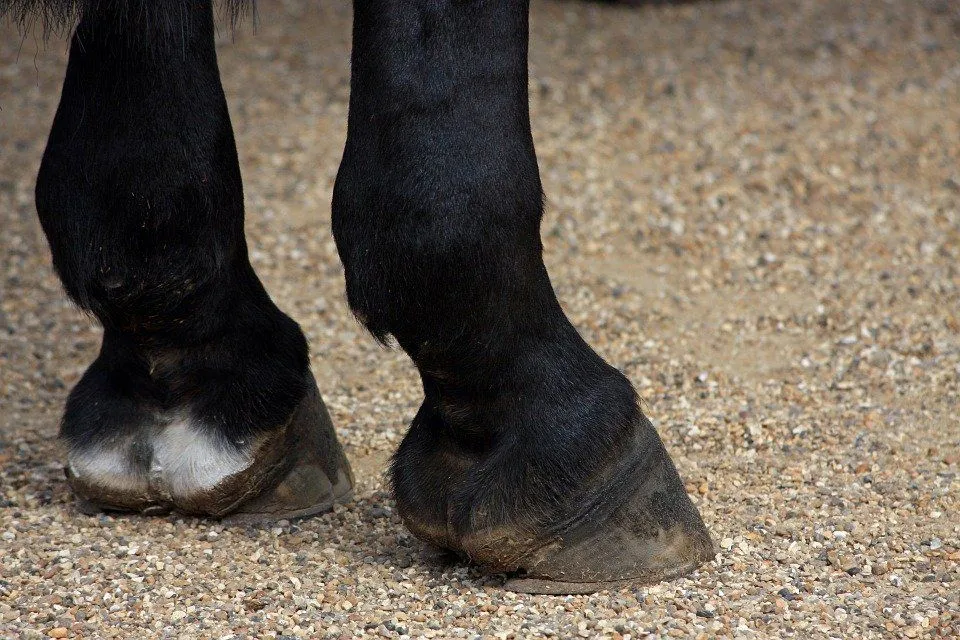
As the name implies, a horseshoe is a shoe for a horse. It’s basically a man-made item (traditionally made of metal) that’s attached to a horse’s hooves in order to protect them from wear over time. The shoe sits against the ground-bearing surface of the foot and is held on by nails driven through the outer hoof wall, the thick, curved rim you can see around the bottom of the hoof. The hoof wall is similar to human toenails, but much thicker and larger than even our longest toenails, and like a toenail it’s made of dead keratin with no nerves or blood vessels running through it. In other words, just as clipping our toenails is painless, a horse feels nothing when a farrier drives a nail through that outer wall, as long as the nail stays in the insensitive part and clear of the living tissue deeper inside the hoof.
Why Are Horses ‘Shoed’ In The First Place?
Horses were first domesticated thousands of years ago on the grasslands of the Eurasian steppe. People were keeping horses by around 3,500 BC, but studies of ancient DNA show that the lineage behind nearly all modern domestic horses spread out of the lower Volga-Don region only about 4,000 years ago, roughly 2,000 BC. As indispensable as horses turned out to be, different types of owners, such as farmers, riders and cavalrymen, soon realized that their horses’ feet were wearing down before they could grow properly.
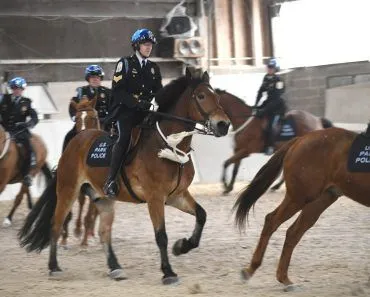
This was definitely bad news, because with so much riding and pulling, especially on uneven terrain, the wearing down of the hooves affected their horses’ gait, balance, and speed; it even caused lameness to a certain extent. To tackle this serious gait problem, horseshoes were invented.
The primary objective of horseshoes is to help protect horses’ hooves from excessive stress, wear and damage.
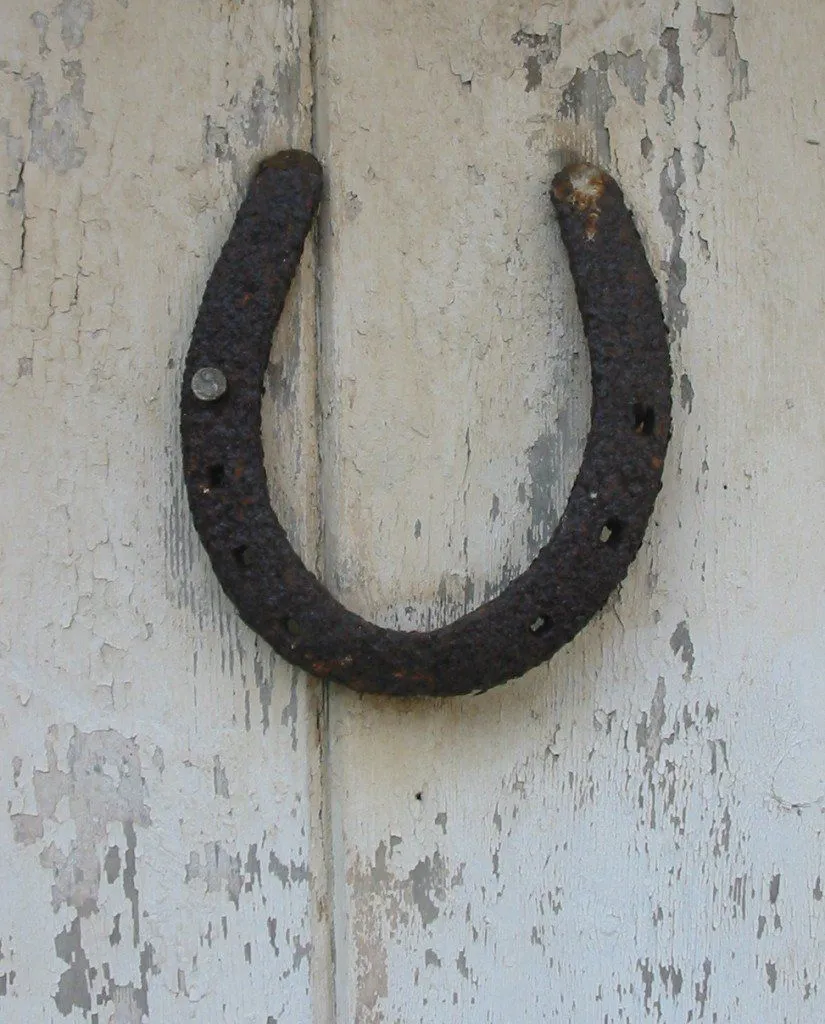
Other than that, horseshoes serve plenty of other purposes: specifically designed horseshoes are known to provide traction, which helps horses sprint or move more confidently in slippery, muddy areas without losing their balance. Such horseshoes prove very helpful when horses have to trot on asphalt surfaces, as without them, horses with worn down hooves would be at great risk of slipping and sustaining injuries.
There are certain breeds among horses that are known to have ‘soft hooves’, and these horses are much more likely to need shoes. Horseshoeing can also contribute to improving the gait of certain horses. In fact, specialized horseshoeing can help manipulate and even correct the gait of horses that are born with bone or muscular problems.
Horseshoeing Isn’t Easy!
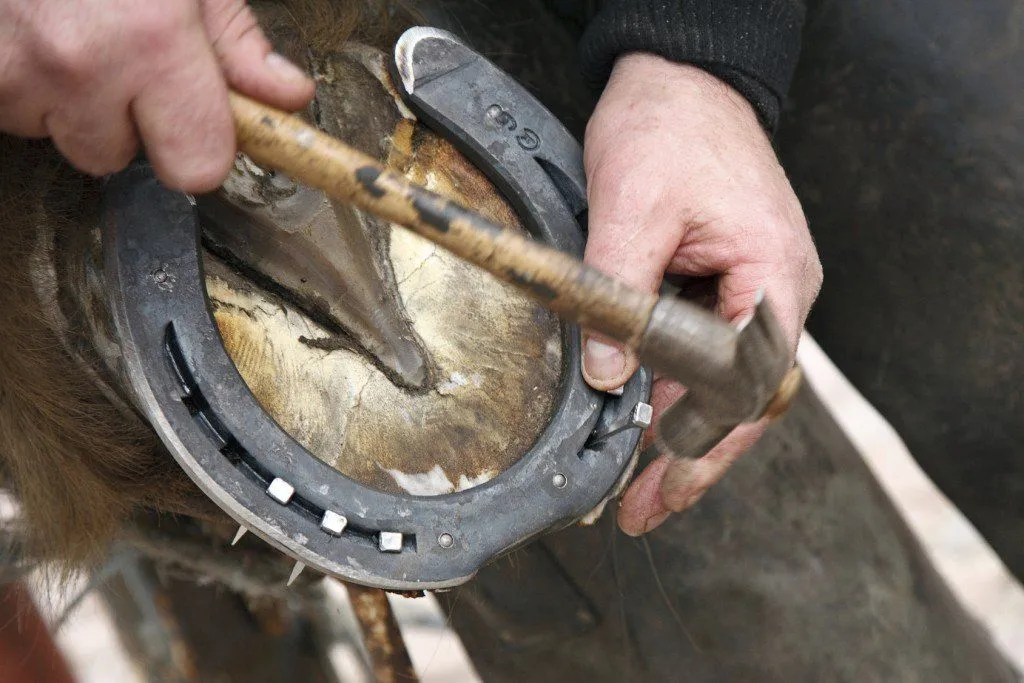
Shoeing a horse is no cakewalk! In fact, it is legally required that you be properly trained in the trade, have specific qualifications, and considerable relevant experience to be able to shoe horses in those countries (like the United Kingdom) where horseshoeing is a strictly regulated practice.
A person who professionally shoes horses is called a farrier – an expert in the field of shoeing horses who specializes in assessing potential lameness issues and fitting properly measured shoes to horses’ hooves. When done with proper care, horseshoeing is a painless procedure, but if the farrier makes a mistake (which happens even with skilled farriers when the horse in question doesn’t stand still) while shoeing a horse, the nail could come too close to the sensitive part of the hoof, causing the horse great discomfort, bleeding and lameness, if not corrected quickly.
How Are Horseshoes Attached?
So what does a farrier actually do when a horse comes in for new shoes? The job starts with the old shoe, not the new one. Using a pair of pincers (also called shoe pullers), the farrier eases off the worn shoe, then trims the overgrown hoof wall back to the right length with nippers, a sharp, pliers-like cutter, and tidies up the sole and the V-shaped frog with a hoof knife. A flat file called a rasp then levels and balances the bottom of the foot so the new shoe can sit perfectly flush.

Fitting the shoe itself comes in two flavors. In cold shoeing, the farrier shapes a ready-made shoe to the trimmed hoof without heating it. In hot shoeing, the shoe is heated in a forge and briefly pressed against the hoof; the scorch mark it leaves shows exactly where the metal does and doesn’t touch, so the farrier can hammer it to a near-perfect fit before it cools. Hot shoeing usually gives a closer fit, which is why many farriers still light up a forge.
Then comes the part everyone wonders about: the nails. The farrier drives specially shaped nails through the shoe and into the hoof wall along the white line, the pale seam that marks the boundary between the dead outer wall and the living tissue inside. Each nail is angled so that it bends outward as it goes in, steering clear of the sensitive interior and emerging through the side of the hoof wall a couple of centimeters (about an inch) up. The protruding tips are snipped off and bent down flat against the wall, a step called clinching, which hooks each nail in place so the shoe cannot work loose. A final pass with the rasp smooths the clinches and the edge where hoof meets metal. Because every nail travels through dead keratin, a well-done shoeing is as painless for the horse as a haircut is for us, and that firm grip is exactly why a fresh set of shoes stays put through weeks of walking, trotting and galloping.
Hoof Boots: A Safe Alternative
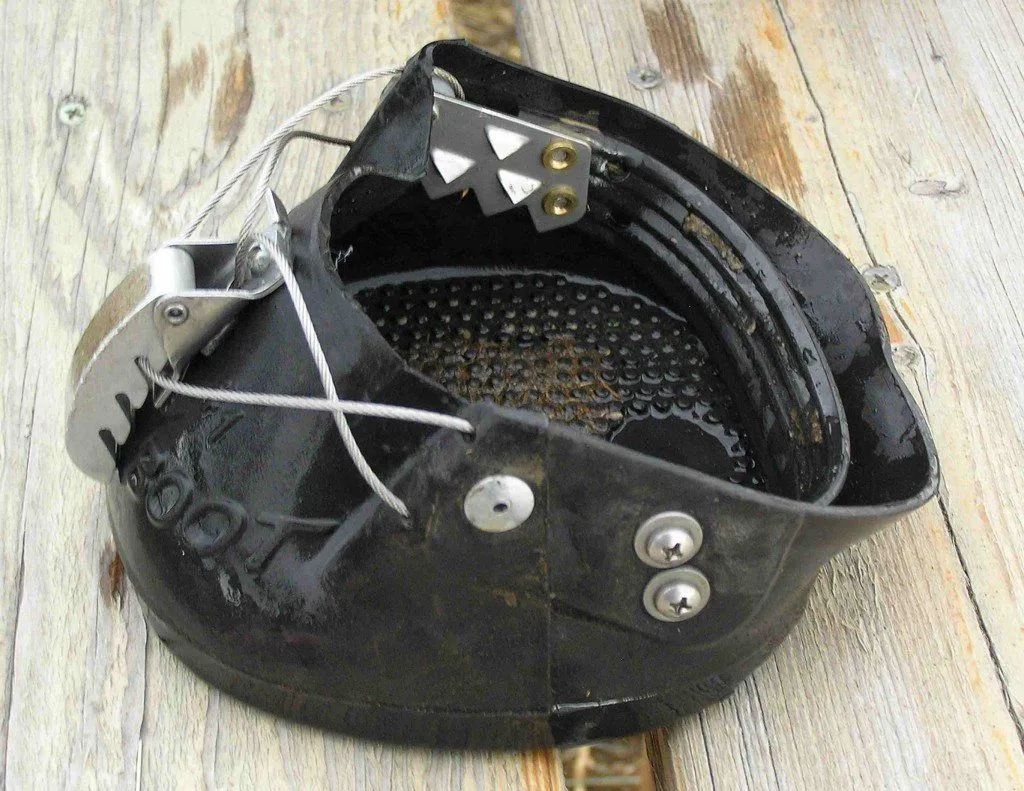
Since a horseshoe can be somewhat harmful to horses at times, if fitted improperly, hoof boots represent an elegant alternative. Hoof boots are devices made of tough, flexible synthetics such as rubber and polyurethane that replace (or sometimes aid) traditional metal horseshoes. In addition to the purposes that regular horseshoes serve (protection from wear and tear), hoof boots are actually more useful in the case of an injury to the hooves or if a pre-existing sole injury needs to be protected against hard, rocky surfaces.
It turns out that hoof boots are a better alternative to traditional horseshoes, at least in the sense of being an accessory, as you can easily put them on the horse’s hooves yourself. However, in the case of horseshoeing, you need a skilled and experienced farrier, because an unskilled one can actually do more damage than good to your beloved steed.
When Did Horses Start Wearing Shoes?
People have been protecting horses’ feet for a very long time, but the familiar nailed metal shoe is a surprisingly late arrival. One of the earliest known solutions came from the Romans, who fitted their animals with a device called the hipposandal, an oval-shaped cup of thick metal that wrapped around the bottom of the hoof. Instead of nails, it was held on with metal clips and leather laces, a bit like strapping on a temporary boot, and it shows up in the Celtic-Roman lands north of the Alps from around the middle of the first century AD.

The nailed iron horseshoe we recognize today appears clearly in Europe only later. A complete nailed shoe was famously recovered from the tomb of the Frankish king Childeric I, who died in the fifth century AD, and by around 1000 AD horseshoes had become common across Europe. From the medieval period onward the nailed shoe steadily won out, because once a smith learned to drive nails safely through the insensitive hoof wall, the shoe could be fitted snugly and would stay on for weeks at a stretch. That basic design, a curved band of metal nailed to the hoof, has remained remarkably unchanged for the better part of a thousand years.
Are Horses Born With Horseshoes?
This is one of the most charming questions people ask, and the answer is a firm no. Horseshoes are entirely man-made; no horse has ever grown a strip of metal on its foot. Foals are, however, born with their own clever bit of footwear. A newborn foal’s hooves are wrapped in a soft, rubbery layer called the eponychium, nicknamed “foal slippers” or “fairy slippers.” These cushioned tips protect the mare’s birth canal from the foal’s sharp little hooves during delivery, then quickly dry out and wear away once the foal stands and starts moving around, usually within a day or two.

Underneath those slippers is an ordinary hoof, and like our own nails it never stops growing, adding roughly 6 to 9 millimeters (about a quarter to three-eighths of an inch) of new wall every month from the coronary band at the top. At that pace a horse essentially grows a whole new hoof over the course of a year. That brings up the obvious follow-up: if hooves keep growing, why don’t wild horses need shoes or a farrier? The answer is mileage. Wild horses roam many kilometers a day across hard, rocky, abrasive ground, and that constant travel files their hooves down about as fast as they grow, keeping them naturally short and tough. Domesticated horses, by contrast, spend far more time standing on soft pasture or in stables and carry us over punishing surfaces, so their feet need a farrier’s rasp every six to eight weeks and, often, a set of shoes to make up the difference.
References (click to expand)
- The origins and spread of domestic horses from the Western Eurasian steppes. Nature (2021), via NCBI PMC
- Functional Anatomy of the Horse Foot. University of Missouri Extension
- Winter Time Hoof and Mouth Care for Horses. University of Illinois Urbana-Champaign
- Farriery Regulation under the Farriers (Registration) Act 1975. Farriers Registration Council (UK)
- Horseshoes and Horseshoeing: Their Origin, History, Uses, and Abuses. SCETI, University of Pennsylvania
- Horseshoe. Wikipedia
- How a Horse’s Hoof Grows. Extension Horses
- Basic Horse Hoof Care. Extension Horses
- The deciduous hoof capsule (eponychium) of the equine fetus and newborn foal. Bragulla, Anatomia, Histologia, Embryologia (1991), via PubMed
- Hipposandal. Wikipedia