Zebras have never been successfully domesticated because they are aggressive, unpredictable, and evolved alongside human and big-cat predators in Africa. They lack the calm temperament, clear social hierarchy, and willingness to breed in captivity that Jared Diamond identified as essential traits for domestication, so even after Victorian-era zebra-carriage experiments, every attempt has failed.
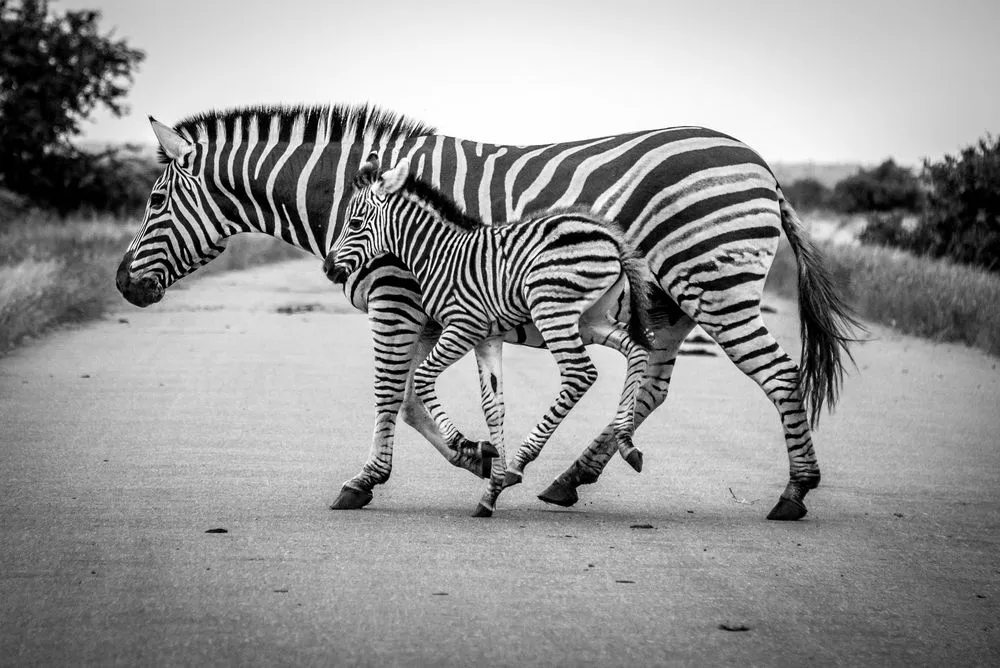
When you picture a zebra, you probably imagine a black- and white-striped animal, somewhere between a horse and a donkey. Some may think of a poor little zebra surrounded by predators in the unforgiving African plains, while others may imagine ‘Marty’ from Madagascar!
They look like cute and nearly defenseless animals, but they can kick and bite in a desperate attempt to save themselves. Poor, poor zebras! Or are they? If zebras were actually the innocent and docile animals that we imagine them to be, why don’t we ride zebras like horses? It would certainly look classier than a normal horse, right?
Human Colonization Analogy
If human civilization records are correct, Homo sapiens first appeared in Africa and later ‘colonized’ different parts of Eurasia. As a ‘species’, we were basically moving around, killing and oppressing other animals that were native to those regions. An example of this is when we domesticated horses. The horse genus Equus actually evolved in North America, but those populations went extinct around 10,000 years ago, and a 2021 genome study in Nature (Librado et al.) traced the ancestors of all modern domestic horses to the western Eurasian steppes (the lower Volga–Don region) around 2000 BCE. Those wild horses had not co-evolved with humans as full-time hunters in quite the same way Africa’s wildlife had, and over time their reactions to people grew calmer rather than sharper.
The first encounter between a horse and a human would have gone something like this:
Horse (sees a human): Hey pal, what’s that thing? It’s pretty small and not very hairy. I’ve never seen something like that before. Let’s wait and see what it does.
Man 1: Whoa! That’s a good-looking animal right there. Should we eat it?
Man 2: Oh! Look how it runs. It sure is fast. We have enough to eat as it is. Let’s just ride this so we can move around faster!
After something like that exchange, it was decided that these wild beasts had to be tamed. Over the years humans and horses both spread out to many more regions, which led to various evolutionary developments, but horses never developed the instinct to fear or flee from humans. It was as though they evolved into comparatively cooler and calmer versions of themselves. Unfortunately, humans don’t know how to maintain an ecosystem balance, so now there are hardly any wild horses left! The free horses that you see galloping around in movies are ‘feral’ horses, which means they’re descendants of domesticated horses, and therefore not technically wild.
Why Did We Give Up On Taming Zebras?
Zebras are native to the African plains, the same place where humans started off, so they were not strangers to our species at all. When European colonization eventually spread into Africa, horses were the only widely used form of transport. Horses formed the base of all communication and transport networks. However, horses are not native to Africa, are vulnerable to African horse sickness, and people began looking for local alternatives. Zebras, which are not hybrids of horses and donkeys but their own species in the same genus Equus, looked like a perfect solution. Or so they thought!
As mentioned, zebras were familiar with us and our methods, and rightfully viewed us as predators, unlike the wild horses in North America who were unfamiliar to human ways. Zebras knew that cavemen hunted them, and they had to survive many other predators, including lions, cheetahs and hyenas, in addition to humans. As a result, they developed the instincts and reflexes to survive attacks from numerous predators. Tendencies and temperaments develop as animals evolve; over the centuries, some of these behavioral instincts became a part of their brain’s physiology. Zebras had the knowledge of human tendencies and regarded us with skepticism, while the same cannot be said for horses.
The Zebra You Don’t Know
The beautiful and seemingly harmless zebra has actually been known to seriously injure humans who have tried to come near them (in zoos). In fact, they are known to hold on to a bite until the person dies. They have also kicked hard enough to cause fatal injuries to people.
Zebras do not listen to humans or breed like humans want them to. They get cranky and kick each other (to death, sometimes) when held in captivity. They are truly ‘wild’ and don’t need to serve us to survive, nor are they ideal guests in our zoos.
Throughout the 19th and 20th centuries, when colonization was gaining peak momentum, people tried to tame zebras, but the experience quickly taught us to simply leave them alone! Their wild characteristics make them quite unsuitable for domestication.
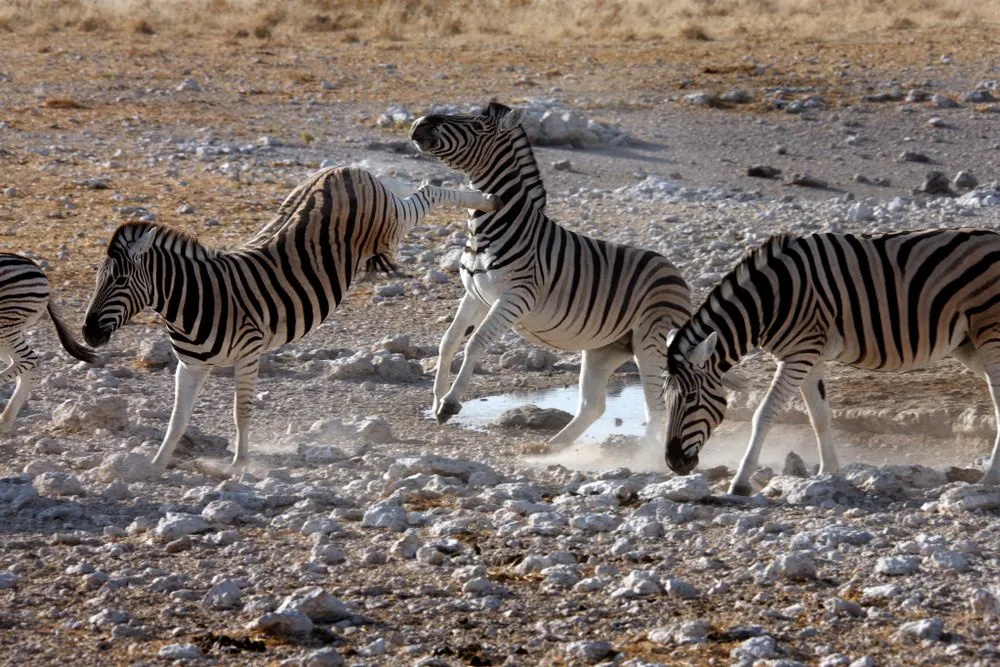
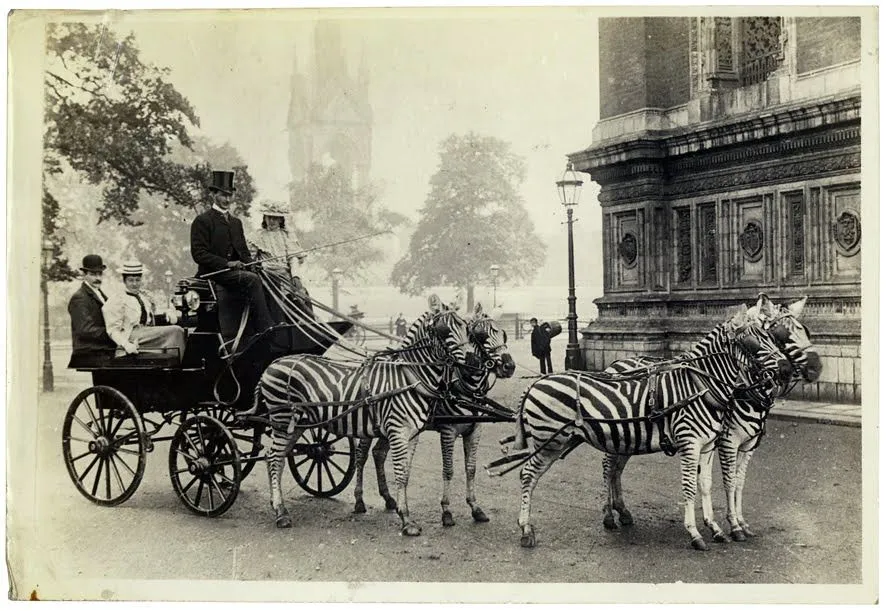
We have attempted multiple times to domesticate these fascinating beasts, but with their unpredictable nature and undying spirit, all human efforts have inevitable failed. Zebras even pulled carriages in the past, but no one has been successful in truly domesticating them.
Zebras don’t fit the domestication criteria. In Guns, Germs, and Steel, Jared Diamond argued that a domesticable animal needs to clear roughly all of the following hurdles:
- A flexible, efficient diet
- A reasonably fast growth rate
- The willingness to breed in captivity
- A calm temperament and low aggression
- A tendency not to panic when startled or penned in
- A clear social hierarchy that humans can slot into
Zebras flunk most of them.
It didn’t take long to observe zebras and determine that they can suddenly become nasty and cruel, and will even hurt their own kind. They are nomadic and don’t stay in territories like lions, and therefore despise being enclosed.
Their aggressive nature and strong body structure means that they can cause some serious damage to anyone coming near them. Basically, not all animals are domesticable and zebras have made their opinion on the matter very clear!
Are Zebras Just Striped Horses?
We keep holding zebras up against horses, so it is fair to ask: is a zebra actually a horse? Not quite. A zebra is not simply a horse wearing fancy striped pyjamas. Horses and zebras do share the genus Equus, the same small branch of the family Equidae that also includes asses and donkeys, but they are separate species that parted ways millions of years ago. DNA even tells a slightly cheeky twist: zebras are more closely related to wild asses (the group that gives us donkeys) than they are to horses. The horse lineage split off first, roughly 4 million years ago, while zebras and asses share a much more recent common ancestor.

The differences run deeper than the coat. A domestic horse carries 64 chromosomes, while a plains zebra has just 44, and that mismatch is exactly why the two do not blend cleanly. You can cross them to make a zorse (a zebra-horse hybrid) or a zonkey (a zebra-donkey cross), but these zebroids are usually sterile, so they are an evolutionary dead end rather than a handy new breed. There are three living species of zebra (plains, mountain and Grévy’s), and not one of them is a horse.
Are Zebras Faster Than Horses?
“Zebra vs horse, who would win?” is one of the internet’s favourite matchups, and speed is usually the opening question. In a flat-out sprint, the horse takes it. A zebra’s top speed is generally put at around 64 km/h (40 mph), and the fastest reliably clocked zebra runs sit closer to 50 km/h (31 mph). Horses comfortably clear that bar. A sprint specialist such as the American Quarter Horse has been credited with bursts of up to about 88 km/h (55 mph) over a quarter mile, and Thoroughbred racehorses gallop along at roughly 60–70 km/h (37–43 mph).
But raw speed is not how a zebra stays alive. Out on the plains it is not trying to beat a lion in a straight line, because the lion would win that dash. Instead the zebra jinks and zigzags, cutting direction sharply to shake a predator off its tail, and it backs that up with a bone-cracking kick. So a horse may cross the finish line first, but a zebra is built for dodging and self-defence rather than for winning a derby.
Can You Ride A Zebra?
Given all of that, can you actually ride a zebra? Technically, a handful of stubborn optimists have managed it. The most famous was Dr. Rosendo Ribeiro, Kenya’s first private doctor, who in the early 1900s rode a tamed zebra around Nairobi to reach his patients on house calls. Over in Victorian England, the eccentric zoologist Lord Walter Rothschild trained zebras to pull a carriage and even drove a zebra-drawn team up to Buckingham Palace to make a point, though even he never actually climbed on to ride one.

Here is the catch, though: taming one individual is not the same as domesticating a species. A zebra is smaller and stockier than a typical riding horse, and its famously unpredictable temper means a bite or a kick can come without warning. So while the odd zebra has been saddled or harnessed as a stunt, you will never walk into a stable full of riding zebras. It stays a novelty precisely because zebras never signed the domestication contract that horses did.
Why Are Horses Afraid Of Zebras?
Plenty of people search for why horses seem spooked by zebras, usually after watching a jumpy horse meet one at a zoo or safari park. The honest answer is that there is no solid scientific evidence that horses are born with a special fear of zebras. What we are almost certainly watching is a horse’s ordinary reaction to something unfamiliar. Horses are prey animals with a hair-trigger flight instinct, and a stocky, boldly striped, oddly-scented creature that moves and sounds a little differently reads as “unknown, therefore possibly dangerous.”
It is also worth busting a common myth: a zebra’s stripes did not evolve to frighten horses or any other big animal. The best-tested explanation is that the stripes deter biting flies such as horseflies, which struggle to make a controlled landing on a striped surface. So a horse’s wide-eyed double-take at a zebra is less about terror and more about being introduced to a very strange new neighbour.
References (click to expand)
- Diamond J. M. (1998). Guns, Germs and Steel: A Short History of Everybody for the Last 13,000 Years. Vintage
- Can zebras be domesticated? - Library of Congress. The Library of Congress
- Zebra Domestication | Eden's Blog. Eden
- Librado, P. et al. (2021). The origins and spread of domestic horses from the Western Eurasian steppes. Nature, 598(7882), 634-640.
- Zebra - Wikipedia
- Vilstrup, J. T. et al. (2013). Mitochondrial Phylogenomics of Modern and Ancient Equids. PLOS ONE.
- Caro, T. et al. (2019). Benefits of zebra stripes: Behaviour of tabanid flies around zebras and horses. PLOS ONE.
- Rosendo Ribeiro - Wikipedia
- American Quarter Horse - Wikipedia