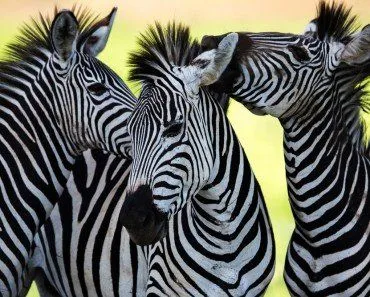
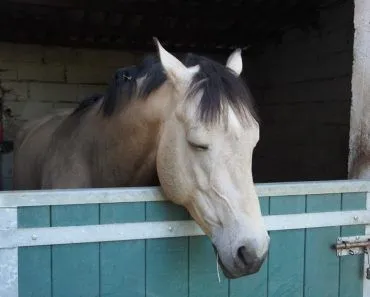
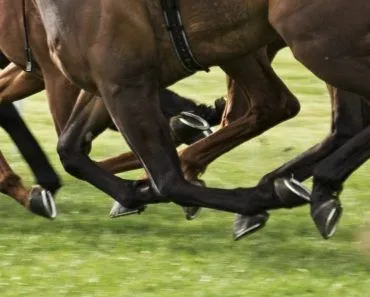
Horses, zebras, and donkeys all belong to the same family (Equidae), but their tails look very different. A horse's tail is a long, shaggy "fountain" of hair growing all the way down from the dock, adapted to keep the horse warm on the cold Eurasian steppes where modern horses evolved. Zebras and donkeys, by contrast, evolved in warm African and desert habitats, so their tails are short with only a tuft of long hair at the tip (useful as a fly swatter, but not for insulation).
Horses are truly stunning creatures; they can start running within hours of their birth, can differentiate between sweet and sour, and can even sleep in a standing position! One particular trait, however, that sets them apart from their close relatives (donkeys and zebras), as well as every other animal, is their tails.
Have you ever wondered why horse tails are so different from ‘regular’ tails? Let’s find out.
Meet The Horse
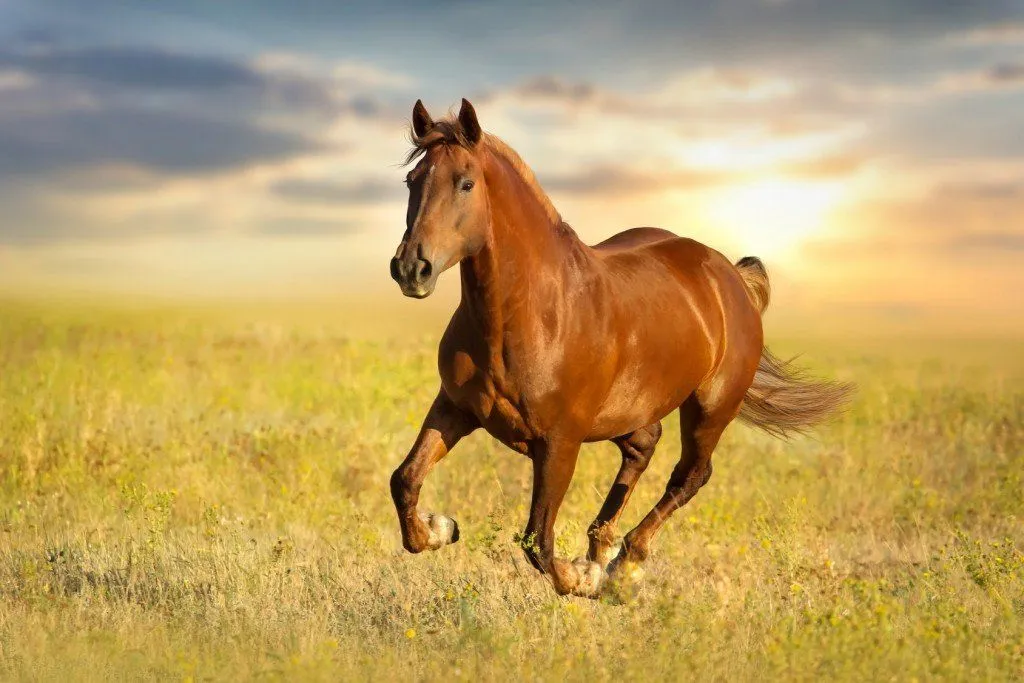
The horse (scientific name: Equus ferus caballus) is an odd-toed ungulate (mammals that have an odd number of toes) that has evolved over a period of 40-50 million years from a small, multi-toed mammal to the majestic animal it is today. Humans began to domesticate horses around 2000 BC and soon found out that they were an asset… and an indispensable one at that! Horses soon became an integral part of human life and progress, thanks to their immense body strength, stamina and unmatched speed.
Horses belong to the genus Equus, which also includes a few other species in the Equidae family. Zebras and donkeys belong to the same family; therefore, they are reasonably similar to horses in terms of appearance.
However, there are a few important differences, including, as mentioned above… their tails!
Is A Zebra Closer To A Horse Or A Donkey?
Here is the part that surprises most people. Because zebras look like stripey horses, we tend to assume that zebra and horse are the closest pair in the family. They are not. Genetic studies place the zebra and the donkey closer to each other than either of them is to the horse.

The genus Equus splits into three branches, or subgenera: the true horses (subgenus Equus, which includes the domestic horse and the wild Przewalski's horse), the asses (subgenus Asinus, which includes the donkey and the Asiatic wild asses), and the zebras (subgenus Hippotigris). Mitochondrial DNA shows a clean divide between the ‘caballine’ true horses on one side and the ‘non-caballine’ group of zebras and asses on the other. In other words, the horse branched off first, leaving zebras and donkeys as each other's nearer cousins.
When did this happen? Molecular dating puts the split between the horse lineage and the zebra-ass lineage at roughly 4 million years ago, with the whole genus Equus radiating from a common ancestor around 4 to 4.5 million years ago. So a zebra is genetically a touch closer to the donkey braying in a farmyard than to the horse it resembles.
You can even see this kinship in the barnyard. Cross a zebra with a donkey and you get a zedonk (also called a zonkey); cross a zebra with a horse and you get a zorse. These hybrids are usually sterile, much like the mule born from a horse and a donkey, because the parent species carry different numbers of chromosomes. That the three can interbreed at all is a reminder of just how recently they shared a single ancestor.
Not Your Average Tail…
If you ever paid attention, you would have seen that the tails of horses are significantly different from those of zebras and donkeys. Although all of these animals belong to the same family, zebras and donkeys have tails with tufts. Such tails (also found in other grazing animals) offer the best means for donkeys and zebras to swat flies. Their tails, undoubtedly, are quite useful as fly swatters, but apart from that, they don’t have much use.
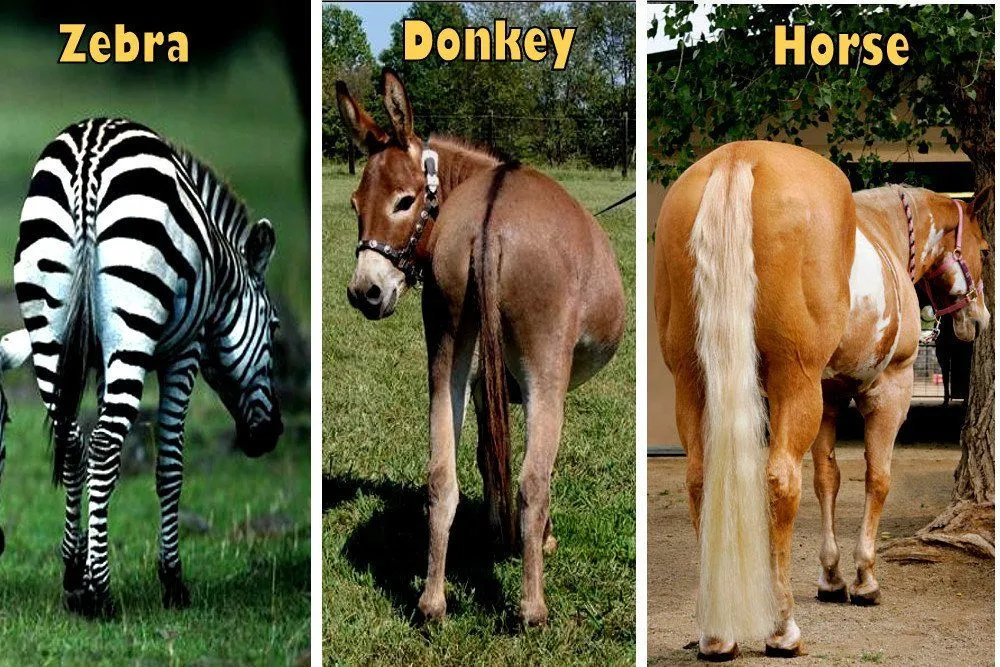
Horses, on the other hand, have a very unique tail. It appears to be a fountain of hair sprouting from a horse’s hindquarters. Also, compared to many other animals, horse tails are shorter. The central part of the tail, known as the ‘dock’, comes down (on average) to just below the buttocks. It is made of both skin and muscle and is covered with long hair. It’s basically a natural extension of the horse’s spine.
Is A Horse's Tail Just Hair, Or Does It Have Bones?
A common assumption is that a horse's tail is nothing but a curtain of hair hanging off its rear. It is not. The tail has two parts: the dock, which is the solid, fleshy base you can grip, and the skirt, which is the long hair that flows down from it. The hair is the part you notice, but the dock is what makes the tail a true tail rather than a tassel.

Inside that dock runs a chain of small bones called the caudal (or coccygeal) vertebrae, the direct continuation of the spine past the sacrum. A horse typically has somewhere between 15 and 21 of these tail vertebrae, around 18 on average, each one smaller than the last as the tail tapers to a point. Wrapped around them are muscles, ligaments, tendons and a generous supply of nerves, which is exactly why a horse can flick, clamp, lift and swish its tail with such precision rather than just letting it dangle.
So the short answer is no, a horse's tail is not just hair. It is a flexible, muscular, bony extension of the backbone wearing a coat of long hair, and it is that internal scaffolding that lets the horse use its tail as a fly swatter, a blanket and a mood flag all at once.
Why Do Have Horses Have Such Unique Tails?
One word… climate!
Climate has played a key role in shaping horses’ tails to the way they appear today. Horses’ close relatives, i.e., zebras and donkeys, have always lived in warm conditions. Zebras are tropical beasts, whereas donkeys are desert animals. Since the climate conditions in which they thrived were mostly warm to hot, they had little use for a hairy tail to add to their woes.
Horses, on the other hand, evolved on the North American plains and later moved across the Bering Strait land bridge to Asia. Both of these places are known to get very cold during the winter, so nature had to equip these majestic beasts with something that could help them survive in such conditions. And what accessory could nature possibly provide them with over thousands of years of evolution?
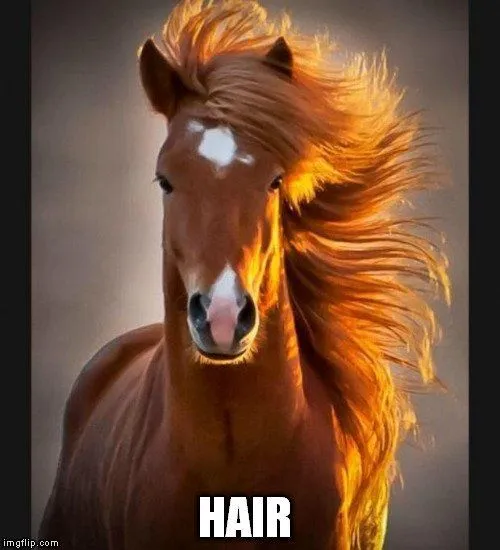
Yes! That’s the reason that horses evolved such shaggy manes (horses’ manes have more hair than zebras and donkeys) and long, large furry tails.
The Purpose Of Horses’ Hairy Tails
The most important function of a horse’s tail is protection from cold. When a horse is cold, it tucks its tail between its buttocks to shield that area underneath, which is almost hairless. Like other animals, a horse’s tail also functions as a fly swatter.
Apart from performing such physical functions, it’s also believed that a horse’s tail also gives some insight into the animal’s mood and emotions. If the tail is tucked between the buttocks, it can be assumed that the horse is either cold or is fearful or nervous. If, on the other hand, the tail is lifted over the back, it means that the horse is in high spirits or excited.
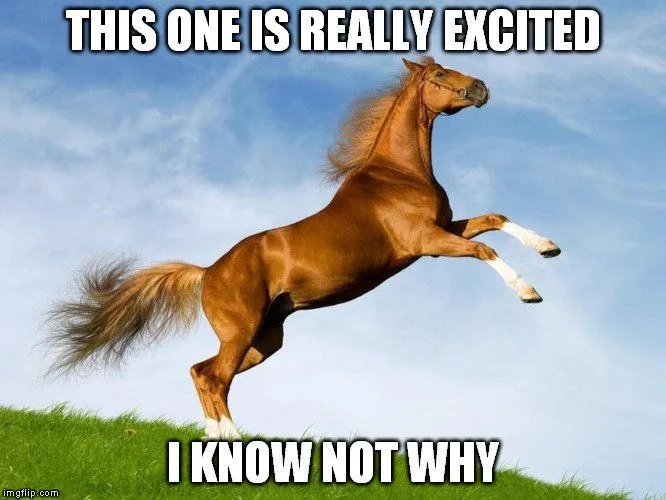
Protection from harsh weather conditions, a fly swatter, and a means to express their emotions, what else could you want from a tail?
References (click to expand)
- Horse - Wikipedia. Wikipedia
- Evolution of the horse - Wikipedia. Wikipedia
- DSpace Angular :: Home - lib.dr.iastate.edu
- Why Do Horses Have Tails? - PetHelpful. pethelpful.com
- Mitochondrial Phylogenomics of Modern and Ancient Equids. NCBI PMC
- Equus (genus) - Wikipedia. Wikipedia
- Tail (horse) - Wikipedia. Wikipedia
- Equine Tail Docking, Blocking and Nicking. Mad Barn