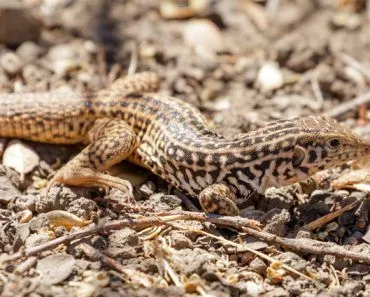
When camouflage or horns fail to work, the horned lizard resorts to squirting blood from its eyes, which usually does the trick and keeps predators at bay.
Do lizards creep you out? Wait until you see what some of them can do with their eyes.
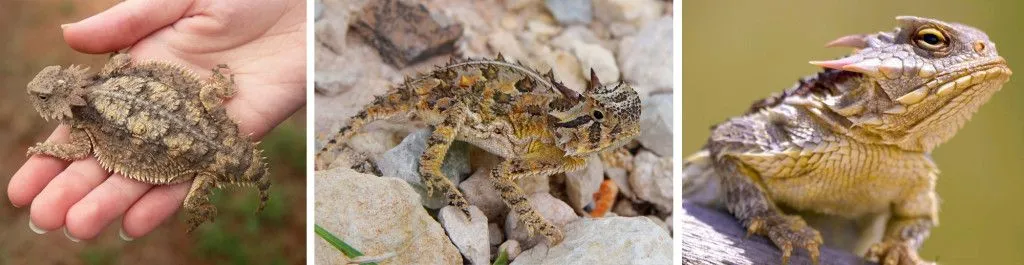
Commonly known as horned lizards, these creatures can be characterized based on their flattened horns, rounded snouts, and bloated toad-like bodies. The lizards belong to the genus Phrynosoma. At least 8 species of this genus possess the ability to get bloody-eyed when necessary. However, P. mcallii, P. modestum, and P. platyrhinos are not blessed with this bizarre and rather grotesque trick.
A potential threat will cause them to squirt blood… straight out of their eyes!
But how does squirting blood from its eyes protect this unusual creature?
What’s Up With The Bloody Defense?
Every animal employs its own unique defense strategies to protect itself, and horned lizards are no different. They could make use of their horns and pierce them into the flesh of their captor to break free, but that isn’t always effective with larger predators.
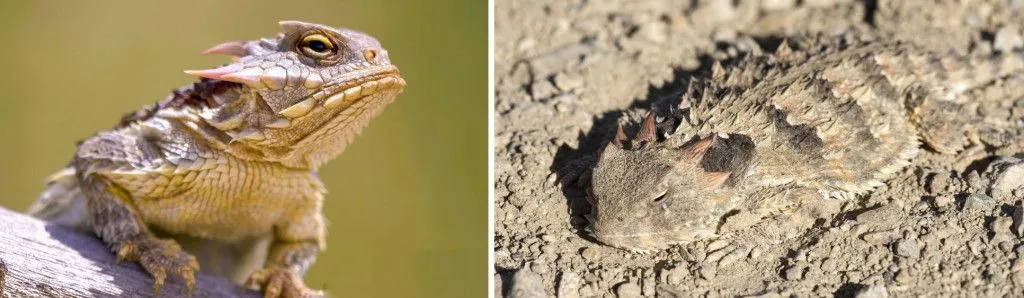
They have also been observed to camouflage or flatten their bodies to escape detection.
Saving the best for last, when none of the aforementioned tactics work, this creature resorts to squirting blood from its eyes, which usually does the trick, and keeps predators at bay!
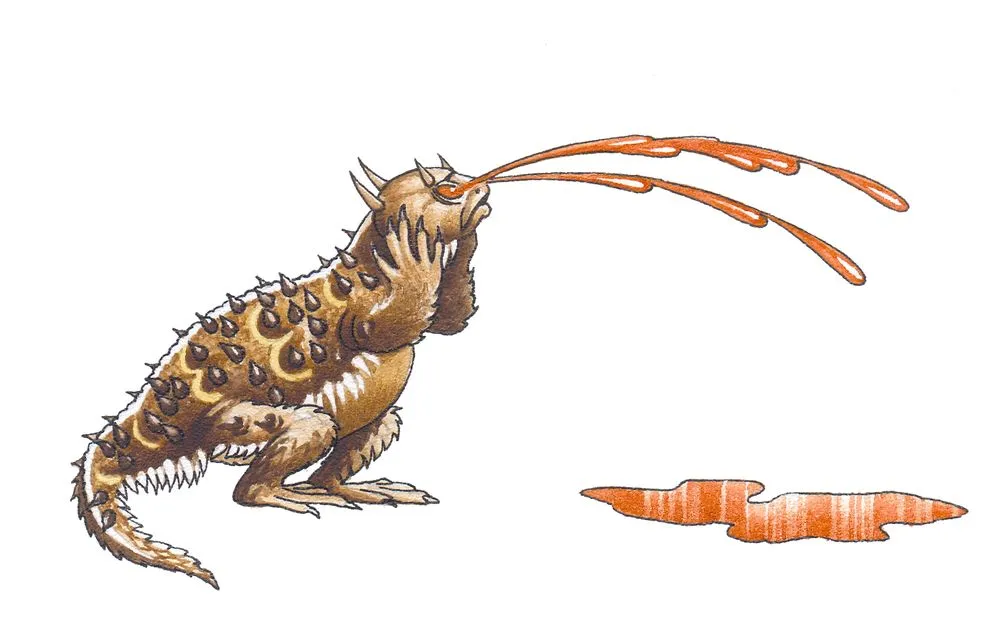
When animals voluntarily eject blood from their bodies, the act is referred to as auto-hemorrhaging. For the horned lizard, one of the primary motives to auto-hemorrhage is self-defense.
Several studies have investigated how these lizards respond to different predators and threats. Hawks and snakes are a common threat to this species. A few species of Phrynosoma squirted blood when they encountered canids (dog family) as well. However, some species showed no such response, failing to squirt blood in both canid and human encounters.
Worthy of mention are P. cornutum, P. coronatum, and P. solare, three species of horned toads that excel at auto-hemorrhaging.
Where Does The Blood Come From?
Ocular sinuses are directly connected to the blood vessels in the eye sockets of the lizard. When faced with a potential threat, the circulatory system of the head is immediately affected. Blood flow to the head becomes increasingly restricted, which causes the blood to redirect to the ocular sinuses, where the pressure builds up. This enables the oculi muscles adjacent to the pressured sinuses to contract. When the muscles contract, these sinuses rupture, and a stream of blood that had been held in the eye ducts shoots out, and can be ejected up to 5 feet!
These lizards can squirt blood repeatedly until they succeed in scaring off the aggressive predator.
What’s In The Blood?
Simply squirting blood may not suffice. For the action to be fully effective, the blood must also be distasteful to the predator. Research has identified chemical defenses in the blood that deter mammalian predators. These chemical deterrents may already be present in the composition of the blood that is already circulating in the lizard’s body. The chemicals can have a foul smell or even ruin the appetite of their predators. Scientists haven't pinned down the exact compounds, but the leading candidates are formic acid and other defensive chemicals from the venomous harvester ants that horned lizards specialise in eating.
One hypothesis is that the chemical is derived from ant venom. Horned lizards like to gobble up venomous ants. The lizards can eat venomous harvester ants unharmed because their blood plasma contains factors that appear to neutralize the ant venom; the toxic by-products from those ants may then end up concentrated enough in the lizard's plasma to make their squirted blood unpalatable to canid predators (Sherbrooke and Middendorf's 2004 kit-fox experiments support this picture).
Considering all of this, it’s interesting to note that horned lizards are not always seen with bloodshot eyes; how then do their eyes go back to looking normal?
How Do They Clean Up The Bloody Mess?
These lizards possess a third eyelid, one that is a transparent membrane lining the eye. This membranous eyelid is called the nictitating membrane and is found in all lizards. After a bloody rupture, the nictitating membrane conveniently removes the blood as it sweeps across the entire surface of the eyeball, pushing the pellet-like debris to the rear corner of the eye. The excess blood is deftly disposed of or dropped sometime later.
Is The Thorny Devil The Same As A Horned Lizard?
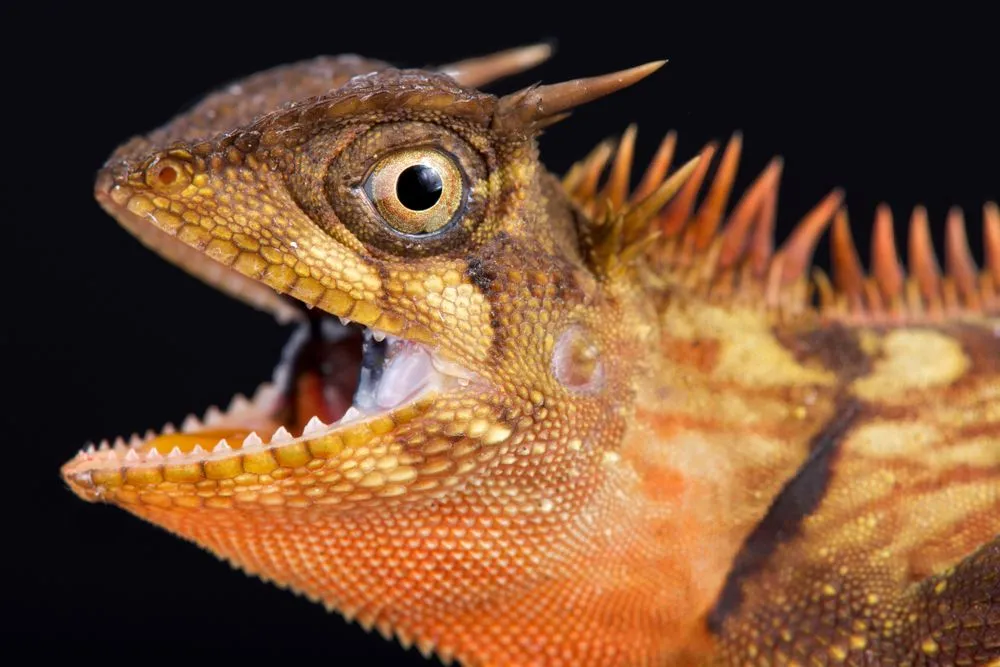
If you have ever searched for a blood-squirting lizard, you have probably bumped into the thorny devil (Moloch horridus) and the bearded dragon (Pogona) too. Both look the part, so it is a fair thing to wonder. The short answer, though, is no: neither of them squirts blood from its eyes. That party trick belongs only to the North American horned lizards of the genus Phrynosoma.

The resemblance is real but skin-deep. The thorny devil and the bearded dragon both belong to the family Agamidae and are native to Australia, while horned lizards sit in a different family (Phrynosomatidae) on the other side of the planet, in North America. The spiky, squat, ant-eating thorny devil arrived at its horned-lizard look entirely independently, a textbook case of convergent evolution, where unrelated animals evolve similar features because they face similar problems.
Their defenses are different too. A threatened thorny devil tucks its real head down between its front legs and presents a spiny false head on the back of its neck, daring a predator to bite the wrong end. Bearded dragons puff up the throat, gape the mouth wide, and can even shift color to look bigger and meaner. Impressive, but bloodless. So if a quiz asks which lizard fires blood from its eyes, the thorny devil and the bearded dragon are the classic wrong answers.
Are Horned Lizards Actually Toads Or Frogs?
You will see these animals called horned toads, horny toads, and even horned frogs, which is enough to make anyone second-guess what they are looking at. Rest assured: they are reptiles, full stop. They are not amphibians, and they are not related to toads or frogs at all.

The nicknames come straight from how they look. With a flattened, rounded, pot-bellied body and a short, blunt snout, a horned lizard squats on the ground looking far more toad-like than your typical slim, long-tailed lizard. The genus name says it outright: Phrynosoma literally means "toad-bodied." It does not help that, like real toads, these lizards tend to move slowly and sit motionless, leaning on their camouflage rather than bolting away.
The best known of the bunch is the Texas horned lizard (Phrynosoma cornutum), the "horny toad" many readers across the American Southwest grew up hearing about. It is now listed as a threatened species in Texas, where habitat loss and invasive fire ants displacing the native harvester ants it depends on have thinned its numbers. So the next time someone insists they saw a toad shoot blood from its eyes, you can gently correct them: it was a lizard wearing a toad's silhouette.
A Final Word
Evolutionary studies suggest that the trait of blood-squirting was adopted and became widespread when lizards started facing predation pressure from dog species. The species of horned lizards that currently lack this trait must have lost the ability to do so in the course of evolution. However, the reasons for this loss remain a mystery.
Auto-hemorrhaging to defend oneself is not limited to horned-lizards. Some snake species, like dwarf boids, king snakes, and some species of long-nosed snakes, also squirt blood, not only from their eyes, but from their nostrils or cloacal (common genital, intestinal, and urinary tract) opening.
References (click to expand)
- Sherbrooke, W. C., & Middendorf III, G. A. (2001, December). Blood-Squirting Variability in Horned Lizards (Phrynosoma). (C. Guyer, Ed.), Copeia. American Society of Ichthyologists and Herpetologists (ASIH).
- Heath, J. E. (1966, January). Venous Shunts in the Cephalic Sinuses of Horned Lizards. Physiological Zoology. University of Chicago Press.
- Sherbrooke, W. C., & Middendorf, G. A., III. (2004, August). Responses of Kit Foxes (Vulpes macrotis) to Antipredator Blood-Squirting and Blood of Texas Horned Lizards (Phrynosoma cornutum). (M. E. Douglas, Ed.), Copeia. American Society of Ichthyologists and Herpetologists (ASIH).
- Mirkin, S., Tucker, M. R., & Williams, D. A. (2021). Predation release of Texas horned lizards (Phrynosoma cornutum) living in small towns. Ecology and evolution, 11(10), 5355–5363. https://doi.org/10.1002/ece3.7426
- Middendorf, G. A., & Sherbrooke, W. C. (1992). Canid Elicitation of Blood-Squirting in a Horned Lizard (Phrynosoma cornutum). Copeia, 1992(2), 519–527. https://doi.org/10.2307/1446212
- Moloch horridus (Thorny Devil). Animal Diversity Web. University of Michigan Museum of Zoology.
- Phrynosoma solare (Regal Horned Lizard). Animal Diversity Web. University of Michigan Museum of Zoology.
- Texas Horned Lizard (Phrynosoma cornutum). Texas Parks & Wildlife Department.
- Texas Horned Lizard Watch 10-Year Summary Report: Conclusions and Recommendations. Texas Parks & Wildlife Department.