Table of Contents (click to expand)
Color keeps animals safe in two opposite ways. Camouflage helps prey blend in and avoid being seen. Warning coloration, or aposematism, does the reverse: brightly colored animals advertise that they are poisonous, venomous, or dangerous, so predators learn to leave them alone. Some harmless species cheat by mimicking these warning colors without the matching defense.
The animal kingdom is a complex world with diverse predator-prey relationships. The variety of ways in which animals try to evade predators is fascinating. One of the best defenses that animals have against their natural predators is camouflage; blending into their surroundings is often an animal’s best bet against being devoured by a hungry beast. You might think that this camouflage technique would be used by all animals, but it turns out that many animals go completely against this method. Bizarrely enough, there are some creatures out there that have evolved to be very noticeable to predators, a quality that is actually designed to save their lives. In this article, we'll look at how camouflage hides an animal, how warning coloration (aposematism) does the exact opposite, and how some sneaky species cheat the system through mimicry.
Hiding In Plain Sight: Camouflage
Before we get to the show-offs, let's give the wallflowers their due. Camouflage, or crypsis, is the strategy of not being seen at all, and it's the most familiar defense in the animal kingdom. A moth resting on tree bark, a stick insect among twigs, an Arctic hare in winter white: each of these animals survives by matching its background so closely that a hungry predator's eye simply slides right past it.
Camouflage works in a few different ways. The simplest is background matching, where an animal's color and texture blend into its surroundings, like that bark-colored moth. Disruptive coloration takes a different approach: bold spots, stripes, or blotches break up the animal's outline so that a predator can't pick out its body shape, even if the animal itself is in plain view. Then there's countershading, in which the upper surface is darker than the underside. Because sunlight falls from above, this dark-on-top, light-on-bottom pattern cancels out the shadow that would otherwise reveal a solid, three-dimensional body, leaving the animal looking flat and hard to spot. You'll see countershading on everything from sharks to deer to penguins.
Conspicuous Creatures: Warning Coloration
Certain animals have evolved unique defenses against predators. They typically have a primary defense, which can be their color, odor, or sounds that they produce. This defense, of course, is deployed before the predator makes its move. The secondary defense is unleashed after the predator has attacked its prey, and can consist of various behavioral or chemical defenses that make the animal dangerous or “not worth it” for the predator to eat.
This strategy, where an animal signals predators via their colors, odors, or sounds that they are dangerous for the predator to attack and eat, is known as aposematism. The word was coined by the English zoologist Edward Bagnall Poulton in his 1890 book The Colours of Animals, and is derived from the Greek words “apo” meaning “away” and “sema” meaning “sign”. Therefore, aposematism basically refers to animals signaling their predators to stay away, as it benefits both animals. This prey-avoidance is achieved by the predator learning to associate the prey’s primary defense with unprofitability.
The most widely deployed primary aposematic defense is an animal’s color. Since a predator will learn to associate its prey’s color with how dangerous it is, it makes sense that animals have evolved to have bright colors to signal their dangerous nature. Therefore, such visual warning signals can be thought of as “honest indicators” of an animal’s unpalatability, and the more brightly colored and visible an animal is to its predator, the more dangerous it usually is for the predator to attack.
Compromising Creatures
However, returning to the point about aposematic animals defying conventional wisdom about camouflage, it is worth noting that some animals seem to have found a compromise between the two. There is empirical evidence supporting the idea that some animals have struck a balance between camouflage, when viewed by predator from a distance, and aposematism, when viewed up close.
Now, let’s explore some of these fascinating aposematic creatures.
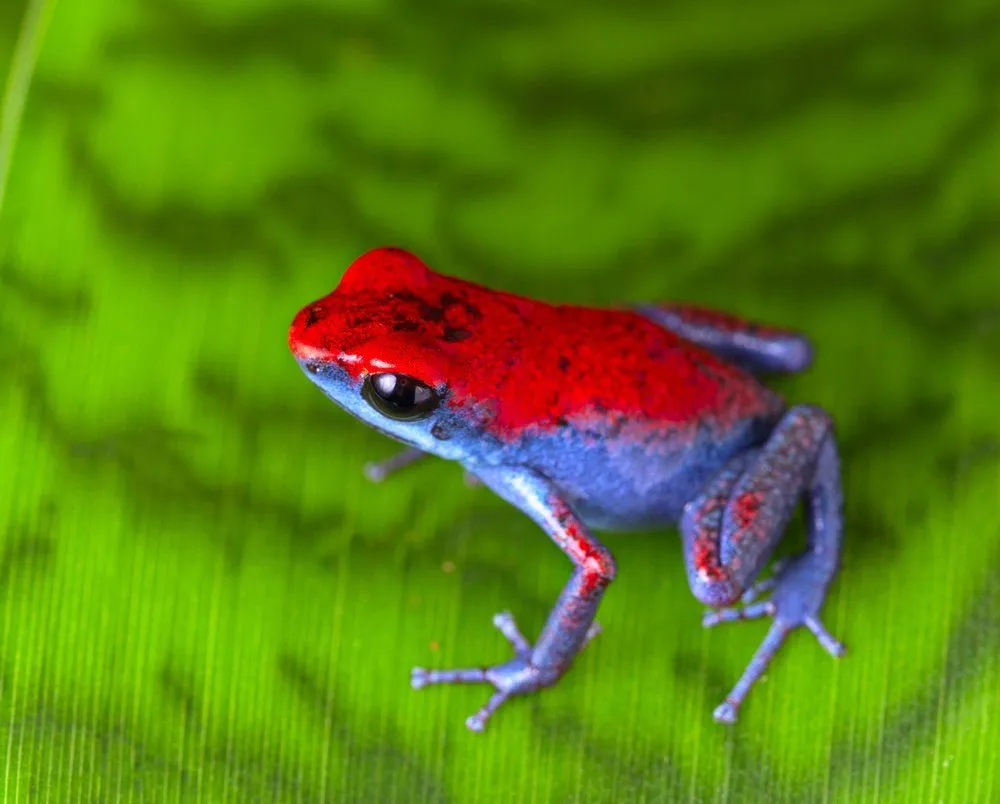
In the Central American countries of Nicaragua, Costa Rica, and Panama, there is a colorful species of frog (Oophaga pumilio) known as the strawberry poison frog. The frog is toxic to predators, due to certain alkaloid toxins that accumulate in its skin. Different populations of these frogs vary in color (color morphs), and it has been found that the more brightly colored the frogs are, the more toxic they usually are to predators. Therefore, these frogs are an example of honest aposematic signaling.
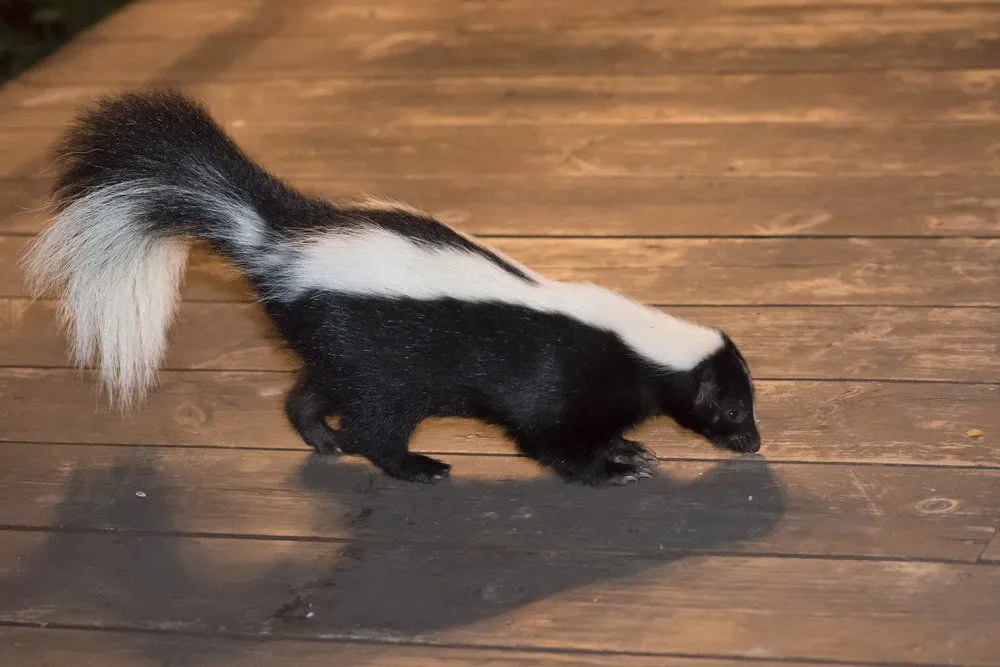
Another example of aposematism is observed in bold-colored mammals, such as the skunk and honey badger. These animals’ bold black-and-white coloration warns predators of their ability to spray noxious chemicals, as well as their strength and aggressiveness. One very interesting finding, from a 2011 study of carnivores by Ted Stankowich and Tim Caro, is that bold lengthwise (longitudinal) stripes running head-to-tail along the body, such as in skunks, are linked to having a chemical spray defense. One idea is that these stripes lead a predator's eye down the body toward the back end, where the noxious chemical is sprayed from the animal's anal glands. The same study found that not every boldly marked animal is advertising a spray: in some cases, like the honey badger, the black-and-white pattern is warning predators about sheer ferocity and a willingness to fight back.
Do Animals Cheat?
As it turns out, yes, even animals are capable of a little cheating. Some animals have evolved the ability to copy the warning signs of aposematic animals, even though they aren’t dangerous for the predator to eat. This sneaky tactic is called Batesian mimicry. Another strange occurrence is when two or more animals evolve to have similar appearances, where both are aposematic and therefore wisely avoided by predators. This kind of similarity is called Müllerian mimicry.
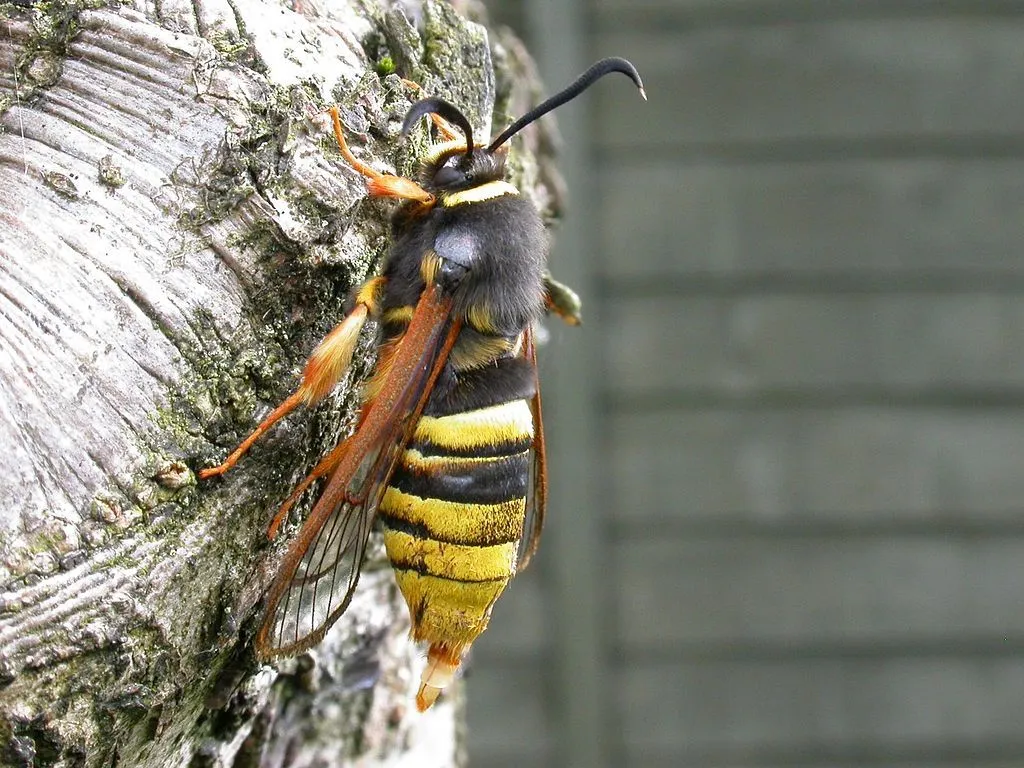
A classic example of Batesian mimicry is the harmless hornet moth (pictured below), which has evolved the yellow-and-black coloration of a stinging wasp or hornet. It has no sting and is perfectly edible, but predators that have learned to leave real wasps alone give the moth a wide berth too. The bluff only works as long as the genuinely dangerous models stay common enough that predators keep their lesson learned, which is why Batesian mimics tend to be far rarer than the species they copy.
Müllerian mimicry plays out a little differently. The North American monarch and viceroy butterflies, for instance, look strikingly alike. For decades the viceroy was held up as the textbook Batesian copycat of the toxic monarch, but later experiments showed that the viceroy is unpalatable in its own right. Because both butterflies are genuinely distasteful and share the same bold orange-and-black warning pattern, predators only need one bad mouthful to learn to avoid both, so the resemblance benefits each species. That makes the pair a Müllerian, not a Batesian, partnership, a neat reminder that even textbook examples get revised as the science improves.
Aposematic animals are fascinating creatures that use their distinctive features to warn predators to stay away. Therefore, next time you spot an animal that seems to be poorly camouflaged, don’t just assume that it’s doing a bad job of surviving in the wild. Wait for a predator to attack it and face the decidedly unpleasant consequences!
References (click to expand)
- Aposematism. Encyclopaedia Britannica
- Coloration: Camouflage, Countershading and Disruptive Coloration. Encyclopaedia Britannica
- Mimicry (Batesian and Müllerian). Encyclopaedia Britannica
- An Analysis of Predator Selection to Affect Aposematic Coloration in a Poison Frog Species. PMC, NCBI
- Black, White and Stinky: Explaining Bold Coloration in Skunks (Stankowich & Caro, Evolution, 2011). ScienceDaily
- Animal Colors and Patterns. Ask A Biologist, Arizona State University