Table of Contents (click to expand)
Some animals, including praying mantises, redback and black widow spiders, scorpions and certain octopuses, eat their mates during or after sex. In most cases the larger female devours the smaller male for a protein-rich meal that helps nourish her eggs. For some males, being eaten even boosts how many offspring they father.
Cannibalism has been recorded in more than 1,500 species, but can you digest the fact that some animals feed on their mates right after they’ve had sex?
Interestingly, this sort of ‘sexual cannibalism’ is not a trait followed by just one or two species in the animal kingdom, but many! So what’s driving this fatal wedge between sexual partners?
The Mate Munchers
Praying Mantis
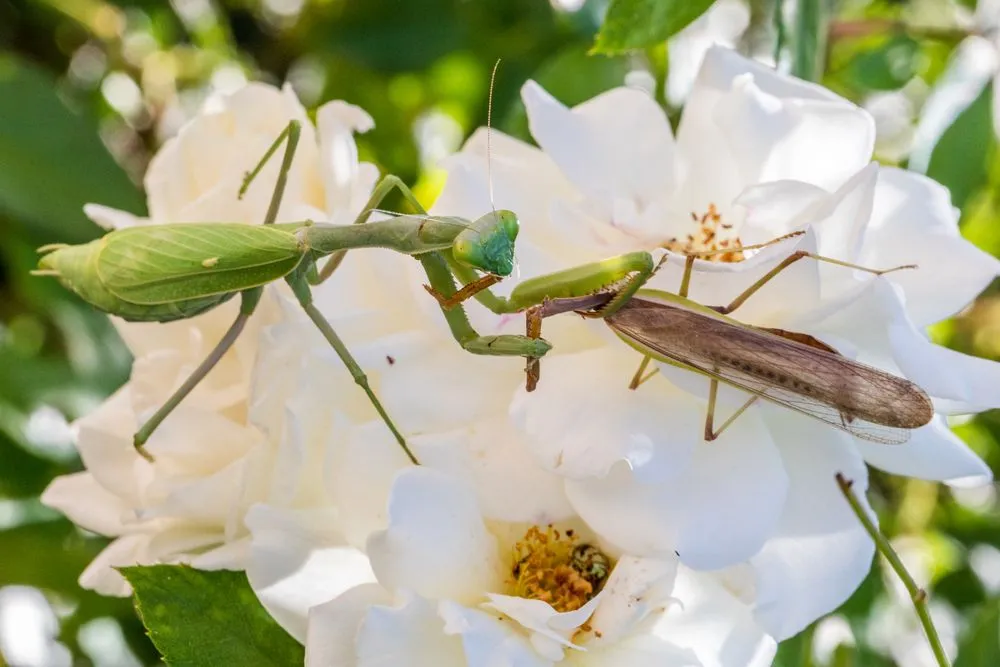
When it comes to sexual cannibalism, praying mantises top the charts. Guess what female praying mantises primarily prefer for their meals? Male praying mantises!
Do the males just lie there and let the females devour them?
Well, not quite.
The females slyly keep attracting the males, even after their first sexual encounter. This time, however, they don’t need their sperm, but a hearty meal. The chances of a male mantis dying will only increase with his sex-readiness.
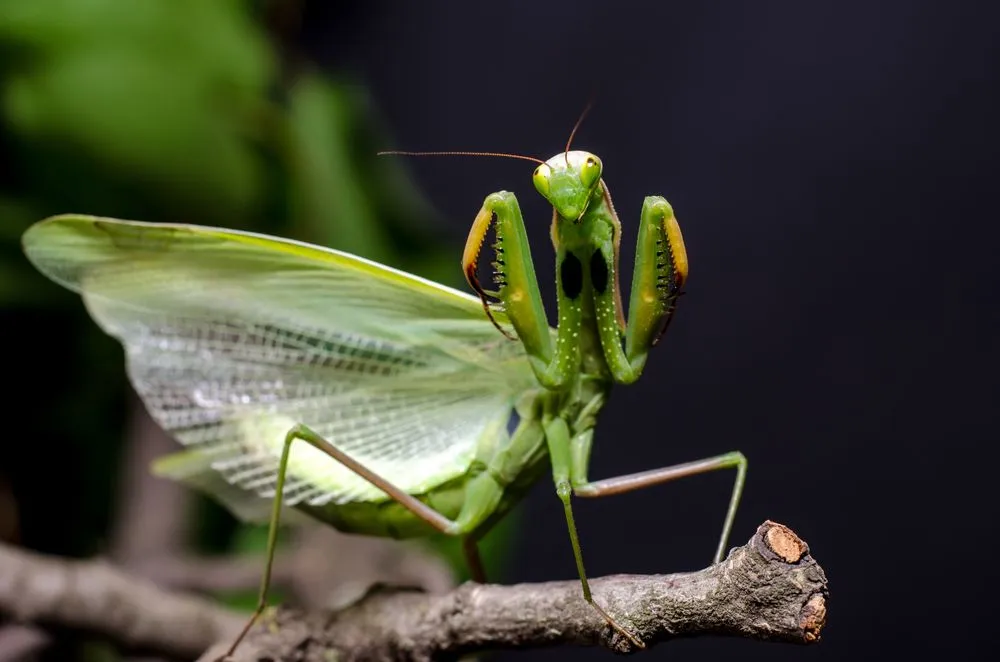
In the classic image of this gory ritual, the female chomps on the male’s head soon after (or even during) mating. In reality, though, field studies suggest it happens in only a minority of wild matings (often well under a third), with the rate climbing when a female is hungry or stressed. Although head-eating was long considered a female mantis’ signature move, recent research has provided more insight into the matter. A study of 52 springbok mantis pairs found that 29 of them (56%) made physical contact within the first 12 hours, and in many cases that contact turned deadly before the pair ever mated.
Upon close observation, it was seen that the males did approach the females, but they weren’t gentle in their approach. The male was always the one to make the first move, leaping onto the female and pursuing her in a violent and forceful manner, which triggers an intense wrestling match between the sexes. If the female wins, it spells death for the male, but if the male emerges as the victor, he usually mates with the female. Oddly enough, female springbok mantises don’t really need the males to give birth; they can do so asexually. So naturally, they can afford to eat their partner, instead of mate with him.
Keeping this in mind, some species, like praying mantises, have evolved a smart technique. They try to choose females with a full tummy, so they don’t have to sacrifice their lives just to pass along their genes.
The Ghoulish Sex Tales Of Spiders
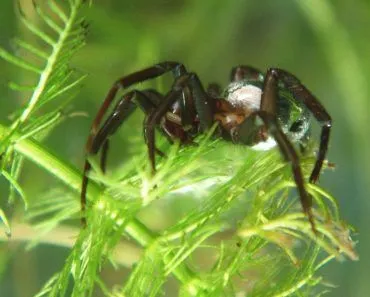
A species called widow spiders exhibit an elaborate foreplay routine. The males make most of the effort, and subject themselves to a lot of risk. He begins his endeavor by coating the pair of antennae-like outgrowths near his mouth with his sperm. He then undertakes a long-distance journey in search of a potential mate.
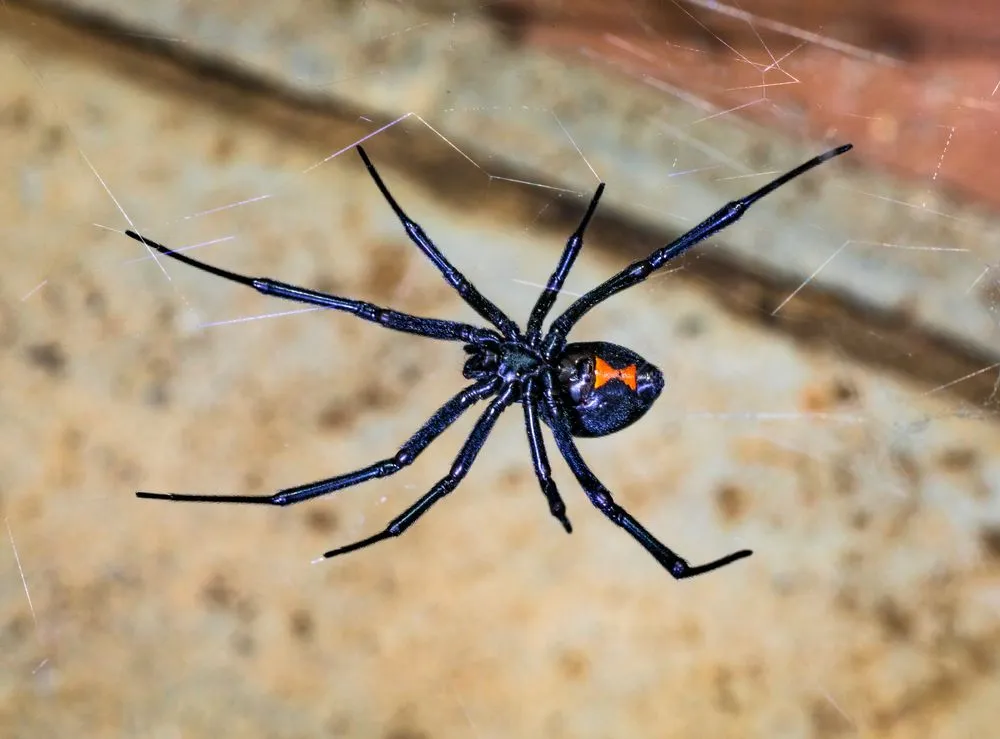
After spotting one, he will try to woo the female by playing her a song that he produces by plucking the strings of her cobweb. After gaining enough proximity, he taps incessantly on her body and deposits his sperm into her abdomen. What happens next depends on how quickly the male can flee the female’s lair. Too slow, and he becomes her dinner. If he survives, he gets to mate with other females.
Another spider species has perhaps the most bizarre sex ritual. Most Australian redback males (nearly two-thirds) will literally sacrifice their lives just so they can mate! It was observed that, during sex, the males will jump into a position that helps them directly insert their abdomen onto the female redbacks’ fangs. In other words, they can only have sex once in their lifetime.
Octopus
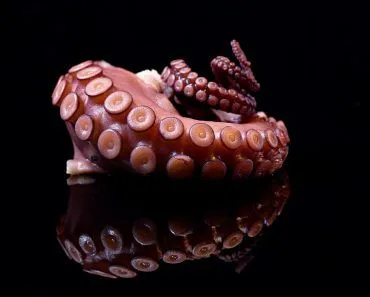
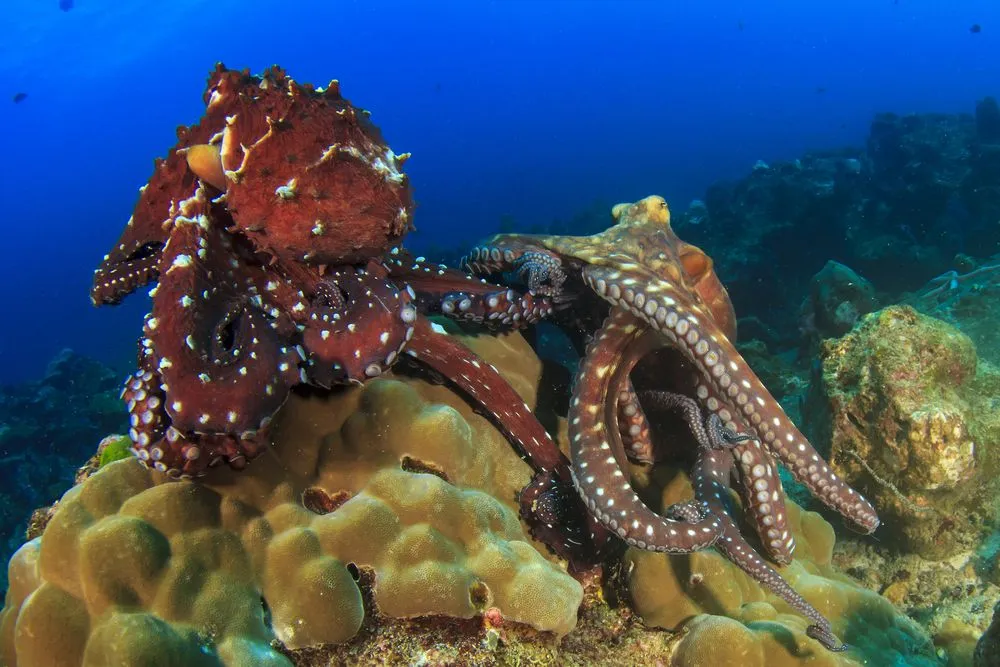
There are 300 or so species of octopuses lurking in the dark depths of the sea, and some of them commit brutal crimes, such as murdering their partner after sex. One recorded instance involved a female engaging in sexual intercourse with a male for a quarter of an hour, after which she wrapped her arms around the base of his mantle, cutting off his oxygen and suffocating him.
However, not all octopuses go the duration; they just tend to fight it out. Others, like the pacific striped octopus, refrain from causing their loving partner any harm while they are mating, which can last for up to 2 days.
Why Do It?
One possible explanation for sexual cannibalism could be the immense nourishment the mate provides the female after they have copulated. The prey the female is looking for just happens to be the male she just mated with. Sad as it may sound, this ensures that the female has plentiful and immediate access to resources that will help her brood her offspring successfully.
As with redback spiders, it was found that the males that were eaten up tended to have a longer intercourse duration than those left unharmed. This entitled the cannibalized males to a better chance at passing down their genes. Those animals that sacrifice their lives to mate ironically increase their reproductive success.
In some species (like the Mediterranean tarantula, a burrowing wolf spider), the females will resort to eating the male before they even have sex with him! However, it’s not in vain, as cannibalistic females breed earlier and produce roughly 30% more offspring per clutch.
A Final Word
Sexual cannibalism might sound sadistic, but it’s completely reasonable from a successful reproduction standpoint. Some animals, especially invertebrates, must go to extreme lengths to ensure that they’ve contributed their sperm and passed down their genes to their offspring. Some are just willing to die for that motive.
References (click to expand)
- Huffard, C. L., & Bartick, M. (2014, July 11). WildWunderpus photogenicusandOctopus cyaneaemploy asphyxiating ‘constricting’ in interactions with other octopuses. Molluscan Research. Informa UK Limited.
- Andrade, M. C. B. (2003, July 1). Risky mate search and male self-sacrifice in redback spiders. Behavioral Ecology. Oxford University Press (OUP).
- Fox, L. R. (1975). Cannibalism in Natural Populations. Annual Review of Ecology and Systematics. Annual Reviews.
- Majdic, G. (2021). After-Dark Secrets of Nemo’s Parents. Fascinating Life Sciences. Springer International Publishing.
- Lelito, J. P., & Brown, W. D. (2008, October 8). Mate attraction by females in a sexually cannibalistic praying mantis. Behavioral Ecology and Sociobiology. Springer Science and Business Media LLC.
- Burke, N. W., & Holwell, G. I. (2021, January). Male coercion and female injury in a sexually cannibalistic mantis. Biology Letters. The Royal Society.
- Hurd, L. E., Eisenberg, R. M., Fagan, W. F., Tilmon, K. J., Snyder, W. E., Vandersall, K. S., … Welch, J. D. (1994, March). Cannibalism Reverses Male-Biased Sex Ratio in Adult Mantids: Female Strategy against Food Limitation?. Oikos. JSTOR.
- Rabaneda-Bueno, R., Rodríguez-Gironés, M. Á., Aguado-de-la-Paz, S., Fernández-Montraveta, C., De Mas, E., Wise, D. H., & Moya-Laraño, J. (2008, October 22). Sexual Cannibalism: High Incidence in a Natural Population with Benefits to Females. (R. Brooks, Ed.), PLoS ONE. Public Library of Science (PLoS).
- Lawrence, S. E. (1992). Sexual cannibalism in the praying mantid, Mantis religiosa: a field study. Animal Behaviour. Elsevier BV.
- Male praying mantis fights to avoid being eaten. auckland.ac.nz
- ROEDER, K. D. (1935, October). An Experimental Analysis Of The Sexual Behavior Of The Praying Mantis (Mantis Religiosa L.). The Biological Bulletin. University of Chicago Press.
- (2016) Sexual cannibalism in a facultative parthenogen. Oxford University Press
- Andrade, M. C. B., Gu, L., & Stoltz, J. A. (2005, June 7). Novel male trait prolongs survival in suicidal mating. Biology Letters. The Royal Society.