Table of Contents (click to expand)
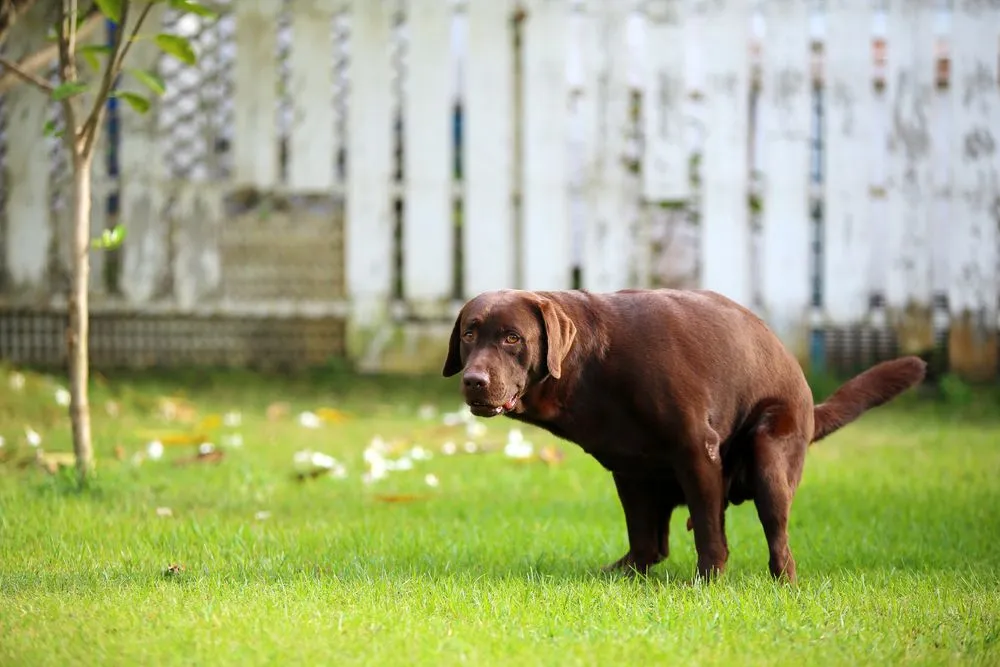
Dogs look at you when they poop because squatting leaves them vulnerable, so they watch their owner to keep a lookout for danger, an instinct inherited from their pack-living ancestors. The eye contact may also signal communication and bonding. It’s a sign of trust, not embarrassment.
There’s no denying that dogs are adorable, but they are just as weird as they are cute. One weird and frankly unnerving thing that dogs do is maintain eye contact in even the most awkward situations, such as when they’re squatting to do their business. What makes it worse is that this literal shit stare isn’t a one-time thing… it’s an everyday occurrence.
So, why do dogs stare right at us when they’re pooping? Let’s find out!
A Staring Game
Let’s take a step back and look at the bigger picture.
It turns out that dogs actually stare at humans quite a lot in general! Think about it… as we go about our day, most of us have caught our pups quietly peeping at us. The only difference is that we’re more accustomed to their stares in seemingly safe and predictable situations.
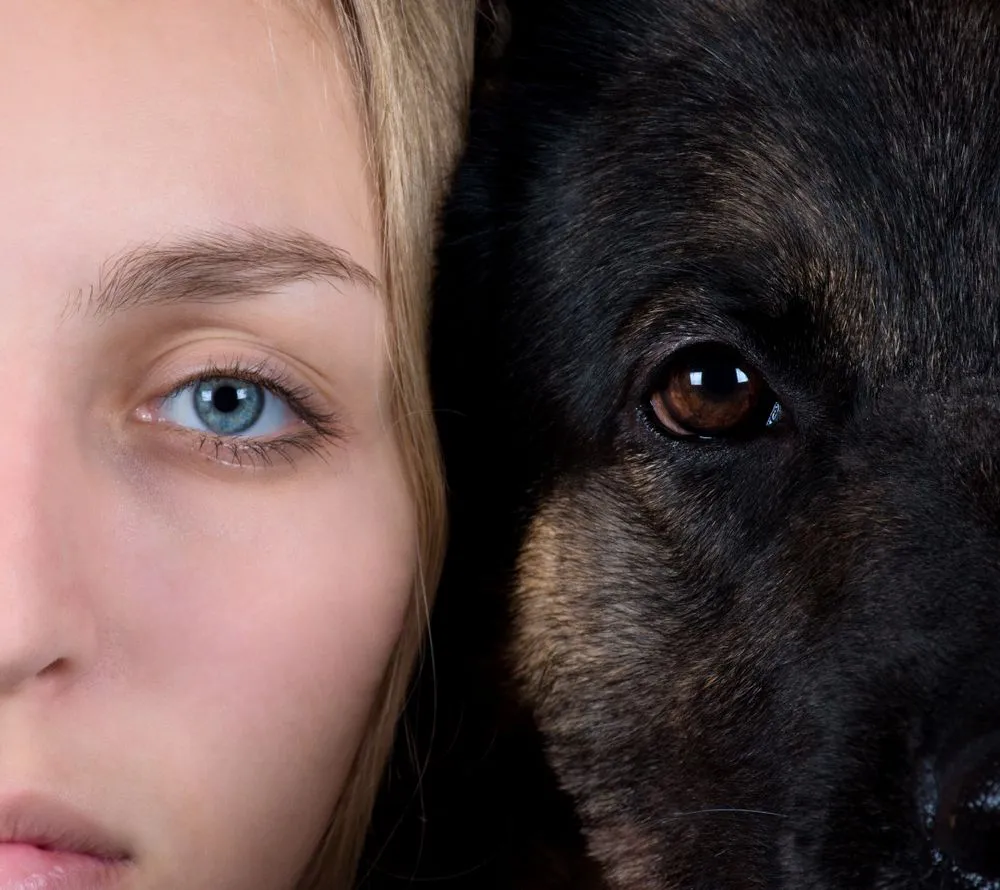
All that staring doesn’t mean your pup is a serial killer; it’s just a normal part of being a dog. Dogs have been living with us for centuries, and over time they’ve figured out how to read our emotions just by looking at us. By analyzing everything from our voice to our facial expressions, and of course, our scent, dogs use a whole range of cues to pick up on their humans’ moods. Basically, your pup is just trying to figure out how you’re feeling.
Eye contact isn’t just information-gathering, either. A 2015 study in the journal Science by Miho Nagasawa and her colleagues found that when a dog gazes at its owner, both the dog and the human get a spike of oxytocin, the so-called “love hormone” that also bonds parents to their babies. The longer they hold that mutual gaze, the bigger the spike, and the cycle feeds back on itself. Wolves raised by people don’t do this, which suggests the gaze-and-bond loop is something dogs picked up over thousands of years of living alongside us. So when your pup locks eyes with you, even at the most awkward moment, part of what’s happening is a genuine social bond.
It’s All About Communication
Dogs can’t speak. Well, technically, they can talk to other dogs, but they can’t communicate with us as effectively as they’d like to. Fortunately, they have figured out a few tricks across the nearly 30,000-year history we share with them.
For example, hungry dogs will look at us quite intently, often while sitting in the place where we generally serve them their meals. Similarly, when they want our attention, they’re known to adorably “boop” or nudge us with their snouts.
According to Stephanie Gibeault, a certified dog trainer and contributor to the American Kennel Club, if you’ve trained your pup with positive reinforcement, and doted out verbal rewards or tasty treats once they’ve done their business in the right place, or even if you just generally give them treats for good behavior, then your dog will likely stare at you every time they do that “thing”, because they’re eagerly anticipating your praise (or a treat).
A Defensive Move
Dogs are social creatures. Even in the wild, their closest relatives, wolves, live in family groups (called packs) that usually number four to ten members, although some can swell to fifteen or more.
Modern-day dogs still have that “pack” mentality. To your pup, you’re part of their pack! Why is that important? Well, being in a “pack” gives your dog an additional sense of security. Animals that live together, whether in large or small groups, have the added benefit of always having a few members designated to keep an eye out. This helps them stay safe and sound, and gives them all a better chance of survival.
This is especially useful in vulnerable situations when certain animals in a group may have their guard down. For example, most ambush predators, like crocodiles or tigers, sneak up on their prey when they’re not expecting an attack. Think about wildebeest sipping water from a lake or deer busy foraging and eating.
In both of these instances, there are always a few members of the herd keeping a lookout for predators lurking nearby.
The same idea applies to domestic modern-day dogs.
Veterinarians lean the same way. Writing for PetMD, Dr. Rochelle Hartson notes that the theory making the most sense is that the eye contact gives a squatting dog a sense of safety. Whether they go indoors or outdoors, dogs seem acutely aware that they’re in a defenseless position, and locking eyes with you is their way of checking that you’ve got their back while they keep a lookout for any immediate danger.
A Compass In The Grass?
Here’s where it gets genuinely strange. Some of the staring may have nothing to do with you at all, and everything to do with which way your dog is facing.
In a two-year study published in Frontiers in Zoology in 2013, Vlastimil Hart and his team watched 70 dogs across 37 breeds and logged nearly 1,900 instances of pooping (and over 5,000 wee breaks). They found that dogs preferred to line their bodies up along the North-South magnetic axis when they did their business, and tended to avoid pointing East-West. In other words, dogs may be quietly sensing the Earth’s magnetic field and using it like a built-in compass.
There’s a big catch, though. The North-South preference only showed up when the geomagnetic field was calm and stable, which it is for only a fraction of any given day. When the field was shifting, the alignment vanished. That on-again, off-again pattern is also why plenty of scientists remain skeptical: the effect is subtle, it leans on a particular slice of the data, and it hasn’t been convincingly replicated since. So while it’s a delightful idea that your dog is consulting an internal compass before squatting, treat it as an intriguing hypothesis rather than settled fact. Either way, it has nothing to do with the stare itself, which brings us back to you.
Conclusion
If you were hoping for an article that would solve this quirky little problem, I’m sorry to disappoint you. Modern-day dogs may depend on humans for food and shelter, but they’re unable to shake off some of their wild instincts. In essence, it’s still all about survival for these pooping pups.
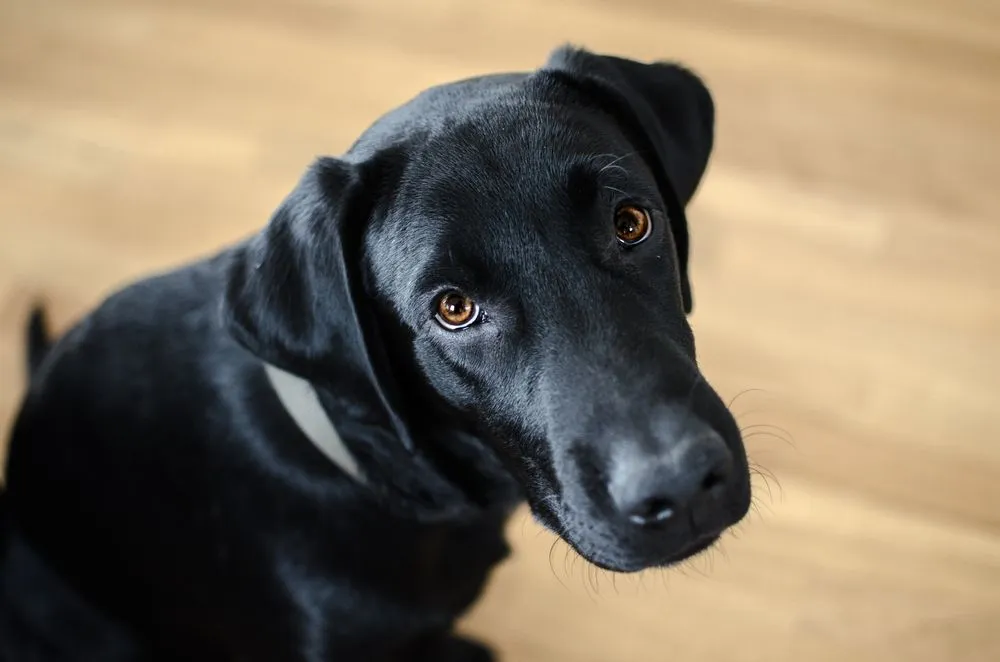
Funnily enough, dogs follow us to the bathroom for the same reason they stare at us while they poop. When you’re on the can, your dog will stand by you because they think you’re in a vulnerable position, so they keep a look out while you go about your business!
References (click to expand)
- Why do animals do what they do? Part 2: A herd is good. Michigan State University
- Why Do Dogs Look at You When They Poop? PetMD
- Why Does My Dog Stare At Me? - American Kennel Club. The American Kennel Club
- Why Dogs Touch Noses: Communication and More. Psychology Today
- Siniscalchi, M., d’Ingeo, S., Minunno, M., & Quaranta, A. (2018, July 31). Communication in Dogs. Animals. MDPI AG.
- Nagasawa, M., et al. (2015). Oxytocin-gaze positive loop and the coevolution of human-dog bonds. Science.
- Hart, V., et al. (2013). Dogs are sensitive to small variations of the Earth’s magnetic field. Frontiers in Zoology.