Table of Contents (click to expand)
Yes. In a 2021 study, scientists potty trained cows to pee in a designated latrine (a "MooLoo") using treats as rewards and a brief spray of water when they went elsewhere. Of 16 calves, 11 learned the skill within a few weeks. Capturing the urine could cut ammonia emissions and curb pollution.
Potty training – every toddler’s major milestone! It’s perhaps an even greater milestone for parents, as they don’t have to clean up messes nearly as often. Toddlers are so messy… how bad must farm animals be?
Can you imagine how difficult life must be for cattle herders? To clean up the unpleasantries coming out of so many animals! If only there was a way to potty train farm animals…
Oh wait, scientists have already figured out how to potty train cows!
How Were The Cows Potty Trained?
One study, published in Current Biology in 2021, was able to uncover the secret to controlling a cow’s toilet etiquette.
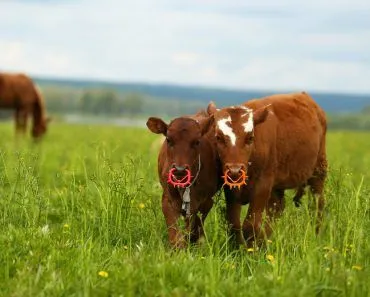
In this study, 16 calves were taken and trained to use a specifically designated area where the scientists set up a latrine, which they called the MooLoo, to relieve themselves. They were encouraged to pee there using rewards or punishments, otherwise known as operant conditioning. It was quite similar to rewarding a child for good behavior and punishing them when they are naughty.
The cows were placed in an alley with an accessible entry and exit gate. This alley passes through the latrine they were supposed to pee in. Each time a cow peed in the latrine, they were treated with some delicious food, just like giving a child a piece of candy. The more times the cow peed in the latrine, the more food they were given.
MooLoo with a treat!
However, if the cow drifted away and peed somewhere else in the alley, they got a brief spray of water (the researchers first tried unpleasant in-ear sounds, but a splash of water worked better). This is the equivalent of a gentle telling-off for a misbehaving child. (Note: No cows were harmed in this study.)
Within a few weeks, many cows smartened up and realized what was happening, and 11 out of 16 calves began to pee in the latrine, eagerly waiting for their reward. The researchers noted that this learning speed was comparable to that of young children.
Other studies had tried to accomplish this before, but were only partly successful. This was because, if cows wanted to pee, but were denied access to a latrine, they wouldn’t hold it and would instead relieve themselves on the spot.
That’s the difference between farm animals and humans. I’m sure that many of us hold our unpleasantries when we are outside until we reach the comfort of our own bathrooms.
Can All Cows Be Potty Trained?
Scientists believe that all cows can learn this skill, but it is without a doubt going to be extremely and painfully difficult to teach them all.
Another interesting observation was that the potty-trained cows didn’t need guidance to go to the latrine. They would go whenever they needed to, finish their business and wait for their treat. However, there were 5 cows that didn’t pick up this trait quickly enough. They were more stubborn, but the scientists felt that with time, they too could be potty trained.
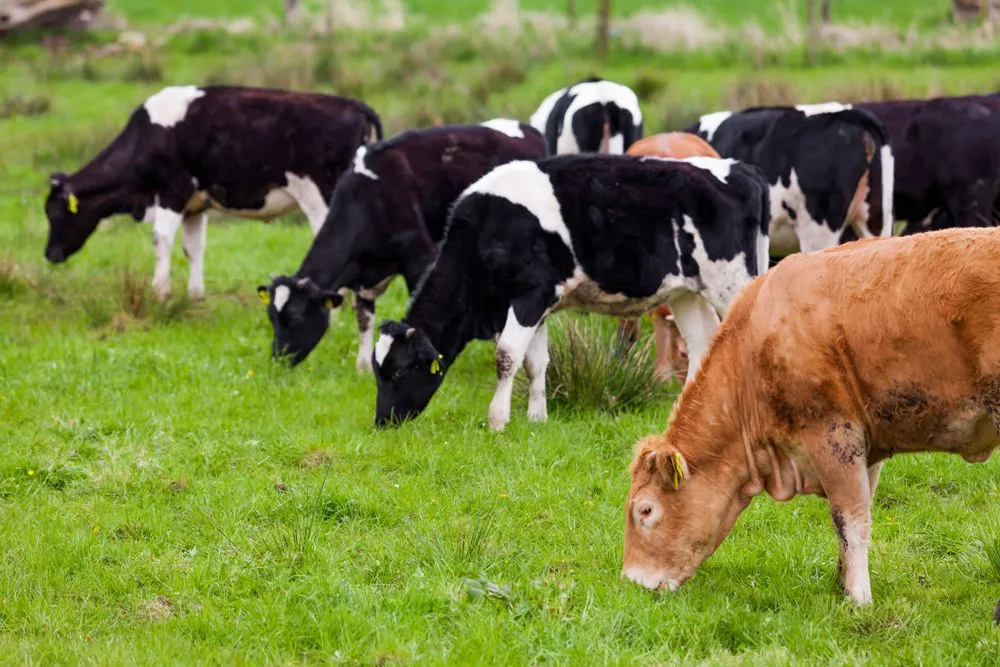
More research is needed to see how far a cow will be willing to travel to find a suitable MooLoo. It’s quite possible that they feel the reward that comes from peeing in the latrine isn’t worth the tiring journey. This study could help decide how many MooLoos are needed per farm.
The practicality of potty training all cows would be the biggest problem. No one knows how long it would take or how expensive this task would be.
Why Do We Have To Potty Train Cows?
To help save the environment!
A single cow can produce around 30 liters (about 8 gallons) of urine a day, roughly enough to fill a small car’s fuel tank. That doesn’t even include the amount of number two…
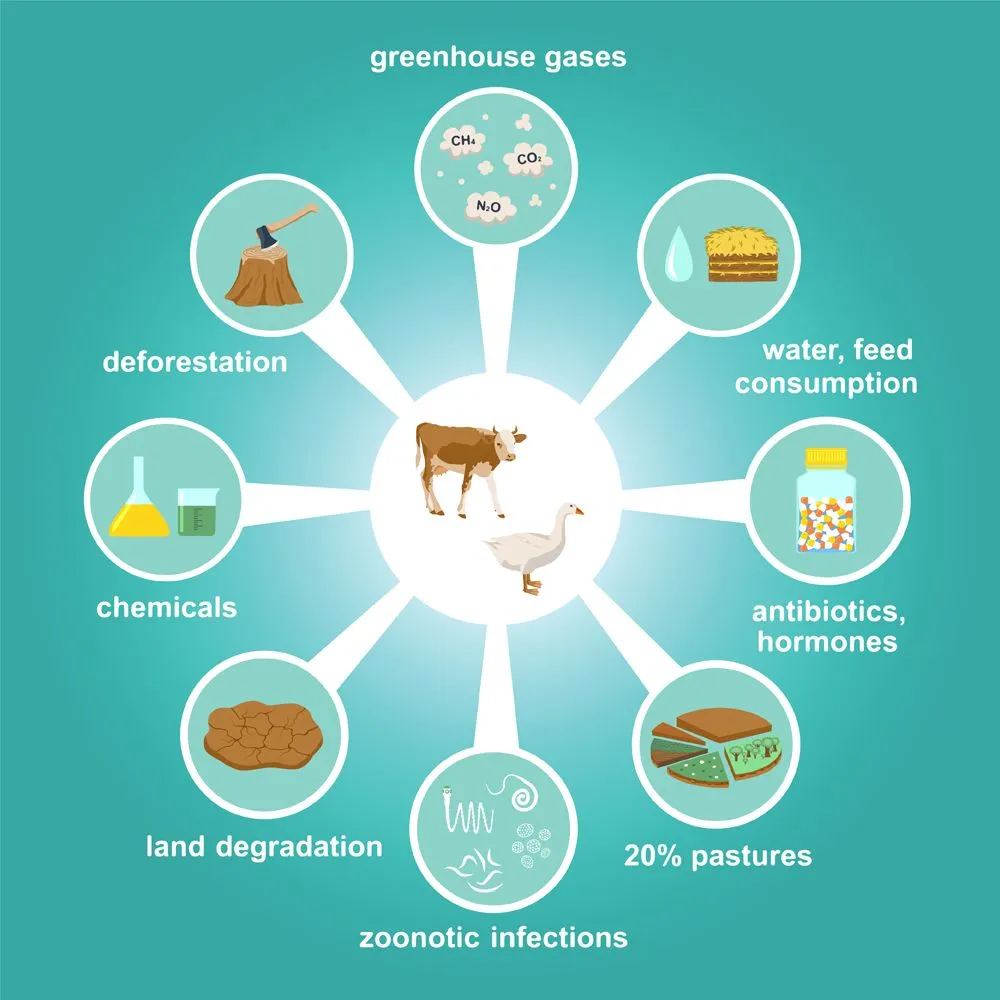
That much waste contributes terribly to greenhouse gas emissions. Apart from that, urine is rich in nitrogen, which breaks down into ammonia and nitrous oxide and leaches into the soil and water, thus polluting it. As urine and feces mix, more ammonia is produced and released into the atmosphere.
With the help of MooLoos, all cow waste can be collected at one site, making it easier to be treated and disposed of. This saves a lot of money, time and resources.
Nitrogen and phosphorus are extracted from the urine and used to make fertilizers. Using the waste, manure can also easily be made to help the soil become more nutrient-rich. The MooLoo helps put the waste to better use.
According to some data models, if 80% of all urine can be collected in MooLoos, it can lead to a 56% reduction in ammonia release.
Additionally, having a MooLoo is also more sanitary and cleaner when dealing with the waste. Otherwise, when animals go about their business anywhere they please, it is unhygienic and risky for animal health. They can contract diseases of all sorts from exposure to their digestive waste.
Conclusion
Without a doubt, it’s definitely more useful to potty train cows, but as mentioned earlier, doing that for all cows will be a huge task. Who knows though, in a few years’ time, we might have MooLoos on farms around the world.
Potty training cows will make the world’s air cleaner and allow cows to live more comfortably. Scientists are now focusing on automated, sensor-based MooLoos so people aren’t required to operate them.
Whatever the progress, I’m sure that cows would love a MooLoo; after all, they would get a treat each time they visit!
References (click to expand)
- Dirksen, N., Langbein, J., Schrader, L., Puppe, B., Elliffe, D., Siebert, K., … Matthews, L. (2021, September). Learned control of urinary reflexes in cattle to help reduce greenhouse gas emissions. Current Biology. Elsevier BV.
- Dirksen, N., Langbein, J., Schrader, L., Puppe, B., Elliffe, D., Siebert, K., … Matthews, L. (2020, October 15). How Can Cattle Be Toilet Trained? Incorporating Reflexive Behaviours into a Behavioural Chain. Animals. MDPI AG.
- Vaughan, A., de Passillé, A. M., Stookey, J., & Rushen, J. (2014, September). Operant conditioning of urination by calves. Applied Animal Behaviour Science. Elsevier BV.
- Cardenas, L. M., et al. (2018). The contribution of cattle urine and dung to nitrous oxide emissions. Science of the Total Environment. PMC, NCBI.