Table of Contents (click to expand)
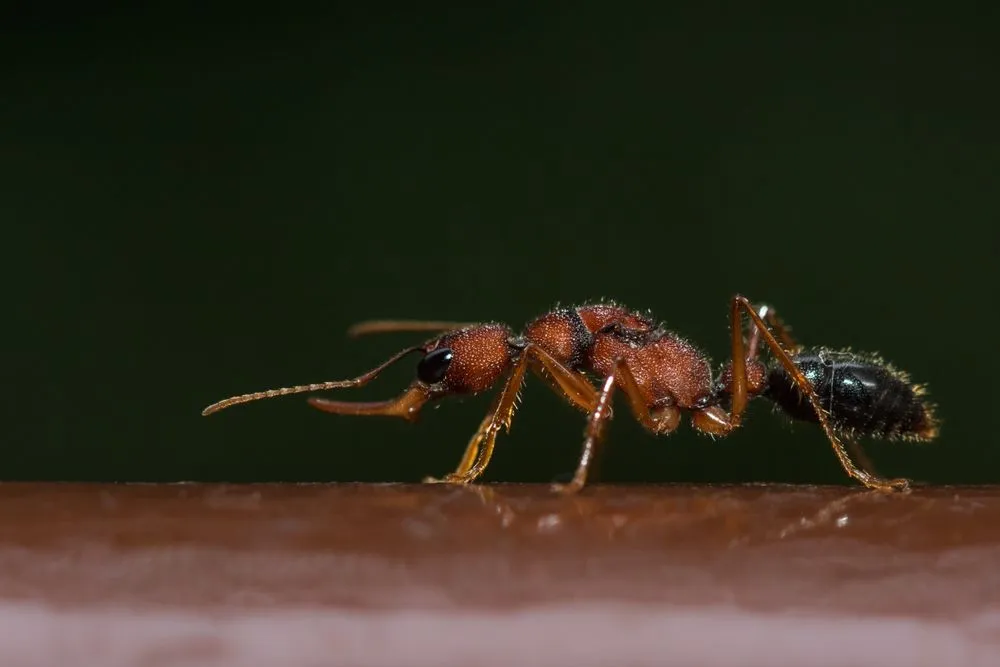
When an Indian jumping ant (Harpegnathos saltator) queen dies, rival female workers fight for the throne. The winners shrink their brains by about 19%, diverting that energy to egg production, and become reproductive “pseudo-queens.” Remarkably, the change is reversible: a defeated pseudo-queen regrows its brain within six to eight weeks and returns to worker life.
Although an ant might seem too small to have a brain, they do in fact possess one. Packing roughly 100,000 to 250,000 brain cells depending on the species, an ant’s nervous system might not be as complex as a human’s (which holds about 86 billion neurons), but it is capable of doing much more than one might anticipate from an animal its size.
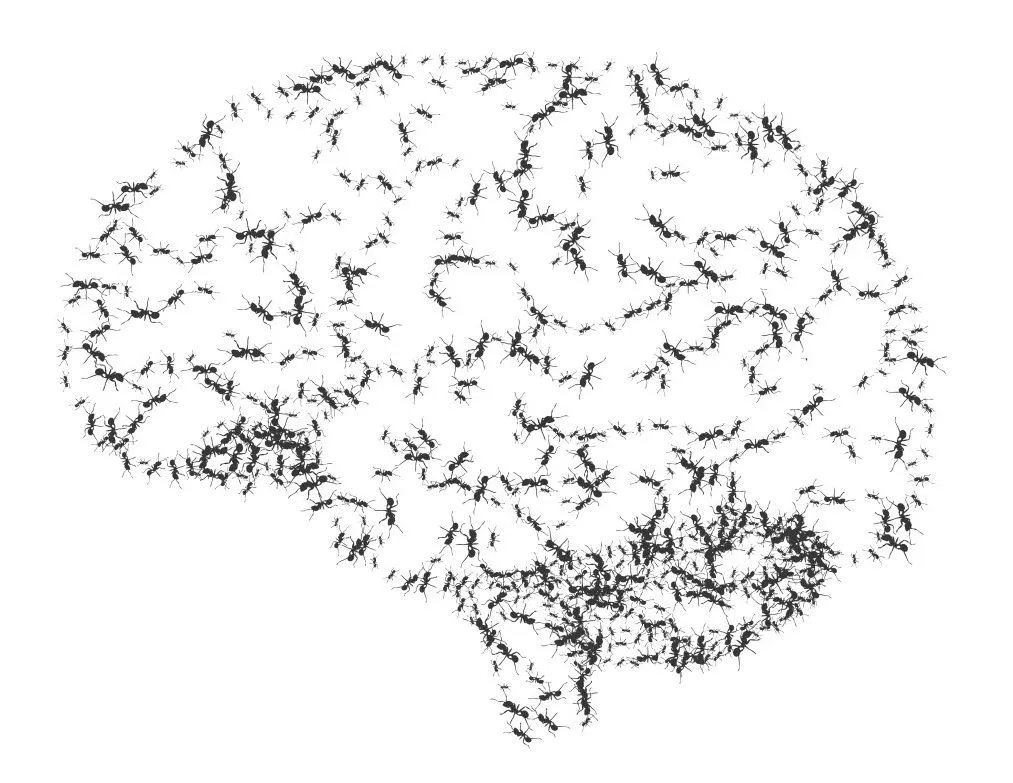
Ants can demonstrate brain plasticity, meaning that their brain is capable of reorganization, changing its shape and size, and creating new neural connections as it learns and adapts to the changes it encounters.
Brain plasticity was studied in the reproductive workers of the ant species, Harpegnathos saltator. To understand why only worker ants were candidates for this study, we have to look at how hierarchy works in an ant colony.
The Kingdom Of Ants
Colonies of ants, regardless of their species, follow the same social organization and structure in their communities.
The queen is the main character in every colony. Not only is she responsible for continuing the lineage of the colony, but she also decides whether each of her eggs becomes a male or a female. After she’s mated with a male, the queen can choose to either fertilize an egg with sperm from her reservoir, or decide against it, letting it develop without fertilization.
Males are born from unfertilized eggs, while females are a product of fertilized eggs.
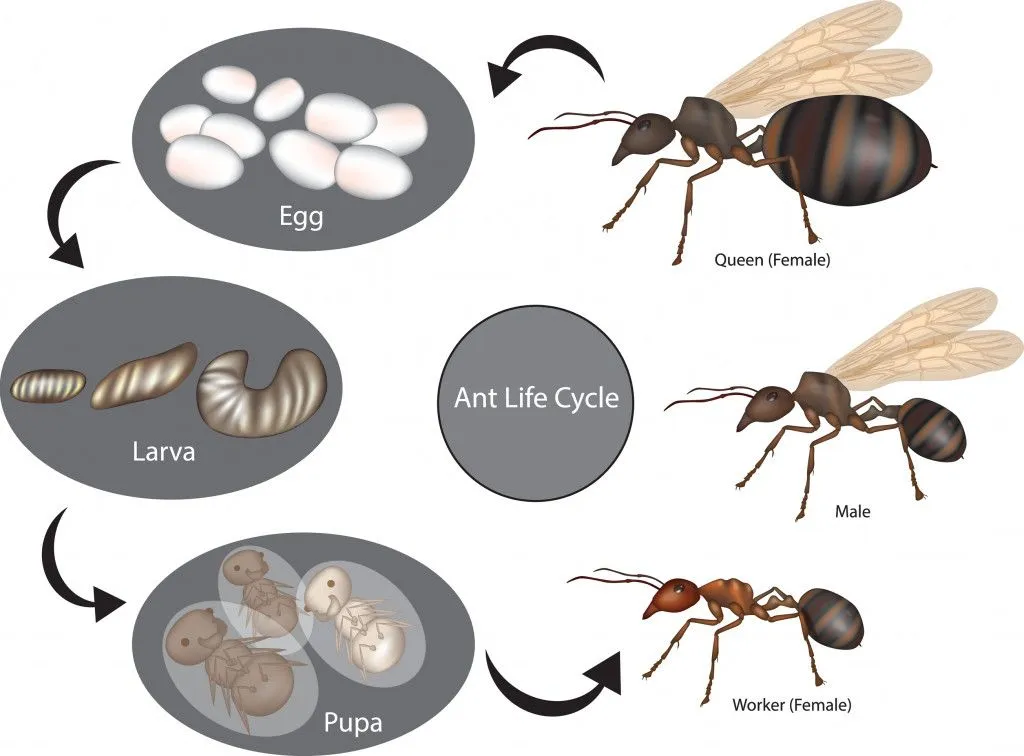
If the larva forming from the fertilized egg is fed well and taken care of, it then develops into a female ant with a chance to become queen. However, the majority of them end up as workers. This caste of ants will be unable to reproduce and are responsible for the day-to-day maintenance of the colony.
Being the queen has its perks! Certain proteins in the queen allow her to outlive her workers. Indian jumping ant workers live for seven months, while their queen lives for three to five years.
What Follows A Queen’s Death?
As a queen, she does not need structures for processing much information, nor does she need to hunt for food or defend the colony; the workers take care of that.
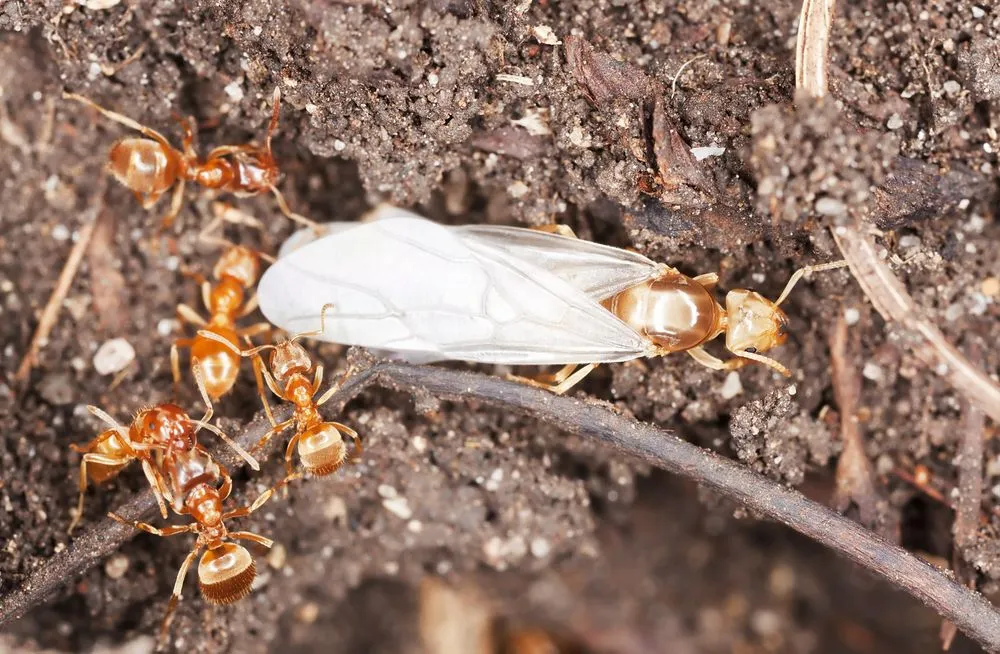
Queens and male ants take a nuptial or marriage flight, where they mate mid-air. Having mated, the queen ant loses her wings and retires to her chambers in the ant hill. She no longer has to mate, as she receives enough sperm stock to enable her to reproduce for a few more years. She will eventually die of old age, or as her lifespan comes to an end.
Subsequently, like politicians during election season, up to half of the colony’s female workers battle it out (with their antennae) for supremacy in a dominance tournament that can last weeks. A handful of ants emerge triumphant, and they all become pseudo-queens. These pseudo-queens will go through drastic changes, even decreasing the size of their brains! Their ovaries become enlarged, they gain the ability to reproduce, and they lose the ability to produce venom. As so-called queens, they can now live for years instead of just a few months.
However, if the odds are against them and they are defeated by stronger competition, they will simply go back to being workers. Over the next six to eight weeks their brain size increases again, their ovaries shrink, and they lose their reproductive ability, settling back into the worker phenotype.
Why Does The Brain Change?
How these ants shrink and expand their brains is based on what position they assume in the colony. These assumptions were made when scientists stained and imaged their brains with microscopy, and then measured the brain’s volume using digital methods.
Upon observing what happens in the brain, liver and ovary tissues of these ants that switch from pseudo-queens to workers, researchers saw that the hormone responsible for making eggs peaked in a pseudo-queen. So, while they prepare to contribute to the growth of the colony, their brain volume decreases by 19%! This helps them direct their brain processing energy to egg production.
The reverse, however, would require them to expand those regions of the brain that deal with optics and senses, as these would be essential to carry out the worker ant tasks.
Closing Thoughts
When nurse bees change their physiology to match that of a forager bee, there are changes in their hormones, immunity and behavior, all accompanied by an increase in brain size. However, they are incapable of reducing this increased brain volume if and when they transition to being nurses again. When experimenting with fruit flies, scientists determined that the brain regions they’d affected during a fruit fly’s early life would not show repair or normal functioning as it grew. Who knew that humble ants would possess the superpower of brain size reversibility!
References (click to expand)
- Yan, H., Opachaloemphan, C., Carmona-Aldana, F., Mancini, G., Mlejnek, J., Descostes, N., … Reinberg, D. (2022, September 2). Insulin signaling in the long-lived reproductive caste of ants. Science. American Association for the Advancement of Science (AAAS).
- Haight, K. L. (2012, December). Patterns of venom production and temporal polyethism in workers of Jerdon’s jumping ant, Harpegnathos saltator. Journal of Insect Physiology. Elsevier BV.
- Ant Life Cycle. Harvard Forest, Harvard University.
- Khila, A., & Abouheif, E. (2010, February 27). Evaluating the role of reproductive constraints in ant social evolution. Philosophical Transactions of the Royal Society B: Biological Sciences. The Royal Society.
- Nie, L., Zhao, F., Chen, Y., Xiao, Q., Pan, Z., Ran, H., & Xu, Y. (2021, December 25). Prey Status Affects Paralysis Investment in the Ponerine Ant Harpegnathos venator. Insects. MDPI AG.
- 'Princess Pheromone' Tells Ants Which Larvae Are Destined .... North Carolina State University
- DeWitt, T. J., Sih, A., & Wilson, D. S. (1998, February). Costs and limits of phenotypic plasticity. Trends in Ecology & Evolution. Elsevier BV.
- Some Indian jumping ant workers can transition to a queen .... Phys.org
- Auld, J. R., Agrawal, A. A., & Relyea, R. A. (2009, October 21). Re-evaluating the costs and limits of adaptive phenotypic plasticity. Proceedings of the Royal Society B: Biological Sciences. The Royal Society.
- Shimoji, H., Kasutani, N., Ogawa, S., & Hojo, M. K. (2020, June 27). Worker propensity affects flexible task reversion in an ant. Behavioral Ecology and Sociobiology. Springer Science and Business Media LLC.
- Robinson, G. E., Page, R. E., Jr., Strambi, C., & Strambi, A. (2010, April 26). Colony Integration in Honey Bees: Mechanisms of Behavioral Reversion. Ethology. Wiley.
- Gronenberg, W., & Liebig, J. (1999, July 7). Smaller Brains and Optic Lobes in Reproductive Workers of the Ant Harpegnathos. Naturwissenschaften. Springer Science and Business Media LLC.
- Niven, J. E., & Laughlin, S. B. (2008, June 1). Energy limitation as a selective pressure on the evolution of sensory systems. Journal of Experimental Biology. The Company of Biologists.
- Barth, M., Hirsch, H. V. B., Meinertzhagen, I. A., & Heisenberg, M. (1997, February 15). Experience-Dependent Developmental Plasticity in the Optic Lobe ofDrosophila melanogaster. The Journal of Neuroscience. Society for Neuroscience.
- Sasaki, T., Penick, C. A., Shaffer, Z., Haight, K. L., Pratt, S. C., & Liebig, J. (2016, June). A Simple Behavioral Model Predicts the Emergence of Complex Animal Hierarchies. The American Naturalist. University of Chicago Press.