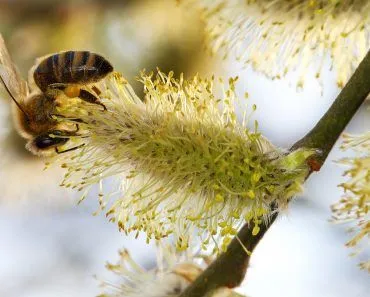
The bees in a colony will swarm when the hive becomes overcrowded. A group of bees will leave the hive to find a new location, while another group stays behind. The bees that are looking for a new location will send out scouts to find potential sites. The scouts will communicate the location and quality of a site to the other bees by performing a dance. The bees will then choose the best location based on the dances of the scouts.
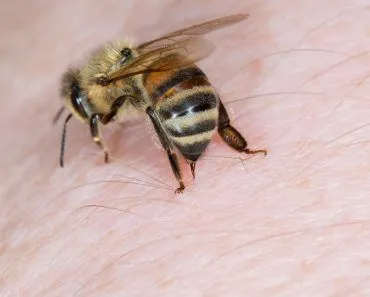
If there is one thing that honey bees are possessive about, it’s their home. Standing near a honeycomb could earn you 2-3 stings, courtesy of the bees.
However, tens of millions of bees must find a new location to build a new home each year. While the sight of swarming bees can be pretty scary for some people, it is a natural and wonderful part of the life cycle of honey bees.
When Do Honeybees Need To Find A New Nest?
Swarming is a sign that the honeybees in the area are thriving. It is a way for honeybees to reproduce.
Honeybees will stay in one hive for years, even decades. They only leave their hive when conditions get unfavorable for their growth. This happens when the hive gets overcrowded or a new queen is finally made.
The queen bee and approximately half the worker bees leave the parental nest to establish a new colony, while a newly reared daughter queen and the remaining workers stay behind to look after the old colony. The workers prepare to swarm by consuming extra honey to sustain themselves. When ready, they force the queen out of the hive.
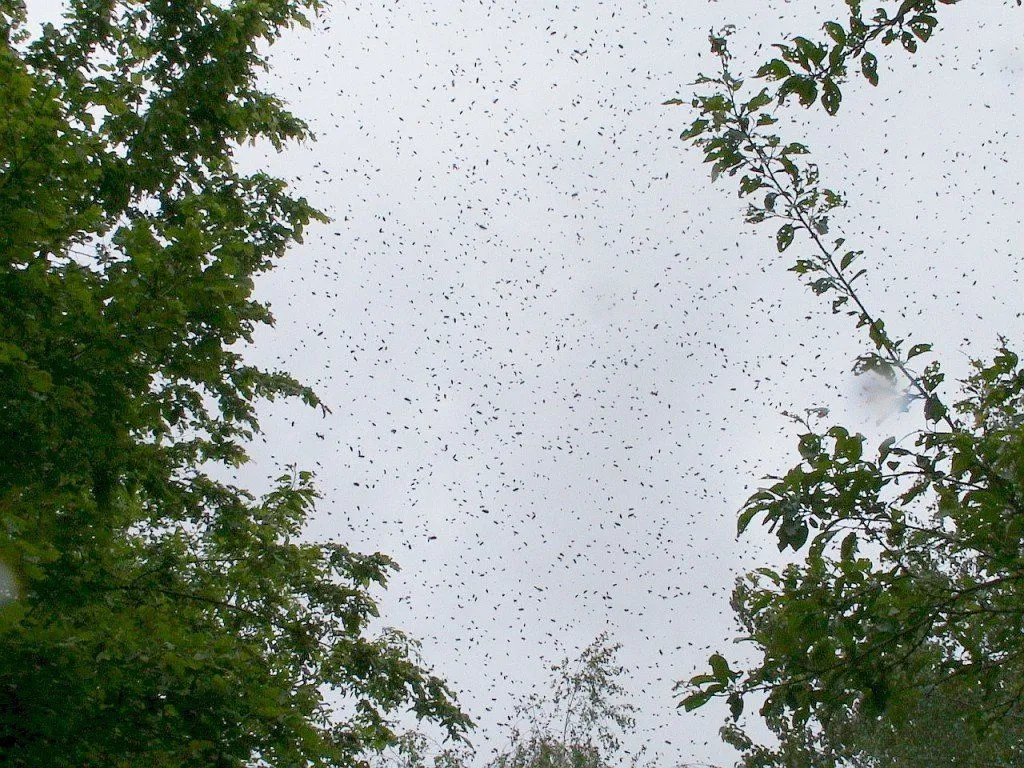
Nest-site selection by honeybee swarms is a highly distributed decision-making process that usually occurs in the spring when a colony outgrows its hive and divides itself by swarming.
Swarming occurs as spring arrives, usually between March and May.
The Hive
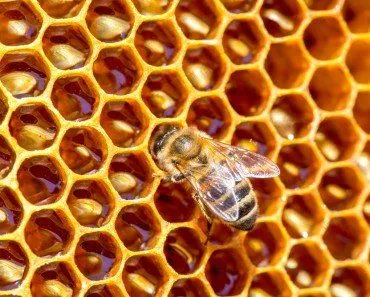
In the hive, the honeybees rear young, store honey and beeswax, and stay protected from the elements. It is also where they come to rest. Forager bees need to sleep for about 5 to 8 hours. They do so at night when the lack of sunlight prevents them from searching for and collecting pollen from flowers.
Without a hive, the bees remain exposed to the elements, without stored food and no place for their queen to reproduce new worker bees.
How Bees Choose A New Hive
A hive that’s ready to swarm splits in two: one that stays in the original nest and another that must find a new site.
Until they find a comfortable and spacious hollow tree to call home, the thousands (between 1,500 to 30,000 bees) of bees wait in a tree branch while a few hundred scouts explore new prospects. Each scout bee returns to the group and pitches an idea of how good a particular location is by performing a unique “waggle” dance. This dance has a code that indicates the site’s location.
Based on the relative vigor of their dance, the bees shortlist the location and estimate which of the more strongly recommended locations should be the site of their new home.

If two nests are equally appealing, the bees risk a deadly tiebreaker. After all, the swarm has only one queen bee, so it can’t split up and must agree on a single nest site. Bee biologist Thomas Seeley of Cornell University and his colleagues experimented to determine how those particular stalemates are broken. To measure this, they set up two identical boxes on a remote island and then released a swarm of bees. The researchers then observed how they selected the site.
Here, scouts locate two potential nest sites, one with a large opening and one with a more desirable small opening. Each scout bee then returns to the swarm and performs a waggle dance for her site, but the scout from the superior right tree performs more waggle dance circuits than the scout from the left tree. Three hours later, the number of bees committed to the right tree has increased sixfold, whereas support for the left tree has increased only threefold, and most dances favor the right tree. After three more hours, the scouts at the right tree increased even more.
The scouts waggled for their sites but took time out from their dancing to disrupt other bees from completing their performance by head-butting them and emitting high-pitched beeps.
Such inhibitory signals help to break the deadlock and help the bees choose their home faster. As soon as one site gains even the slightest edge over the other, more bees will be on the winning nest side to stop the other side’s waggling, thus accelerating the inequality and allowing the bees to choose a site more quickly. Ideally, the new home should be a cavity in a tree, well above the ground, with lots of space for the whole swarm and storing honey.
What Makes A Good Nest Site For Honey Bees?
So what exactly are those fussy scout bees looking for? It turns out honey bees work from a surprisingly precise checklist, and decades of work by Cornell biologist Thomas Seeley pinned much of it down.

The single most important feature is volume. Scouts strongly prefer an enclosed cavity of roughly 40 liters (about 10 gallons), big enough to store a winter's worth of honey but not so cavernous that it can't be kept warm. Cavities of at least about 15 liters (4 gallons) are usually the lower limit they will accept.
Next comes the entrance. Bees favor a small opening that is easy to defend against robbers and predators. They also like that entrance to sit high off the ground, ideally at least 2.7 meters (about 9 feet) up. On top of that, the perfect home is dry, dark, and unoccupied. A snug, weatherproof box like that is exactly why a hollow tree trunk so often wins the vote.
Where Do Honey Bees Nest In And Around Homes?
A cavity is a cavity, and bees aren't picky about who built it. Hollow trees may be the textbook choice, but the same checklist sends swarms straight into our buildings.

According to the University of California's pest-management program, honey bees will happily set up house inside the walls of houses; in or around chimneys; and in outbuildings, fences, water meters, utility boxes, barbecue grills, soffits, or under decks. Any dark, sheltered void of about the right size will do.
That makes a hidden colony tricky to pin down. Beekeepers usually locate a nest in a wall by tapping along the surface and listening for the hum of the colony, sometimes pressing a stethoscope to the wall to map the comb's edges. Telltale clues are a steady stream of bees coming and going from a single gap, or a slowly enlarging damp patch where the bees have softened the plaster from behind. To track down a wild colony out in the open, naturalists use an old trick called bee-lining: you feed foragers sugar syrup, watch the straight "bee line" they fly home, and follow it back to the nest tree.
How Do Bees Choose A New Queen?
Picking a home is only half the story. A colony that is about to swarm also needs a new monarch, and bees don't so much crown a queen as build one from scratch.

Any fertilized egg can become either a worker or a queen, so the difference comes down entirely to diet. Worker bees select the youngest larvae, less than a day old, and rear them inside large, vertical, peanut-shaped queen cells that hang down from the comb. These chosen larvae are flooded with royal jelly, a protein-rich secretion from the nurse bees' glands, for their entire development. Ordinary worker larvae get royal jelly only for their first three days before switching to a plainer mix of pollen and nectar, and that nutritional gap is what turns one larva into a fertile queen and another into a sterile worker.
A queen develops fast, going from egg to adult in about 16 days. Colonies rear new queens in three situations: when they are swarming (the reproductive split this article describes), supersedure (quietly replacing an old or failing queen), and emergency (when the reigning queen is suddenly lost). When several queens are raised at once, the first to emerge typically hunts down and stings her rivals before they can hatch, leaving a single queen to lead the colony.
Once the bees select their location, they don’t move. They will begin to lay down a wax comb for their new hive, and the queen will begin laying eggs.
This is a brilliant example of the smooth functioning of bees. Perhaps the Earth would be a utopia if humans were as disciplined as honey bees!
References (click to expand)
- Janson, S., Middendorf, M., & Beekman, M. (2006, December 20). Searching for a new home--scouting behavior of honeybee swarms. Behavioral Ecology. Oxford University Press (OUP).
- Head Butts & Waggle Dances: How Honeybees Make ....
- Seeley, T. D. (2003, March 19). Consensus building during nest-site selection in honey bee swarms: the expiration of dissent. Behavioral Ecology and Sociobiology. Springer Science and Business Media LLC.
- Honey Bee Swarms - TN Department of Agriculture.
- Honeybee Swarms.
- Removing Honey Bee Swarms and Established Hives - UC IPM.
- Beekman, M., & Oldroyd, B. P. (2018). Different bees, different needs: how nest-site requirements have shaped the decision-making processes in homeless honeybees (Apis spp.). Philosophical Transactions of the Royal Society B.
- An Introduction to Queen Honey Bee Development. Penn State Extension.