Table of Contents (click to expand)
Yes, bees sleep. Older forager bees sleep for roughly 5 to 8 hours each night on a regular circadian rhythm, while younger bees nap irregularly around the clock. Sleep helps bees consolidate memories, navigate accurately, and perform a sharp waggle dance. Whether they truly dream is unproven, but during deep sleep their brains appear to replay the day’s experiences.
Comparing an organization to a beehive is a common platitude. The metaphor finds its origins in our perception of bees. Bees are known to be tenacious workers who toil relentlessly, whether collecting nectar, building a new hive, synthesizing viscous honey, protecting their revered queen or just randomly buzzing around.
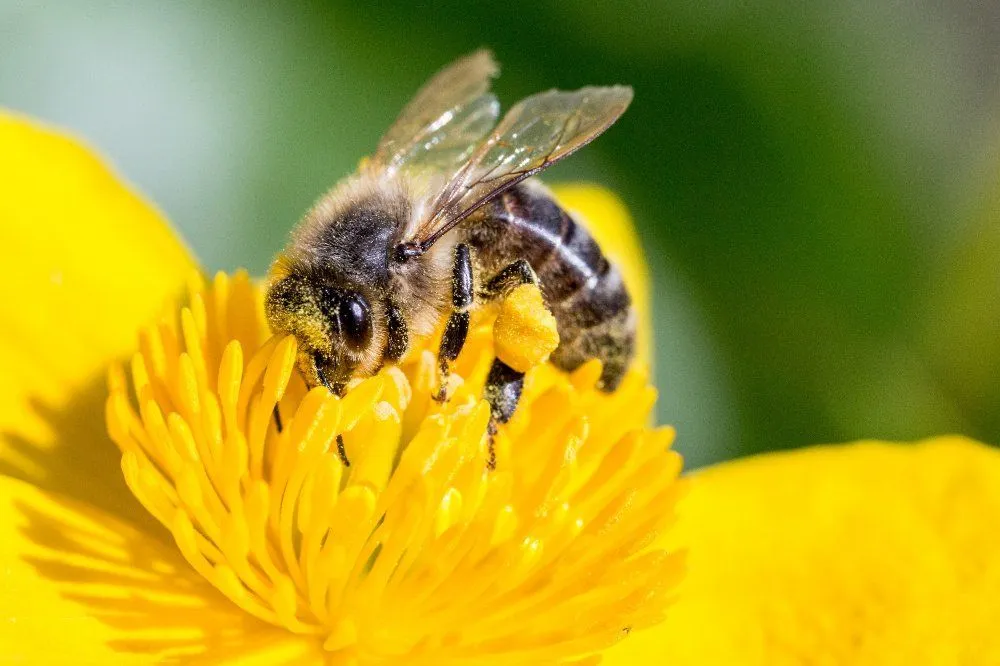
In their incessantly busy lives, do bees ever find the time to pause and rest? Do they sleep?
Yes, Bees Do Sleep
One reason why someone might believe that bees don’t sleep is that we seldom find one asleep. We arrive at this conclusion based on assumptions about what we conventionally deem to be the characteristics of sleep. These include immobility or a relaxed posture, reduced body temperature, delayed response to disturbances, and neuronal activity corresponding to different sleep phases.
Bees have been continually found to portray these characteristics. The scientist who first showed that bees sleep is Walter Kaiser, who reported it in 1983 after filming bees in observation hives through the night. He observed that a sleeping bee bows its head toward the ground, lets its antennae droop, and rests its wings against its body. Foragers spend roughly 5 to 8 hours asleep in a 24-hour period.
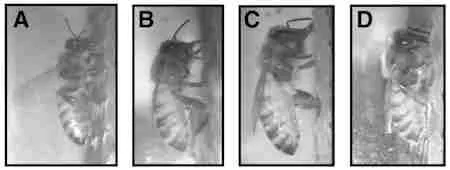
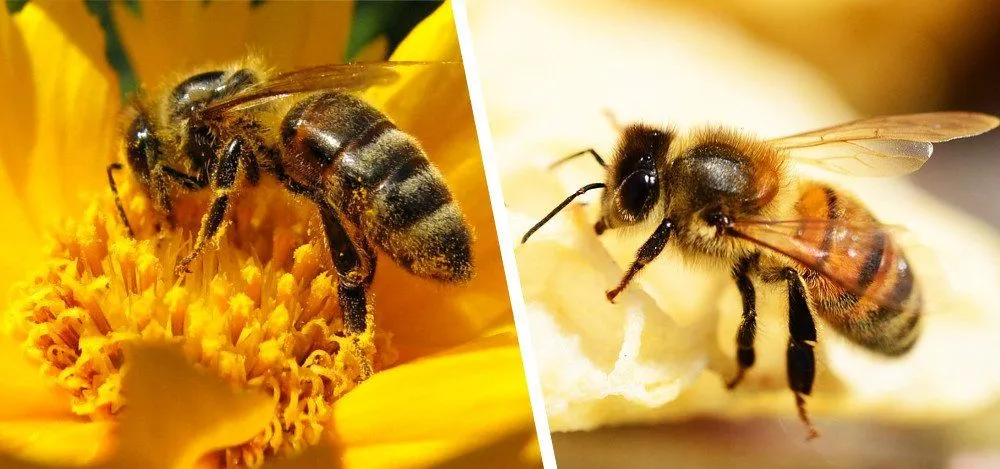
Bees are often found sleeping on flowers, but they buzz away as soon as they encounter some perturbation. This causes us to strike off the characteristics of immobility and relaxed posture. Research has shown that while asleep, a bee’s body temperature declines and it takes a brighter light to wake them up than the intensity of light to which they would usually respond.
This sort of behavior resembles our own sleeping habits. However, unlike humans, not every bee illustrates a circadian rhythm. The variance is introduced depending on the role and age of a bee in a hive. Only the older ones, the foragers, reliably sleep at night, following a circadian clock that is tied to their work tracking the sun and timing visits to flowers. The younger bees, freshly emerged ones called callows, take abrupt, irregular naps around the clock and lack a fixed pattern.
This split makes sense. Foragers leave the hive only by day, so a strong internal clock that consolidates their rest into the night pays off. Younger bees, by contrast, are confined to round-the-clock duties inside the hive, such as tending the brood, so their rest gets scattered into short power naps. Beyond this circadian pattern, sleeping bees also move through distinct sleep stages, progressing from a light, relaxed state to deep sleep with drooping antennae and almost no movement.
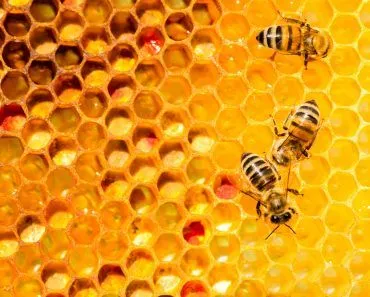
Because forager bees must indulge in relatively long, undisturbed deep sleep, they tend to sleep on the fringes or perimeter of the hive, away from the chaos in the center. Mapping where bees sleep inside the nest shows that this cooler periphery acts as a kind of dormitory, which also explains the drop in a sleeping forager's body temperature. The younger bees, drifting through lighter sleep, do not hesitate to doze nearer the warm center, often tucked into empty honeycomb cells.
That being said, their sleep patterns still elude detection and confuse scientists. Scientists are not sure why bees of one hive sleep longer than the bees of another hive or cell. We’re still in the shadows when it comes to unraveling this mystery. Could genetic differences be responsible for this disparity? We don’t know.
Now that we know that bees sleep, we must ask what purpose it serves for them? Does sleep facilitate the strengthening of memory circuits like it does for the human brain?
Why Do Bees Sleep?
Scientists have narrowed down why bees might sleep to three reasons.
Memory Consolidation
Like humans, bees are indisputably social animals, and the communication of information is of the utmost importance. However, information isn’t simply received and hurtled into a mental cabinet. In order to cement its place in the brain, a bolus of information is transmuted from short-term memory to long-term memory by the process of consolidation.
This “cement” does take some time to dry. Consolidation requires hours, sometimes days, depending on the magnitude of information. Sleep has been shown to be the major facilitator of consolidation. Without deep sleep, consolidation is denied, and consequently, memory retention is gravely impeded.
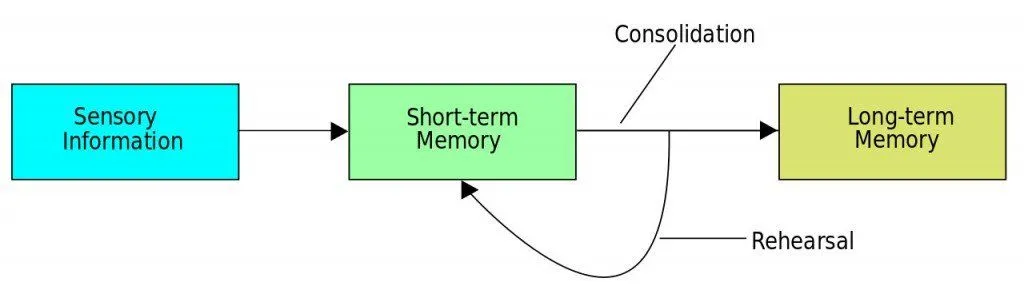
Consolidation isn’t just restricted to us, but bees as well. In a sort of Pavlovian experiment, bees were trained to associate a particular odor with a sugar reward. When researchers then wafted that same training scent past the bees during their deep sleep, the bees remembered the lesson better the next day than those left undisturbed. It was as if a gentle reminder during sleep helped the memory set, much like a cue nudging a half-formed thought into place.
So, bees must sleep to consolidate the information they acquire through interacting with other bees.
Disruption Of ‘Waggle’ Dance
Bees perform a sort of waggle dance by assuming a posture where the abdomen is directed at a certain angle with respect to the position of the sun. The waggle dance is exclusively performed by experienced forager bees to direct other bees towards a new source of nectar or pollen – a flower.
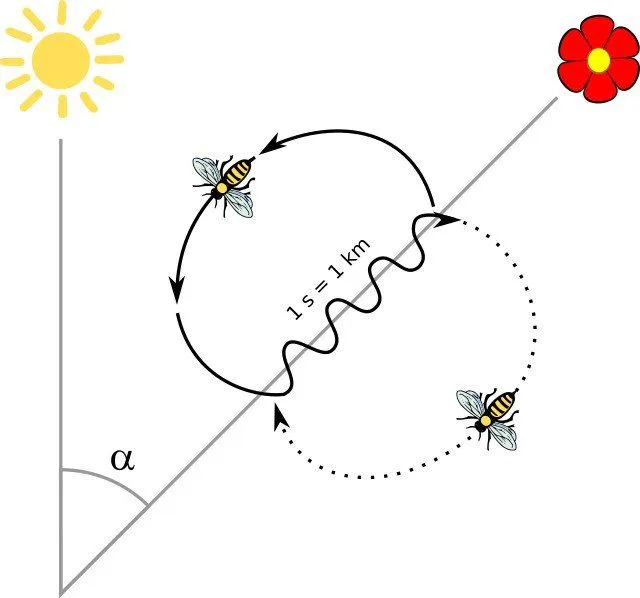
A 2010 study by Barrett Klein, Thomas Seeley and their colleagues showed that sleep-deprived bees perform a sloppier waggle dance. Their dances pointed in less consistent directions, so they communicated the bearing of a food source with poorer precision. This might lead to wasted effort, as the dancer could send her hive-mates off at the wrong angle.
Difficulty Learning New Routes
Even if a forager bee leads her kin to a novel source of nectar or pollen, a sleep-deprived bee may struggle to return to the hive because of a faltering memory. The bee might find it difficult to learn this new route home. Indeed, experiments tracking bees with radar have found that a night of sleep helps them lock in a freshly learned route, a direct benefit of memory consolidation.
Akin to humans, a bee’s performance, be it waggle dance or route learning, suffers when it is denied deep sleep. The consequent somnolence leaves it sluggish and fatigued during the day.

Moving forward with our inquisition, we can ask something even more profound: do bees dream like we do? This is unquestionably fascinating, and the evidence, while far from conclusive, is no longer empty. When that training odor reawakened a stronger memory during deep sleep, it hinted that the sleeping brain was busy replaying the day. Researchers studying bumblebees have even watched their sleep swing between deep stillness and a livelier, antennae-twitching state that loosely echoes our own dreaming REM sleep.
So if bees do dream, their slumbering minds might well be conjuring up elemental phenomena, such as the colors of a flower or the path back to it. Unassailable proof remains out of reach, but it would be a truly groundbreaking feat.
References (click to expand)
- Eban-Rothschild, A. D., & Bloch, G. (2008, August 1). Differences in the sleep architecture of forager and young honeybees(Apis mellifera). Journal of Experimental Biology. The Company of Biologists.
- Beyaert, L., Greggers, U., & Menzel, R. (2012, November 15). Honeybees consolidate navigation memory during sleep. Journal of Experimental Biology. The Company of Biologists.
- Klein, B. A., Klein, A., Wray, M. K., Mueller, U. G., & Seeley, T. D. (2010). Sleep deprivation impairs precision of waggle dance signaling in honey bees. PNAS.
- Klein, B. A., Stiegler, M., Klein, A., & Tautz, J. (2014). Mapping Sleeping Bees within Their Nest. PLOS ONE.
- Zwaka, H., et al. (2015). Context Odor Presentation during Sleep Enhances Memory in Honeybees. Current Biology.
- Do Honeybees Sleep? Encyclopaedia Britannica.