Table of Contents (click to expand)
Yes, carving and Halloween pumpkins are edible. The flesh you scoop out before carving is perfectly good to cook, though large carving varieties are blander and stringier than small sugar (pie) pumpkins. Don't eat a pumpkin once it has been carved and left out, however, as the exposed flesh quickly picks up bacteria and starts to rot.
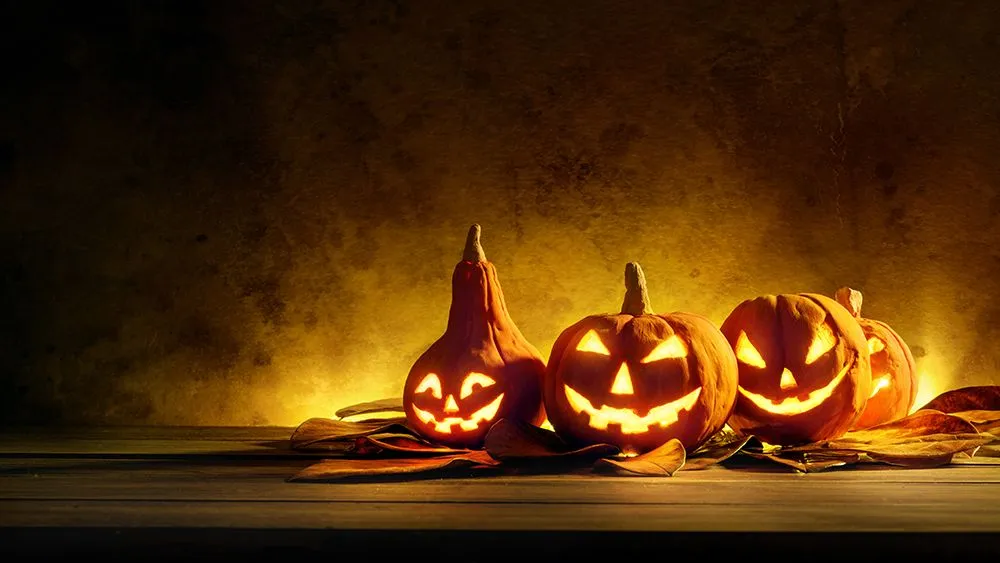
Pumpkins and Halloween are synonymous! Carved pumpkins, odd-shaped pumpkins, and pumpkin-themed décor are often used to decorate our homes during the Halloween season, along with all the ghostly décor! Pumpkin pies and pumpkin-spiced lattes complete the autumnal experience.
Brightly colored pumpkins symbolize the fall/autumn colors as well. Pumpkin growers plan their crop so that they can harvest right before Halloween. In the days and weeks leading up to Halloween, countless pumpkins are sold. Most of these pumpkins are used for the aesthetics of Halloween, but once the season is over, unfortunately, many of the pumpkins are thrown away.
All of these pumpkins are edible, and when we use them only for decoration, that’s a lot of food wasted. Around 17% of total global food production is wasted in households, food service, and retail spaces. Halloween pumpkins form a small but significant part of this global food waste.
Pumpkins Are Diverse
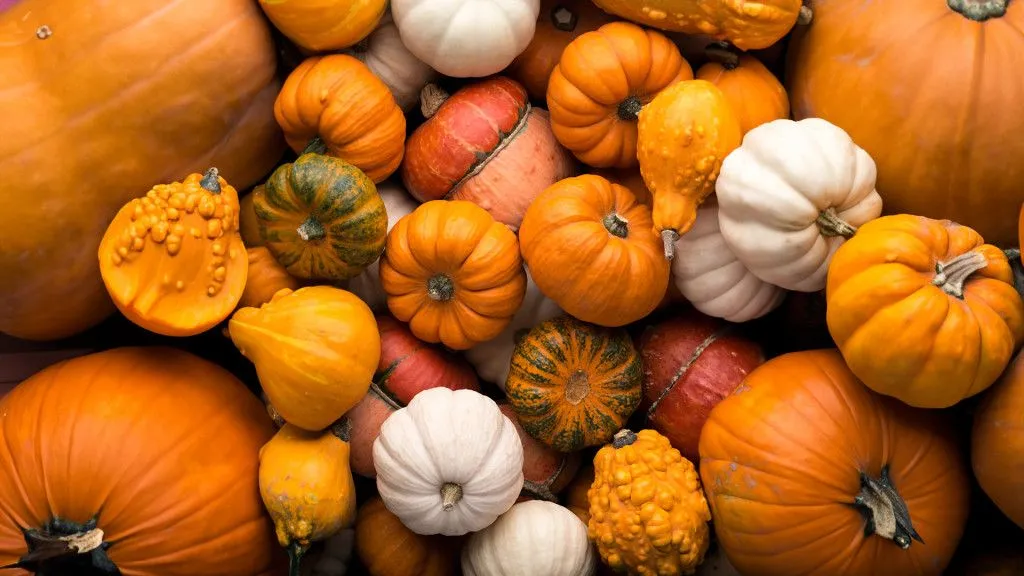
The term pumpkin applies to fruits of multiple Cucurbita species, including pumpkin or acorn squash (Cucurbita pepo); giant pumpkin, Hubbard or kabocha squash (Cucurbita maxima); and crookneck squash, tropical pumpkin (calabaza), or butternut squash (Cucurbita moschata). The familiar round, orange jack-o-lantern pumpkin sold for Halloween is a variety of Cucurbita pepo. Even within each of these species, the fruit types vary from one variety to another.
The diverse, colorful, weird and spooky shapes of pumpkins make them ideal for decorations.
Why Do We Carve Pumpkins During Halloween?
The tradition of carving pumpkins originated with Irish immigrants in the United States. The people of Ireland, England, and Scotland celebrated the Celtic festival of Samhain on Nov 1. On the eve of Samhain, they used to carve scary faces on recently harvested beets, turnips and potatoes and put a light inside them to scare away ‘Stingy Jack’ and other evil spirits. They also wore scary costumes to chase away the evil spirits.
When the Irish migrated to the US, they started using pumpkins instead, as they were easier to carve and made great Jack O’lanterns. Today, carving pumpkins is an essential part of Halloween festivities in the US and the UK. Pumpkin varieties specifically bred for Halloween, of the aptly named ‘Jack O’ Lantern’ variety, are harvested in the days leading up to Halloween.
A Lot Of Pumpkins Are Wasted
The UK grows 10 million pumpkins per year, almost 95% of which are used for decoration and then thrown out. This amounts to 18,000 tonnes of pumpkins being thrown away every year in the UK!
In the US, two billion pounds (about 900,000 tonnes) of pumpkin were grown in 2014 and 1.3 billion pounds of that total ended up in the trash after Halloween.
This is an incredible amount of food waste in a world where millions are starving and malnourished. The discarded rotting pumpkins also release methane and contribute to global warming. In addition, there is the environmental footprint of the water, fertilizers, and other resources that are used to grow these pumpkins.
Are Halloween Pumpkins Edible?
Ornamental Halloween pumpkins are bred to have an intense orange color when mature, and since they are grown for decoration, they “usually are larger, with stringier pulp and more watery flesh”. Even so, they are still edible. The smaller sugar (pie) pumpkin varieties are sweeter, less stringy and more flavorful, so they are the better pick if you actually want to cook your pumpkin.
The flesh extracted from the pumpkin during carving is edible. However, a survey of 3,000 adults in the UK concluded that only 42% of respondents thought that the pumpkin flesh removed from the fruit was edible. The rest thought the flesh was supposed to be thrown out.
Pumpkin is a highly nutritious fruit. One cup (245 g) of pumpkin contains 209% of the recommended daily value (RDV) of vitamin A, 37% RDV of vitamin K, 22% of vitamin E, and 3 g of protein.
Once carved, pumpkins are typically left out on the porch or in a window for days or weeks. The moment you cut into a pumpkin, you expose the inside to bacteria, and food scientists at Michigan State University Extension warn that those bacteria can double roughly every 20 minutes once the flesh sits in the “danger zone” of 4 °C to 60 °C (40 °F to 140 °F) for more than two hours. After a day or two on the porch, the flesh has usually started to rot as well. So the simple rule is to treat a pumpkin as either an ingredient or a decoration, but not both, and not to eat one that has already been carved and left out.
However, if the pumpkin has not been carved, the flesh remains edible. There are lots of non-Jack O’ Lantern pumpkins that are not carved, but still used for decorations during Halloween. All of these pumpkins are also edible.
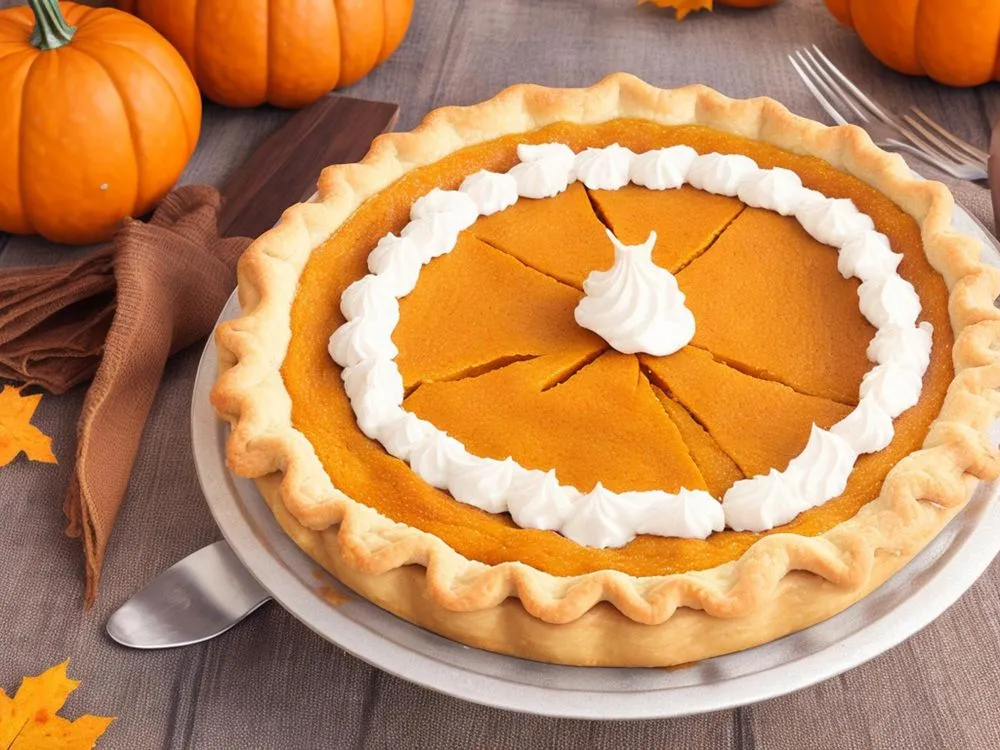
Instead of throwing away thousands of tonnes of pumpkins each year, they can be used to make pies, soups, bread, cakes and more. Pumpkin seeds are also well known for their health benefits.
Conclusion
About 7% of global greenhouse gas emissions comes from food that is lost or wasted. Around 30% of our agricultural land grows food that will never be eaten. On the other hand, in 2022, 735 million people around the world experienced chronic hunger. To make a difference in these unfortunate statistics, eat your pumpkins this Halloween!
References (click to expand)
- Ferriol, M., & Picó, B. (n.d.). Pumpkin and Winter Squash. Handbook of Plant Breeding. Springer New York.
- The Jack-O-Lantern's Origins. Carnegie Museum of Natural History.
- The twisted transatlantic tale of American jack-o'-lanterns. National Geographic.
- Can You Eat Your Jack-O-Lantern Pumpkin? - UNL Food.
- The environmental impact of Halloween pumpkins. World Economic Forum.
- Carved pumpkins are for decorating - not for consumption. Michigan State University Extension.
- Pumpkin Varieties - Pumpkins and More. University of Illinois Extension.